
Weil’s disease: the talk
Read it as written or in your own words. Tick each point as you make it. Stop for the questions.
Why it matters
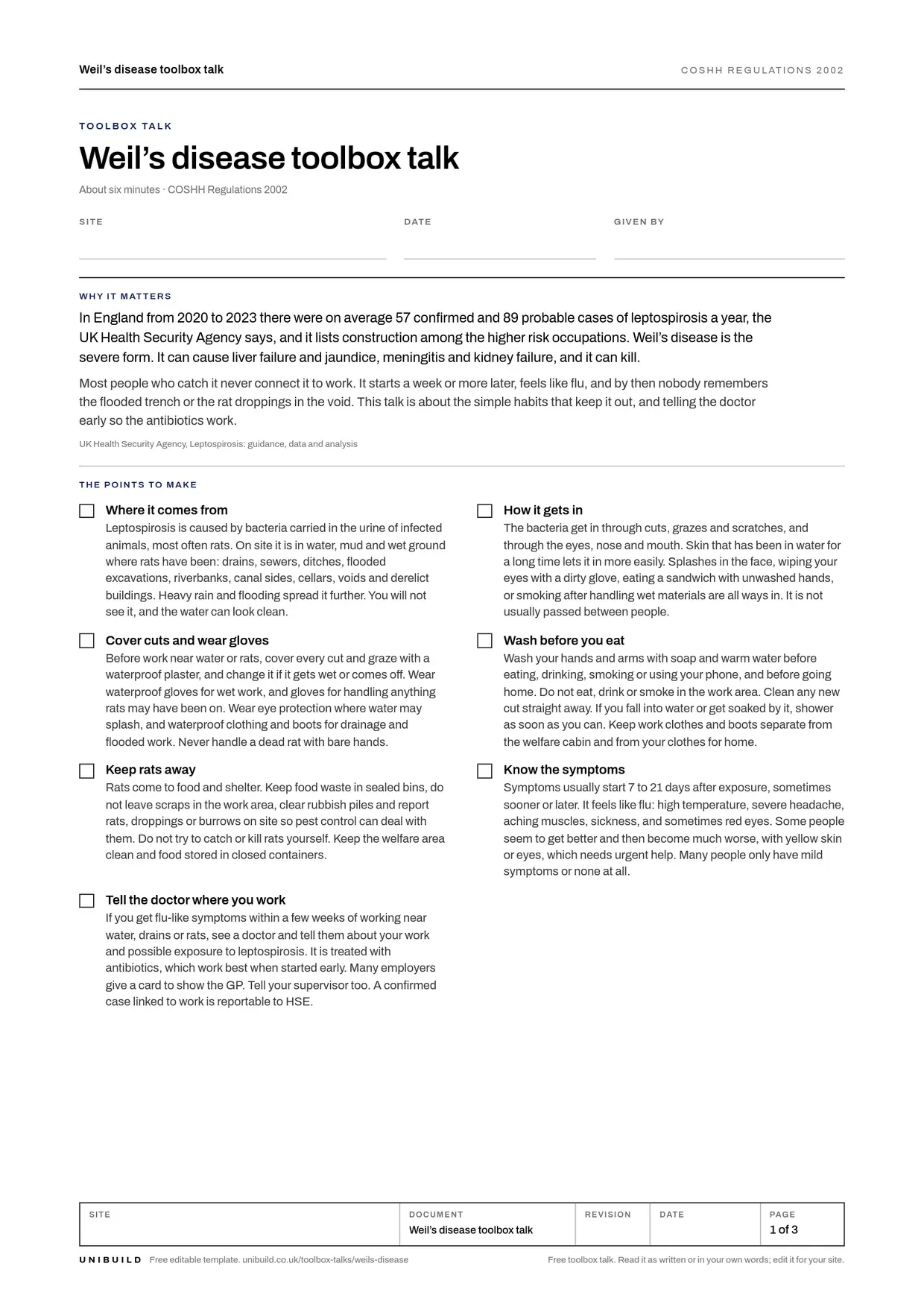
In England from 2020 to 2023 there were on average 57 confirmed and 89 probable cases of leptospirosis a year, the UK Health Security Agency says, and it lists construction among the higher risk occupations. Weil’s disease is the severe form. It can cause liver failure and jaundice, meningitis and kidney failure, and it can kill.
Most people who catch it never connect it to work. It starts a week or more later, feels like flu, and by then nobody remembers the flooded trench or the rat droppings in the void. This talk is about the simple habits that keep it out, and telling the doctor early so the antibiotics work.
UK Health Security Agency, Leptospirosis: guidance, data and analysisThe points to make
Where it comes from
Leptospirosis is caused by bacteria carried in the urine of infected animals, most often rats. On site it is in water, mud and wet ground where rats have been: drains, sewers, ditches, flooded excavations, riverbanks, canal sides, cellars, voids and derelict buildings. Heavy rain and flooding spread it further. You will not see it, and the water can look clean.
How it gets in
The bacteria get in through cuts, grazes and scratches, and through the eyes, nose and mouth. Skin that has been in water for a long time lets it in more easily. Splashes in the face, wiping your eyes with a dirty glove, eating a sandwich with unwashed hands, or smoking after handling wet materials are all ways in. It is not usually passed between people.
Cover cuts and wear gloves
Before work near water or rats, cover every cut and graze with a waterproof plaster, and change it if it gets wet or comes off. Wear waterproof gloves for wet work, and gloves for handling anything rats may have been on. Wear eye protection where water may splash, and waterproof clothing and boots for drainage and flooded work. Never handle a dead rat with bare hands.
Wash before you eat
Wash your hands and arms with soap and warm water before eating, drinking, smoking or using your phone, and before going home. Do not eat, drink or smoke in the work area. Clean any new cut straight away. If you fall into water or get soaked by it, shower as soon as you can. Keep work clothes and boots separate from the welfare cabin and from your clothes for home.
Keep rats away
Rats come to food and shelter. Keep food waste in sealed bins, do not leave scraps in the work area, clear rubbish piles and report rats, droppings or burrows on site so pest control can deal with them. Do not try to catch or kill rats yourself. Keep the welfare area clean and food stored in closed containers.
Know the symptoms
Symptoms usually start 7 to 21 days after exposure, sometimes sooner or later. It feels like flu: high temperature, severe headache, aching muscles, sickness, and sometimes red eyes. Some people seem to get better and then become much worse, with yellow skin or eyes, which needs urgent help. Many people only have mild symptoms or none at all.
Tell the doctor where you work
If you get flu-like symptoms within a few weeks of working near water, drains or rats, see a doctor and tell them about your work and possible exposure to leptospirosis. It is treated with antibiotics, which work best when started early. Many employers give a card to show the GP. Tell your supervisor too. A confirmed case linked to work is reportable to HSE.
Do
- Cover cuts and grazes with waterproof plasters before starting work.
- Wear waterproof gloves for wet work and eye protection where water can splash.
- Wash your hands and arms before eating, drinking, smoking or going home.
- Shower as soon as possible if you fall in or are soaked by water.
- Report rats, droppings and burrows on site.
- See a doctor about flu-like symptoms after wet work, and mention leptospirosis.
Do not
- Do not eat, drink or smoke in the work area or with dirty hands.
- Do not rub your eyes or face with dirty gloves or hands.
- Do not handle rats, dead or alive, or their nests with bare hands.
- Do not leave food waste where rats can get to it.
- Do not shrug off flu-like symptoms after working in water or drains.
Ask the team
- Where on this site might there be rats or dirty standing water?
- Has anyone seen rats, droppings or burrows here?
- Where are the washing facilities, and is there always soap and warm water?
- Does everyone have waterproof plasters and gloves for today’s work?
- What would you tell a doctor if you came down with flu a fortnight after this job?
To close
Weil’s disease is rare but can be very serious, and it gets in through a cut, a splash or a dirty hand at break time. So cover every cut, wear the gloves, wash before you eat or smoke, keep food away from rats, and report them when you see them. If you get flu in the weeks after working near water or drains, see a doctor and tell them where you have been working. Early antibiotics make the difference.
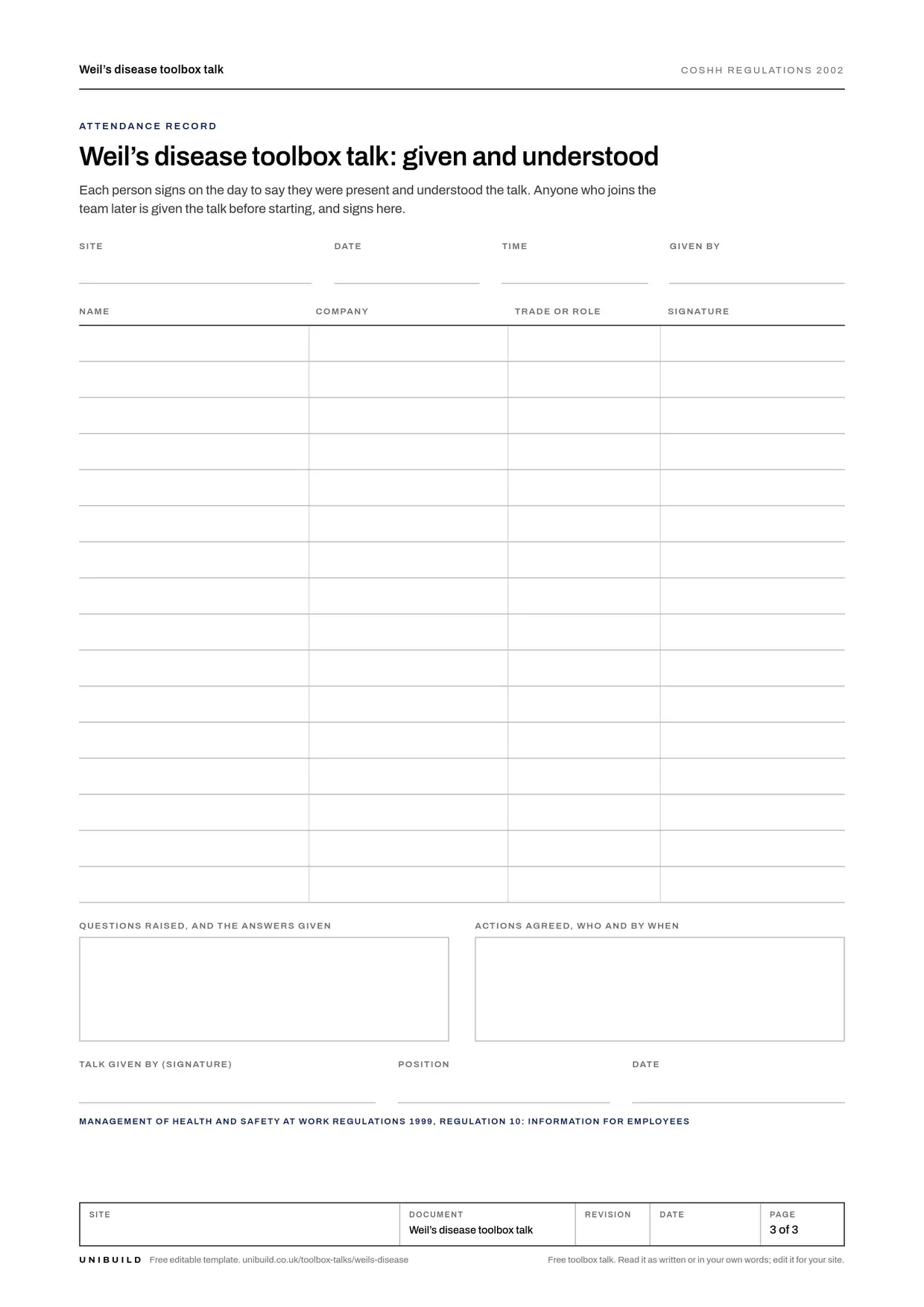
Record it. Who gave the talk, where, when, who was there and what was raised. The last page of the sheet is the record.