




















For civil engineering contractors

The work happens at night.
The record gets written
the next morning.

Temporary works permitted before anything is loaded. Plant and lifting accessories examined in date. Early warnings raised the day they are known rather than the week they are argued. Muck away ticketed off site, and the hours a gang actually worked on a closure counted against the limits you set. Around thirty modules on one account, and a civils contractor turns on the handful it needs.

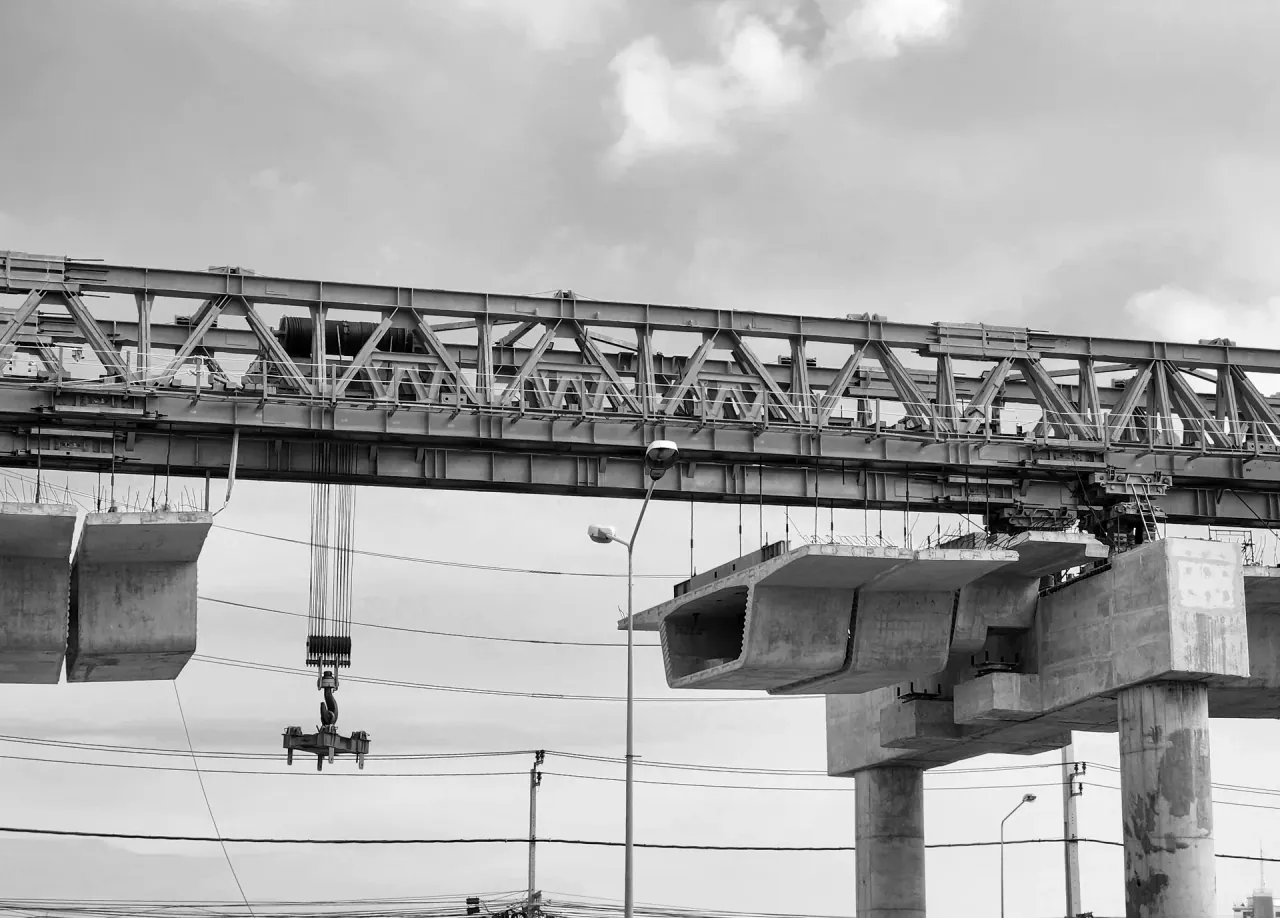
A segment launcher erecting precast deck segments on a viaduct
The office side

From the early warning to the final account.

Structures, earthworks, drainage, flood defence or highways: the discipline differs, the office side does not.

  1. The engineering is the part a civils contractor already has right. It is the record behind it that decides the year: which temporary works were permitted before they were loaded, which machine was examined and when, what left site as waste and under whose ticket, what was notified as an early warning, and who was on the closure for how long.

  2. Unibuild is construction management software for UK contractors, built inside a contracting business rather than sold into one. One account carries the labour run, plant and equipment registers, materials and stock, certification and training records, documents, day works, variations and applications for payment.

Built for civils

What civil engineering requires, and what Unibuild provides.

A fit-out job and a civils job look alike in a database. They stop looking alike at the permit to load, at two in the morning under a road closure, and at the final account. Each requirement below is followed by what the platform does about it.

Permitted before it is loaded

Temporary works are the thing that collapses

Excavation support, propping, falsework, formwork, piling mats and lifting gantries all carry a design, a check and a permit, and the sequence matters more than the paperwork.

  • Every item carries a design brief, a design, a check category and a checker
  • A permit to load and a permit to strike are separate decisions by a named person
  • The temporary works coordinator is a role somebody holds, not a title on a chart
  • The register has to be current on the day, not reconstructed afterwards
A register that carries the permit and the person

Each item of temporary works is a numbered record with its design, its check category, its checker and its permits, and the permit to load is a signed, dated act by a named person rather than a tick. The reminders engine watches what is still loaded and what has not been struck.

Examined, not just serviced

Your plant is the balance sheet and the risk

Excavators, cranes, telehandlers, dumpers, pumps and every chain, strop and shackle behind them carry statutory examinations on their own clocks.

  • Lifting equipment for people is examined at least every six months, other lifting equipment at least annually
  • Lifting accessories are examined in their own right, not with the machine
  • PUWER inspection is separate from LOLER examination and separate again from service
  • A machine off hire on the wrong date is a cost nobody notices for a month
One register, one expiry page

Every machine and accessory is a record with make, model, serial, acceptance documents, service history and a next examination date, and one page watches the registers together so what is due is a list rather than a hunt. Scanning the machine at the compound returns its history.

Counted across the week

The hours are a safety control before they are a cost

Closures run at night, possessions run at weekends, and the site moves far enough from home that the travel is a shift of its own.

  • Shift length, rest between shifts and consecutive nights each carry a limit
  • Travelling time to and from a remote site counts against the day
  • Plant operators usually carry a second duty as drivers
  • The evidence asked for afterwards is the actual hours, not the planned ones
Counted from the gate scan, warned before the shift

Advanced Fatigue Manager reads the day lines the timesheet already produces and counts shift length, travel at both ends, rest between turns, consecutive shifts and nights against limits you set, warning the planner and the operative before the shift rather than after the incident.

Measured going out, not coming back

Muck away is volume, duty of care and cash

Excavated material leaves site by the wagon load under somebody's waste licence, and the ticket is the only evidence of any of it.

  • Waste transfer documentation has to identify the waste, the carrier and the destination
  • Material re-used on site under the code of practice is not waste, but only if the record says so
  • Contaminated arisings change the destination and the rate on the same day
  • A missing ticket is a quantity you cannot claim and a duty you cannot evidence
The ticket recorded where the wagon was

Loads out are recorded against the job on the phone with the carrier, the destination and a photograph of the ticket, so the volume claimed and the duty evidenced come off the same record. See waste transfer notes for what the paperwork has to say.

Notified, or not recoverable

On NEC, the clock starts when you knew

Most civils work is under an NEC contract, where the money follows a notice given at the right moment rather than an argument made at the end.

  • An early warning is raised as soon as the matter could affect cost, time or quality
  • A compensation event has a notification period and a quotation period attached to it
  • Defined cost has to be built from records kept as the work happened
  • The site diary, the photographs and the day works are what a quotation is assembled from
Contemporaneous records, kept as the work happens

Site diaries, progress photographs, weather, trade attendance and day works are recorded on the day, against the job, by the people who were there. Unibuild is not a contract administration system, and the honest limits below say so, but the evidence a quotation is built from stops being a memory.

Checked at the compound

Competence here is a stack of separate cards

A civils gang carries more overlapping tickets than almost any other trade, and each one expires on its own timetable.

  • CSCS for site access, CPCS or NPORS per machine category
  • Streetworks units under NRSWA for anyone working in the highway
  • EUSR for water and utilities, confined space and rescue grades, appointed person for lifts
  • A supervisor's ticket lapsing takes a whole operation off the programme
Every card and category, per person, in colour

The training matrix holds each card, category and medical against the person and turns amber before it lapses rather than after. The labour run reads the same account, so a gang is built from people who are in date and inside their hours.

Counted in the deployment Unibuild was built on, July 2026: one expiry page carrying 376 assets, 141 subcontractor certificates, 84 accreditations, 80 health assessments, 55 instruments and 9 vehicles.

Earthworks and fill
Concrete and reinforcement
Drainage and ducting
Temporary works
Structures and bridgeworks
Plant and lifting
Traffic management
Records and notices
The week

An ordinary week in a civils contractor, and the record it leaves.

Six entries from a civils contractor's day book. Nothing here asks anybody to remember something in a compound at half past three in the morning.

Monday, the brief

The propping design for the headwall comes back checked at category two. The permit to load is signed by the temporary works coordinator against that version, and the number goes on the register before anyone stands a frame.

Permitted, then loaded
Tuesday, the wagons

Nineteen loads of arisings leave for the recycling centre. Each ticket is photographed against the job with its carrier and destination as the wagon pulls off.

Claimable and evidenced
Wednesday, the notice

An unrecorded service is found in the trench. The photographs, the depth, the time lost and who was standing are recorded on the day, so the early warning is raised against a record rather than a recollection.

Notified on the day
Thursday, the roster

Next weekend's closure is built from people who are in date on CPCS and streetworks and inside their hours. Two are approaching their consecutive nights limit and are swapped while there is still time.

Swapped, not sent home
Saturday, 0200

The gang scans in at the compound. Cards are current, the machine scans back with its examination in date, and the pack on the phone is the version that was issued.

Everyone goes on
The valuation

The extra excavation around the service was measured on site, priced on the contract rates and signed before the gang left. It is a line on the application rather than a conversation in March.

Priced where it happened
The test

Eight things civils software has to do.

Written from what actually costs a civils contractor money or exposes it, rather than from a feature list. Unibuild is around thirty modules on one account, and a civils firm turns on a handful of them.

Temporary works, permitted and struck by a named person

Each item is a numbered record carrying the design brief, the design, the check category, the checker and the permits, with the permit to load and the permit to strike as separate signed acts. Reminders and expiry watches what is still loaded. The register is the document an inspector asks for first on a civils site, and it is the one most often reconstructed. Related: the temporary works register.

Every machine and accessory, with its next examination

Assets and inventory holds each machine and each chain, strop and shackle as its own record with serial, acceptance documents, service history and a next date. One page watches the registers together, so a six monthly examination on a MEWP and an annual one on an excavator do not need two different people remembering. Related: LOLER thorough examination.

Hours counted as a safety control, not just for payroll

QR clock-in timesheets put the hours against the job at the compound, timed by the server. Advanced Fatigue Manager reads the same day lines and counts door-to-door time, rest between turns, consecutive shifts and nights against the limits you set, warning the planner while the roster can still be changed. For a trade that works nights and weekends, that is the difference between a control and a report.

Loads out ticketed where the wagon was

Muck away, imported fill and aggregate deliveries are recorded against the job as movements, with the carrier, the destination and a photograph of the ticket. The volume you claim and the duty of care you evidence come off one record rather than two. Related: waste transfer notes.

Contemporaneous records an early warning can rest on

Project and site management carries the site diary, the progress photographs, the weather on the day and trade attendance, recorded by the people who were there rather than typed up later. On an NEC contract that record is what a compensation event quotation is assembled from, and it is the half most firms lose. Related: why a message thread is not a site record.

Extra work priced at the moment it is instructed

Onsite quotes and variations price the work where it happens, and rate valuations are measured on site, priced on the rates the job was won on, capped against the contract and signed before anyone leaves. They feed applications for payment with retention and ageing already attached.

Cards, categories and medicals per person

The training matrix holds CSCS, CPCS or NPORS by category, streetworks units, EUSR, confined space grades and medicals against the person, in one grid that colours itself. The level is held rather than just the fact of a card, which matters when an appointed person or a supervisor is the reason an operation can proceed at all.

Subcontract gangs vetted and removed automatically

Subcontractor management holds insurances and accreditations per firm, and a lapse drops that firm out of approved status overnight, which withdraws it from the order forms and the labour planner. On a trade that subcontracts earthworks, traffic management and specialist gangs, that is the control that works while nobody is looking.

Governing clauseEverything above is a record made at the works, not typed up on monday.
The compound

What a civil engineering contractor holds

Written for the trade rather than for any one firm. Most civils contractors will recognise eight or nine of these lines and ignore the rest.

What a UK civil engineering contractor holds, and the tracking quirk in each line
KeyCategoryTypical itemsThe tracking quirk
Earthmoving plant360 excavators, dozers, dumpers, rollers, telehandlersEach carries PUWER inspection, LOLER examination where it lifts, and a service interval, on three different clocks
Lifting accessoriesChains, strops, shackles, eyebolts, beam clamps, quick hitchesExamined in their own right rather than with the machine, and the cheapest item on site is the one that stops the lift
Temporary works kitTrench boxes, drag boxes, props, falsework, soldiers, waling beamsThe item is hire stock and the design that permits it is a document, so the two live in different systems and only agree by accident
Arisings and fillExcavated material, imported 6F2, capping, topsoil, stoneMeasured going out by the load and coming in by the ticket, and the two never reconcile without the tickets attached to the job
Concrete and reinforcementReady mix by the load, rebar by schedule, mesh, couplers, admixturesA pour is ordered against a schedule and delivered against a docket, and the cube results arrive a month after the money did
Drainage and ductingPipe by diameter and class, chambers, covers, ducting, draw pitsOrdered by the metre and installed by the run, so a partial delivery is the quantity that goes missing between the two
Traffic managementCones, barriers, signs, temporary signals, lighting, VMS boardsHired by the week against a permit that expires on its own date, and left on site long after the works finish
Site accommodationCabins, welfare units, generators, fuel bowsers, water bowsersOn hire from the day it lands, and the off hire is the single most commonly forgotten instruction in the trade
Pumps and dewateringSubmersibles, wellpoints, settlement tanks, hoses, discharge metersRuns against a discharge consent with conditions and an end date, which is a permission rather than a piece of kit
Small plant and toolsBreakers, whackers, saws, compactors, lasers, levels, CAT and gennyA cable avoidance tool is a measuring instrument with a calibration date, and a lapsed one puts every dig in doubt
TransportTippers, low loaders, beavertails, vans, trailersDrivers carry hours limits enforced by tachograph, and the yard hours either side of the driving are usually counted nowhere
The paperworkPermits, designs, examinations, tickets, diaries, notices, recordsThe only category with no physical existence and the one that decides both liability and the final account, so it is the one worth systemising first
Regulations

The regimes a civils contractor works under

It is about who was competent, who permitted it,
when it was last examined, and what left site
under whose ticket. This is the reference
version, kept factual.

The regimes a UK civil engineering contractor works under, and what each requires
RegimeWhat it requires
CDM 2015On most civils work the contractor is a contractor and very often the principal contractor, with duties to plan, manage and monitor the construction phase, produce and keep the construction phase plan current, and provide information for the health and safety file. The plan and the temporary works register are separate documents that have to agree with each other. See the CDM 2015 guide.
BS 5975 and temporary worksThe code of practice sets out the management procedures: a temporary works register, a design brief, a design, an independent check proportionate to a check category, and a permit to load and a permit to strike issued by a named temporary works coordinator. It is guidance rather than statute, but it is the standard an inspector and an insurer will measure you against, and the register is the first document either will ask to see.
LOLER 1998 and PUWER 1998Lifting equipment used to lift people is thoroughly examined at least every six months and other lifting equipment at least every twelve, with lifting accessories examined in their own right at least every six months. Work equipment must also be suitable, maintained and inspected where safety depends on its condition, which is a separate duty from the LOLER examination and runs on its own interval.
New Roads and Street Works Act 1991 and Chapter 8Works in the highway need a permit or notice from the street authority, and the operatives supervising and carrying them out hold registered streetworks qualifications. The signing, lighting and guarding of the site follows the Traffic Signs Manual, and reinstatement is carried out and guaranteed to the published specification. Permits carry dates and conditions that expire independently of the contract.
Confined Spaces Regulations 1997Chambers, culverts, deep excavations, shafts and tanks can be confined spaces, where entry is avoided if the work can be done another way, and where it cannot, a safe system of work and adequate emergency arrangements are required before entry. Competence here is a graded qualification with a rescue element, not a general induction.
Waste duty of care and the definition of wasteExcavated material leaving site is waste, and the duty of care requires it to be described accurately, transferred only to an authorised person, and evidenced by documentation kept for the required period. Material re-used on site under the industry code of practice is not waste, but only where the record demonstrates it. See waste transfer notes.
Environmental permitting and dischargeDewatering an excavation and discharging to a watercourse or a sewer needs a consent or permit with conditions attached, typically covering volume, suspended solids and duration. These are dated permissions belonging to the works rather than to any asset, which is exactly the sort of date that goes unwatched until somebody asks.
NEC contracts and the Construction ActMost civils work is let under an NEC form where early warnings and compensation events carry notification periods, and defined cost is built from records kept as the work happened. Underneath it, the Housing Grants, Construction and Regeneration Act governs payment: due dates, payment notices, pay less notices and the right to suspend. See the Construction Act explained.
Working time and fatigueShift length, rest between shifts, consecutive nights and travelling time are managed as safety controls rather than as terms of employment, under the general duties in the Health and Safety at Work etc. Act 1974 and regulation 3 of the Management Regulations, alongside the Working Time Regulations 1998. HSE is explicit that meeting the Working Time Regulations alone does not discharge the duty. See fatigue management.
COSHH 2002, noise and vibrationCement, resins, fuels and solvents carry assessments and storage conditions, and respirable crystalline silica from cutting and breaking is a health surveillance matter rather than a dust nuisance. Hand arm vibration from breakers and compactors is a monitored exposure with trigger times, which means the tool and the person both have to be on a record.
On the record

Questions civils contractors ask

The questions civil engineering contractors actually raise on a demonstration, answered on the record. Open one to read the response.

The marketWhat software do UK civil engineering contractors use?+
Most run a combination rather than a system: a contract administration package for the NEC correspondence, a planning tool for the programme, a hire desk system for plant, a spreadsheet for the temporary works register, and an accounts package behind all of it. Unibuild sits on the contractor's own side of that: labour, plant, competence, materials, documents, site records and the commercial position, with modules turned on as you need them. It does not replace the contract administration package or the planner, and the honest limits below say where it stops.
Temporary worksCan it hold a temporary works register with permits to load?+
Yes, and it is one of the strongest fits for this trade. Each item is a numbered record carrying its design brief, design, check category, checker and permits, with the permit to load and the permit to strike as separate signed and dated acts by a named person, and one page watching what is still loaded. What it does not do is design or check anything: the engineering stays with your temporary works designer and your coordinator, where it belongs.
FatigueWe run nights and weekend closures. Does it help with fatigue?+
Yes, and this is the part most civils firms have no record of at all. Advanced Fatigue Manager reads the hours already recorded at the compound, adds travel at both ends, and counts shift length, rest between turns, consecutive shifts and nights against the limits you set, warning the planner and the operative before the shift. It warns rather than blocks by default, and it does not certify you against anybody's standard. What changes is that the roster decision is made on the hours actually worked, in time to swap somebody.
PlantHow does it handle LOLER examinations and lifting accessories?+
Each machine is a record of its own with make, model, serial number, acceptance documents, service history and a next examination date, and chains, strops and shackles are held the same way rather than as a note against the machine. One page watches the registers together, so what is due is a list rather than a hunt, and scanning the item at the compound returns its history. Read LOLER thorough examination for what the examination itself has to cover.
NECDoes it do NEC early warnings and compensation events?+
No, and that is worth being blunt about before a demonstration rather than after. There is no early warning register, no compensation event workflow and no NEC correspondence numbering. Keep the contract administration package you already run. What Unibuild does is hold the contemporaneous evidence those notices rest on: the diary, the photographs, the weather, who was standing, the day works and the measured extra, recorded on the day by the people who were there. That is the half that usually goes missing.
Muck awayCan it track loads off site and the waste tickets?+
Yes, as movements against the job, recorded on the phone with the carrier, the destination and a photograph of the ticket. The quantity you claim and the duty of care you evidence then come off the same record instead of a ticket book in a cab and a tally on a whiteboard. It does not file anything with the environmental regulator and it does not classify waste for you, so the description and the destination stay your decision.
CompetenceWill it keep CPCS categories and streetworks cards in date?+
Yes, and the category is held rather than just the fact of a card, which matters more in civils than in most trades. A CPCS card with the wrong category on it is the same as no card when an excavator turns up, and a supervisor's streetworks unit lapsing takes a whole operation off the programme. The grid turns amber before a date passes rather than after, which is the difference between rescheduling a gang and sending one home from the compound.
ProgrammeDoes it replace our planning software?+
No. There is a four week bar chart against the job and a labour run planner that shows who is where across the weeks, which is what a site team actually looks at on a Friday. It is not a critical path planner, there is no resource levelling and nothing produces an accepted programme under an NEC clause. Keep the planning package. What changes is that the people, the plant and the hours behind the programme are on the same account as the job.
SubcontractorsWe subcontract earthworks and traffic management. Does that work?+
Yes, and it is where the automatic part earns its keep. Insurances, accreditations and competence are held per firm, and a lapse removes that firm from approved status overnight, which withdraws it from the order forms and the labour planner. Subcontract and agency operatives scan the same gate poster as your own people at no extra cost, so they appear on the attendance record, the fatigue record and the project report.
AdoptionWill the gangs actually use it at three in the morning?+
Only if what you ask of them is small. The realistic answer is to grant each operative three things on the phone, clock in, the RAMS signature and photographs against the job, and leave everything else to the office and the section engineer. Permissions are granted per person, so that is a configuration rather than a compromise. The field app is built for patchy coverage, which in a cutting at three in the morning is the normal condition rather than an edge case.
PricingHow is it priced, and do you charge per operative?+
Users are unlimited and the price does not change when you take gangs on, which matters in a trade that flexes hard with the framework. There is no published rate card, because a fifteen person firm running three modules and a two hundred person firm running twenty are not the same product. Pricing is worked out against the size and shape of the business on the demonstration, and it is fixed for three years from the date of the quote.
RolloutDo we have to move everything across at once?+
No, and it is usually a poor idea. Most civils contractors start with the thing that costs them most, commonly plant examinations and competence, or the timesheet and the hours behind it, and add modules once the first is habit. Cataloguing every record you hold before anyone uses the system is the most reliable way to kill the project. Firms go live in stages, with a first site usually running inside two weeks.
Honest limits

Where it stops for civils

Five things a civil engineering contractor asks for that are not in the platform as it stands. Unibuild is bespoke, so each one is a scoping conversation rather than a dead end: customer specific modules, fields, rules and reports are written on request and included in the monthly fee.

  • NEC contract administrationNo early warning register, no compensation event workflow and no NEC correspondence numbering. The evidence behind them is held; the notices are not.
  • Critical path planningA four week bar chart and a labour run, not a resource levelled programme. Nothing produces an accepted programme under an NEC clause.
  • Temporary works design or checkingThe register, the check category and the permits are held. No design is produced and no check is performed.
  • Earthworks quantities from surveyVolumes are recorded as loads and measures, not calculated from a surface model or a drone survey.
  • Tachograph and drivers' hoursYard, site and travel hours are counted. Driving hours stay with your tachograph analysis and are read alongside rather than merged.
Other trades

Not quite your line of work?

The same platform, written for the trade that runs it. Each of these is a different set of modules switched on rather than a different product.

Return slip

Come and try it on one contract.

Half an hour, on your own contract and your own compound. Bring a live temporary works register and one bad week of hours, and we will set both up in front of you. Unlimited users, never per seat, and fourteen days to try it without a card.

Bring
One live temporary works register
Takes
30 minutes
Phone, UK hours
+44 7587 557546
Pays for itself
On the first examination caught before the shift
WhatsApp us