
Cold and winter working: the talk
Read it as written or in your own words. Tick each point as you make it. Stop for the questions.
Why it matters
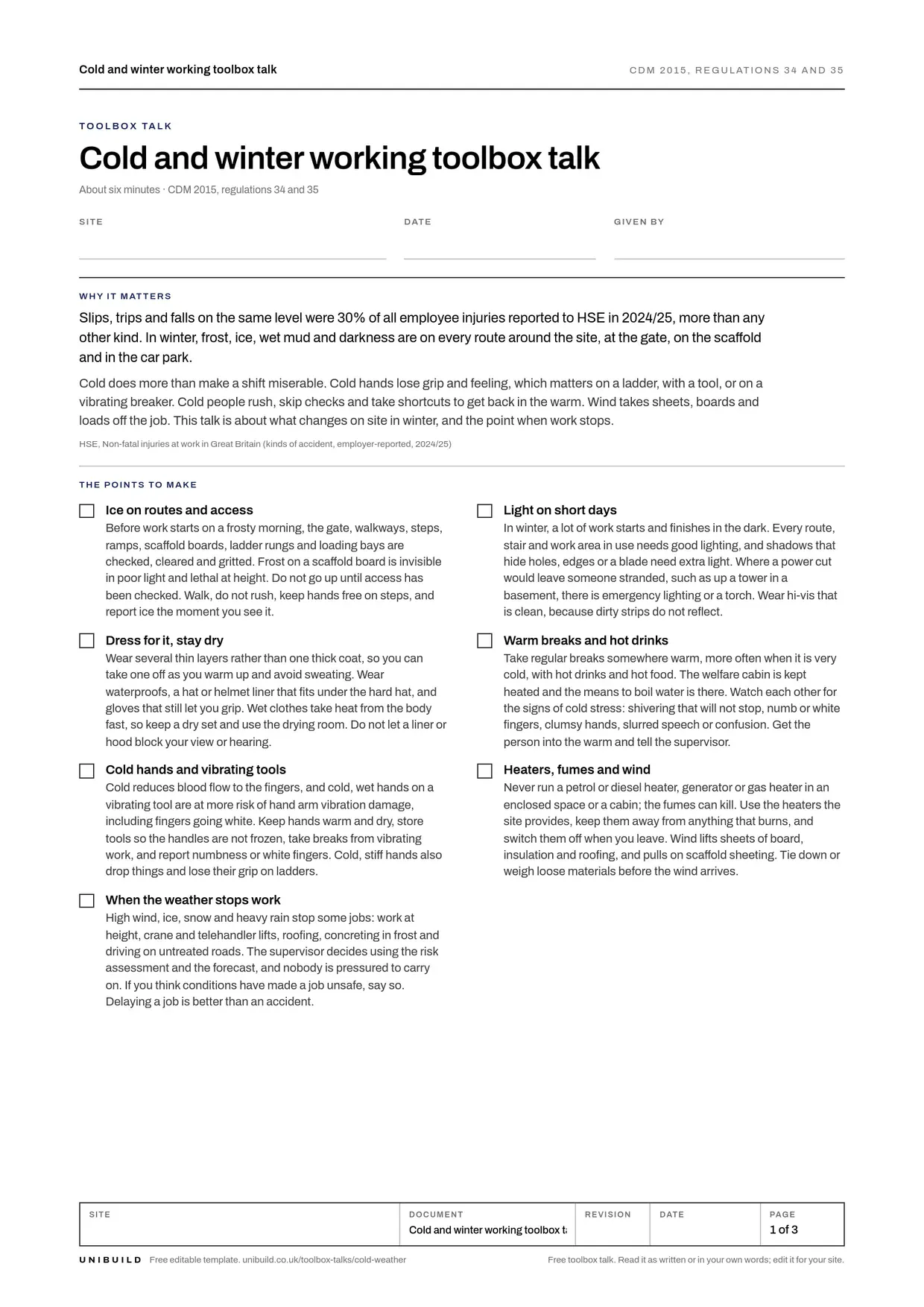
Slips, trips and falls on the same level were 30% of all employee injuries reported to HSE in 2024/25, more than any other kind. In winter, frost, ice, wet mud and darkness are on every route around the site, at the gate, on the scaffold and in the car park.
Cold does more than make a shift miserable. Cold hands lose grip and feeling, which matters on a ladder, with a tool, or on a vibrating breaker. Cold people rush, skip checks and take shortcuts to get back in the warm. Wind takes sheets, boards and loads off the job. This talk is about what changes on site in winter, and the point when work stops.
HSE, Non-fatal injuries at work in Great Britain (kinds of accident, employer-reported, 2024/25)The points to make
Ice on routes and access
Before work starts on a frosty morning, the gate, walkways, steps, ramps, scaffold boards, ladder rungs and loading bays are checked, cleared and gritted. Frost on a scaffold board is invisible in poor light and lethal at height. Do not go up until access has been checked. Walk, do not rush, keep hands free on steps, and report ice the moment you see it.
Light on short days
In winter, a lot of work starts and finishes in the dark. Every route, stair and work area in use needs good lighting, and shadows that hide holes, edges or a blade need extra light. Where a power cut would leave someone stranded, such as up a tower in a basement, there is emergency lighting or a torch. Wear hi-vis that is clean, because dirty strips do not reflect.
Dress for it, stay dry
Wear several thin layers rather than one thick coat, so you can take one off as you warm up and avoid sweating. Wear waterproofs, a hat or helmet liner that fits under the hard hat, and gloves that still let you grip. Wet clothes take heat from the body fast, so keep a dry set and use the drying room. Do not let a liner or hood block your view or hearing.
Warm breaks and hot drinks
Take regular breaks somewhere warm, more often when it is very cold, with hot drinks and hot food. The welfare cabin is kept heated and the means to boil water is there. Watch each other for the signs of cold stress: shivering that will not stop, numb or white fingers, clumsy hands, slurred speech or confusion. Get the person into the warm and tell the supervisor.
Cold hands and vibrating tools
Cold reduces blood flow to the fingers, and cold, wet hands on a vibrating tool are at more risk of hand arm vibration damage, including fingers going white. Keep hands warm and dry, store tools so the handles are not frozen, take breaks from vibrating work, and report numbness or white fingers. Cold, stiff hands also drop things and lose their grip on ladders.
Heaters, fumes and wind
Never run a petrol or diesel heater, generator or gas heater in an enclosed space or a cabin; the fumes can kill. Use the heaters the site provides, keep them away from anything that burns, and switch them off when you leave. Wind lifts sheets of board, insulation and roofing, and pulls on scaffold sheeting. Tie down or weigh loose materials before the wind arrives.
When the weather stops work
High wind, ice, snow and heavy rain stop some jobs: work at height, crane and telehandler lifts, roofing, concreting in frost and driving on untreated roads. The supervisor decides using the risk assessment and the forecast, and nobody is pressured to carry on. If you think conditions have made a job unsafe, say so. Delaying a job is better than an accident.
Do
- Check and grit routes, ladders, steps and scaffold boards before work on frosty days.
- Wear layers, waterproofs and a hat liner, and keep a dry change of clothes.
- Take warm breaks with hot drinks, more often when it is very cold.
- Keep hands warm and dry, especially when using vibrating tools.
- Tie down loose sheets and materials before wind is forecast.
- Tell the supervisor when ice, wind or light make a job unsafe.
Do not
- Do not go up a ladder or scaffold before the access has been checked for ice.
- Do not run fuel heaters or generators in cabins or enclosed spaces.
- Do not work on in wet clothing. Change into dry kit.
- Do not let a hood or liner block your view or hearing on site.
- Do not rush to get the job done before dark or before the weather turns.
Ask the team
- Where on this site does ice form first, and who grits it in the morning?
- Which work areas or routes are badly lit when it gets dark?
- Is the drying room and welfare cabin warm enough, and is the kettle working?
- Which jobs on this site would stop in high wind or frost?
- What are the signs that someone is getting too cold?
To close
Winter does not change the work, but it changes everything around it. The routes are icy, the days are short, hands are cold and the wind picks things up. So check and grit before you climb, light the job, dress in layers and keep dry, take your warm breaks, and keep fuel heaters out of cabins. When the weather makes a job unsafe, the job waits. If you are cold, wet or worried about the conditions, tell us. We would rather stop than pick someone up off the ice.
Record it. Who gave the talk, where, when, who was there and what was raised. The last page of the sheet is the record.