
For solar PV and battery installers

Every array with its serials,
its tests and its paperwork.

Solar installer software that holds each installation against the address. Panels, inverter and battery by serial, the electrical certificate issued on the phone, and the record MCS and the network operator ask for. Roofers, electricians and scaffold planned on one grid, and commercial arrays kept on a maintenance schedule afterwards.

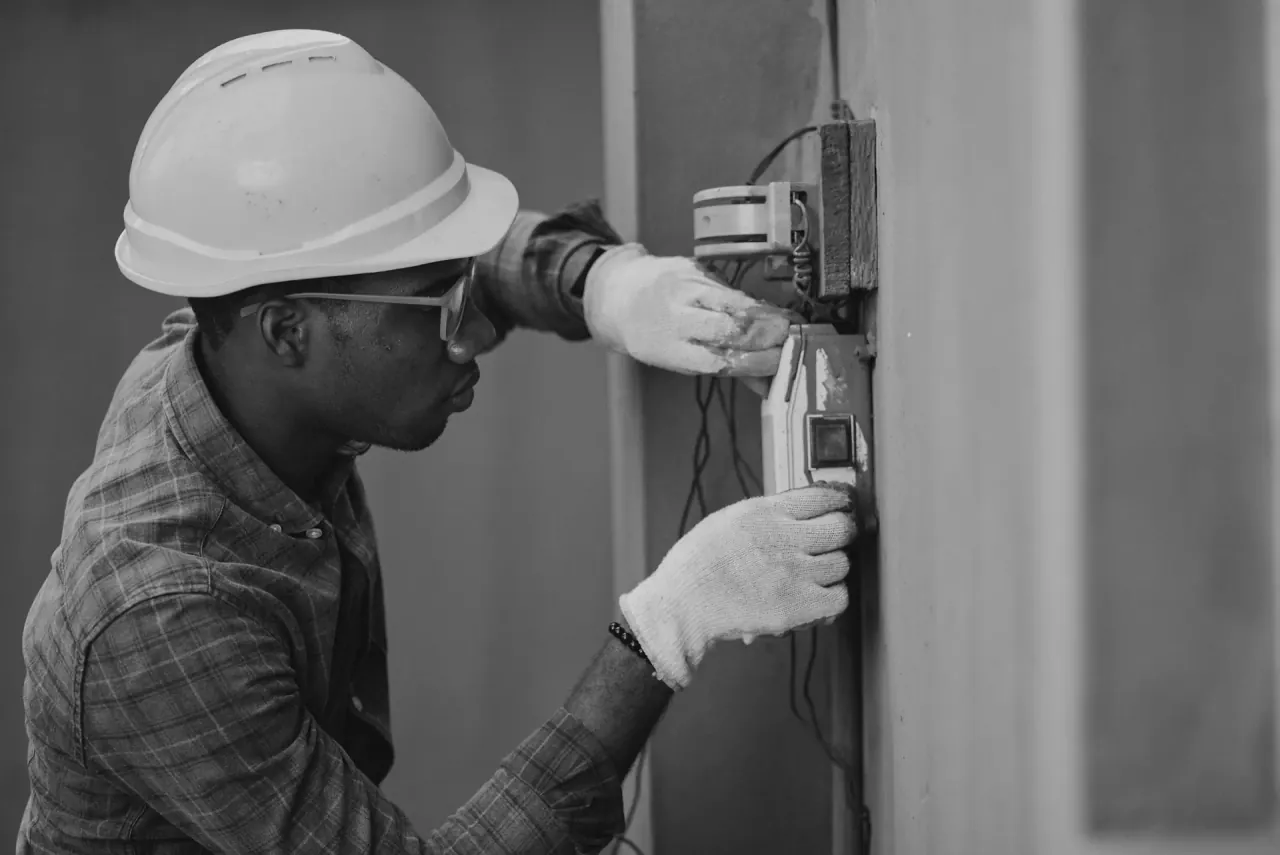
An electrician testing at a distribution board
The office side

From the roof survey to
the export payment.

Domestic arrays at volume, batteries retrofitted to existing systems, or a commercial roof on a warehouse: the scale differs, the record behind each one does not.

  1. Putting panels on a roof and an inverter on a wall is the part a solar firm already does well. The work around it is heavier than it looks. A scaffold is booked and struck, a network notification carries a deadline, and three sets of serials back three warranties.

  2. Unibuild is bespoke construction management software for UK contractors: a platform in daily production since 2016, shaped to the way each firm already works. One account carries surveys and quotations, the labour run, stock by serial, competence, electrical certificates, maintained assets and applications for payment.

Built for solar

What solar PV and battery work requires,
and what Unibuild provides.

An installation is finished on the roof in a day or two. It is finished on paper when MCS, the network operator, the manufacturer and the customer each have what they need. Each requirement is followed by what the platform does about it.

Certified per installation

MCS registration is what the customer is paid on

An MCS certified installer designs and fits to the scheme's standards and registers each installation. The customer's MCS certificate is what the Smart Export Guarantee asks for, and the firm also belongs to a consumer code such as RECC or HIES.

  • MIS 3002 covers solar PV, and battery storage has its own standard
  • The performance estimate and the handover pack go to the customer
  • Scheme assessments sample finished installations
  • A registration made late delays the customer's export payments
The installation record the registration is made from

Each installation is a job carrying its address, system size, product serials, photographs, test results and signed handover. The office registers from a finished record, and documents and certificates issues the handover documents on your letterhead.


The network has a say

Every connection is notified or approved

A system up to 16A per phase connects under G98, and the network operator is notified within 28 days of commissioning. Above that, G99 applies and approval comes before the system is connected.

  • The notification needs the inverter, the capacity and the supply details
  • A G99 application sets the programme before the scaffold goes up
  • Export limitation is agreed under its own recommendation, G100
  • A battery added later can change the answer on an existing site
The commissioning date and the kit, on the job

The commissioning date, the inverter serial and the system size are captured on the phone at handover. The notification is made from that record, and its reference and date are filed back against the same job.

An electrical installation

Each array needs its own electrical certificate

A PV system is an electrical installation to BS 7671, with its own section for solar. Each one is tested and certified, and work in a home is notified through an electrical competent person scheme under Part P.

  • String voltages, insulation resistance and the AC side are all tested
  • The certificate names the instrument that took the readings
  • An instrument out of calibration puts every reading in doubt
  • The customer and the scheme both want the certificate
Certificates on the phone, instruments watched

Electrical certificates are created on the phone where the work is, numbered, on your letterhead and finished when saved. Compliance and certification keeps the calibration register, so the tester's date is watched like any other.

Three warranties per house

Panels, inverter and battery each carry a serial

Warranties run for years and are claimed by serial number. A failed inverter in year eight is a warranty claim if the serial and install date can be produced, and a paid replacement if they cannot.

  • Panels arrive by the pallet and leave by the roof
  • Inverters and batteries are high value and individually tracked
  • Stock sits in the warehouse, in vans and on driveways overnight
  • Manufacturer registrations follow the install date
Serials issued to the address, not off a shelf

Assets and inventory holds panels, inverters, batteries and mounting kit by item, with bin locations, serial numbers and signed delivery notes. Each issue is an entry against the job, so the serial on the wall matches the serial on the record.

Two trades and a scaffold

Roofers, electricians and access, in the right order

A domestic install needs a scaffold up, a roofing crew for the mounting and panels, and a qualified electrician for the inverter, battery and connection. Weather moves all three.

  • Scaffold on hire costs money every day it stands idle
  • The electrician holds the qualification the certificate depends on
  • Roof work needs working at height competence in date
  • Battery siting inside a home follows PAS 63100
One grid for crews, and competence checked on it

The labour run plans who goes to which address weeks ahead, with subcontract crews and approved leave on the same grid. The training matrix shows who holds the electrical and working at height tickets in date.

The commercial roof stays yours

A commercial array comes with a maintenance contract

A warehouse roof system is inspected, cleaned, tested and monitored for years after handover. Inverter faults are call-outs, and the client wants proof every visit happened.

  • Inspection and cleaning run on a planned pattern
  • Inverter and string faults are reactive work with a response time
  • Access to the roof needs a permit and edge protection
  • The client renews on the evidence
A register with its schedule and its visit history

Maintained assets holds each array, inverter and battery with a twelve month PPM pattern and every visit in date order with photographs. Call-outs open against the same asset, so the engineer arrives with its history.

The week

An ordinary week in a solar firm,
and the record it leaves.

Six entries from a solar installer's day book, each ending in a record rather than a reminder.

A street of British semi detached houses and their roofs, the housing a domestic solar programme works across
Monday, the survey

A roof is surveyed. Pitch, orientation, shading, the consumer unit and the battery location are photographed and recorded on the phone against the address.

Surveyed once
Tuesday, the planner

Next week's six installs go on the labour run. Scaffold dates, the roofing crew and an electrician with his tickets in date are set against each address.

Crews in order
Wednesday, the warehouse

Panels, an inverter and a battery are issued to the job by serial and loaded. The pallet count and the serials follow the van.

Issued by serial
Thursday, the handover

The system is tested and commissioned. The electrical certificate is completed on the phone, the customer signs, and the commissioning date is fixed on the record.

Certified on site
Friday, the office

The week's installations are registered and notified from finished records, and the scaffold strike is booked for every completed address.

Registered from the record
Eight years later

An inverter fails. The call-back opens against the installation with the serial and install date, and the warranty claim is made the same afternoon.

Claimed, not paid for
Your system, your app

Shaped to your firm,
published under your name

Anything a firm needs is built for it, and changes asked for after go-live are included in the monthly fee. See how bespoke construction software works at Unibuild.

  • Your survey and handoverYour roof survey, your commissioning checklist and your handover pack are set up the way your surveyors and installers already work. Nobody relearns the job to suit the software.
  • A working startThe build starts from a working platform rather than an empty screen. A firm gets the fit of a bespoke system without the cost, the timescale or the risk of commissioning one from scratch.
  • Your app on the storesYour staff app is published on the App Store and Google Play under your company's own name and icon. The installer on the roof opens your firm's app, not ours. How the branded staff app works.
  • Your letterheadThe office portal carries your name, logo and colours, and fifty-eight document types generate on your own letterhead, from the quotation to the electrical certificate.
The stores

What a solar PV and
battery firm holds

The warehouse, the vans and the systems left on customers' roofs, and the quirk in each line that breaks ordinary inventory software.

What a UK solar PV and battery installer holds, and the tracking quirk in each line
CategoryTypical itemsThe tracking quirk
PanelsModules by make and wattage, delivered by the palletBought by the pallet, warranted by the serial, and fitted a dozen at a time to one address
Inverters and batteriesString and hybrid inverters, optimisers, battery modules, gatewaysThe highest value items in the building, each on its own warranty from the install date, and the ones a customer rings about
Mounting kitRails, roof hooks, clamps, in-roof flashing kits, bird meshSpecific to the roof covering, so a slate kit and a tile kit that look alike are not interchangeable
Electrical sundriesDC cable, connectors, isolators, surge protection, labelsCounted by the drum and used by the metre, and the connector that matters is the one that matches the panel
InstrumentsPV testers, multifunction testers, clamp testers and irradiance instrumentsCalibrated annually, and every certificate produced with one inherits its calibration status on the day
AccessScaffold on hire, roof ladders, edge protection, towersScaffold is somebody else's stock on your customer's house, charged by the week until somebody books the strike
VansVans with roof racks for rails and laddersA battery on a van overnight is a high value item in a place with no record, unless it was issued to a job
Systems you maintainCommercial arrays, inverters and batteries under contractNot your stock and not your roof, but your record, and every visit is what the renewal is argued on
Regulations

The regimes a solar PV and
battery firm works under

Certification, the network, the electrics and the roof. The reference version, kept factual.

What each regime asks of a solar PV and battery installer
RegimeWhat it requires
MCS and the consumer codesMCS certifies the installer against its standards, MIS 3002 for solar PV and its own standard for battery storage, and each installation is registered. The customer's MCS certificate is needed for the Smart Export Guarantee. Certified firms join a CTSI approved consumer code such as RECC or HIES.
G98 and G99 network connectionSystems up to 16A per phase connect under G98, with the network operator notified within 28 days of commissioning. Larger systems apply under G99 and are approved before they are connected.
BS 7671 and Part PA PV system is an electrical installation designed, tested and certified to the wiring regulations, which carry a section for solar. Work in a dwelling is notified under Part P, usually through an electrical competent person scheme.
PAS 63100:2024Fire protection for battery storage in dwellings. It sets where a battery may and may not be sited, including bedrooms and escape routes, and the separation needed where it goes indoors.
Work at Height Regulations 2005Roof work is planned, with collective protection such as scaffold and edge protection first. The scaffold is inspected before first use and at intervals while it stands.
VAT on energy saving materialsInstalling solar panels and batteries in residential accommodation is zero rated until 31 March 2027. Commercial installations are standard rated, and supplies to another contractor may fall under the domestic reverse charge.
CDM 2015 and CISCommercial and new build installations sit under CDM. Payments to installation subcontractors fall under the Construction Industry Scheme.
On the record

Questions solar PV and
battery firms ask

The questions solar installers raise on a demonstration, answered on the record.

The marketWhat is the best software for a UK solar PV installer?
The right system runs the survey, the crews, the stock by serial, the electrical certificate and the payment from one record per installation. Unibuild does that on one account. Each installation carries the address, the serials, the test results and the commissioning date that MCS registration and the network notification are made from.
CertificationDoes it hold what we need for MCS and the DNO?
Yes. The system size, product serials, photographs, test results, commissioning date and signed handover sit on the installation record. The office registers the installation with MCS and notifies the network operator from that record, and the references are filed back against the same job.
StockCan we track panels, inverters and batteries by serial number?
Yes. Every item is held with its serial, bin location and signed delivery note, and every movement is an append only entry. Items are issued to the installation rather than taken off a shelf, so the serial on a customer's wall is the serial on the record.
CertificatesCan our electricians complete the electrical certificate on site?
Yes. Electrical certificates are created on the phone at the installation, numbered, branded to your firm and finished when saved, with the customer's signature on screen. The test instrument is on the calibration register, so its date is watched.
MaintenanceCan it run operations and maintenance contracts on commercial arrays?
Yes. Each array, inverter and battery is an asset with a twelve month PPM pattern, and every visit is recorded with photographs. Faults are call-outs opened against the same asset, and the client can see its own register read only through the client portal.
PricingHow is it priced, and do you charge per installer?
No. One monthly figure covers everything, with unlimited users on every plan, and it is quoted in writing, usually the same working day. It is sized to the firm when quoted and fixed for three years, and taking on more people never changes the fee. Configuration, training and data migration are included, and most firms go live in about two weeks, in phases.
Neighbouring tradesWe fit heat pumps and EV chargers too. Which page is ours?
Heat pumps, with their F-Gas and MCS requirements, are covered on heating and plumbing contractors. EV charging sits with electrical contractors. Firms doing all three run them on one account.
Other trades

Not quite your
line of work?

The same platform, written for the trade that runs it.
Each of these is a different set of modules
switched on rather than a different product.
Every one is shaped to the firm's own process,
with its own app under its own name.

Other trades
Return slip

Half an hour, on your own installations.

Bring one roof survey and one finished installation. We will set up the survey form and the installation record, serials included, in front of you on the call.

Bring
One survey and one finished installation
Takes
30 minutes
Phone, UK hours
+44 7587 557546
Another trade
Roofing contractors