For facade and cladding contractors

Every layer covers the
evidence for the last one.

Every layer is photographed on the elevation before the next one covers it. Product and batch records sit against the wall they went into. Competence is held per system rather than per trade, and subcontractor cover cannot quietly lapse. Around thirty modules on one account, and a facade firm turns on the handful it needs.

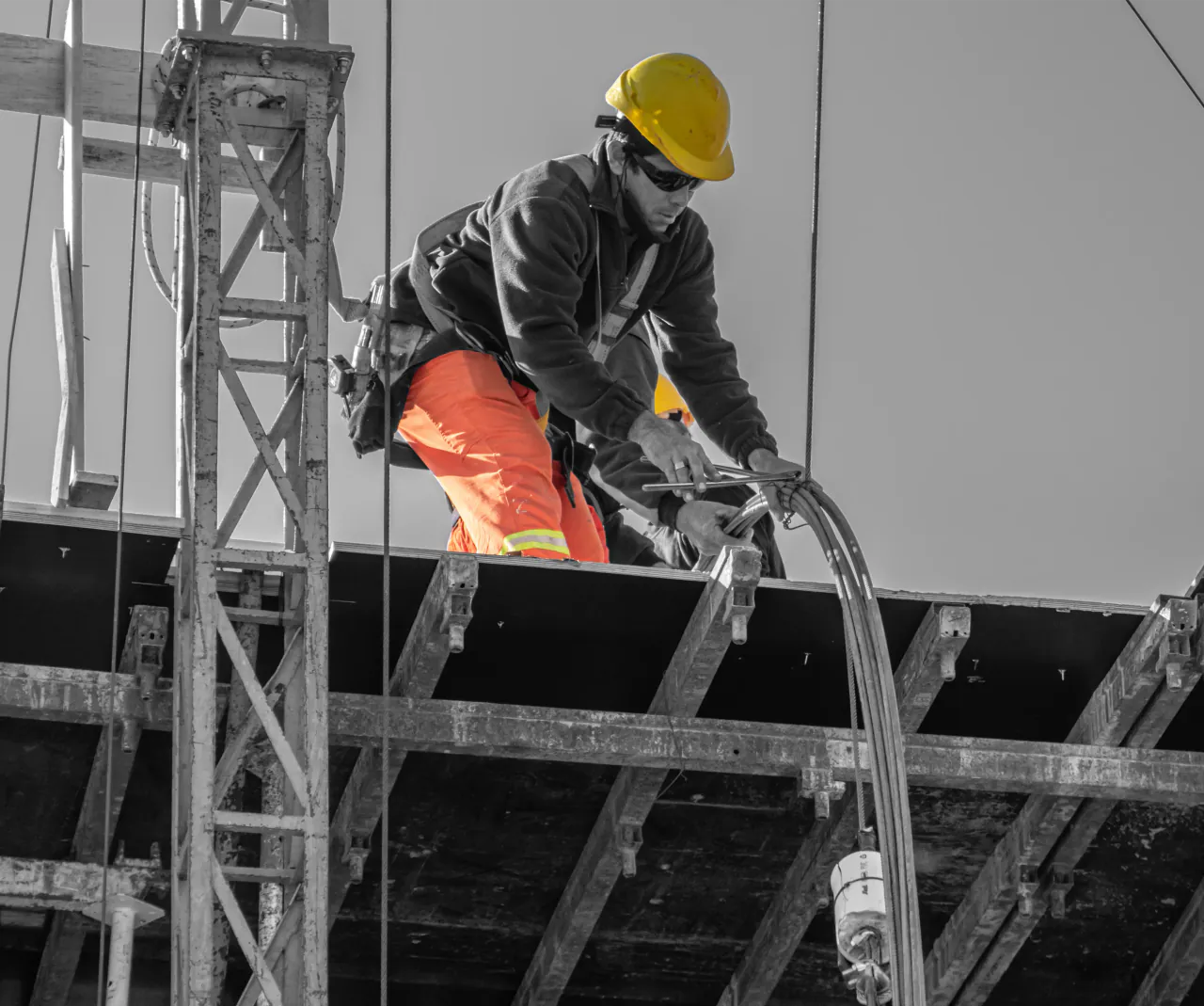
Tower cranes above a building under construction, the kind of envelope a facade contractor clads
The office side

From the first bracket to the golden thread.

Rainscreen, curtain walling, SFS or render: the system differs, the office side does not.

  1. The wall is the part a facade firm already has right. It is the evidence behind it that the law now asks for: which product went on which elevation, who was trained on that system, what the cavity barrier looked like before the panel covered it, and where all of that will be in sixty years.

  2. Unibuild is construction management software for UK contractors, built inside a contracting business rather than sold into one. One account carries the labour run, plant and equipment registers, materials and stock, certification and training records, documents, day works, variations and applications for payment.

Built for facade

What facade work requires, and what Unibuild provides.

A fit-out job and a facade job look alike in a database. They stop looking alike behind the panel, at the gate, and in front of a building safety regulator. Each requirement below is followed by what the platform does about it.

A duty since April 2024

The record is now a legal deliverable

Since April 2024 a higher risk building carries a golden thread: a secure, structured, digital record of the safety critical information and the evidence behind it, kept for the life of the building.

  • Digital and structured, which rules out a folder of photographs
  • It has to survive handover and stay accurate afterwards
  • Dutyholder roles are named: client, principal designer, principal contractor
  • Insurers and lenders increasingly ask for the pack at every renewal or sale
The golden thread built as you go

Product records, drawings, photographs and sign-offs attach to the elevation as the work happens, rather than being assembled afterwards from folders and drives. The duty stays with the duty holder. What changes is that the record is made at the moment it can still be made.

Visible for a day

What you install stops being visible in days

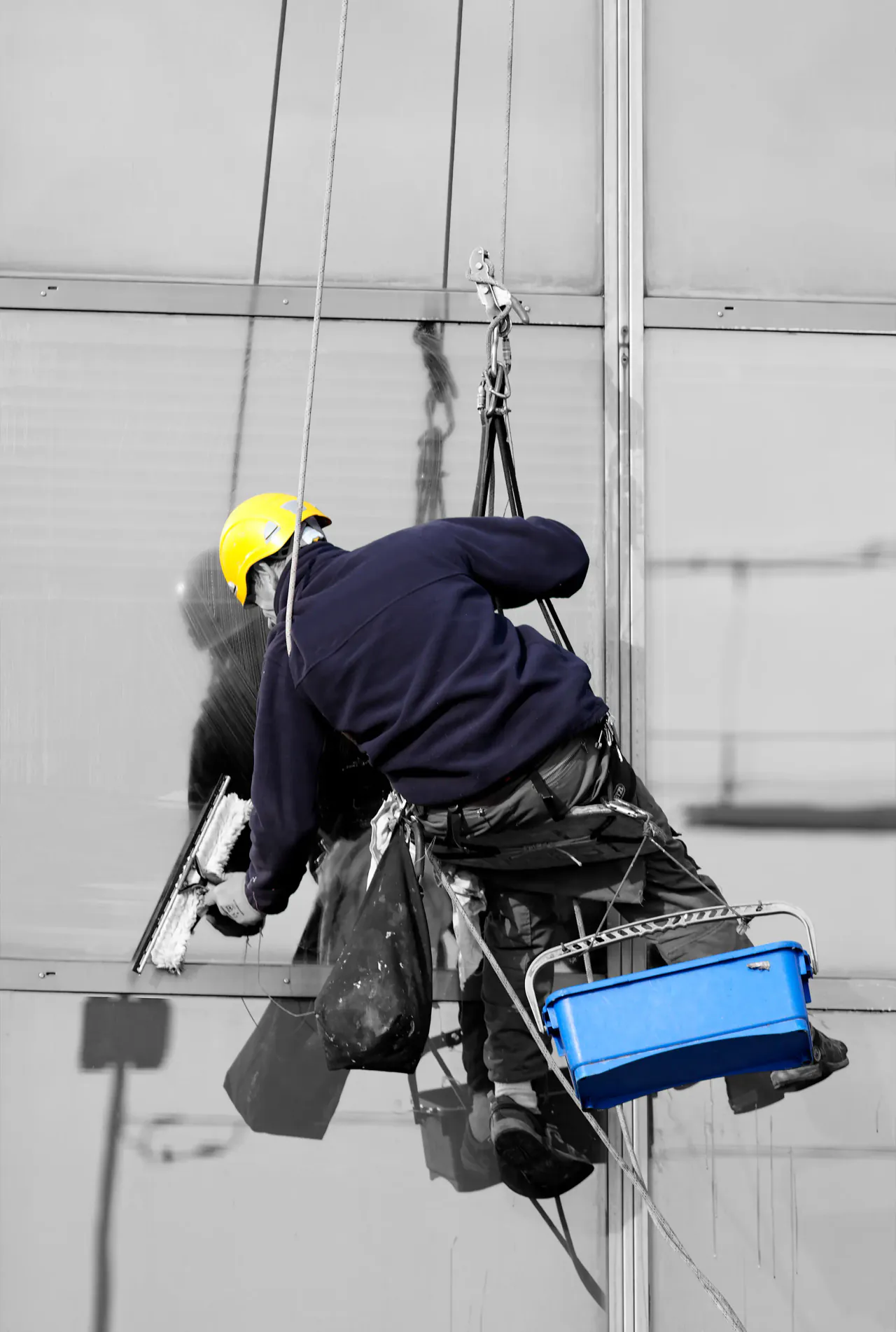
Brackets, insulation, membrane, cavity barriers and fire stopping are each covered by the next layer within about a fortnight, and after that only a photograph proves what went in.

  • Fire stopping at compartment junctions is inspectable once
  • Cavity barrier position and continuity cannot be checked through a panel
  • Bracket fixings and pull out results are behind insulation
  • The person who installed it may be off the project by handover
Photographed on the elevation

Dated photographs of brackets, insulation, membrane, cavity barriers and fire stopping attach to the elevation on the phone before the next layer goes on. The question asked in year eighteen is answered from the job rather than from a fixer who has moved on.

Regulation 7

A classification, not just a colour

On a relevant building with a storey at least 18m containing dwellings, materials in the external wall have to reach Euroclass A2-s1, d0 or A1, with a short list of exemptions.

  • The certificate matters as much as the delivery note
  • A substitution on site is a regulatory decision, not a purchasing one
  • Some components, membranes among them, are specifically exempted
  • Proving which product went on which elevation is the whole game
Product and batch held per elevation

Materials are held by item with their certificates against the job they were fitted on, so a substitution is a decision on the record rather than something discovered during a review. Batch level traceability to a specific panel is scoped tailoring, which is set out in the site notice below.

Gateway two, then the clock starts

The design is approved before you start

On a higher risk building the detailed design is signed off at a gateway before construction begins, which changes what a site decision is allowed to be.

  • A deviation on the elevation is a formal change, not a workaround
  • The approved design is a reference point somebody will check against
  • Change control has a paper trail or it did not happen
  • Programme pressure and formal change control pull hard against each other
Approved drawings against the job

The approved drawing, the revision that was issued and who accepted it sit against the elevation, so the version being fixed to is the version on record. A deviation raised on site is a dated document rather than an adaptation nobody wrote down.

Made for this building

Nothing you fit is stock

Panels are made to order for one elevation in one finish at one size, with long lead times and no meaningful substitute, so a damaged panel is a programme problem rather than a stores problem.

  • Colour, finish and size are project specific and not interchangeable
  • Lead times are measured in weeks, sometimes months
  • Damage on site means a remake, not a replacement off the shelf
  • Brackets and rails, by contrast, run to thousands of identical parts
Made to order, tracked to the job

Cassettes, trims and gaskets made for one elevation are held against that elevation with their order and delivery, so a replacement panel is ordered from a record rather than from a measurement taken again. Costs land on the elevation that consumed them.

Three separate registers, one question at the gate

Competence is per system, not per trade

A fixer trained on one manufacturer's system is not automatically accepted on another, and on this work the principal contractor will ask, in writing, before anyone goes up.

  • Manufacturer training sits on top of the card and the NVQ
  • Much of the labour is supplied, so cover and competence are two firms' records
  • An expired insurance certificate removes a gang overnight
  • The answer has to be produceable at the gate, not by Friday
Competence held per system

Manufacturer system training, card schemes and third party certification sit on one matrix per person, turning amber before they lapse. A subcontractor whose insurance or certificate has lapsed is removed from approved status overnight, which withdraws that firm from the order forms.

Counted in the deployment Unibuild was built on, July 2026: one expiry page carrying 376 assets, 141 subcontractor certificates, 84 accreditations, 80 health assessments, 55 instruments and 9 vehicles.

Panels and cassettes
Brackets and rails
Insulation
Membranes
Cavity barriers
Fire stopping
Curtain walling
The evidence
The week

An ordinary week, and the record it leaves.

Six entries from a facade firm's day book. Nothing here asks anybody to remember something at five o'clock on a Friday.

Level six, Tuesday

A run of cavity barriers goes in and is photographed against the elevation on the phone, before the panel covers it.

On the elevation
The delivery

Panels arrive for the south elevation and their certificates attach to the job as they are booked in, not to somebody's inbox.

Filed on arrival
Thursday

A bracket line does not suit the substrate. The fixer raises the deviation on site with photographs, and it is approved against the drawing.

Deviation recorded
At the gate

The principal contractor asks which fixers are trained on this system, and for the subcontractor cover certificate. Both come off the phone, in date.

Cleared to fix
The hose test

A joint fails on the north elevation. Who sealed it, when, and the photograph taken that day are all on the job.

Answered in minutes
Eighteen months on

The building owner's consultant asks for the record of what went into the wall. It is retrieved by elevation rather than assembled from drives.

Golden thread stands
What it must do

Eight requirements, and an honest answer to each.

Read the limits section below before anything else on this page. This is the one trade where what a platform does not do matters more than what it does, and we would rather you knew first.

The photograph taken before the panel goes on

Project and site management holds dated photographs, drawings and the site diary against the job, captured on the phone by the person on the elevation. A run of cavity barriers photographed before it is covered stays attached to that job with the date and the operative, rather than on the phone of somebody who has since moved on. This is the single habit that matters most in this trade and the one most often left to chance.

Certificates held where the job is, not in an inbox

Documents and certificates holds and issues 58 document types against the job on your own letterhead, and the handover pack guidance covers how that assembles at the end. Delivery paperwork, classification certificates and test results live with the contract rather than in one buyer's email, which is what makes them findable eighteen months later.

Who is trained on which system, provable at the gate

The training matrix holds every card, course and manufacturer accreditation per person and turns it red before it lapses. It holds the specific qualification rather than the general fact of one, which is what this trade actually gets asked: not whether somebody is a fixer, but whether they are trained on this system.

Supplied labour whose cover cannot quietly expire

Subcontractor management holds each firm's insurances and accreditations, and expired cover removes that firm overnight rather than being noticed at an audit. The subcontractor portal lets them read their orders and invoice you, with the limits of that surface stated plainly on its own page. For a facade contractor running several labour firms across elevations, this is usually the second module to switch on.

A deviation recorded as a change, not a conversation

Onsite quotes and variations price and record the change where it happens, and rate valuations are measured on the elevation, capped against the contract rates and signed. On this work the commercial record and the technical record are the same event, and capturing it once is what stops a site decision becoming an undocumented deviation.

Access equipment that carries people, kept examined

Mast climbers, hoists and cradles are lifting equipment carrying people, with examination intervals that do not move for the programme. Reminders and expiry watches twelve registers on one page, and dates sit on the item itself in compliance and certification. See the LOLER guide for what a thorough examination actually is.

The method signed by the person on the elevation

RAMS are signed on the phone at the gate against a frozen version, by the operative doing the work, and the record says which version they signed. Health and safety carries permits, COSHH and near miss reporting, and toolbox talks are signed in the room by the people who were in it.

Elevations, not one undifferentiated site

Work is planned and costed against the job with the labour run planner, and workforce and time puts hours against the contract rather than the week. A facade job is really four or five sequential jobs on one building, and holding the cost and the labour per phase is what makes the second elevation cheaper than the first.

Governing clauseCaptured on the elevation while the layer is still open, or captured never.
Site noticeWhere it stops

Four things Unibuild does not do today.

Every one of these has been asked for by a facade firm on a demonstration. They are published here rather than discovered in week three.

  1. It is not a golden thread system

    This is the important one. Unibuild holds records against jobs; it does not produce or maintain a golden thread in the regulatory sense for a higher risk building, and it is not built to a Building Safety Regulator specification. Treat it as a place your evidence is captured properly, and keep the golden thread question with whoever holds that duty on the project.

  2. Product traceability to a panel or elevation

    Stock is held by item, bin and serial number. There is no batch or certificate field carried from a delivery through to a specific panel on a specific elevation. Photographs and documents against the job carry a lot of this in practice, but it is not structured traceability and should not be sold to you as such.

  3. Gateway submissions and design change control

    There is no gateway workflow, no submission pack builder and no formal design change control tied to an approved design. Changes are recorded commercially and photographically. The regulatory change process stays where it already sits on the project.

  4. Testing and engineering

    No CWCT test scheduling or results management, no thermal or structural calculation, no interface with facade design software. Test certificates are documents the platform will hold against the job. The engineering stays with your engineers.

Why this is hereHiding the gaps wastes both our afternoons. Ask about all four.
The yard

Materials schedule

Written for the trade rather than for any one firm. The order of this table is the order the layers disappear in.

What a UK facade contractor holds, and the tracking quirk in each line
KeyCategoryTypical itemsThe tracking quirk
Substrate and SFSLight gauge steel framing, sheathing board, structural fixingsSetting out and fixing pattern, checkable until the board goes on and not afterwards
Brackets and railsHelping hand brackets, thermal isolators, carrier rails, shimsPull out test results belong to the substrate they were tested in, not to the box
InsulationMineral wool and rigid boards, cut to the bracket layoutThe classification certificate, which on a relevant building is the whole compliance question
MembranesBreather membranes, air and vapour control layers, tapesSpecifically exempted from the combustibility requirement, which is worth knowing rather than guessing
Cavity barriersHorizontal and vertical barriers, open and closed state, intumescentPosition and continuity, inspectable once, then only from a photograph
Fire stoppingCompartment line stopping, penetration seals, edge of slabThe highest consequence record on the job and the one covered fastest
Panels and cassettesAluminium, fibre cement, terracotta, brick slip, HPL, metal compositeMade to order per elevation, so damage is a lead time rather than a stores issue
Curtain wallingStick systems, unitised units, glazing, gaskets, pressure platesUnitised units are individually numbered to a position on the grid before they arrive
Sealants and gasketsSilicones, foam tapes, EPDM, backing rodShelf life, substrate compatibility, and the first suspect when a joint fails a test
FixingsRivets, self drill screws, anchors, brackets, restraint fixingsThousands of identical parts, so a minimum and maximum bin rather than an itemised issue
AccessMast climbers, hoists, cradles, MEWPs, scaffoldLifting equipment carrying people, with examination dates that do not move for the programme
The evidencePhotographs, certificates, test results, approved drawings, change recordsThe only line here with no physical existence and the one the building is judged on
Regulations

The regimes you work under

External walls now have their own legislation,
their own regulator and their own record keeping
duty. This is the reference version, kept factual,
and it is not legal advice.

What each regime asks of a facade contractor
RegimeWhat it requires
The Building Safety Act 2022 and the gatewaysWork on a higher risk building passes three gateway points. Gateway one sits at planning and deals with fire safety in the design. Gateway two is pre construction: the Building Safety Regulator approves the detailed design before construction may begin. Gateway three sits at completion. The Act also names dutyholder roles, the client, the principal designer and the principal contractor, with the principal designer responsible for ensuring design decisions, including material and system selection, comply and are supported by adequate evidence.
The golden threadA legal requirement under regulations introduced in April 2024. It is a secure, structured, digital and auditable record of the safety critical information about a building, covering design, construction and the evidence behind safety critical decisions, maintained across the building's life. Two words in that sentence do most of the work: structured, which a folder of photographs is not, and maintained, which means it does not end at handover.
Regulation 7(2) and combustibilityMaterials becoming part of an external wall or a specified attachment must achieve Euroclass A2-s1, d0 or A1 on a building with a storey at least 18 metres above ground containing one or more dwellings, an institution, or a room for residential purposes. Regulation 7(3) exempts a limited list of components, membranes among them. In practice this makes the classification certificate a compliance document rather than a filing item, and makes a substitution on site a regulatory decision.
CWCT standards and weathertightnessThe Centre for Window and Cladding Technology publishes a whole performance standard for building envelopes covering airtightness, watertightness, wind resistance and impact. On site testing, including the hose test used to check the workmanship of permanently closed joints as built, is UKAS accredited against those standards and is increasingly required by warranty providers. A failed joint is a workmanship question, which means it is a question about who sealed it and when.
Cavity barriers and compartmentationCorrectly positioned cavity barriers, continuous fire stopping at compartment junctions, and non combustible copings and flashings are what turn a set of compliant materials into a compliant wall. None of it can be verified once the panel is on, which is why the photograph taken on the day is not a nicety in this trade but the only evidence that will exist.
CDM 2015 and competenceOrdinary contractor duties apply on top of everything above: planning, the construction phase plan, cooperation with the principal contractor. Competence is the part that bites hardest here, because manufacturer system training sits on top of the card and the qualification, and much of the labour is supplied rather than employed. See the CDM 2015 guide.
Work at height and powered accessMast climbers, hoists and suspended cradles carry people, so they are lifting equipment with thorough examination intervals, operator training and rescue arrangements attached. The access method is also a design input for the facade itself, since a mast climber needs ties into the structure and a cradle needs a roof rig, and both leave records.
Remediation and existing buildingsA large share of the current market is remediation rather than new build, which brings its own paperwork: surveys of what is actually in the wall, funding conditions, resident liaison and phased handovers on an occupied building. The evidence burden is heavier rather than lighter, because you are documenting both what you removed and what you installed.
Questions

Requests for information

The questions facade firms actually raise on a demonstration, answered on the record. Open one to read the response.

The marketIs this a golden thread solution?+
No, and that is the honest first answer rather than the caveat at the end. Unibuild is a contractor platform that holds photographs, certificates, competence records and commercial records against jobs. It is not built to a Building Safety Regulator specification and it does not produce or maintain a golden thread for a higher risk building. What it does is make sure the evidence you are responsible for is captured at the moment it exists, in one place, with a date and a person against it. Whoever holds the golden thread duty on your project still holds it.
Golden threadWhat software do UK facade and cladding contractors use?+
Usually three or four things at once: a facade design and detailing package, a document management system imposed by the principal contractor, a spreadsheet for elevations and progress, and an accounts package. The gap most firms describe is between the principal contractor's system, which they do not control and cannot take with them, and their own records, which are scattered. Unibuild sits in the second place: your own record of your own work, which survives the project ending.
PhotographsCan it prove which panel went on which elevation?+
Not as structured traceability. Stock is held by item, bin and serial number, and there is no batch or certificate field carried from a delivery through to a specific panel position. In practice firms cover a lot of this with dated photographs and delivery documents held against the job, which is genuinely useful evidence but is not the same thing. If panel level traceability is the reason you are looking, say so early and we will tell you whether it is scoped tailoring or whether you need something else.
CompetenceHow does it help with the photographs before close up?+
Photographs are taken on the phone against the job, with the date, the location and the person captured with them, and they stay attached to that job rather than to a handset. For cavity barriers and fire stopping, which are inspectable for about a day, that is the difference between having evidence and having a memory. It is a habit rather than a feature, and the platform's job is to make the habit take ten seconds so it actually happens on a wet Thursday.
AdoptionCan it track manufacturer system training per fixer?+
Yes, and this is one of the strongest fits. The training matrix holds specific accreditations per person rather than a general competence flag, so being trained on one manufacturer's system and not another is a fact the system holds. It turns red before a certificate lapses. When a principal contractor asks in writing who is trained on this system, the answer is a screen rather than a morning of phone calls.
TraceabilityWe use a lot of supplied labour. Does that work?+
Yes, and it is usually the second module switched on for this trade. Each labour firm's insurances and accreditations are held, and expired cover removes that firm rather than being discovered at an audit. The subcontractor portal lets them read their orders and invoice you, and its limits are stated plainly on its own page rather than implied. Where firms get caught out is competence records for supplied operatives, which stay your problem at the gate whoever employs them.
DeviationsDoes it handle CWCT testing or design calculations?+
No. There is no test scheduling, no results management, no thermal or structural calculation and no interface with facade design software. Test certificates and calculations are documents the platform holds against the job so they are findable later. The engineering stays with your engineers, and anyone telling you a general contractor platform does facade engineering is selling you something.
PricingMost of our work is remediation. Is that different?+
Operationally yes, and the platform does not care much either way, which is the point. The differences are that you document what you removed as well as what you installed, the building is usually occupied so access and resident liaison sit in the programme, and the funding route brings conditions of its own. The record keeping burden is heavier rather than lighter, so the case for capturing it on the phone at the elevation is stronger, not weaker.
SignalWill fixers actually use it?+
Only if what you ask of them is small. Three things on the phone: clock in, the method statement signature, and photographs against the job. Everything else stays with the office and the contracts manager. Permissions are granted per person, so that is configuration rather than compromise. On this trade the photograph is the one that pays for the whole exercise, so if you only ever get one habit to stick, make it that one.
RolloutHow is it priced, and do you charge per fixer?+
Users are unlimited and the price does not change when you take people on or bring a labour gang in, which matters in a trade that scales per project. There is no published rate card, because a twelve person firm running three modules and a sixty person firm running twenty are not the same product. Pricing is worked out against the size and shape of the business on the demonstration, and there is a 14 day free trial on your own data first.
Return slip

Come and try it on your own elevation.

Half an hour on your own project. Bring one elevation's worth of paperwork and we will set it up in front of you. We will be direct about the golden thread question rather than selling around it.

Bring
One elevation's worth of paperwork
Takes
30 minutes
Phone, UK hours
+44 7587 557546
Pays for itself
On the first record you do not have to reassemble
WhatsApp us