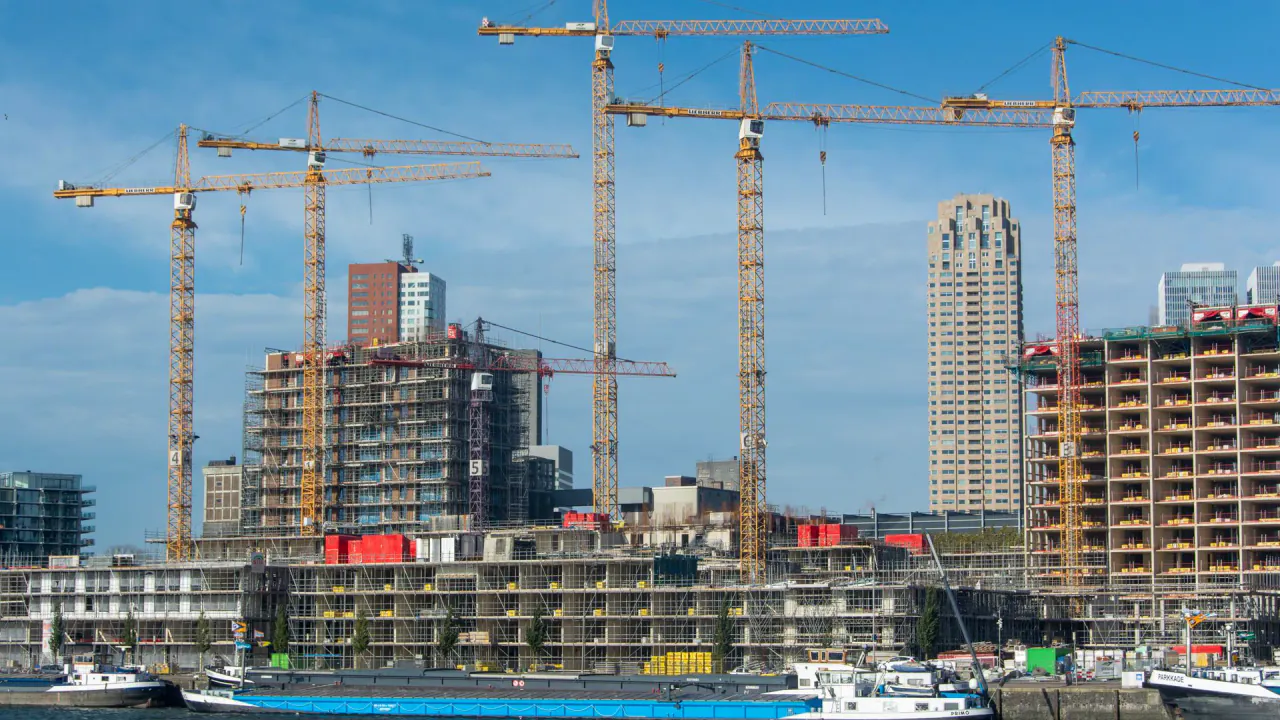
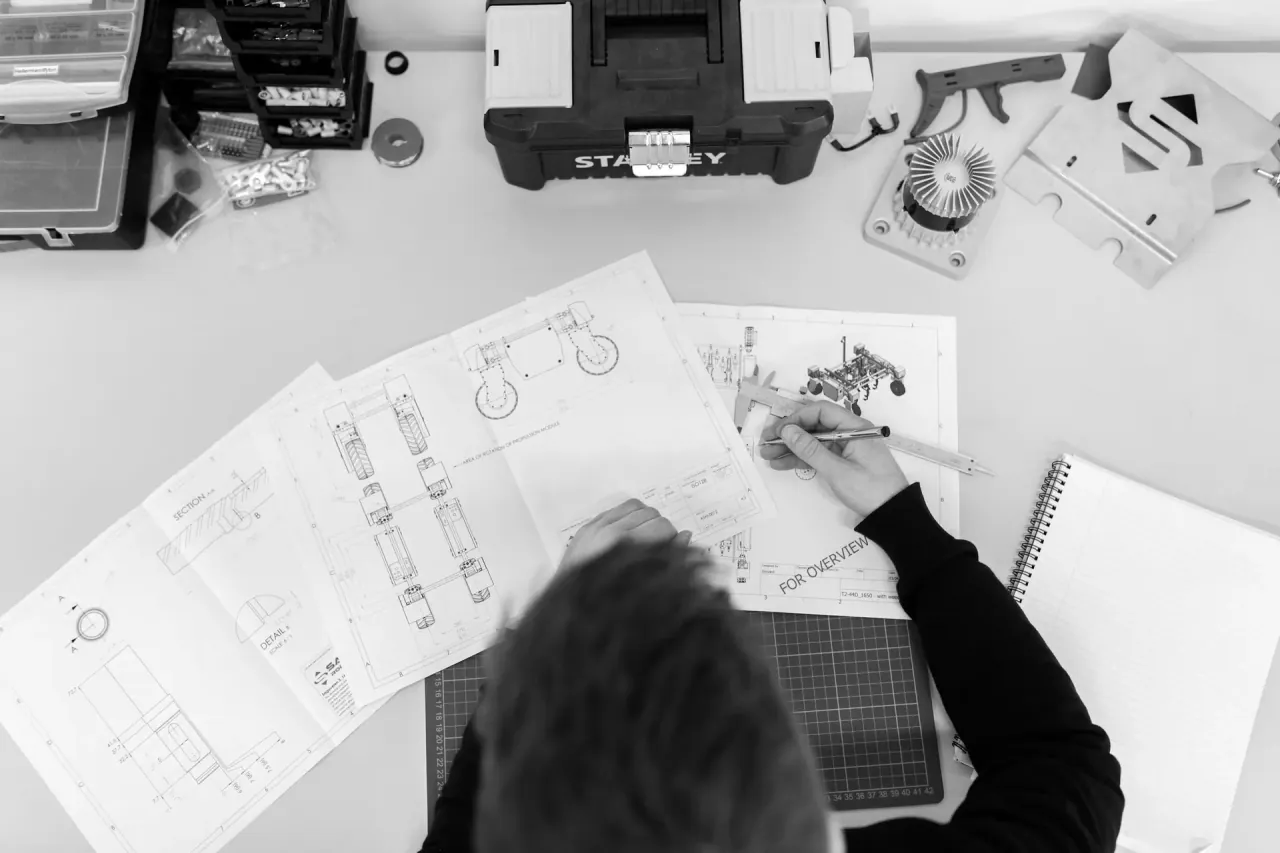
Half a frame has to stand up on its own before anyone goes home.
Lift plans written by an appointed person, accessories examined in date, bolts torqued and recorded, and bracing left in until the frame can carry itself. The engineering is yours. The record behind it is what an inspector and an insurer both ask for. Around thirty modules on one account, and a steel erector turns on the handful it needs.
Portal frames, multi-storey, mezzanines, bridgework or secondary steel: the structure differs, the office side does not.
Putting the steel up is the part an erection contractor already has right. It is the record behind it that decides the year: which lift plan covered which pick, whether the accessory that made it was in date, who torqued the bolts and to what, which welder made the connection and under what procedure, and when the temporary bracing came out.
Unibuild is construction management software for UK contractors, built inside a contracting business rather than sold into one. One account carries the plant and equipment registers, the labour run, certification and training records, materials, documents, day works, variations and applications for payment.
Built for erection
What steel erection requires, and what Unibuild provides.
A fit-out job and a steel job look alike in a database. They stop looking alike under the hook, at the bolt torque record, and at the moment the crane leaves and the frame is on its own. Each requirement below is followed by what the platform does about it.
The tradeThe platform
Planned by a named person
Every lift is a planned operation
Lifting operations are planned by an appointed person, supervised by a competent one, and carried out by people trained for the role they hold in it.
The appointed person plans the lift; the slinger and the operator execute it
The plan names the crane, the accessories, the load, the radius and the ground
A change of crane, load or position is a change to the plan, not a judgement call
The plan is the document produced after an incident, in its issued version
Plans held against the job, signed at the version issued
Lift plans, method statements and risk assessments are documents against the job with every revision kept, and they are signed on the phone against a version that freezes on submission, by the slinger and the operator rather than by a supervisor on their behalf.
Cranes, MEWPs and every chain, strop and shackle behind them carry statutory examinations on their own intervals, and the accessory is examined in its own right.
Equipment lifting people is examined at least every six months
Lifting accessories are examined at least every six months, separately from the machine
Other lifting equipment is examined at least every twelve months
A strop out of date is a stopped shift, and it is the item nobody is watching
Accessories as records, not as a box in the van
Each chain, strop, shackle, beam clamp and magnet is its own record with its serial, SWL, examination date and history, on the same expiry page as the cranes and MEWPs. Scanning the item on site returns it, so a check at the compound is a scan rather than a squint at a stamped tag.
Bolted and welded connections are checked before the cladding, the fire protection and the concrete cover them, and after that the record is all there is.
Preloaded bolt assemblies are tightened to a defined method and recorded
Welds are made under a qualified procedure by a welder qualified for it
Non-destructive testing is carried out to a specified frequency and scope
Nobody is opening the connection up again to check
Inspected at the connection, photographed, signed
Inspection records are completed on the phone against the grid reference and the member, with photographs and a signature, before the connection is covered. The record belongs to the structure rather than to the week it happened in.
Temporary bracing, guys and props hold a partly erected frame up, and removing them early is one of the classic ways steelwork comes down.
Temporary works carry a design, a check category and a permit
The permit to remove bracing is a decision by a named person
Partial completion at the end of a shift is the dangerous state
Wind is a design case, and it arrives on somebody else's timetable
A register that says what is still holding the frame
Each item of temporary bracing is a numbered record with its design, its check category and its permits, and the permit to remove is a signed, dated act rather than a decision taken at four on a Friday. The reminders engine watches what is still in place.
Erectors spend the day in MEWPs, on netting, on beams and in harnesses, and the access equipment is as regulated as the crane.
A MEWP lifts people, so its examination interval is six months
Harnesses and lanyards are inspected and have a service life
Fall arrest anchor points are part of the temporary works, not an accessory
Rescue from height is a plan, not an intention
Access kit and PPE on the same register as the steel
MEWPs, harnesses, lanyards and fall arrest kit are records with their own inspection intervals and service lives, watched on the same page as the cranes. Inspection records are completed on the phone against the item rather than in a book in the van.
Members arrive on artics in erection sequence, and a site with no laydown area turns a delivery problem into a programme problem the same morning.
Loads are sequenced to the erection order, not to the drawing number
A member damaged in transit cannot simply be reordered
Bolts, shims and packs are small, critical and easy to run out of
A crane standing waiting for steel is the most expensive idle hour in the trade
Loads booked in against the job, photographed on arrival
Deliveries are recorded against the job with a signed note and photographs, so damage is evidenced on the day it lands. Bolts, shims and consumables are held as quantities by item against locations, including a van, with an append only ledger.
Counted in the deployment Unibuild was built on, July 2026: one expiry page carrying 376 assets, 141 subcontractor certificates, 84 accreditations, 80 health assessments, 55 instruments and 9 vehicles.
Primary steel
Secondary steel
Bolts and fixings
Temporary bracing
Decking and mesh
Cranes and lifting
Access and fall arrest
Inspection records
The week
An ordinary week in a steel erector, and the record it leaves.
Six entries from a steel erection contractor's day book. Nothing here asks anybody to remember something on a beam with a wind picking up.
Monday, the plan
The appointed person issues the lift plan for the main girders. It goes against the job with its revision, and the slinger and the operator sign it on the phone at the version issued.
Signed, not briefed at
At the compound
Chains and strops are scanned before they go on the hook. One shackle is a fortnight past its examination and is pulled out of the set before it reaches the crane.
Caught at the gate
Tuesday, the delivery
Three artics arrive in erection sequence. One rafter is damaged on the trailer and is photographed against the job before it is lifted off.
Evidenced on arrival
Wednesday, the connections
Bolted connections on grid line C are torqued and recorded against the grid reference, with photographs, before the decking goes on and nobody can see them again.
Recorded before it is covered
Thursday, the bracing
Two bays are ready to have temporary bracing removed. The permit is signed by the named person against the design, rather than agreed between two people on a radio.
Permitted, then struck
The valuation
Extra steel for a plant platform was instructed on site on Tuesday. It was measured, priced on the contract rates and signed where it happened.
Paid for
The test
Eight things steel erection software has to do.
Written from what actually costs a steel erector money or exposes it, rather than from a feature list. Unibuild is around thirty modules on one account, and an erector turns on a handful of them.
Lifting accessories as individual records
Assets and inventory holds each chain, strop, shackle and beam clamp with its serial, safe working load, examination date and history, rather than as a box of kit. Scanning the item at the compound returns it. This is the cheapest register on the system to keep right and the one that stops a shift when it is wrong. Related: LOLER thorough examination.
Lift plans signed at the version that was issued
RAMS and lift plans are signed on the phone against a version that freezes on submission, by the slinger and the crane operator rather than by a supervisor signing on their behalf. Every revision is kept, newest at the top, so the plan produced after an incident is the plan that was actually in force.
Connection records made before the cladding goes on
Bolt torque and weld inspection records are completed on the phone against the grid reference and the member, with photographs and a signature, at the connection. Once fire protection, decking or cladding covers it, the record is the only evidence that exists, and a record made a week later is not the same document.
Welder and operator competence, by qualification not by name
The training matrix holds welder qualifications by procedure, CPCS or NPORS by category, appointed person, slinger and signaller tickets and medicals, per person, in a grid that colours itself. A welder qualification lapsing is not an administrative problem; it invalidates the connections made after it.
Temporary bracing on a register with a permit to remove
Each item of bracing, guying or propping is a numbered record with its design, check category and permits, and the permit to remove is a signed, dated act by a named person. Reminders and expiry watches what is still in place. Related: the temporary works register.
Access equipment and fall arrest with their own service lives
MEWPs carry a six monthly thorough examination because they lift people, and harnesses and lanyards carry inspections and a service life measured in years rather than uses. Both sit on the same expiry page as the cranes, which is the only way a small firm keeps all three straight.
Deliveries in erection sequence, evidenced on arrival
Loads are booked in against the job with a signed note and photographs, so a member damaged on the trailer is a dated record before it is lifted off. Bolts, shims and packs are held as quantities by item against locations, including the van, with an append only ledger.
Extra steel priced at the moment it is instructed
Onsite quotes and variations price extra work from the phone, by the supervisor who was asked, and rate valuations are measured on site, priced on the contract rates and signed before the crane leaves. They feed applications for payment with retention and ageing attached.
Governing clauseEverything above is a record made at the connection, not typed up once it is covered.
The compound
What a steel erection contractor holds
Written for the trade rather than for any one firm. Most erectors will recognise eight or nine of these lines and ignore the rest.
What a UK structural steel erection contractor holds, and the tracking quirk in each line
The only category with no physical existence and the one that becomes the sole evidence the moment a connection is covered
Regulations
The regimes a steel erector works under
It is about who planned the lift, what was examined, who was qualified to make the connection, and when the bracing was allowed out. This is the reference version, kept factual.
The regimes a UK structural steel erection contractor works under, and what each requires
Regime
What it requires
LOLER 1998
Lifting operations are planned by a competent person, appropriately supervised and carried out safely. Lifting equipment is thoroughly examined at least every six months where it lifts people or is an accessory, and at least every twelve months otherwise, or under an examination scheme. On most erection jobs the crane is hired, which means the examination report belongs to the hire company and still has to be held against your job.
BS 7121, the code of practice for safe use of cranes
The industry standard behind the planning duty: the roles of appointed person, crane supervisor, slinger, signaller and operator, the content of a lift plan, and the categories of lift from basic to complex. It is guidance rather than statute, but it is the benchmark an investigation will measure the operation against, and the appointed person is the named individual at the centre of it.
BS EN 1090 and execution classes
The execution of steel structures is governed by an execution class from EXC1 to EXC4, which drives the required welding quality level, the inspection and testing regime, the tolerances and the documentation. A higher class is not more paperwork for its own sake; it changes what has to be checked and recorded on site, and by whom.
Welding procedure and welder qualification
Welds are made under a qualified welding procedure specification by a welder holding a current qualification for that procedure, position and material. Qualifications have validity periods and can lapse. A lapsed welder qualification does not just create an administrative gap; it puts the connections made after it in question, which is why this belongs on a dated register.
Bolting and preloaded assemblies
Preloaded bolt assemblies are tightened by a defined method, commonly combined or torque based, and the tightening is recorded. Ordinary bolts are checked for the right grade, length and washers. The connection is inspected before it is covered by decking, fire protection or cladding, after which nobody is opening it again.
BS 5975 and temporary works
Temporary bracing, guying and propping that holds a partly erected frame is temporary works, with a design brief, a design, a check proportionate to a check category, and a permit to load and to remove issued by a named temporary works coordinator. Partial completion at the end of a shift is the state in which frames come down.
Work at Height Regulations 2005
Work at height is avoided where reasonably practicable, and where it is not, equipment is selected to prevent falls before it is selected to minimise the distance. For erection that means MEWPs, netting and fall arrest, each with inspection duties, and harnesses carrying a service life as well as an inspection interval. Rescue from height has to be planned rather than assumed.
CDM 2015
A steel erector is a contractor, and on a frame-only project sometimes the principal contractor, with duties to plan, manage and monitor. The construction phase plan, the erection method statement and the temporary works register are separate documents that have to agree with each other on the sequence. See the CDM 2015 guide.
Competence schemes
CSCS for site access, CPCS or NPORS by category for crane and MEWP operation, appointed person, slinger and signaller qualifications, and welder qualifications per procedure. Several of these are individual tickets renewed on their own timetable rather than one card with one date, which is why a single expiry per person is the wrong shape.
Working time and fatigue
Early starts around crane availability, long travel to a frame that lasts three weeks, and shifts that stretch to get a bay stable before dark all sit under the general duties in the Health and Safety at Work etc. Act 1974 and regulation 3 of the Management Regulations, alongside the Working Time Regulations 1998. See fatigue management.
On the record
Questions steel erectors ask
The questions steel erection contractors actually raise on a demonstration, answered on the record. Open one to read the response.
The marketWhat software do UK steel erection contractors use?+
Most run a combination rather than a system: a detailing and modelling package that belongs to the fabricator, a spreadsheet for the erection sequence and the gangs, a folder of lift plans, and an accounts package behind it. Unibuild sits on the erector's own side of that: people, competence, lifting accessories, access equipment, site records, variations and the money. It does not detail steel and it does not model anything, and the honest limits below say where it stops.
AccessoriesCan it hold every chain and strop with its examination date?+
Yes, and it is the strongest fit for this trade. Each accessory is its own record with serial, safe working load, examination date and history rather than a note against a machine, and one page watches them all and turns a date red before it passes. Scanning the item at the compound returns it, which is faster and more honest than reading a stamped tag in poor light with gloves on.
Lift plansDoes it produce lift plans?+
No. It does not calculate a lift, check a radius against a duty chart or produce a plan. Your appointed person does that, and should. What Unibuild does is hold the plan against the job with every revision kept, and get it signed on the phone by the slinger and the operator against a version that freezes on submission. After an incident, the difference between the plan in force and the plan somebody remembers is the whole question.
ConnectionsCan we record bolt torques and weld inspections against grid references?+
Yes, as records completed on the phone at the connection with photographs and a signature, against the grid reference and the member. The important part is when rather than what: a connection covered by decking or fire protection on Wednesday cannot be inspected on Friday, so the record has to be made where the work is. Structuring your own check sheet to your execution class is done during implementation.
WeldersWill it track welder qualifications by procedure?+
Yes, and holding the procedure rather than just the person is the point. A welder qualified for one procedure, position and material is not qualified for another, and qualifications have validity periods that lapse quietly. The grid turns amber before a date passes. What it does not do is approve a procedure or hold the technical content of a WPS as structured data; the document sits against the job.
Hired cranesThe crane is hired. Whose examination record is it?+
The hire company's, and you still need it against your job. The report of thorough examination travels with the equipment, so it is held as a dated document on the job record alongside the operator's ticket and the lift plan. When an inspector asks on the day, producing three documents from one screen is the difference between a short conversation and a long one.
Temporary worksCan it hold bracing with a permit to remove?+
Yes. Each item is a numbered record with its design, check category, checker and permits, and the permit to remove is a signed, dated act by a named person rather than a decision taken over a radio at four on a Friday. One page watches what is still in place. It does not design or check the bracing; that stays with your temporary works designer and coordinator.
DetailingDoes it connect to our fabricator's model?+
Not as standard. Detailing and fabrication models live in specialist packages, usually the fabricator's rather than yours, and there is no generic connector. Drawings and schedules live against the job with every revision kept, newest at the top, so the erection gang is working to the current issue. A feed from a named system is a scoping conversation because the platform is bespoke.
VariationsSecondary steel changes constantly. Can we get paid for it?+
You can price it at the moment somebody asks, from the phone, by the supervisor who was asked, without showing your margin. Plant platforms, handrail, extra cleats and access steel are where the extra work in this trade lives, and they are agreed verbally on a frame and forgotten by the valuation. Pricing on the spot turns it into a dated line rather than a recollection.
AdoptionWill erectors actually use it on a frame?+
Only if what you ask of them is small. The realistic answer is three things on the phone for a gang: clock in, the lift plan and RAMS signature, and the connection record with a photograph. Everything else stays with the supervisor and the office. Permissions are granted per person, so that is a configuration rather than a compromise. Asking a gang to run the whole platform in month one is how these projects die.
PricingHow is it priced, and do you charge per erector?+
Users are unlimited and the price does not change when you take gangs on, which matters in a trade that flexes hard between frames. There is no published rate card, because a ten person firm running three modules and an eighty person one running twenty are not the same product. Pricing is worked out against the size and shape of the business on the demonstration, and it is fixed for three years.
RolloutDo we have to move everything across at once?+
No, and it is usually a poor idea. Most erectors start with lifting accessories and competence, because a lapsed strop or a lapsed ticket stops a shift, and add connection records and variations once the first is habit. Firms go live in stages, often on one frame, and migration of your existing accessory and people records is done for you.
Five things a steel erector asks for that are not in the platform as it stands. Unibuild is bespoke, so each one is a scoping conversation rather than a dead end: customer specific modules, fields, rules and reports are written on request and included in the monthly fee.
Lift planning and crane calculationsPlans are held, versioned and signed. Nothing calculates a lift, checks a radius against a duty chart or produces the plan.
Steel detailing and modelsNo detailing package and no model viewer. Drawings and schedules live against the job with every revision kept.
Piece tracking from the fabricatorMembers are received against the job as deliveries. There is no piece mark status feed from a fabrication system.
Welding procedure approvalWelder qualifications and their dates are held. The WPS itself is a document, not structured technical data, and nothing approves a procedure.
Temporary works designThe register, the check category and the permits are held. No design is produced and no check is performed.
Other trades
Not quite your line of work?
The same platform, written for the trade that runs it. Each of these is a different set of modules switched on rather than a different product.
Return slip
Come and try it on one frame.
Half an hour, on your own job and your own kit. Bring a set of lifting accessories and one live frame, and we will set both up in front of you. Unlimited users, never per seat, and fourteen days to try it without a card.