COSHH guide · Hazard symbols

COSHH symbols: the nine hazard symbols and what they mean

The nine hazard pictograms on a chemical label, what each one means and where trades meet it, and the old orange symbols they replaced.

Published · Checked against legislation.gov.uk and HSE on

What are the COSHH symbols?

COSHH symbols are the nine hazard pictograms on the label of a hazardous chemical, each a black symbol on a white diamond with a red border. They come from the GB CLP Regulation, which sets how suppliers classify and label chemicals in Great Britain. COSHH is the law on controlling those chemicals at work.

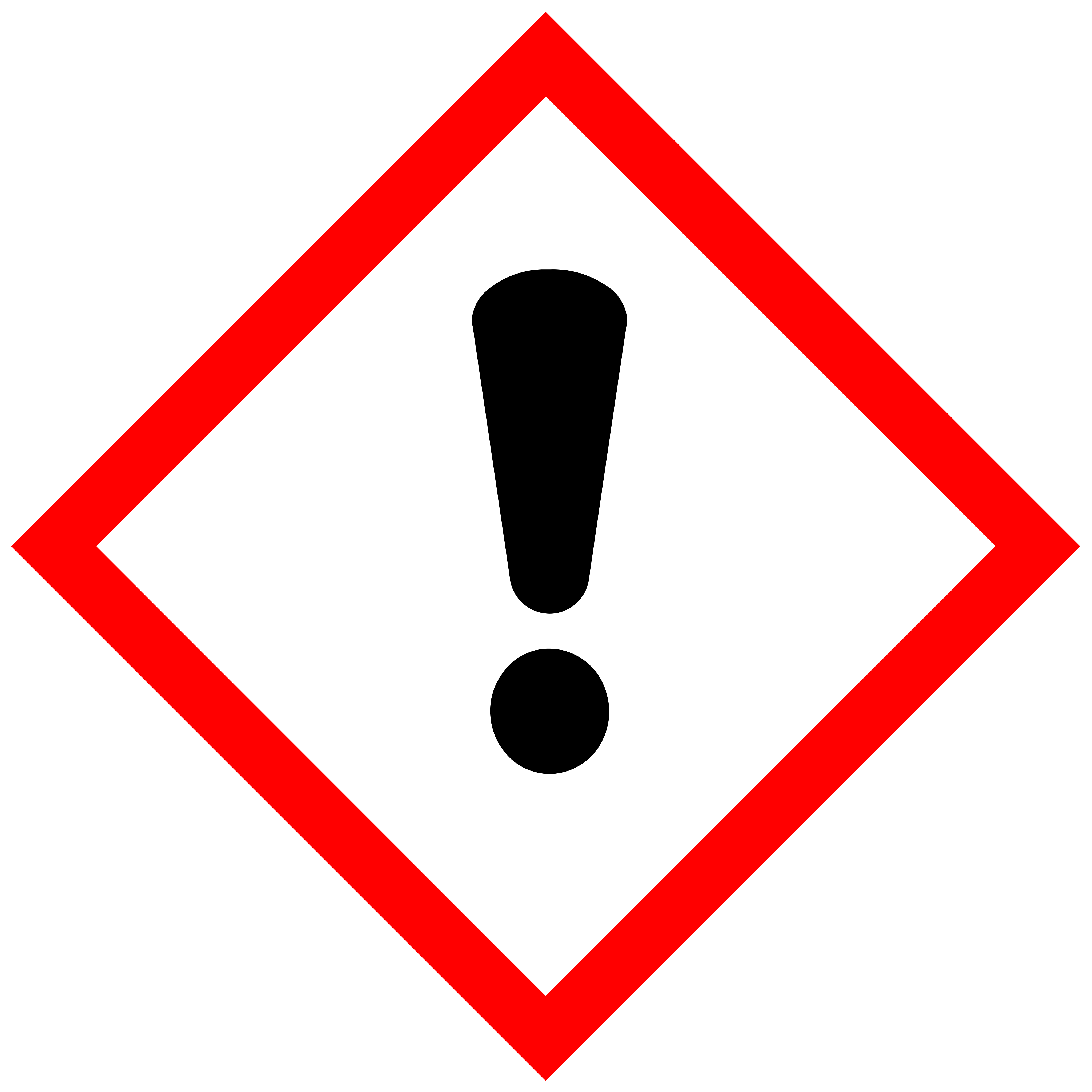
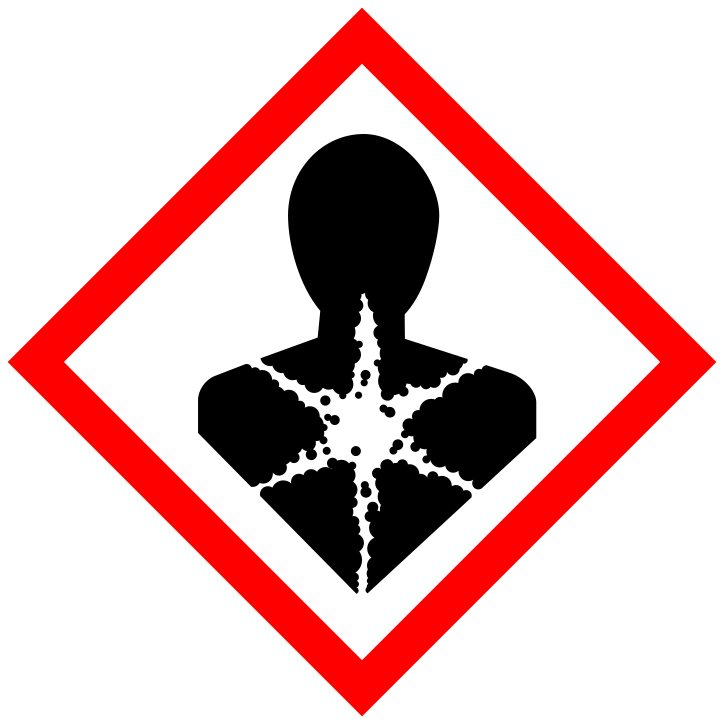
Each pictogram stands for a group of hazards. The flame covers flammable liquids, gases, aerosols and solids. The exclamation mark covers irritation, skin allergy and the less severe acute toxicity. The health hazard symbol marks serious harm such as asthma from isocyanates, cancer and damage to organs.

The nine replaced the orange squares of the old CHIP system. CLP labels became compulsory for substances on 1 December 2010 and for mixtures on 1 June 2015. Older stock could keep its orange label until 1 June 2017 at the latest.

A symbol says what a product can do. It does not say what your team should do about it. That comes from the safety data sheet and your own COSHH assessment.

The nine COSHH hazard symbols and their meanings

GB CLP Annex V

Each card gives the name HSE uses, the symbol and its GHS code, what it means and where trades meet it. The hazard classes are those in GB CLP Annex V. A product can carry several.

Explosive pictogram

Explosive

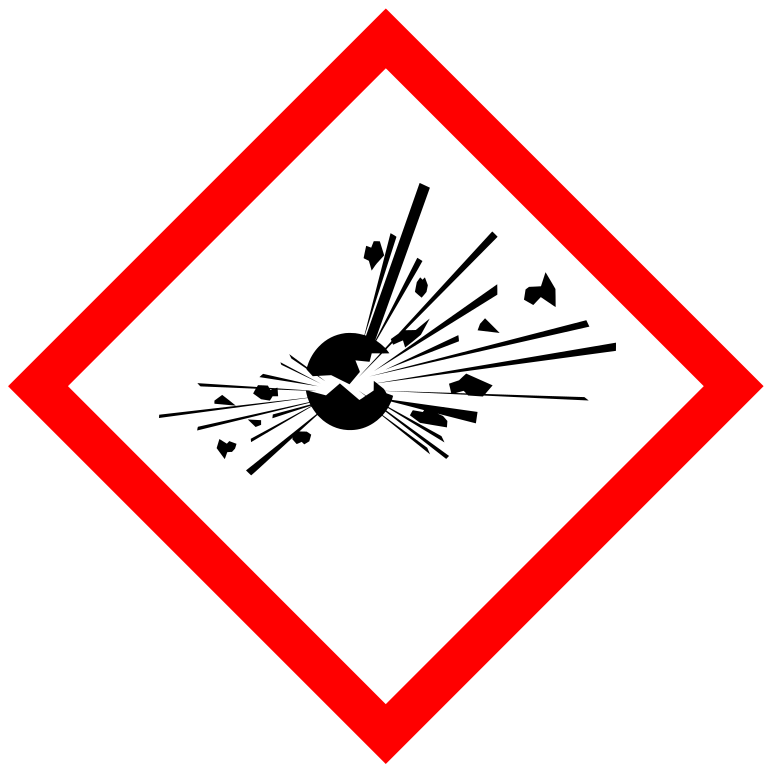
Exploding bomb, GHS01. The product can explode, or decompose violently.

Found onRarely on products bought for trade work. Organic peroxide hardeners for polyester resin and GRP roofing usually carry the flame instead: only the most reactive organic peroxides, types A and B, take the exploding bomb.

Hazard classesUnstable explosives; explosives of divisions 1.1 to 1.4; self-reactive substances and mixtures, types A and B; organic peroxides, types A and B.
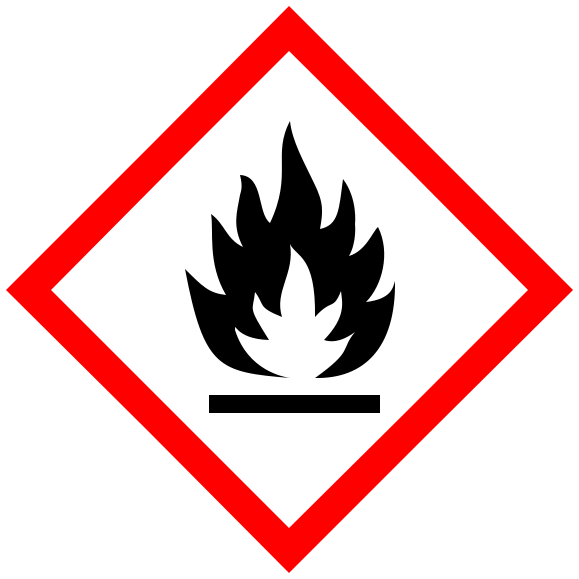
Flammable pictogram

Flammable

Flame, GHS02. The product, or the vapour it gives off, catches fire easily.

Found onSolvent-based paints, thinners and some contact adhesives; aerosol paints and expanding foam; propane, butane and acetylene for heating, roofing torches and brazing.

Hazard classesFlammable gases (categories 1A, 1B); aerosols (categories 1, 2); flammable liquids; flammable solids; pyrophoric liquids and solids; self-heating substances; substances that give off flammable gas in contact with water; self-reactive substances and organic peroxides, types B to F; desensitised explosives.

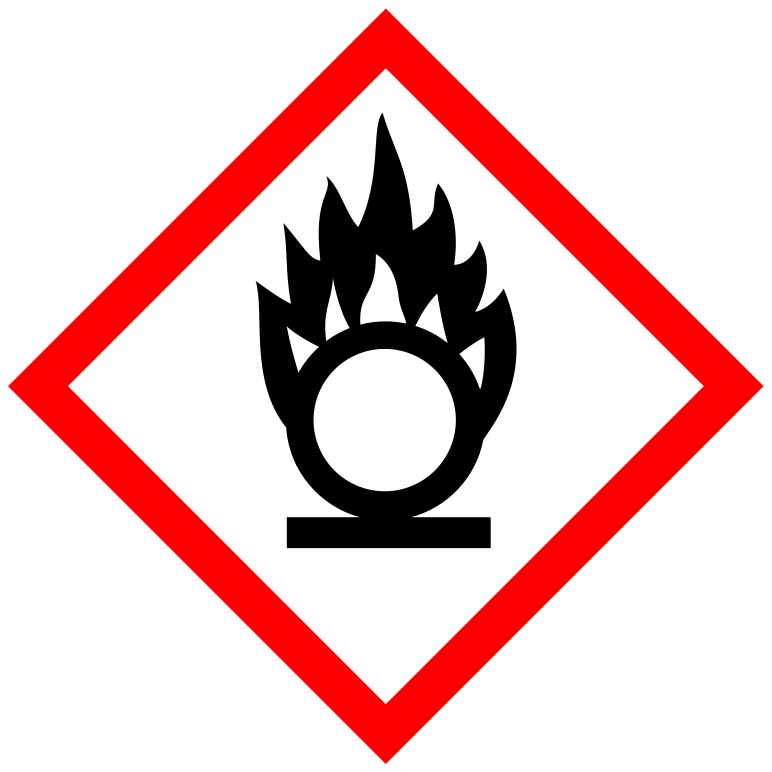
Oxidising pictogram

Oxidising

Flame over circle, GHS03. The product can cause a fire or make one burn more fiercely, because it supplies oxygen.

Found onOxygen cylinders for oxy-fuel cutting, welding and brazing, and calcium hypochlorite granules and tablets for pool and water treatment.

Hazard classesOxidising gases (category 1); oxidising liquids and oxidising solids (categories 1 to 3).

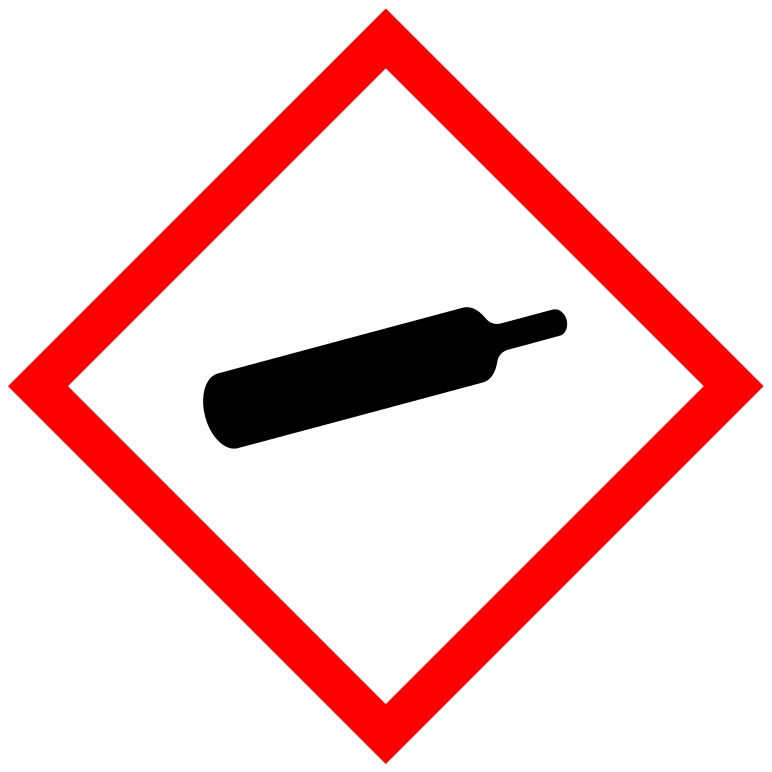
Gas under pressure pictogram

Gas under pressure

Gas cylinder, GHS04. The container holds gas under pressure and may explode if heated. Refrigerated gas can cause cold burns.

Found onCylinders of oxygen, argon, carbon dioxide and acetylene for welding, nitrogen for pressure testing, and refrigerant. On a cylinder that already shows the flame or the skull and crossbones, this symbol is optional.

Hazard classesGases under pressure: compressed, liquefied, refrigerated liquefied and dissolved gases.

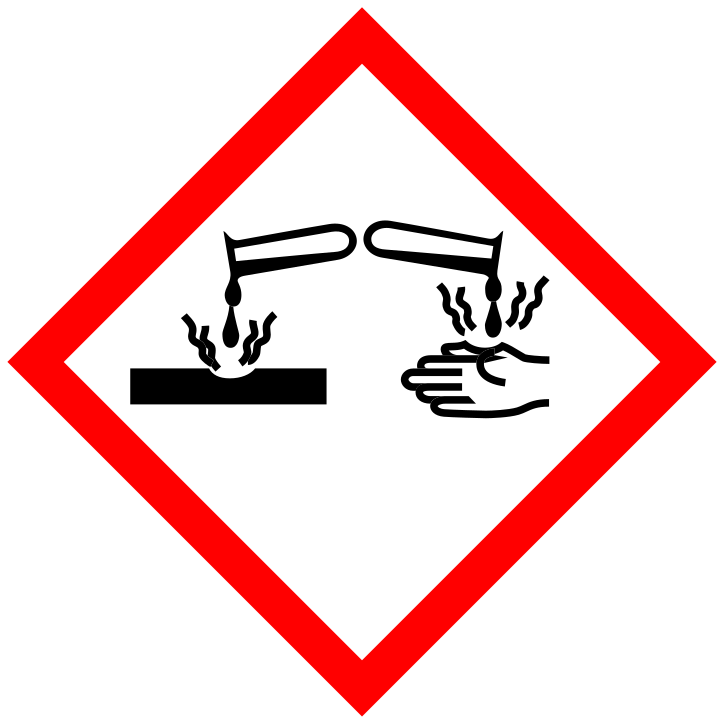
Corrosive pictogram

Corrosive

Corrosion, GHS05. The product burns skin, causes serious eye damage, or corrodes metal.

Found onDrain cleaners, descalers, acid brick and patio cleaners, and some heavy-duty degreasers. Some cleaning products carry it for serious eye damage alone, not skin burns.

Hazard classesCorrosive to metals (category 1); skin corrosion (category 1, sub-categories 1A, 1B, 1C); serious eye damage (category 1).

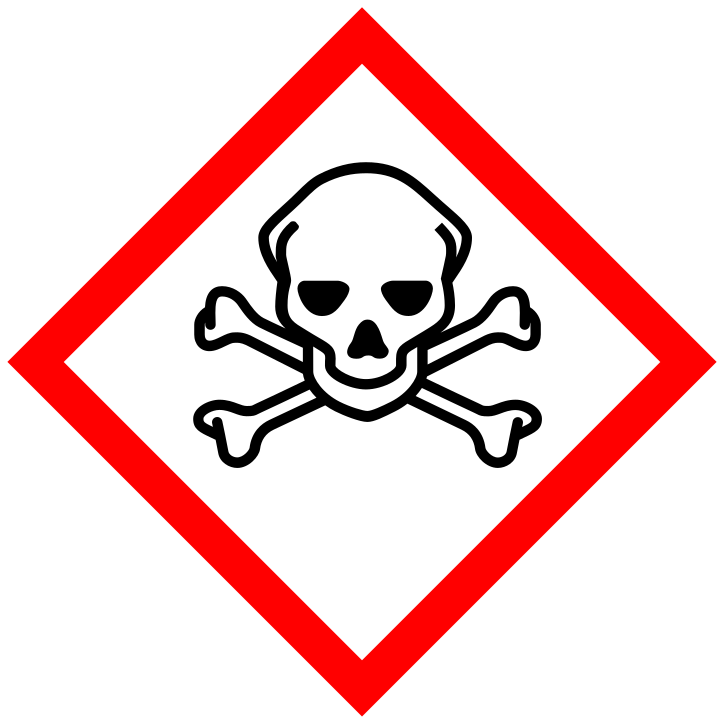
Acute toxicity pictogram

Acute toxicity

Skull and crossbones, GHS06. A small amount swallowed, breathed in or absorbed through the skin can be fatal or toxic.

Found onLess common on everyday trade products. Hydrofluoric acid carries it, and so can brick, stone and metal cleaners made with it, depending on strength. Weaker ones may show only corrosion: read the label.

Hazard classesAcute toxicity, oral, dermal and inhalation (categories 1 to 3).

Health hazard / hazardous to the ozone layer pictogram

Health hazard / hazardous to the ozone layer

Exclamation mark, GHS07. Less severe harm: skin or eye irritation, skin allergy, drowsiness, breathing irritation, or harmful if swallowed, breathed in or absorbed. It also marks harm to the ozone layer.

Found onMany cleaning products and degreasers, epoxy resins and adhesives that can cause skin allergy, and solvents that cause drowsiness or dizziness.

Hazard classesAcute toxicity (category 4); skin irritation (category 2); eye irritation (category 2); skin sensitisation (categories 1, 1A, 1B); specific target organ toxicity, single exposure (category 3: respiratory tract irritation, narcotic effects); hazardous to the ozone layer (category 1).

Serious health hazard pictogram

Serious health hazard

Health hazard, GHS08. Serious harm, often long-term or delayed. It covers asthma from breathing a sensitiser, cancer, genetic damage, harm to fertility or the unborn child, and organ damage. It also marks death or lung damage if a swallowed liquid enters the airways.

Found onExpanding polyurethane foams, which can cause asthma and are suspected of causing cancer, and some isocyanate two-pack paints and hardeners. White spirit, for the aspiration hazard. Any product classified as a carcinogen.

Hazard classesRespiratory sensitisation (categories 1, 1A, 1B); germ cell mutagenicity, carcinogenicity and reproductive toxicity (categories 1A, 1B, 2); specific target organ toxicity, single exposure (categories 1, 2) and repeated exposure (categories 1, 2); aspiration hazard (category 1).

Hazardous to the environment pictogram

Hazardous to the environment

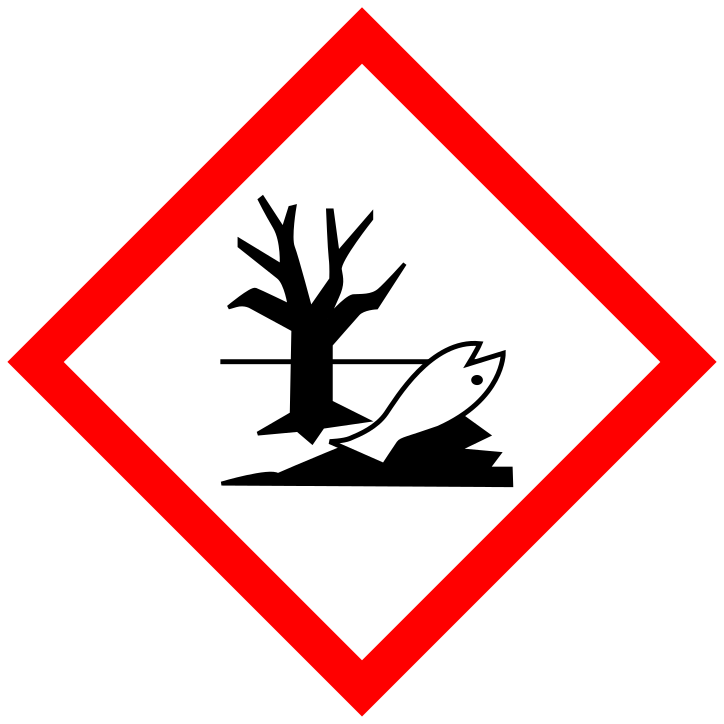
Environment, GHS09. Toxic to fish and other aquatic life, in some cases with long lasting effects. Keep it out of drains and watercourses.

Found onMany woodworm killers, timber treatments and other biocides, and many epoxy resins.

Hazard classesHazardous to the aquatic environment: acute category 1, and chronic categories 1 and 2.

Under GB CLP Article 26, a stronger symbol can displace a weaker one. Where the skull and crossbones applies, the exclamation mark does not appear. Where corrosion applies, the exclamation mark is not used for skin or eye irritation. Where the health hazard symbol is used for a breathing allergy, the exclamation mark is not used for skin allergy or irritation.

The old orange symbols and what replaced them

CHIP, revoked

Before CLP, supply labels in Great Britain carried a black symbol on an orange-yellow square, under the CHIP Regulations. Seven symbols covered ten indications of danger. The conversions below follow the translation table in GB CLP Annex VII.

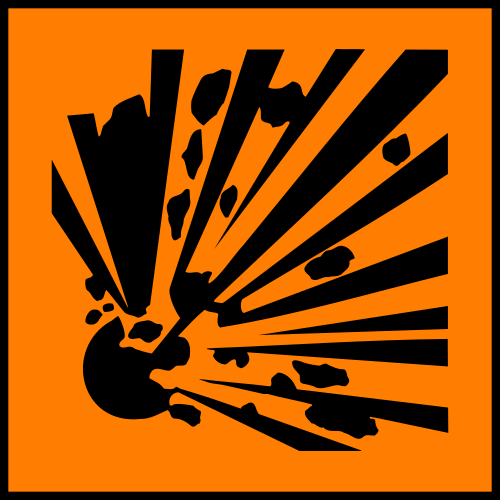
Explosive (E) pictogram

Explosive (E)

Replaced by the exploding bomb. There is no direct conversion: the product is reclassified against the CLP criteria.

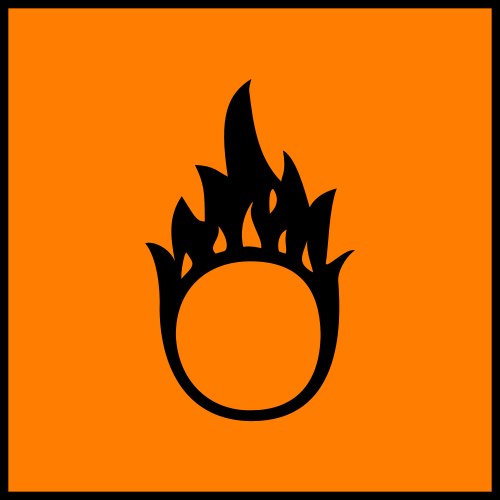
Oxidising (O) pictogram

Oxidising (O)

Replaced by the flame over circle for oxidising gases, liquids and solids. Organic peroxides, which also carried O, now take the flame, and the most reactive the exploding bomb as well.

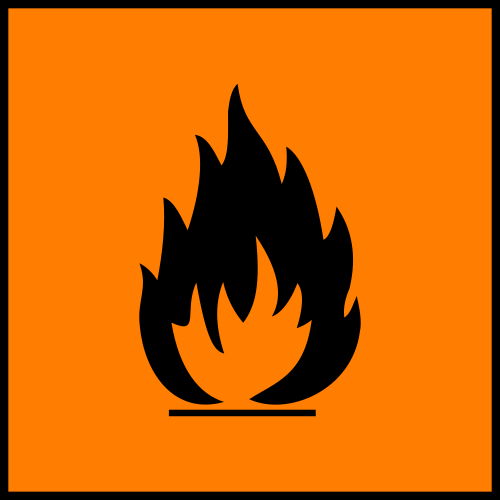
Extremely flammable (F+) and highly flammable (F) pictogram

Extremely flammable (F+) and highly flammable (F)

Replaced by the flame. Some liquids that carried no symbol under CHIP, only the phrase R10 (flammable), now carry the flame as well.

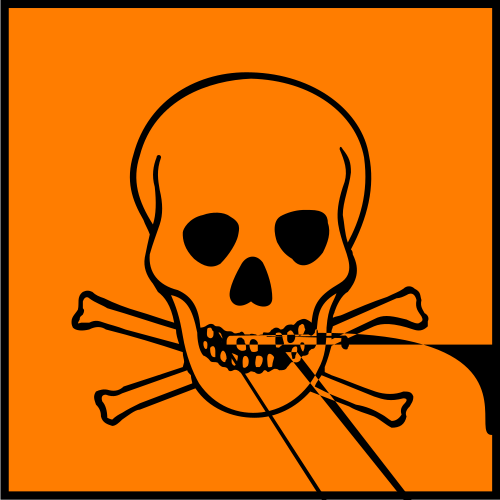
Very toxic (T+) and toxic (T) pictogram

Very toxic (T+) and toxic (T)

Replaced by the skull and crossbones for acute poisoning. Where T marked serious organ damage, cancer, genetic damage or harm to fertility or the unborn child, the conversion is to the health hazard symbol.

Harmful (Xn) and irritant (Xi) pictogram

Harmful (Xn) and irritant (Xi)

One black cross served both. Most of it went to the exclamation mark. Breathing allergy, suspected cancer, aspiration hazard and organ damage went to the health hazard symbol, and risk of serious damage to eyes went to corrosion.

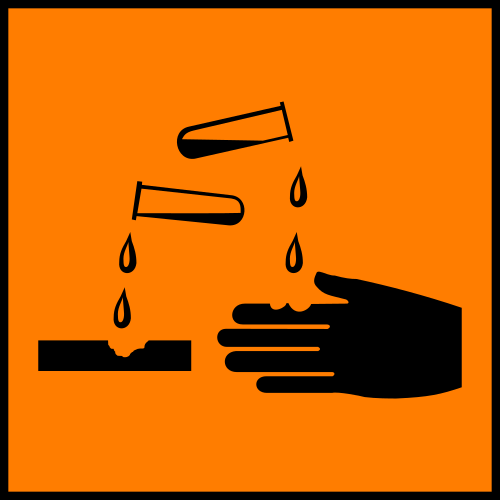
Corrosive (C) pictogram

Corrosive (C)

Replaced by the corrosion symbol, which now also covers serious eye damage and metal corrosion.

Dangerous for the environment (N) pictogram

Dangerous for the environment (N)

Replaced by the environment symbol for aquatic hazards. Substances that harm the ozone layer, once marked N, now carry the exclamation mark.

CLP labels became compulsory for substances on 1 December 2010 and for mixtures on 1 June 2015. Stock already on the market could keep its old label until 1 December 2012 and 1 June 2017 respectively. The gas cylinder has no orange forerunner. An orange label in the store today means old stock: get the current safety data sheet, as the classification may have changed.

What else is on a hazard label

GB CLP Article 17

The pictogram is one of eight label elements GB CLP sets for a hazardous product in packaging, and the label is written in English. Packs sold to the public also state the quantity.

Signal word

Danger for the more severe hazards, Warning for the less severe. Where Danger is used, Warning does not also appear.

GB CLP Article 20

Hazard statements (H-codes)

A fixed phrase for each hazard, with a code. The H200s are physical hazards, the H300s health hazards and the H400s environmental hazards. Examples: H225 Highly flammable liquid and vapour. H317 May cause an allergic skin reaction. H411 Toxic to aquatic life with long lasting effects.

GB CLP Article 21 and Annex III

Precautionary statements (P-codes)

How to use, store and dispose of the product safely. The codes run from general (P100s) through prevention (P200s), response (P300s) and storage (P400s) to disposal (P500s). Examples: P260 Do not breathe dust/fume/gas/mist/vapours/spray. P280 Wear protective gloves/protective clothing/eye protection/face protection. No more than six, unless the hazards need more.

GB CLP Articles 22 and 28, Annex IV

Product identifier

The product name, the same as on the safety data sheet. For a mixture, it also names the substances behind its most serious health classifications, usually no more than four.

GB CLP Article 18

Supplier

The name, address and telephone number of the supplier. It is the number to ring when the label leaves a question open, as HSE advises.

GB CLP Article 17

Supplemental information

Extra statements set by GB CLP, such as the codes beginning EUH that carried over some old risk phrases. Unless the label already identifies them, any mixture containing isocyanates must carry EUH204: Contains isocyanates. May produce an allergic reaction. A hazardous product must not be called non-toxic, non-harmful or ecological on its label or packaging.

GB CLP Article 25 and Annex II

What COSHH symbols do not tell you

A pictogram flags a hazard in a product. Whether your team is at risk, and what keeps them safe, is the job of the COSHH assessment and the safety data sheet.

How much exposure the task creates

A symbol describes the product, not the job. COSHH regulation 6 requires the assessment to consider the level, type and duration of exposure and the circumstances of the work. HSE warns that wet cement can burn badly when trapped against the skin, inside a boot for example. No pictogram says that.

COSHH regulation 6

Hazards that carry no pictogram

Some hazard categories have no pictogram at all, such as flammable gases in category 2, aerosols in category 3 and the lower aquatic chronic categories 3 and 4. A label with no symbol can still carry hazard statements.

GB CLP Annex V

Dust and fume made by the work

Silica dust from cutting kerbs, wood dust from sanding and fume from welding come from the process, not a labelled container. COSHH still covers them. Its definition takes in substances with a workplace exposure limit and any substance that creates a risk by the way it is used. It also covers any dust at or above 10 mg/m3 inhalable or 4 mg/m3 respirable, as an 8-hour average. See the dust and silica and hot works and welding templates.

COSHH regulation 2

The controls, PPE, first aid and disposal

These come from the safety data sheet and your own assessment, which must consider the supplier’s information. Read what is in a safety data sheet, then record the findings on the COSHH assessment template.

COSHH regulation 6(2)(b)

Free COSHH symbols poster

A4 and A3, free

The free COSHH symbols poster shows the nine hazard pictograms, each with its name and a one-line meaning. It prints at A4 or A3, for the chemical store, the van or the welfare cabin.

Download the COSHH symbols poster (PDF)

A poster supports the information and training COSHH regulation 12 requires. It does not replace the assessment or access to the safety data sheets, which regulation 12 also covers. Brief it at a toolbox talk.

The COSHH register in Unibuild

Every data sheet to hand,
tied to the job that uses it.

In Unibuild, each hazardous substance holds its safety data sheet and its supplier, linked to the jobs, materials and purchase orders that use it. Review dates are tracked, every version is kept, and the current one is the one out on site.

When an auditor or a principal contractor asks for the COSHH register, it is a search by name or supplier, not a spreadsheet somebody else kept.

  • A data sheet for every substance held with its supplier
  • Tied to the job through the materials and purchase orders that use it
  • Review dates tracked and every version kept
  • Searched by product name or supplier
What are the nine COSHH symbols?
The physical hazards: explosive (exploding bomb), flammable (flame), oxidising (flame over circle), gas under pressure (gas cylinder) and corrosive (corrosion). The health hazards: acute toxicity (skull and crossbones), health hazard or hazardous to the ozone layer (exclamation mark), and serious health hazard (health hazard). The environment hazard has its own symbol. They are set out in Annex V of the GB CLP Regulation.
What is the COSHH toxic symbol?
The skull and crossbones in a red diamond. It marks acute toxicity in categories 1 to 3: products that can be fatal or toxic in small amounts if swallowed, breathed in or absorbed through the skin. Long-term effects such as cancer or organ damage use the health hazard symbol instead.
What is the COSHH harmful or irritant symbol now?
The old harmful and irritant symbol, a black cross on an orange square, has gone. Most products it marked now carry the exclamation mark, used for harmful acute toxicity, skin and eye irritation and skin allergy. Some moved to the health hazard symbol, for breathing allergy, suspected cancer, aspiration or organ damage, and some to corrosion, for serious eye damage.
What is the difference between the exclamation mark and the health hazard symbol?
The exclamation mark covers less severe effects: irritation, skin allergy, drowsiness and harmful acute toxicity. The health hazard symbol is a figure with a starburst on the chest. It covers serious effects, often long-term: respiratory sensitisation, cancer, genetic damage, reproductive harm, organ damage and aspiration hazard.
Why does a cleaning product carry the corrosion symbol?
Under GB CLP the corrosion symbol covers serious eye damage as well as skin burns. HSE explains that a product classed as causing serious eye damage carries corrosion and H318, while one that causes eye irritation carries the exclamation mark and H319. Read the hazard statements to see which applies.
Are COSHH symbols the same as GHS pictograms?
Yes. GB CLP is how Great Britain gives legal effect to the UN Globally Harmonized System, and Annex V gives each of the nine pictograms its GHS code, GHS01 to GHS09. Northern Ireland follows the EU CLP Regulation, which also adopts the GHS.
Are the old orange hazard symbols still valid?
No. They came from the CHIP Regulations, which CLP replaced. CLP labels were required for substances from 1 December 2010 and for mixtures from 1 June 2015. Stock already on the market could keep its old label until 1 December 2012 and 1 June 2017. An orange label today means old stock: check the current safety data sheet.
Do I need COSHH signs on a chemical store?
A store holding significant quantities of hazardous substances needs a suitable warning sign near it or on its door, unless the container labels are adequate. A store of several substances may use the general danger sign. Containers at work, including a spray bottle you decant into, need the hazard pictograms, unless used only briefly or the contents change often and training gives the same protection. The rules are in the Health and Safety (Safety Signs and Signals) Regulations 1996.
Where can I get a COSHH symbols poster?
The free poster on this page shows the nine pictograms with their names and meanings, at A4 or A3. It supports the information and training COSHH regulation 12 requires, alongside the assessment and access to the safety data sheets.

The COSHH guide

Read in any order
Next step

The COSHH register,
tied to the job.

Unibuild keeps each substance’s data sheet and supplier against the jobs, materials and purchase orders that use it, with review dates tracked and every version kept.