
Silica dust at work: health risks, limit and controls
Where respirable crystalline silica comes from on site, what it does to the lungs, the workplace exposure limit and the controls HSE expects. Checked against legislation.gov.uk and HSE guidance.
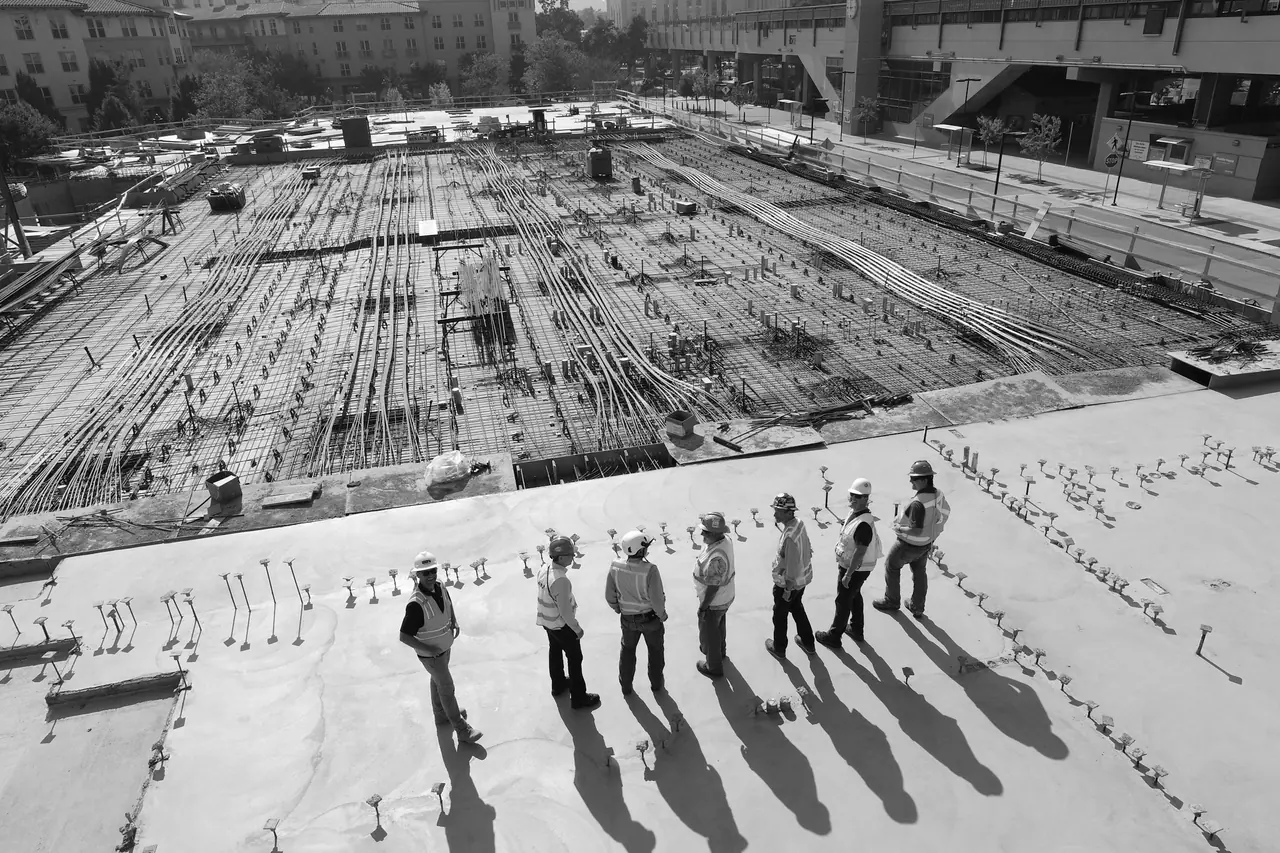
What is silica dust?
Silica dust is the fine dust made when concrete, brick, mortar, stone, tiles and other materials containing crystalline silica are cut, drilled, ground or swept. The finest part, respirable crystalline silica (RCS), reaches deep into the lungs and is too fine to see in normal lighting.
Breathing it over time causes silicosis, chronic obstructive pulmonary disease (COPD) and lung cancer. HSE calls silica the biggest risk to construction workers after asbestos. Any trade that cuts or drills masonry meets it, from groundworkers and roofers to electricians, kitchen fitters and maintenance teams.
COSHH applies. EH40 sets a workplace exposure limit of 0.1 mg/m³ as an 8-hour average, and marks RCS Carc where a work process creates it. EH40 says exposure to a Carc substance must be reduced as low as is reasonably practicable, so the limit is a ceiling, not a target.
HSE’s order of control is to stop or reduce the dust, then use water suppression or on-tool extraction, then add RPE on top. For a task-by-task risk assessment ready to edit, use the dust and silica risk assessment template.
Where trades meet silica dust
HSE CIS36 and task pagesThe dust comes from the work, not from a container. Silica content figures are HSE’s approximate ranges and vary with the stone, so ask the supplier if in doubt.
| Task | Who does it | Material and silica content | What HSE says |
|---|---|---|---|
| Cutting kerbs, blocks, paving and flags with a cut-off saw | Groundworkers, landscapers, paving and highways teams | Concrete: 25 to 70% | Produces very high levels of silica dust. HSE’s film of uncontrolled cutting shows peaks of up to 70 mg/m³, against a limit of 0.1 mg/m³ averaged over 8 hours. |
| Chasing concrete and raking out mortar | Electricians, plumbers, heating engineers and repointing teams | Concrete and mortar: 25 to 70% | Very high levels when uncontrolled, with peaks around 5 mg/m³ in HSE’s film. Extraction does not capture all of it, so RPE is still needed. |
| Cutting roof tiles with a cut-off saw | Roofers | Concrete and clay roof tiles | Quick cuts done outside are not low risk. Dry cutting quickly produces very high peaks of silica dust. |
| Drilling and coring | Mechanical and electrical installers, shopfitters and maintenance teams | Concrete, block and brick (brick up to 30%) | Drilling as a main activity, and dry coring, are on HSE’s list of common high-risk tasks. |
| Scabbling, grinding and breaking | Concrete repair, refurbishment and demolition teams | Concrete: 25 to 70% | High-risk tasks. HSE pairs on-tool extraction, where possible, with RPE. |
| Abrasive blasting | Surface preparation and facade cleaning teams | Sandstone: above 70% | COSHH Schedule 2 prohibits sand or any other substance containing free silica as an abrasive for blasting articles in blasting apparatus. HSE suggests silica-free abrasive or water jetting. Most blasting needs RPE with an assigned protection factor of 40. |
| Cutting and fitting stone worktops | Kitchen and bathroom fitters and worktop fabricators | Engineered stone: often up to about 95%. Granite: 20 to 45%, typically 30%. Sintered stone, including porcelain: 5 to 25% | Stone with a high silica content, such as resin-based engineered stone, gives dust with high levels of RCS and a risk of a high dose. HSE says dry cutting of engineered stone is unacceptable. |
| Dry sweeping and clearing up | Every trade, site cleaners and facilities cleaning teams | Settled dust from any of the above | Dry brushing concrete dust gave peaks around 1 to 2 mg/m³ in HSE’s film. Vacuuming with the correct extraction unit cut it dramatically. |
Limestone, chalk and marble hold up to 5% silica, typically less than 2%, though marble can carry veins of silica that raise it a lot. Gypsum in plasterboard contains very little or none. HSE’s figures differ slightly between sources: its silicosis page gives brick and granite as up to 30%, so treat every figure as a guide. Dust with little silica still comes under COSHH at or above 10 mg/m³ inhalable or 4 mg/m³ respirable, as an 8-hour average. Sources: HSE INDG463 (05/24), silicosis, CIS36 and the construction dust task pages; HSE G404. Wood dust has its own page: wood dust.
What silica dust does to health
The damage builds slowly and often shows no symptoms at first. HSE says that by the time it is noticed, the damage may already be serious and life changing.
Silicosis
RCS scars and hardens the lung tissue, with a loss of lung function. HSE says it usually develops after at least 10 years of exposure, with no symptoms at first. It is irreversible and can keep getting worse after exposure stops. Sufferers may find it difficult or impossible to walk even short distances.
HSE INDG463; HSE, silicosisAcute silicosis and engineered stone
Acute silicosis is a rare, life-threatening form that follows short-term exposure to very large amounts of RCS. HSE said in May 2026 that recent cases suggest engineered stone dust can cause silicosis in months or years, not decades.
HSE G404; HSE press release, 11 May 2026Chronic obstructive pulmonary disease (COPD)
A group of lung diseases, including bronchitis and emphysema, that cause severe breathlessness, prolonged coughing and chronic disability. Any fine dust can cause it, RCS included, and smoking can make it worse. HSE says it is slow to develop and rarely seen in people under 40.
HSE INDG463; HSE, silicosisLung cancer
Heavy and prolonged exposure to RCS can cause lung cancer, and a person with silicosis is at greater risk of it. HSE says the precautions that control the risk of silicosis also control the risk of lung cancer.
HSE INDG463; HSE, silicosisLinked conditions
Workers with silicosis are also at increased risk of tuberculosis, kidney disease and arthritis.
HSE G404The scale in construction
HSE’s construction dust sheet says over 500 construction workers are believed to die from exposure to silica dust every year. HSE says the amount that does this damage is not large.
HSE CIS36(rev3)HSE says these health risks are almost entirely preventable when exposure to the dust is adequately controlled.
What COSHH and EH40 ask for silica dust
Law and HSE guidanceEach row says whether it is the law or HSE guidance, and links to the source.
COSHH covers it at any level (law)
RCS has a workplace exposure limit, which makes it a substance hazardous to health under COSHH. The general dust thresholds of 10 and 4 mg/m³ apply only to dust without a limit of its own.
Regulation 2Assess before the work starts (law)
An employer must not carry out work liable to expose employees until a suitable and sufficient assessment is made and its steps are in place. An employer with 5 or more employees records the significant findings and the steps taken. It is reviewed regularly, and at once if it may no longer be valid or the work changes significantly.
Regulation 6(1), (3) and (4)Prevent, then control in order (law)
Exposure is prevented or, where that is not reasonably practicable, adequately controlled. Substitution comes first. Control then follows a set order: work methods, engineering controls and equipment; control at source; and personal protective equipment, including RPE, only where adequate control cannot be achieved otherwise.
Regulation 7(1) to (3)Stay below the WEL (law)
Control counts as adequate only if the Schedule 2A principles are applied and no workplace exposure limit is exceeded. For RCS, EH40 Table 1 sets 0.1 mg/m³ of the respirable fraction as an 8-hour time-weighted average, with no short-term limit listed.
Regulation 7(7); EH40 Table 1As low as reasonably practicable (HSE guidance)
EH40 Table 1 marks RCS Carc where it is generated as a result of a work process. EH40 paragraph 84 says exposure to any substance with a Carc notation must be reduced as low as is reasonably practicable, whether or not it has a WEL. L5 paragraph 143 says the same for carcinogens with a WEL. Regulation 7(7)(c) itself names only substances with hazard statement H340, H350 or H350i and those in Schedule 1. Dust made on site carries no hazard statement and RCS is not in Schedule 1, so the ALARP duty here comes from HSE guidance.
EH40 Table 1 and paragraph 84; L5 paragraph 143Extra measures for a carcinogen (law)
Regulation 2 defines a carcinogen by the CLP criteria, whether or not the substance is classified. EH40 says the definition covers substances generated by a work process, and L5 says EH40 lists the carcinogens for COSHH purposes. Read together, these make site-made RCS a carcinogen under COSHH. Where exposure cannot be prevented, regulation 7(5) adds five measures. They are total enclosure unless not reasonably practicable, no eating, drinking or smoking in areas that may be contaminated, and regular cleaning of surfaces. The others are marked areas with warning signs, and safe storage and disposal in closed, labelled containers.
Regulations 2 and 7(5); EH40 paragraphs 48 to 51; L5 paragraph 28No silica abrasive for blasting (law)
Regulation 4 and Schedule 2 prohibit sand or any other substance containing free silica from use as an abrasive for blasting articles in any blasting apparatus.
Regulation 4 and Schedule 2Use, maintain and test the controls (law)
Employers take all reasonable steps to make sure controls are used, and employees must use them properly and report defects. Controls are kept in efficient working order. LEV, which HSE says includes on-tool extraction, is thoroughly examined and tested at least once every 14 months. The record is kept for at least 5 years.
Regulations 8 and 9Monitor where the assessment calls for it (law)
Exposure is measured where the assessment shows it is needed to keep control adequate or to protect health, unless adequate control can be shown another way. Records of the personal exposure of identifiable employees are kept for at least 40 years.
Regulation 10Inform and train (law)
Employees exposed must be told the substance, its risk to health and its WEL, the significant findings of the assessment and the precautions to take. If monitoring shows the WEL exceeded, they or their representatives must be told at once.
Regulation 12(2)How WELs are averaged and checked is on EH40 and workplace exposure limits. The wider duties are on the COSHH Regulations explained.
Controlling silica dust, in order
HSE CIS36HSE’s construction dust sheet follows the same order as regulation 7: stop or reduce the dust, stop it getting into the air, then add RPE. Its Table 1 sets out controls for each high-risk task.
Design the dust out
Order materials to size so less cutting is needed. Use a block splitter instead of a cut-off saw, have material cut off site, or fix with a direct fastening system instead of drilling. Roofers can allow for half and one-and-a-half tiles and use dry valleys.
NoteSubstitution comes first in law, under regulation 7(2). COSHH Schedule 2 prohibits sand or other free silica as a blasting abrasive.
Use water suppression
Water damps down the dust cloud, but only with enough water, at the right rate, for the whole time the work is done. Wetting the material beforehand does not work. Connect the saw to a pressurised water container.
NoteHSE says water does not capture all the silica, so RPE is still needed as back-up.
Fit on-tool extraction
Use a captor hood on the tool, tubing and an H or M class extraction unit, never a general commercial vacuum. Make sure the flow rate suits the work and the hose connections are tight. Check it is working at least weekly.
NoteA competent person examines and tests it at least every 14 months. See local exhaust ventilation.
Organise the work area
Limit the number of people near the work and rotate those doing the task. Screen or sheet off the area to stop dust escaping. Use general mechanical ventilation in enclosed spaces, and choose work clothes that do not hold dust. Keep eating, drinking and smoking out of the dusty area.
NoteRegulation 7(4)(c) requires the number of people exposed, and the level and duration of exposure, to be kept to the minimum the work needs. Regulation 7(5) adds the ban on eating, drinking and smoking for carcinogens.
Add RPE on top
HSE’s general level for construction dust is an assigned protection factor (APF) of 20. That means an FFP3 disposable mask or a half mask with a P3 filter. For work over an hour without a break, consider a powered hood such as TH2. Most abrasive blasting needs APF 40.
NoteTight-fitting masks need a face fit test and a clean-shaven wearer. HSE says that if you rely on RPE alone, you must be able to justify why. See face fit testing.
Clean up without raising dust
Do not dry sweep. Damp down and use a brush, shovel and bucket for small amounts, or vacuum with an H or M class unit. Never use compressed air to clean dust off clothing.
NoteRegulation 9(6) requires PPE that may be contaminated to be removed on leaving the work area and kept apart from clean clothing.
Supervise and review
Check that the controls are used and working, involve the operatives in finding problems, and maintain the equipment. If the work still looks dusty, exposure monitoring may be needed.
NoteHSE’s model is assess, control and review. Make sure operatives attend health surveillance where it is needed.
Engineered stone and other stone worktops
HSE ST3A and worktop guidanceResin-based engineered stone often comprises up to around 95% quartz. In May 2026 HSE published COSHH essentials sheet ST3A for cutting and polishing engineered stone with hand-held tools. Its older page for installers covers natural, artificial and engineered stone worktops.
Choose the lowest silica stone
ST3A starts with working stone that has the lowest crystalline silica content. HSE says its research found lower-silica engineered stone available at the same quality.
HSE ST3A; HSE press release, 11 May 2026Cut and finish off site
Do as much cutting, shaping and polishing as possible in a suitably equipped workshop. Cut sink and tap holes before arriving. Clean dust off worktops before transport, using wet cleaning or an M class vacuum.
HSE, installing stone worktopsCut wet, never dry
ST3A asks for on-tool water suppression with an adequate supply of clean water, and control of the mist, which contains crystalline silica. HSE found dry fabrication typically gives exposures five to ten times higher than wet methods. It says its guidance rules out dry cutting unless an equally effective or better control is shown. HSE says this is not a new law, but how employers should meet COSHH.
HSE ST3A; HSE press release, 11 May 2026Cut on site only in a set-aside area
Make on-site changes in a well-ventilated, segregated area with restricted access, ideally outdoors. HSE’s installer page allows water suppression, or on-tool extraction with a shroud to an M class vacuum. For engineered stone, ST3A expects water. Turn off heating blowers and air conditioning, which stir settled dust back into the air.
HSE, installing stone worktops; HSE ST3AWear the right RPE
For engineered stone, ST3A asks for powered air purifying respirators (PAPR), or equivalent positive pressure RPE, with an APF of at least 20 when processing, cleaning or maintaining machinery. For other stone, the installer page gives an FFP3 mask as an example of APF 20, unless monitoring shows it is not needed. Keep RPE on while cleaning up.
HSE ST3A; HSE, installing stone worktopsClean up wet, straight away
Use a low-pressure water hose or an M class vacuum, never brushes or compressed air. Remove slurry and captured dust promptly, and do not let it dry out. Vacuum coveralls before leaving the dusty area, and dispose of disposable RPE and clothing after each shift. ST3A adds that work clothing goes to a contract laundry, not home.
HSE, installing stone worktops; HSE ST3AWatch the other risks of wet work
Wet working can cause dermatitis, so ST3A asks for suitable gloves and skin care. Recirculated water needs checks against legionella. ST3A also asks employers to consider vibration and noise, and to provide health surveillance.
HSE ST3AHSE says a self-employed fitter has the same legal duties as an employer here, and that everyone working with stone must be trained in the risks and the controls. In May 2026 HSE began a programme of more than 1,000 inspections of fabricators across Great Britain. For skin, see occupational dermatitis.
Health surveillance and reporting
HSE G404 and RIDDORWhen HSE says it must be provided
Where workers are regularly exposed to RCS dust and silicosis is reasonably likely to develop. HSE says to consider it for high-risk occupations, construction and worktop fitting included. Reliance on RPE, and previous cases at work, are further signs it may be needed.
HSE G404; COSHH regulation 11What it involves
A baseline before exposure or as soon as possible after it starts, for example within six weeks. Then a questionnaire, lung function tests and chest X-rays, at a frequency an occupational health professional advises. Health records are kept for at least 40 years from the last entry.
HSE G404; regulation 11(3)Reporting under RIDDOR
Silicosis and COPD are not on the regulation 8 list of reportable occupational diseases. Regulation 9 covers any cancer attributed to work with a known human carcinogen. HSE says such a cancer is reportable where the work significantly increases the risk and the current job involves the exposure.
RIDDOR regulations 8 and 9; HSE guidanceWho carries it out, the health record and what to do when a case is found are on health surveillance under COSHH.
A COSHH assessment for silica dust
Write a silica dust COSHH assessment task by task, because the dust level depends on the task. HSE names four drivers: the energy of the tool, how enclosed the work area is, how long the work lasts and how often it is repeated.
Regulation 6(2) requires the assessment to consider, among other things, the level, type and duration of exposure, the effect of the controls and the results of health surveillance and monitoring. In practice, record the material and its likely silica content, who is exposed and for how long, and each control in the order above. Then add the RPE and its APF, face fit testing, the clean-up method and the review date.
Cutting makes the dust on site, so there is no container label for it. For a bagged product such as silica sand, mortar or grout, start from the supplier’s safety data sheet. Use the free COSHH assessment template, or the dust and silica risk assessment template, which is already filled in task by task.
Every data sheet to hand,
tied to the job that uses it.
In Unibuild, each hazardous substance holds its safety data sheet and its supplier, linked to the jobs, materials and purchase orders that use it. Review dates are tracked, every version is kept, and the current one is the one out on site.
When an auditor or a principal contractor asks for the COSHH register, it is a search by name or supplier, not a spreadsheet somebody else kept.
- A data sheet for every substance held with its supplier
- Tied to the job through the materials and purchase orders that use it
- Review dates tracked and every version kept
- Searched by product name or supplier
Free COSHH templates
Free to use and reuse, no sign-upSilica dust: common questions
What is silica dust?
Does concrete contain silica?
What are the symptoms of silicosis?
How long does it take to get silicosis?
What is the exposure limit for silica dust?
What mask do I need for silica dust?
Is silica dust a risk outdoors or on quick jobs?
Do I need a COSHH assessment for silica dust?
Is health surveillance required for silica dust?
Is silicosis reportable under RIDDOR?
Substances and diseases
Read in any orderSources
Great Britain law and HSE guidance, read on the dates above. Northern Ireland has its own COSHH Regulations.
- HSE CIS36(rev3), Construction dust, 2020 (PDF)
- HSE INDG463, Control of exposure to silica dust: a guide for employees, 2024 (PDF)
- HSE G404, Health surveillance for those exposed to respirable crystalline silica, 2024 (PDF)
- HSE, EH40/2005 Workplace exposure limits, fourth edition 2020 (PDF)
- HSE, Silicosis: causes and risk controls
- HSE, Cancer and construction: silica
- HSE, Construction dust: cutting paving blocks, kerbs and flags
- HSE, Installing stone worktops
- HSE ST3A, COSHH essentials for stone workers: cutting and polishing engineered stone, 2026 (PDF)
- HSE press release, No dry cutting of engineered stone, 11 May 2026
- The Control of Substances Hazardous to Health Regulations 2002, regulation 7, legislation.gov.uk
- HSE L5, Control of substances hazardous to health, ACOP and guidance, sixth edition 2013 (PDF)
- HSE, RIDDOR: exposure to carcinogens, mutagens and biological agents
The COSHH register,
tied to the job.
Unibuild keeps each substance’s data sheet and supplier against the jobs, materials and purchase orders that use it, with review dates tracked and every version kept.