
Occupational asthma: causes, duties and controls
The substances that cause asthma at work in trades, cleaning and facilities work, what COSHH asks once one is in use, and what happens when someone reports symptoms.
What is occupational asthma?
Occupational asthma is asthma caused by breathing a substance at work, known as a respiratory sensitiser or asthmagen. In trades work the usual causes are isocyanate paints and foams, wood dust, solder flux fume, some resins and some cleaning products.
Not everyone exposed becomes sensitised, and EH40 says there is no way to tell in advance who will. Once a worker is sensitised, further exposure, sometimes even in tiny quantities, may bring on symptoms. HSE’s guidance says symptoms can appear hours after exposure, possibly at night, which can make the link with work unclear.
COSHH requires exposure to an asthmagen to be reduced as low as is reasonably practicable, not just kept under its exposure limit. EH40 says health surveillance is appropriate for everyone exposed or liable to be exposed. A doctor’s diagnosis can be reportable under RIDDOR.
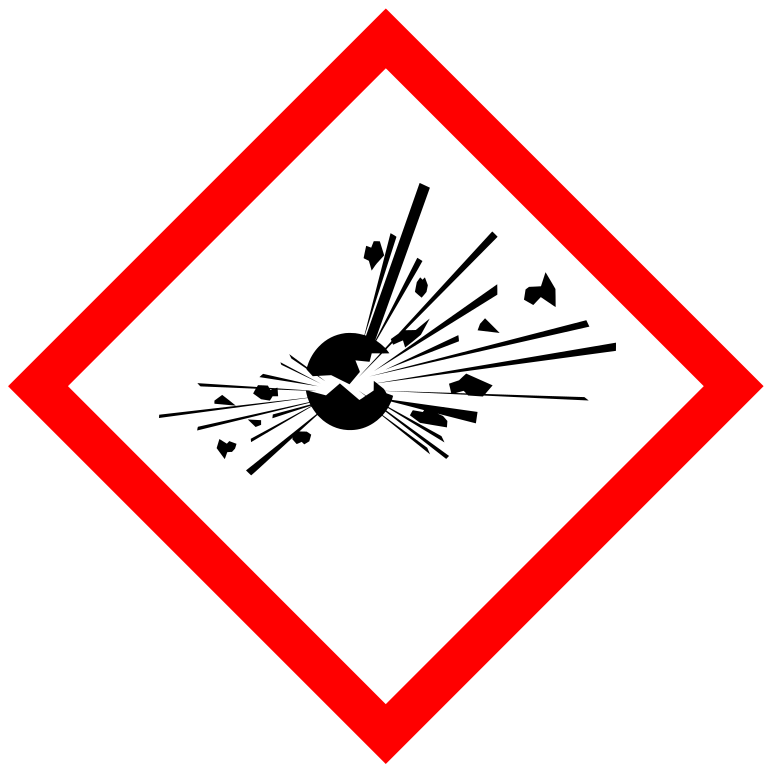
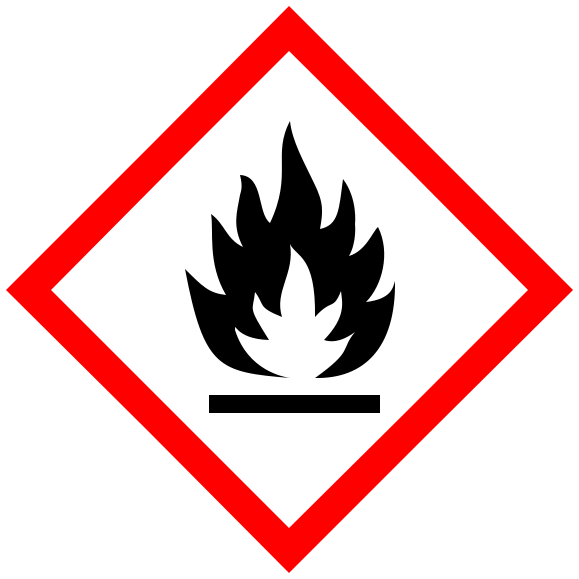
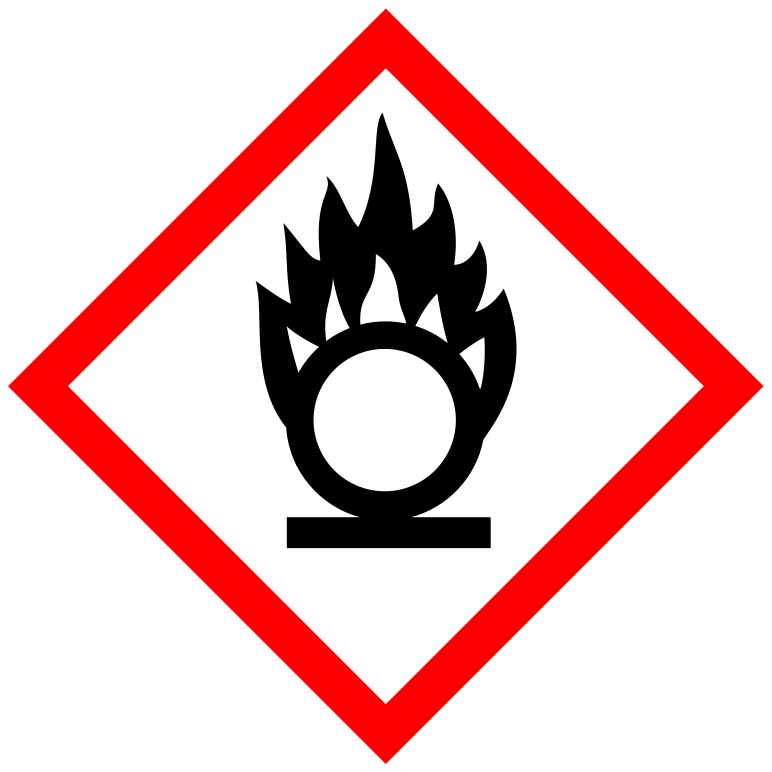
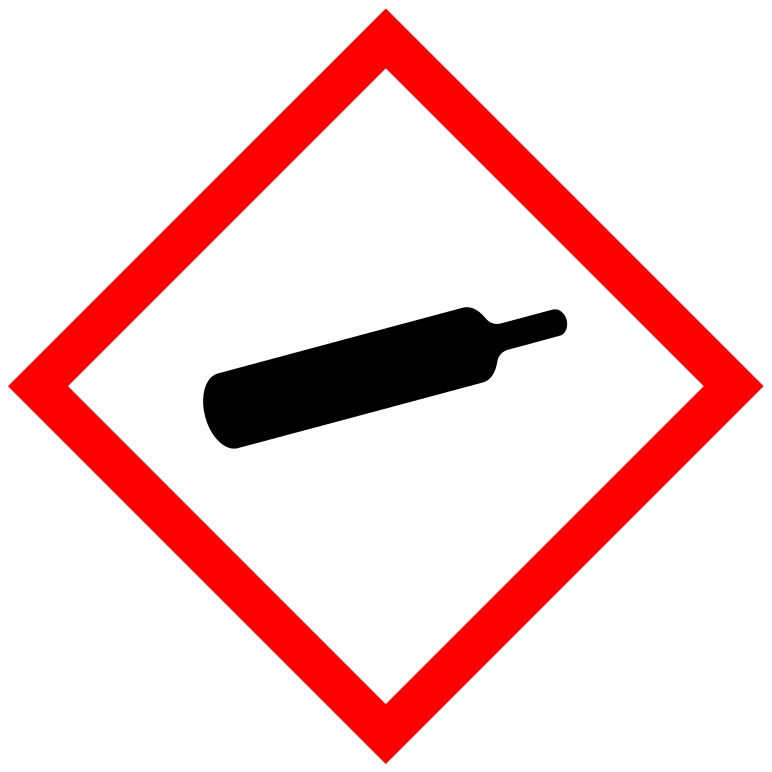
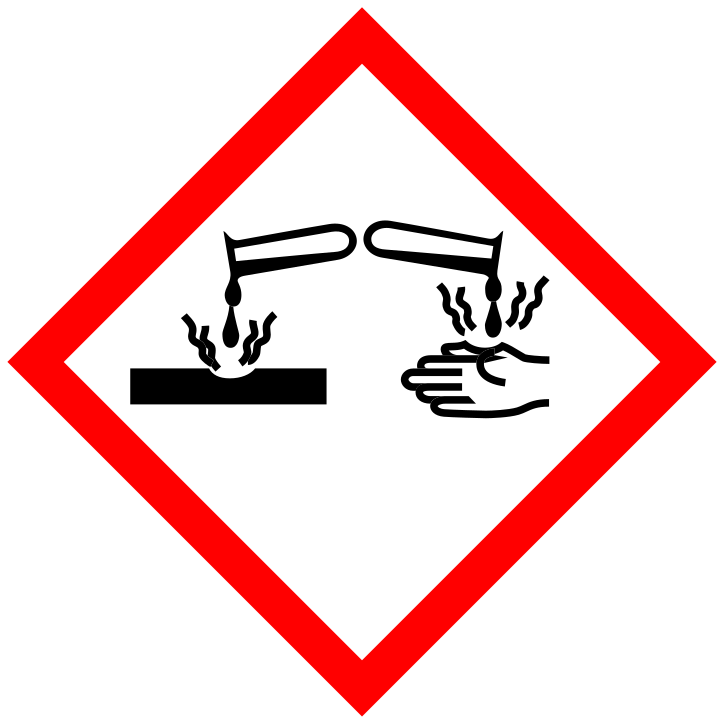
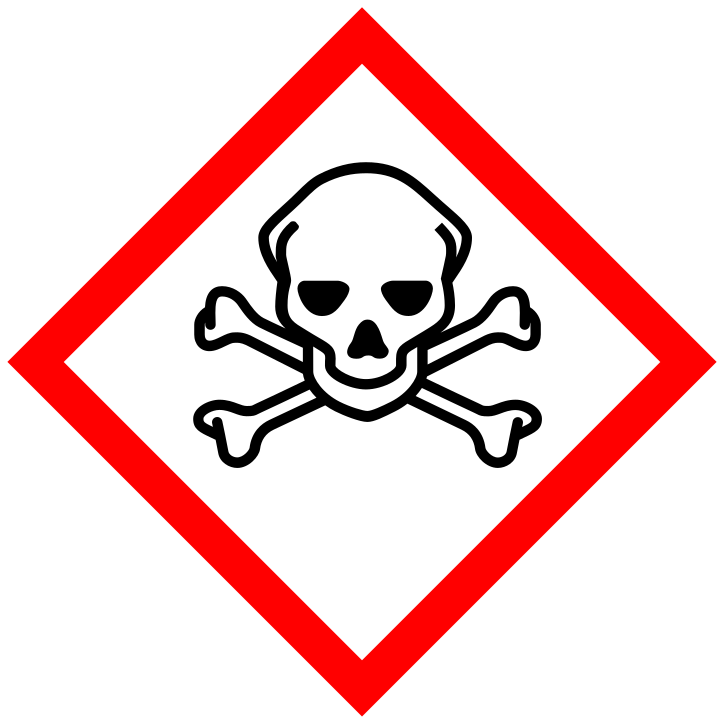
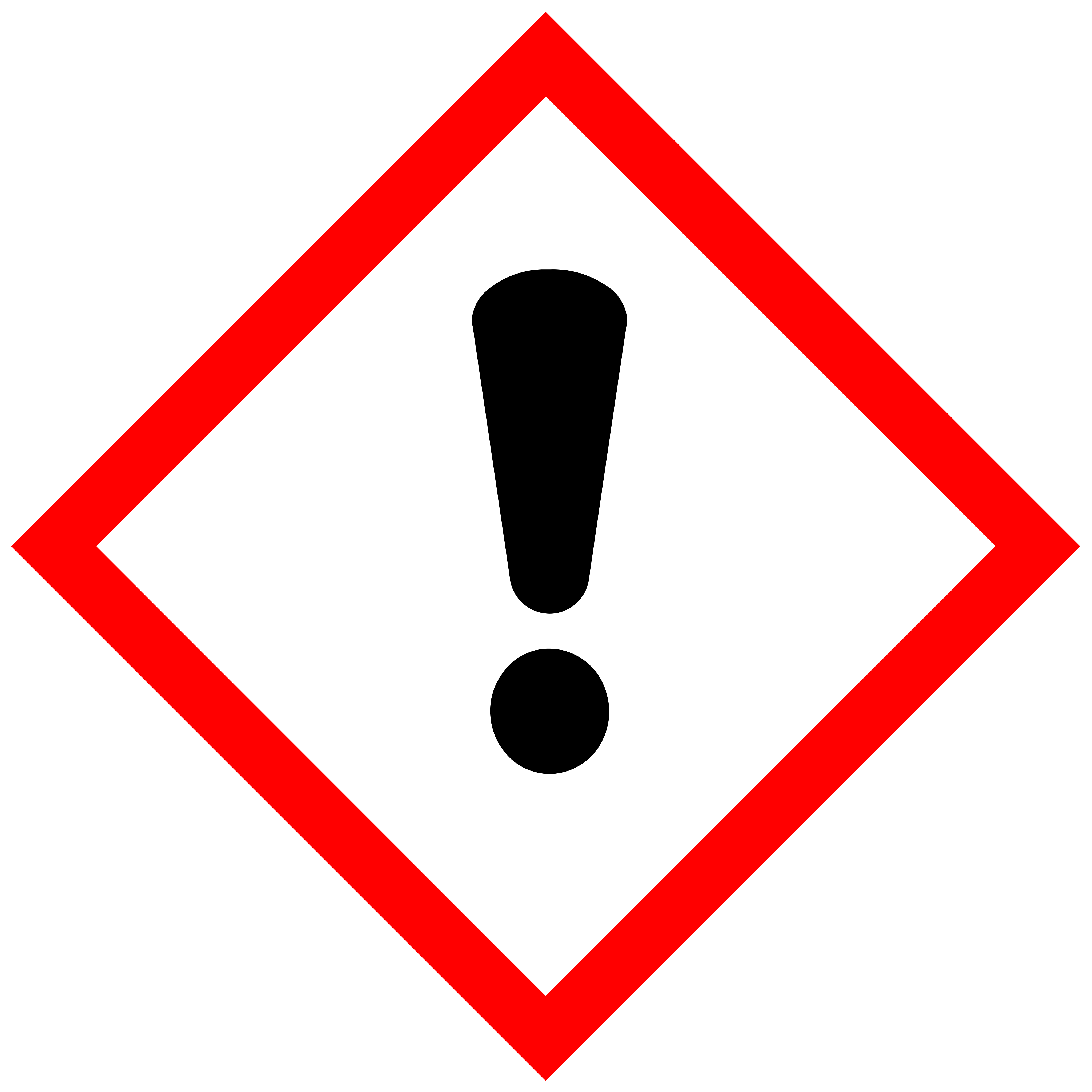
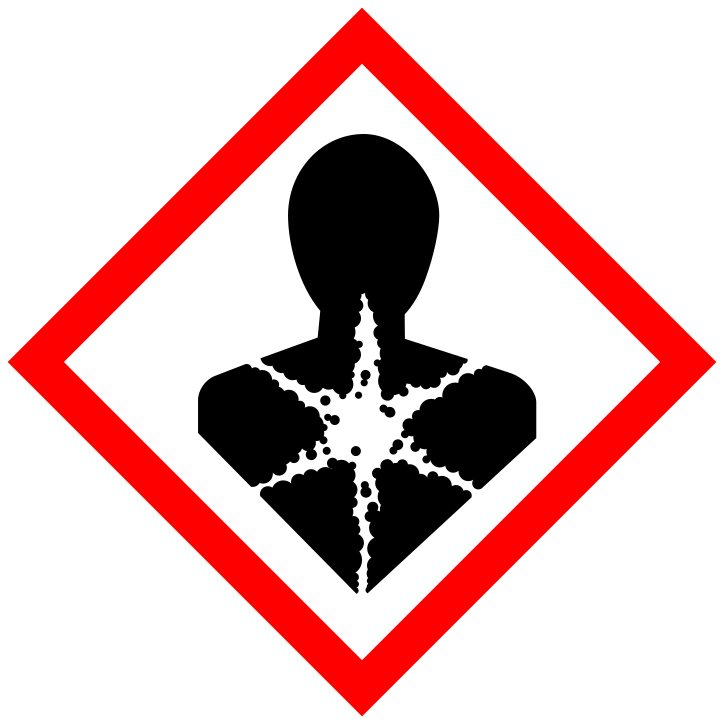
Start with the label and the safety data sheet: hazard statement H334 marks a respiratory sensitiser. Record the controls in your COSHH assessment.
Where trades meet asthmagens
HSE Asthmagen? and EH40The common causes in trades, cleaning and facilities work. Section C of HSE’s Asthmagen? review lists agents HSE found to meet the criteria for a respiratory sensitiser. In EH40, substances with a limit that may cause occupational asthma carry the notation “Sen”.
| Cause | Where trades meet it | How exposure happens | Listed by HSE |
|---|---|---|---|
| Isocyanates | Two-pack (2K) polyurethane paints and lacquers, spray foam insulation, some floor coatings and adhesives | Mainly breathing spray mist. HSE says spraying produces a lot of invisible mist. | Asthmagen? C14. EH40 Sen, 0.02 mg/m³ over 8 hours and 0.07 mg/m³ over 15 minutes. See isocyanates. |
| Wood dust | Sawing, routing and sanding hardwood, softwood and composite boards in joinery, carpentry and fit-out | Fine dust from machining and sanding, and settled dust raised again by sweeping or compressed air. | Asthmagen? C13 (some hardwoods) and C26 (some softwoods, cedar among them). EH40 Sen for both. See wood dust. |
| Rosin (colophony) solder flux fume | Soldering with rosin-based flux, as in electrical and electronic assembly and repair | Breathing the plume of fume that rises from the soldering iron. HSE names it a top cause of occupational asthma. | Asthmagen? C25. EH40 Sen, 0.05 mg/m³ over 8 hours and 0.15 mg/m³ over 15 minutes. |
| Stainless steel welding fume | Welding and hot cutting stainless steel in fabrication, M&E and maintenance | Breathing fume. HSE says the chromium and nickel in stainless steel fume can cause occupational asthma. | Chromium (VI) compounds are in Asthmagen? C6 and marked Sen in EH40. Nickel sulphate is C34. |
| Some epoxy resin systems | Epoxy floor coatings, resin anchors and two-part adhesives | Breathing fume or vapour given off by the resin and its hardener. | HSE’s RIDDOR guidance names epoxy resin fumes among known respiratory sensitisers. Section C includes ethylenediamine, a curing agent in some epoxy coatings and resins, and some anhydrides used to make epoxy resins. Not every epoxy product or hardener is a respiratory sensitiser: check the data sheet for H334. |
| Cleaning products, disinfectants and latex | Cleaning services and facilities teams; anyone using natural rubber latex gloves | Breathing sprays and mists from cleaning products and disinfectants, and from powdered latex gloves. | HSE G402 lists cleaning products and latex among the main causes. Asthmagen? includes the disinfectants glutaraldehyde (C12) and chloramine-T (C4), and latex (C16). |
The lists are not complete. EH40 says substances outside its tables may also cause occupational asthma. Check section 2 of each safety data sheet for H334, and see hazard symbols for the pictogram. HSE also names metalworking fluid mist from machining as a cause. A substance that is not a sensitiser can still trigger attacks in someone who already has asthma.
How occupational asthma develops
There are two stages: the airways become sensitised, then later exposure sets off a reaction. Each citation links to the source.
Sensitisation
An asthmagen can make the airways hyper-responsive. HSE’s L5 says a substance causes occupational asthma if it both produces this hypersensitive state and triggers a later reaction in those airways. Not every exposed worker becomes sensitised, and EH40 says it is impossible to identify in advance who will.
EH40 paragraph 53; L5 guidance paragraph 29The reaction
Once the airways are hyper-responsive, further exposure, sometimes even in tiny quantities, may cause symptoms. EH40 says these range from a runny nose to asthma. HSE says that once the lungs become hypersensitive, exposure even at quite low levels may trigger an attack.
EH40 paragraph 53; HSE, asthma overviewSymptoms
HSE lists wheezing, coughing, chest tightness and severe shortness of breath, with sneezing, a runny nose and itchy red eyes as associated conditions. Symptoms can start straight after exposure or several hours later, possibly at night. G402 adds symptoms that improve at weekends or on holiday.
HSE, asthma overview; HSE G402Occupational asthma and work-related asthma
Occupational asthma is caused by a sensitiser at work. Work-related asthma is wider: it includes pre-existing asthma made worse by work. HSE gives chlorine, general dust and cold air as irritants that can trigger attacks. EH40 says irritants of that kind are not classed as asthmagens.
HSE, asthma overview; EH40 paragraph 54Why early detection matters
HSE’s G402 says that if symptoms are detected early and a sensitised worker’s exposure is changed, the risk of developing long-term asthma is reduced. HSE warns that some people with occupational asthma are unable to work again.
HSE G402; HSE, asthma overviewWho gets it
HSE’s 2025 statistics put skilled trades among the two occupation groups with the highest incidence. They accounted for 40% of cases reported by chest physicians in 2020 to 2024, up from 34% in 2010 to 2019. HSE says that change is uncertain because few cases were reported. Vehicle paint technicians and welding trades had among the highest rates in 2010 to 2019. Flour and isocyanates remain commonly cited causes.
HSE, Work-related asthma statistics 2025What COSHH asks for asthmagens
Regulation 7(7)(c)The general COSHH duties apply, with a higher standard of control. Law, the L5 Approved Code of Practice and EH40 guidance are labelled as such.
Prevent, or else adequately control
The law requires exposure to be prevented or, where that is not reasonably practicable, adequately controlled. Substitution comes first: replacing the substance or process with one that eliminates or reduces the risk, so far as is reasonably practicable.
COSHH regulation 7(1) and (2)As low as is reasonably practicable
Control of an asthmagen counts as adequate only if exposure is reduced as low as is reasonably practicable. That applies to a substance carrying hazard statement H334 or listed in section C of HSE’s Asthmagen? review. It also applies to any other substance the risk assessment shows to be a potential cause of occupational asthma.
COSHH regulation 7(7)(c)(ii)Below the WEL is not enough
The L5 Approved Code of Practice says employers should keep improving control until the cost of further reduction is grossly disproportionate to the benefit. EH40 applies the same requirement to every substance marked Sen, whether or not it has a WEL.
L5 ACOP paragraph 143; EH40 paragraph 84A worker who is already sensitised
The L5 Approved Code of Practice says that once someone develops occupational asthma, their exposure must be controlled to prevent further attacks. It says suitable levels are likely to be well below any WEL.
L5 ACOP paragraph 144The assessment and monitoring
The assessment must consider the supplier’s safety data sheet, the level, type and duration of exposure, activities such as maintenance with potential for high exposure, and health surveillance results. The L5 Approved Code of Practice says exposure monitoring may be needed unless exposure is most unlikely ever to exceed the WEL.
COSHH regulation 6(2); L5 ACOP paragraph 145Health surveillance
Regulation 11 requires health surveillance for employees where its test is met. EH40 says it is appropriate for all employees exposed or liable to be exposed to a substance that may cause occupational asthma. The L5 Approved Code of Practice gives two-pack paint sprayers relying on respirators as an example of where it is appropriate.
COSHH regulation 11; EH40 paragraph 55; L5 ACOP paragraph 237Duties on employees
Employees must make full and proper use of the controls provided and report any defect forthwith. They must attend health surveillance when the employer requires it, in working hours and at the employer’s cost.
COSHH regulations 8(2) and 11(8)For how workplace exposure limits and the Sen notation work, see workplace exposure limits. For the wider duties, see the COSHH Regulations explained.
Controlling asthmagens in regulation 7 order
Work down the order regulation 7 sets, and record in the assessment why a higher step is not reasonably practicable. Practical examples are HSE’s unless marked as ours.
Remove or substitute
Ask whether the sensitiser is needed at all. Our practical examples are an isocyanate-free coating, or a product without H334 on its data sheet. HSE says other fluxing agents are available to replace rosin.
NoteWhere latex gloves are used, HSE says they should be the powder-free type.
Change the method
Choose the method that puts the least into the air. Brushing or rolling a coating instead of spraying it, and buying timber cut to size, are our practical examples. HSE says spraying produces a lot of invisible mist.
NoteEH40 says activities that give short-term peaks need particular attention.
Control at source
Capture the dust, mist or fume where it is made. HSE says a soldering booth is best for flux fume, and wood dust needs extraction kept properly maintained. For workshop spraying of isocyanate paints, HSE says never spray outside the booth.
NoteSee local exhaust ventilation for design, examination and testing.
Cut who is exposed and for how long
Keep the number of people exposed, and the level and duration of exposure, to the minimum the work needs. HSE says to keep unprotected people out of spraying areas and to know the booth clearance time.
NoteCOSHH regulation 7(4)(c).
Clean without raising dust
HSE says never sweep up wood dust or blow it off with compressed air. Use an industrial vacuum cleaner with suitable filters.
NoteSettled dust is easily raised again.
Add RPE where nothing else is adequate
RPE comes last, in addition to the steps above. HSE tells isocyanate paint sprayers to always wear air-fed breathing apparatus while spray mist is present, and not to lift the visor straight after spraying. HSE says the dustiest woodworking tasks, such as sanding and cleaning, usually need a respirator as well as extraction.
NoteTight-fitting RPE needs a face fit test.
Maintain and check
Keep extraction, booths and RPE maintained and working. For isocyanate spraying, HSE says biological monitoring can check whether the breathing apparatus and working methods are effective enough.
NoteFeed health surveillance results back into the assessment.
Ready-made controls are in the COSHH risk assessment template. Trade versions include the painting and decorating and carpentry and joinery templates, and the hot works and welding template.
Health surveillance for occupational asthma
HSE G402HSE’s G402 says to consider health surveillance where people work with the main causes, or with products labelled H334. Reliance on PPE such as RPE, and a confirmed case in your workforce are triggers too.
G402 describes a baseline before exposure, or soon after it starts, such as within six weeks. Checks follow at appropriate intervals, usually once a year and more often for new workers. They involve a questionnaire and spirometry, a lung function test, under an occupational health professional.
G402 says an annual respiratory questionnaire and a health record may be adequate in some cases. Those are exposure to a potential sensitiser, only occasional exposure to a known one, or adequate control with no problems found over a representative period.
A trained responsible person can give out the questionnaire. Workers need a clear route to report symptoms between checks. A health record is kept for each worker for at least 40 years from the last entry.
Who must be covered, who can carry it out and how the records work are set out in health surveillance under COSHH.
When someone reports symptoms
G402 says to plan this before a case arises, and to make sure workers know the plan.
The worker reports it
Wheezing, coughing, chest tightness, a blocked or running nose, or sore eyes that recur at work should be reported, even if they ease at weekends. Report to the responsible person or occupational health contact the employer names.
NoteWorkers should also report any fault in extraction or RPE at once, as regulation 8(2) requires.
Refer for assessment
Refer the worker to a suitable health professional, such as an occupational health doctor or nurse, for assessment of the symptoms.
NoteHSE G402.
Report a diagnosis under RIDDOR
Occupational asthma is reportable where a doctor diagnoses it and the work involves significant or regular exposure to a known respiratory sensitiser. An employee gives the employer the diagnosis in writing; for the self-employed, HSE says a verbal diagnosis is enough. The report goes without delay. See RIDDOR reporting.
NoteRIDDOR regulation 8(e) and Schedule 1. HSE says asthma is not reportable if the person already had it and work did not trigger or worsen it.
Review the assessment and controls
Where health surveillance finds the asthma and links it to the work, review the risk assessment and the controls. Take account of advice from the doctor or occupational health professional.
NoteCOSHH regulation 11(9)(b) and (c). Regulation 6(3) also requires review where the assessment may no longer be valid.
Consider other work
Consider moving the worker to work with no risk of further exposure to that substance. Their exposure must now be controlled to prevent further attacks, which L5 says is likely to be well below any WEL.
NoteCOSHH regulation 11(9)(d); L5 ACOP paragraph 144.
Check others doing the same work
Provide for a review of the health of others who were similarly exposed, including a medical examination where one is recommended.
NoteCOSHH regulation 11(9)(e). Keep the RIDDOR record for at least three years.
Every data sheet to hand,
tied to the job that uses it.
In Unibuild, each hazardous substance holds its safety data sheet and its supplier, linked to the jobs, materials and purchase orders that use it. Review dates are tracked, every version is kept, and the current one is the one out on site.
When an auditor or a principal contractor asks for the COSHH register, it is a search by name or supplier, not a spreadsheet somebody else kept.
- A data sheet for every substance held with its supplier
- Tied to the job through the materials and purchase orders that use it
- Review dates tracked and every version kept
- Searched by product name or supplier
Free COSHH templates
Free to use and reuse, no sign-upOccupational asthma: common questions
What is occupational asthma?
What causes occupational asthma?
What are the symptoms of occupational asthma?
What is the difference between occupational asthma and work-related asthma?
What does H334 mean?
Is it enough to stay under the workplace exposure limit?
Is health surveillance required for occupational asthma?
Is occupational asthma reportable under RIDDOR?
Can someone with occupational asthma keep working?
Can a worker claim benefit for occupational asthma?
Substances and diseases
Read in any orderSources
Great Britain law and HSE guidance, read on the dates above. Northern Ireland has its own COSHH Regulations.
- The Control of Substances Hazardous to Health Regulations 2002, regulation 7, legislation.gov.uk
- The Control of Substances Hazardous to Health Regulations 2002, regulation 11, legislation.gov.uk
- RIDDOR 2013 (SI 2013/1471), regulation 8, occupational diseases, legislation.gov.uk
- HSE, Asthmagen? Critical assessments of the evidence for agents implicated in occupational asthma
- HSE, Asthma: an overview
- HSE, Substances that can cause occupational asthma
- HSE G402, Health surveillance for occupational asthma
- HSE EH40/2005, Workplace exposure limits, fourth edition 2020
- HSE L5, Control of substances hazardous to health, ACOP and guidance, sixth edition 2013
- HSE, Reportable occupational diseases
- HSE, Asthma: your trade (spray painters, woodworkers, solderers, welders)
- HSE, Work-related asthma statistics in Great Britain, 2025
- GOV.UK, Industrial Injuries Disablement Benefit: eligibility
The COSHH register,
tied to the job.
Unibuild keeps each substance’s data sheet and supplier against the jobs, materials and purchase orders that use it, with review dates tracked and every version kept.