Form · MHSWR regulation 3
RAMS template
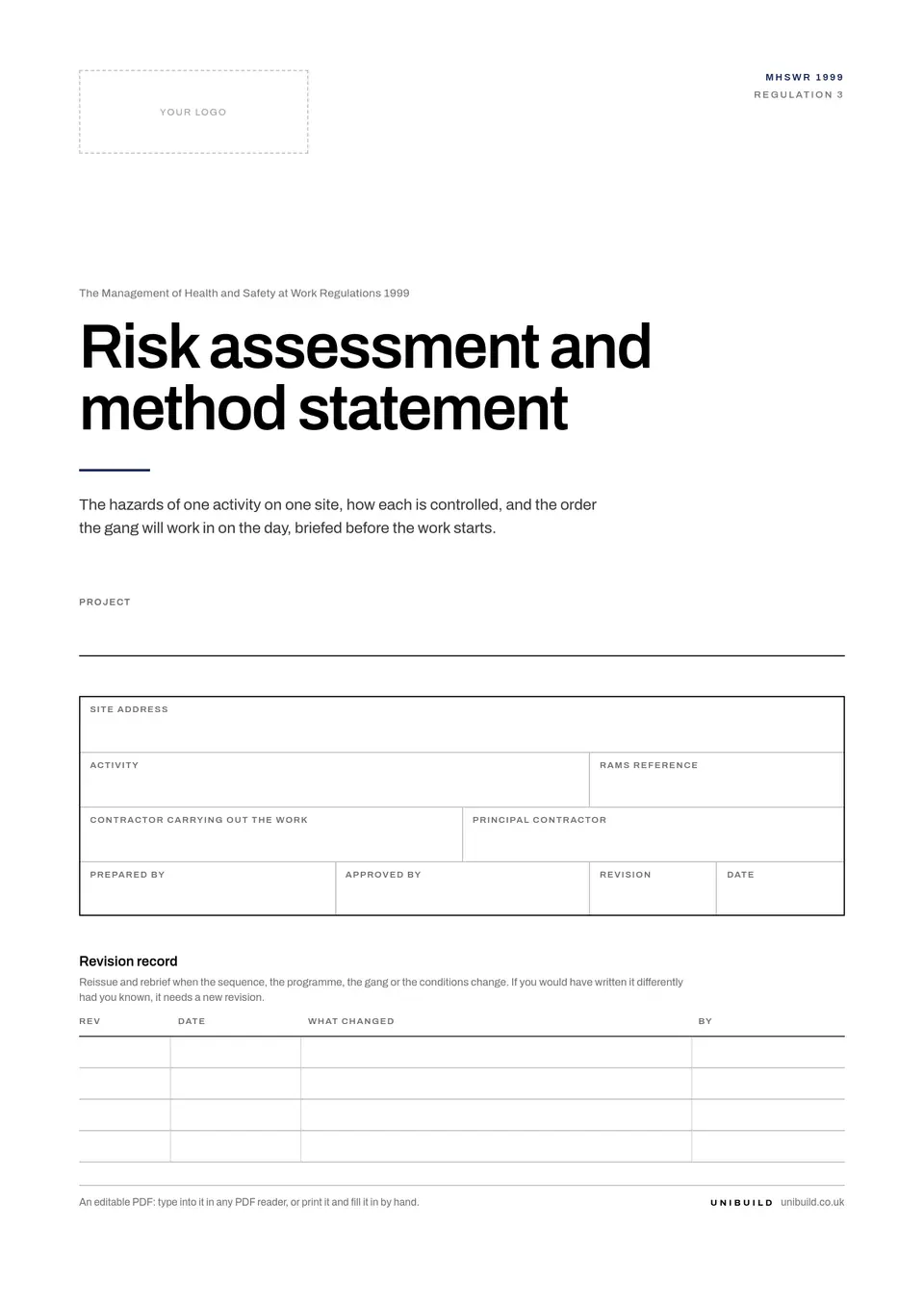
Risk assessment and method statement for one activity: the sequence of work, a five by five risk matrix, PPE, permits, rescue, and a briefing record signed against the revision.

UK-built · CDM · CIS · MTD
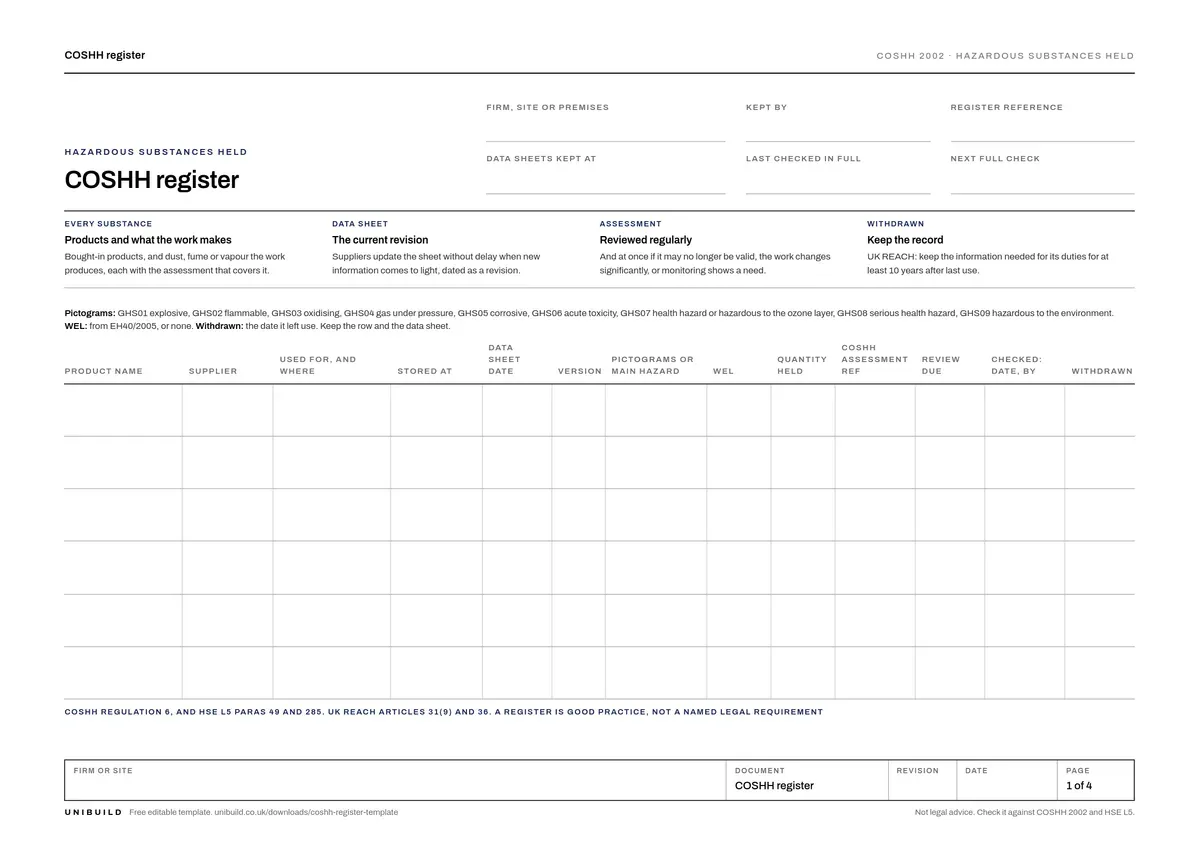
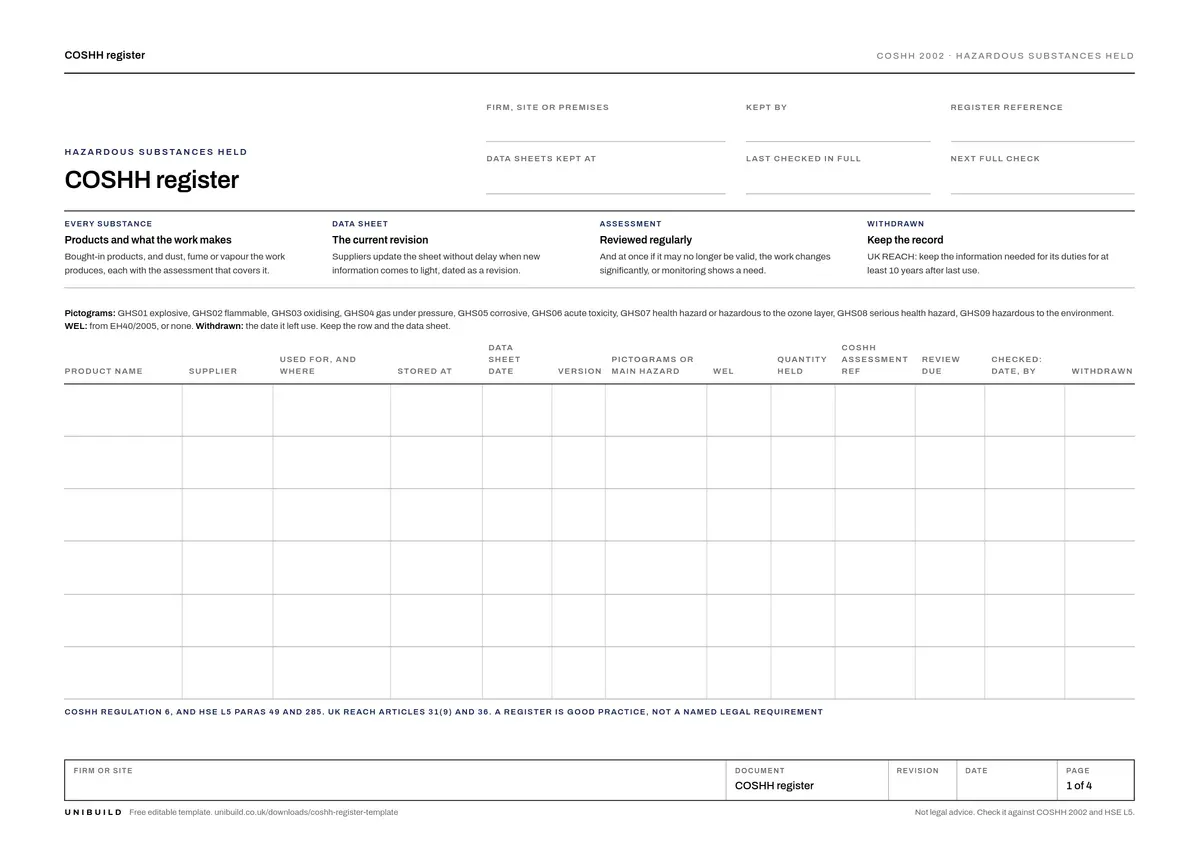
A COSHH register lists every hazardous substance a firm or site holds, with its data sheet, its COSHH assessment and where it is used and stored. This one is a landscape editable PDF and a Word document, four pages, free to use and reuse.
Who keeps the register, its reference, where the data sheets are kept, and when it was last checked in full.
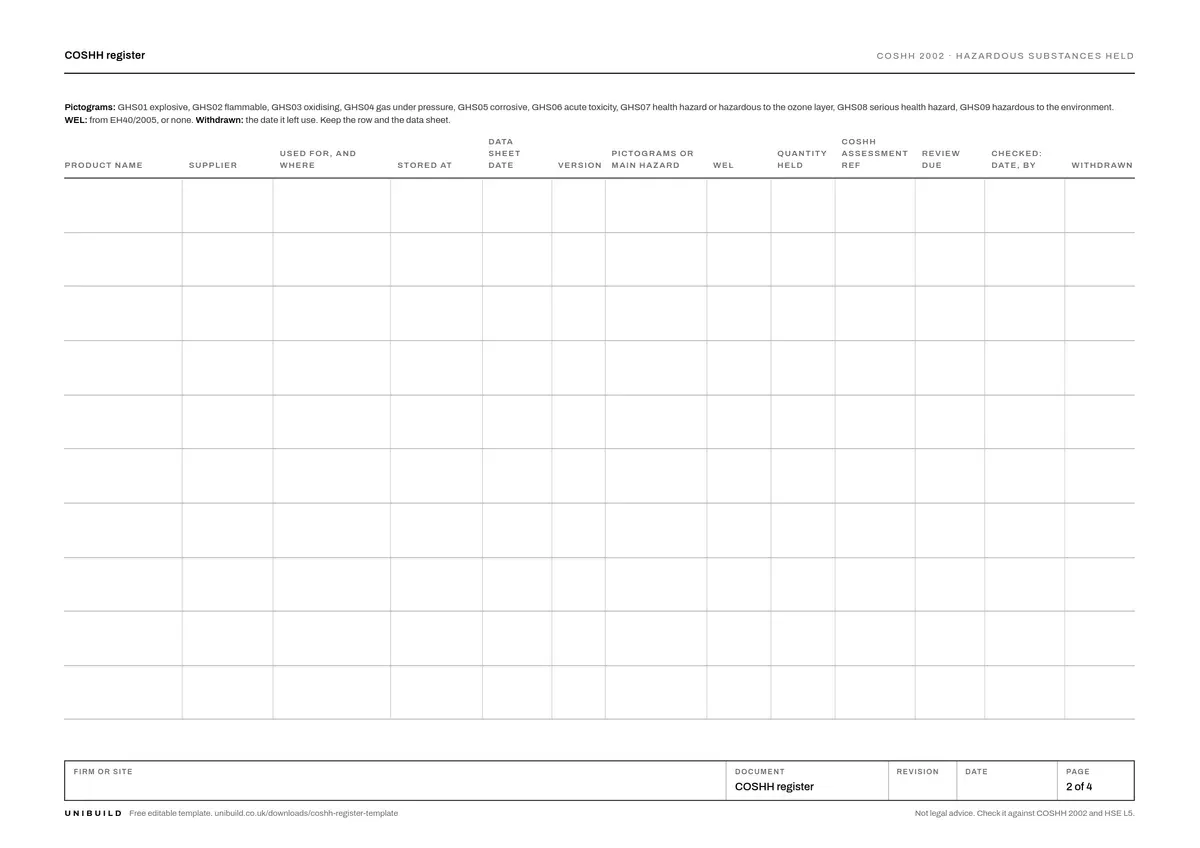
Product name, supplier, what it is used for and where, where it is stored and the quantity held. Then the pictograms or main hazard, with a key to the nine GHS codes.
The data sheet date and version held, any workplace exposure limit, the COSHH assessment reference, when the assessment is next due for review, and when the row was last checked.
The date each product left use, so the row and its data sheet stay on record rather than disappearing.
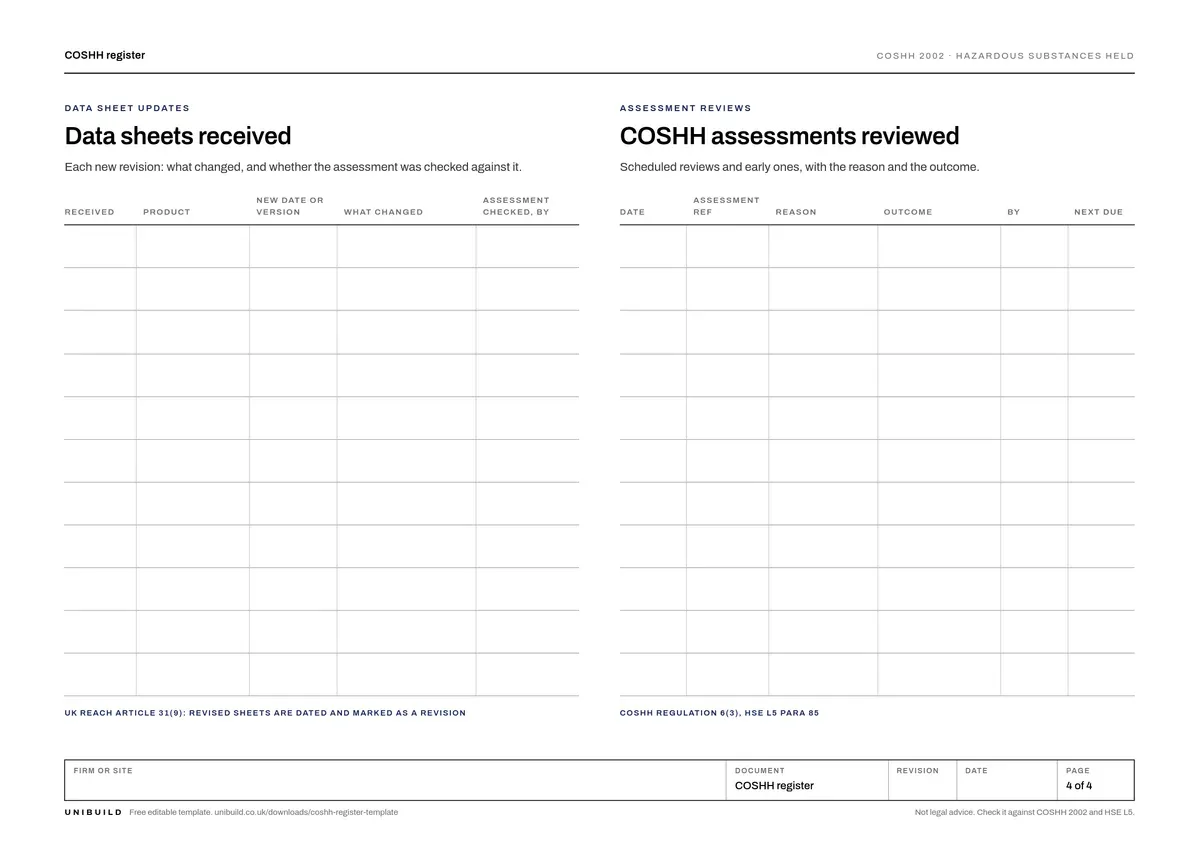
Each new data sheet revision: what changed, and whether the assessment was checked against it.
Scheduled and early reviews of each COSHH assessment, with the reason, the outcome and the next date.
The COSHH Regulations do not require a register of the substances held. The duty is to assess the risk from every substance hazardous to health in the work, and a register is a practical way of showing that none has been missed. It is good practice rather than a legal requirement.
Control of Substances Hazardous to Health Regulations 2002, regulation 6HSE's code of practice says the assessment takes into account substances brought in and used, and those produced by the work, such as dust and fume. It also covers those used for maintenance and cleaning, wastes, and those from other employers working nearby.
HSE L5, para 49 (code of practice)Where an emergency could present significantly greater risks, HSE's code of practice expects the emergency procedures to name the hazardous substances present. They should also say where the substances are stored and used, and estimate the amount on an average day.
HSE L5, para 285 (code of practice), on regulation 13Suppliers must update a safety data sheet without delay when new information on hazards or risk management comes to light. It is dated as a revision and sent free to everyone they supplied in the preceding 12 months. Employees must have access to the relevant data sheet.
UK REACH, Article 31(9), and COSHH regulation 12(2)(a)UK REACH requires users of a substance to keep the information they need for their duties under it for at least 10 years after they last used the substance.
UK REACH, Article 36The 2002 Regulations apply in England, Wales and Scotland. Northern Ireland has its own Control of Substances Hazardous to Health Regulations (Northern Ireland) 2003.
SI 2002/2677, and SR 2003/34List every product in the store, the vans and the cleaning cupboard, then add what the work produces, such as cutting dust or welding fume. Ask the supplier for any missing data sheet.
Every row carries a COSHH assessment reference. A substance without one is the gap to close first, using the COSHH assessment template.
Add products when they arrive, log each new data sheet revision and check the assessment against it, and mark products withdrawn rather than deleting them.
Risk assessment and method statement for one activity: the sequence of work, a five by five risk matrix, PPE, permits, rescue, and a briefing record signed against the revision.
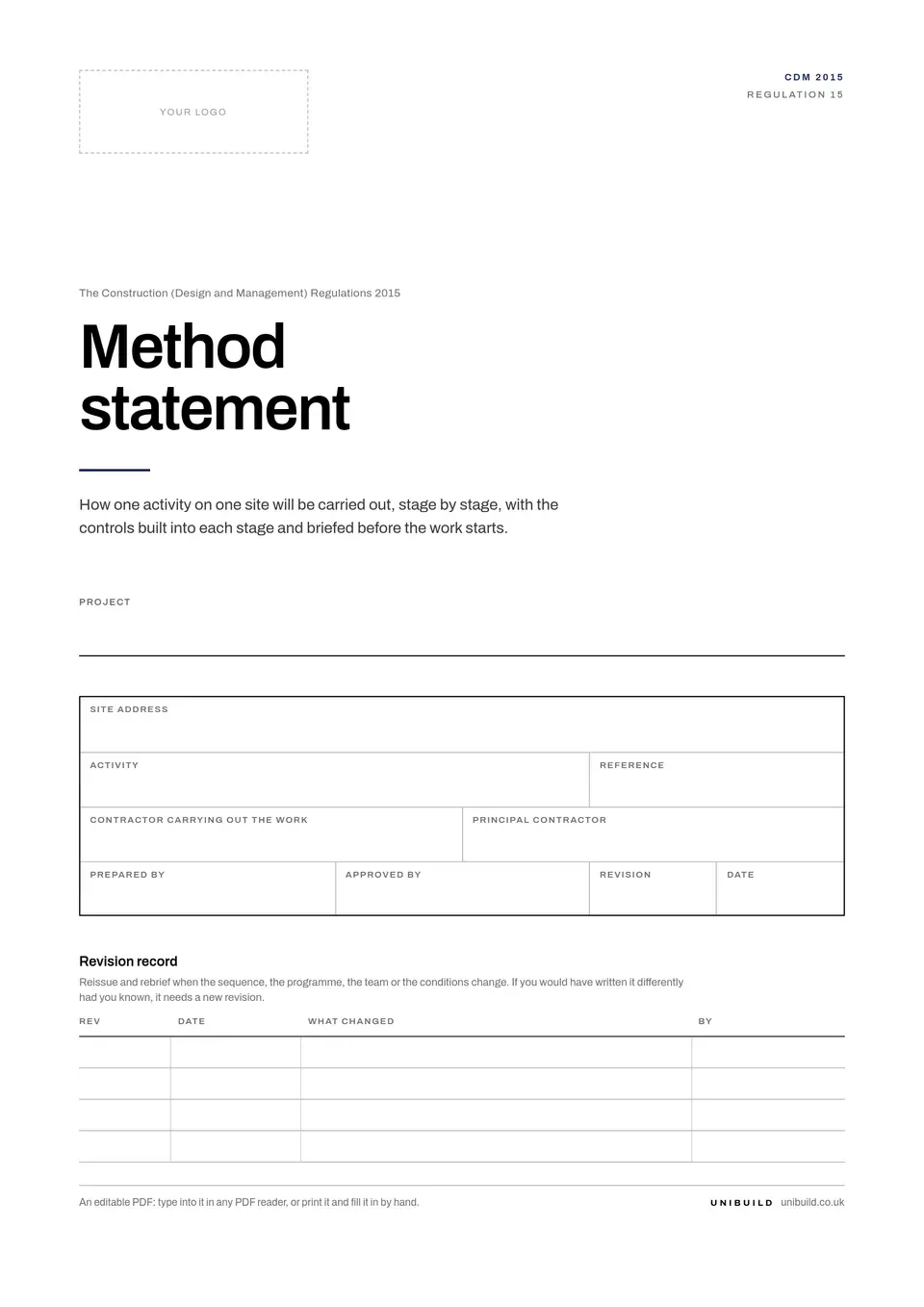
How one activity on one site will be carried out. Two pages of sequence with the controls at each stage, then plant, PPE, permits, rescue and a briefing record.
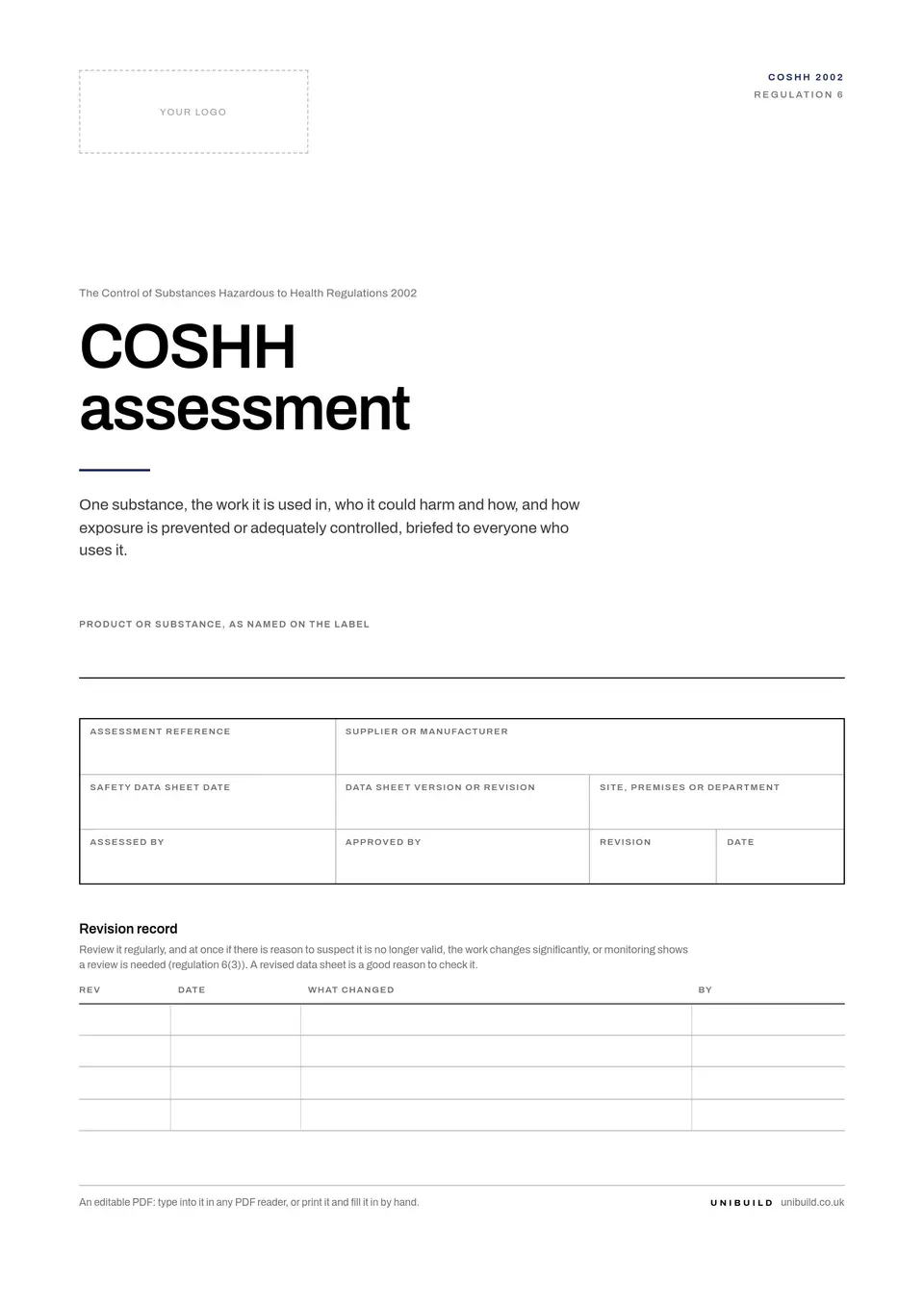
One hazardous substance: its hazards from the data sheet, who is exposed and how, controls in regulation 7 order, PPE and RPE, storage, spills, first aid, monitoring and review.
On the platform each hazardous substance holds its safety data sheet and supplier, linked to the jobs, materials and purchase orders that use it, with review dates tracked and every version kept.