
Isocyanates: 2K paints, foams and the asthma risk
Where trades meet isocyanates, what they do to the lungs and skin, and what COSHH and UK REACH ask of an employer. Spraying gets its own controls.
What are isocyanates?
Isocyanates are chemicals used to make polyurethane, and trades meet them in two-pack (2K) paints and lacquers, spray and expanding foams, coatings, sealants and some adhesives. Breathed in, they can cause occupational asthma, which HSE warns can become permanent and has no cure.
HSE says isocyanates are one of the main causes of occupational asthma reported in the UK. Spraying is particularly high risk: the fine mist is easily breathed in and can drift a long way. Applying the same product by brush, roller or trowel generally carries a lower inhalation risk.
COSHH requires exposure to be prevented or adequately controlled and, for a cause of occupational asthma, reduced as low as is reasonably practicable. EH40 sets a workplace exposure limit of 0.02 mg/m³ over 8 hours. In Great Britain, UK REACH has also required training before anyone uses a product with 0.1% or more diisocyanates at work, since 24 August 2023.
Where trades meet isocyanates
HSE lists isocyanates in polyurethane paints, coatings, foams, glues and flooring. The risk depends on the product, how it is applied and how enclosed the space is.
| Product or task | How exposure happens | Main harm |
|---|---|---|
| Spraying two-pack (2K) paints, lacquers and varnishes | Invisible spray mist that fills the booth or room and drifts with the air. Gun cleaning and paint curing add to it. | Occupational asthma, a significant risk for sprayers and anyone nearby; dermatitis |
| Brushing or rolling 2K coatings | Mainly skin contact. HSE notes that some rollering can make an aerosol, which matters most in an enclosed space. | Dermatitis; asthma where an aerosol forms or ventilation is poor |
| Spray foam insulation | High energy spraying produces mist in lofts, voids and rooms, often with other trades or occupants close by. | Occupational asthma; dermatitis; eye irritation |
| Expanding foam, sealants, fillers and adhesives | Skin contact during fixing and sealing, and vapour in small rooms with little fresh air. Not every product contains isocyanates: the data sheet says. | Occupational asthma; dermatitis; eye, nose and throat irritation |
| Polyurethane flooring and coatings, floor mastics and wall seals | Large areas mixed and laid by hand or sprayed. TDI-based products give off more vapour because TDI evaporates readily. | Occupational asthma; dermatitis |
| Hot work on polyurethane paint, foam or plastic | HSE lists hot work on polyurethane foam, cured paint or plastic as a source. Welding, burning or hot cutting through them can release isocyanates in the fume. | Occupational asthma |
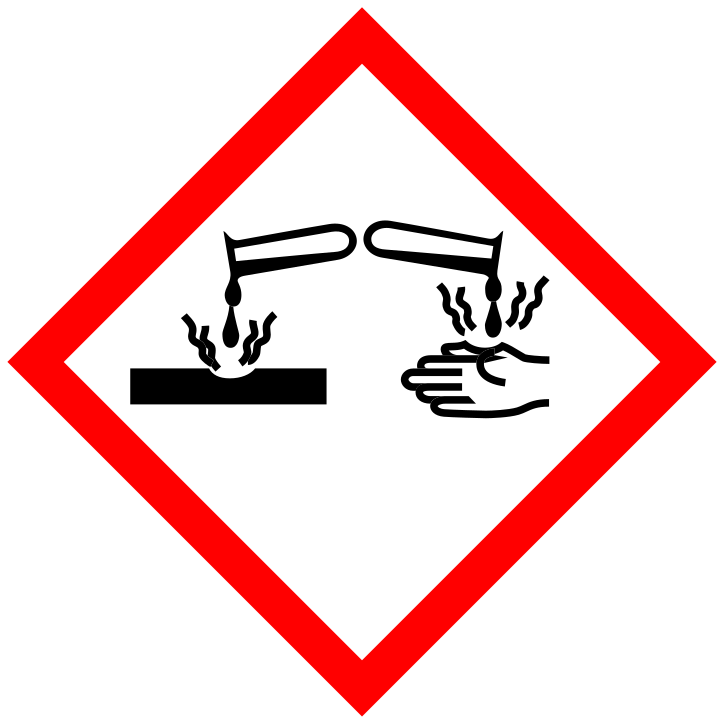
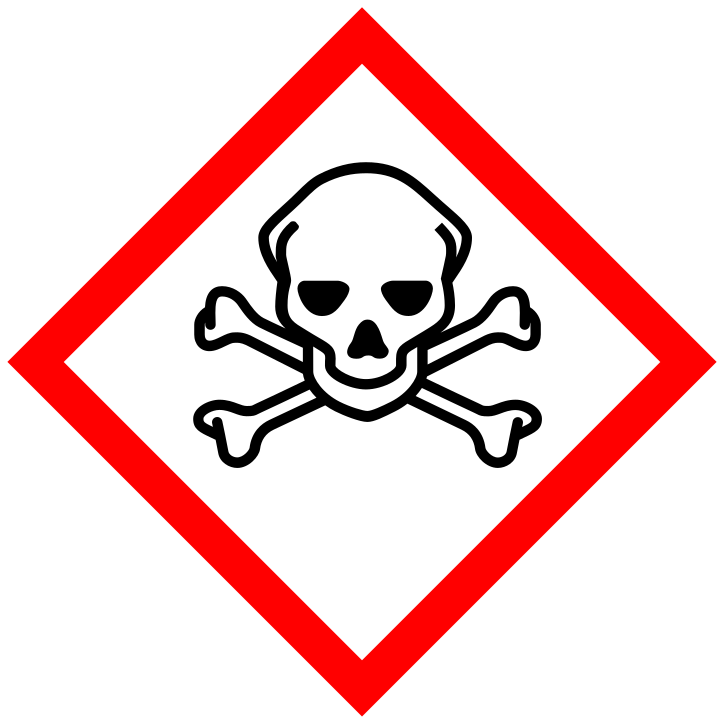
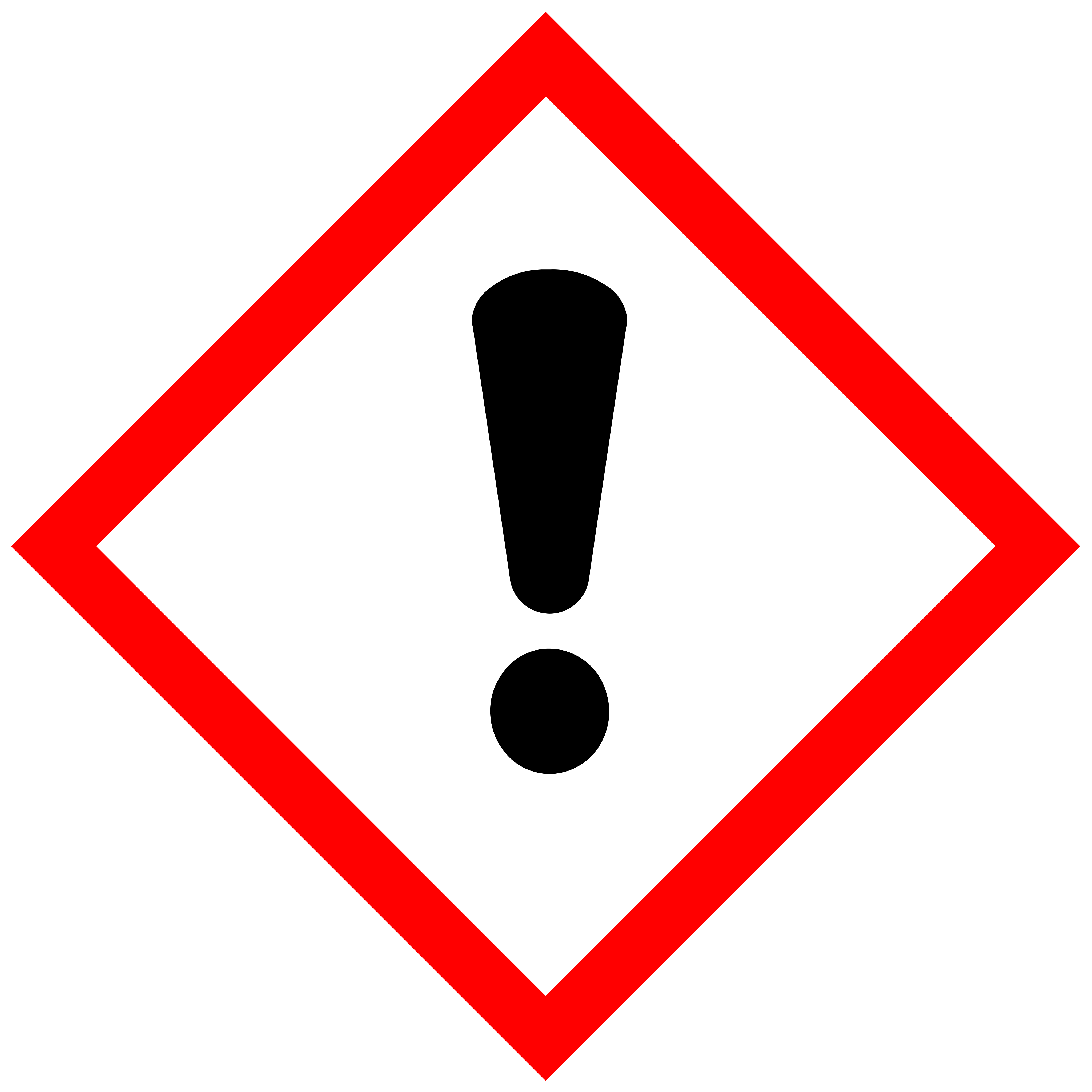
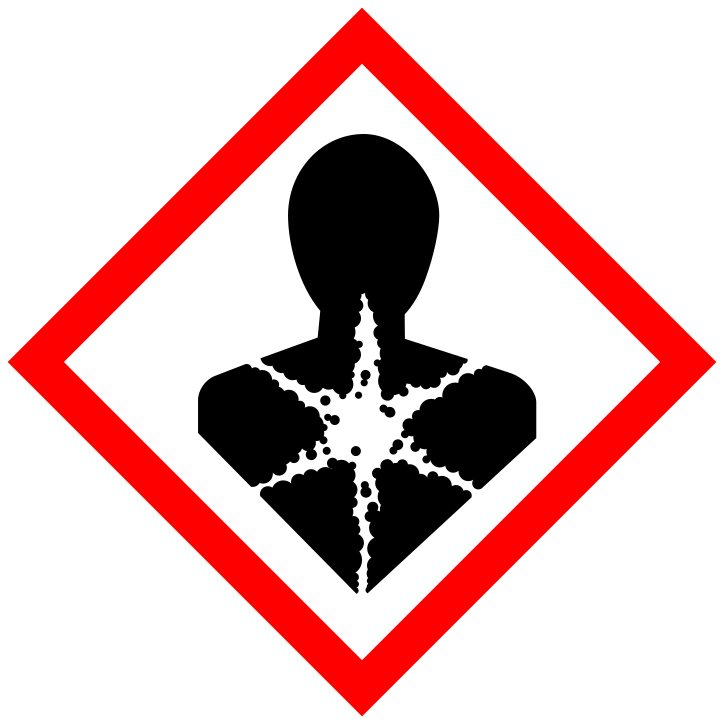
The supplier’s safety data sheet says whether a product contains isocyanates: check sections 2, 3 and 8. Unless the label already identifies them, GB CLP requires mixtures containing isocyanates to carry EUH204, “Contains isocyanates. May produce an allergic reaction.” HSE warns that a water-based product is not necessarily isocyanate-free.
What isocyanates do to health
The main concern is sensitisation. A worker can use a product for months or years without trouble, then react to very small amounts.
Occupational asthma
Isocyanates are respiratory sensitisers. Once the airways are sensitised, further exposure, sometimes even in tiny quantities, may cause symptoms. HSE says continued exposure can lead to permanent and severe asthma, there is no cure, and the worker would almost certainly have to give up that type of work.
HSE, isocyanate spraying; EH40 paragraph 53The early signs
Recurring blocked or runny nose, sore or watering eyes, chest tightness, a persistent cough, flu-like shivers, wheezing and breathlessness. Symptoms can appear hours after work, in the evening or early morning, and may ease at weekends and on holiday.
HSE INDG388 and isocyanate spraying pageDermatitis and skin sensitisation
Skin contact can cause dermatitis. HSE adds that skin contact with isocyanates may also trigger respiratory sensitisation, so gloves protect the lungs as well as the hands.
HSE, 2-pack isocyanate paintsNot all isocyanates behave alike
MDI does not readily evaporate at room temperature, though heating it above 40°C gives off more vapour. TDI is one of the most volatile, so HSE treats it as more hazardous. Other types include HDI and IPDI.
HSE, construction isocyanatesPeople nearby are at risk too
HSE says anyone near spraying is at risk. In one bodyshop HSE tested, everyone was exposed through a leaking booth, and the most highly exposed person was the receptionist.
HSE, isocyanate spraying and 2-pack isocyanate paintsFor asthma from any cause at work, see occupational asthma. For skin, see occupational dermatitis.
What the law asks
Great BritainCOSHH sets the general duties. UK REACH adds a training requirement that applies to diisocyanates only. Each row says which applies.
Prevent, or adequately control
The law requires exposure to be prevented or, where that is not reasonably practicable, adequately controlled. Substitution comes first: replacing the substance or process with one that removes or reduces the risk.
COSHH regulation 7(1) and (2)The workplace exposure limit
EH40 Table 1 lists isocyanates, all (as NCO), except methyl isocyanate, at 0.02 mg/m³ as an 8-hour average and 0.07 mg/m³ over 15 minutes, with the Sen notation. Control counts as adequate only if the limit is not exceeded.
EH40/2005 Table 1; COSHH regulation 7(7)(b)As low as is reasonably practicable
Isocyanates are listed in section C of HSE’s Asthmagen? review, entry C14. So the law requires exposure to be reduced as low as is reasonably practicable, whether or not a product’s data sheet shows H334. EH40 asks for particular attention to short peaks.
COSHH regulation 7(7)(c)(ii); Asthmagen? C14; EH40 paragraphs 55 and 84Diisocyanate training under UK REACH
Since 24 August 2023, a product with diisocyanates at 0.1% by weight or more may be used at work only after training. The employer or self-employed person must ensure the user has completed it first. Supervisors of the task are covered too.
UK REACH Annex XVII, entry 74, paragraphs 1 and 3What the training must be
An expert in occupational safety and health, with competence from relevant vocational training, delivers it. Every user needs the general level. Brushing, rolling, pouring, booth spraying, cleaning and waste add the intermediate level. Spraying in open air or with limited ventilation, high energy foam spraying and handling formulations above 45°C add the advanced level. Completion is documented and renewed at least every five years.
UK REACH Annex XVII, entry 74, paragraphs 4, 5 and 8The packaging statement
Since 24 February 2022, suppliers of products at or above 0.1% must give information on the training. The packaging must also say: “As from 24 August 2023 adequate training is required before industrial or professional use”. The supplier must also provide training material and courses.
UK REACH Annex XVII, entry 74, paragraphs 2 and 7COSHH training as well
The REACH training is in addition to any other training the law requires. COSHH still requires suitable and sufficient information, instruction and training for every employee liable to be exposed.
UK REACH entry 74 paragraph 6; COSHH regulation 12Reporting a diagnosis
Occupational asthma is reportable under RIDDOR when a doctor diagnoses it and the work involves significant or regular exposure to a known respiratory sensitiser. Occupational dermatitis is reportable on the same basis for a skin sensitiser or irritant.
RIDDOR 2013 regulation 8(c) and (e)UK REACH applies in Great Britain. In Northern Ireland, EU REACH continues to apply under the Northern Ireland Protocol, and HSENI publishes the same diisocyanate training dates and 0.1% threshold.
Controlling isocyanate exposure
In the order COSHH regulation 7 sets: remove the risk first, then control it at source, with breathing apparatus and gloves as the last line.
Remove or substitute
HSE says to consider products that do not contain isocyanates, or less volatile forms, and to avoid unnecessary spraying. Keep anyone already sensitised away from the work.
NoteRead the data sheet before assuming a product is isocyanate-free. HSE notes isocyanates appear under names such as two-pack, 2K, blocked isocyanate and polyurethane.
Choose the method
Brush, roller or trowel where it does the job. Where spraying is needed, HSE says HVLP guns reduce overspray compared with conventional guns. Airless spraying gives less mist travel but can inject paint into the skin.
NoteFor airless guns, HSE advises the correct tip size and pressure and a properly guarded spray tip.
Enclose and extract
Spray in an enclosed area with local exhaust ventilation where possible. Mist must not leak out, extracted air goes to a safe place, and precautions continue until the area has cleared.
NoteFor a booth or room, HSE’s INDG388 says to run it at slight negative pressure, check the gauge daily and post the measured clearance time at every entrance.
Spray where no enclosure is possible
HSE’s construction guidance accepts that some structures cannot be enclosed. Keep all non-essential people away until the risk has been minimised, and allow for wind speed and direction, which can carry spray a long way.
NoteThis is for structures, not vehicles. HSE tells vehicle paint sprayers never to spray isocyanate paint outdoors, except SMART repairs. Advanced level diisocyanate training applies to spraying in open air.
Ventilate other work
Make sure there is enough fresh air: open doors and windows. HSE says the higher the risk, the better the ventilation needs to be.
NoteHSE says the more enclosed the space, the greater the risk may be.
Air-fed breathing apparatus for spraying
HSE’s spraying guidance calls for constant flow air-fed breathing apparatus with a low flow indicator. In most instances it should have an assigned protection factor of 40, such as a visor or hood type. The supplied air must be uncontaminated and meet minimum flow conditions.
NoteKeep it on until clear of the area. Lifting the visor to check the finish is a known cause of significant exposure.
Filter masks for other tasks
Where ventilation alone does not control exposure, HSE says RPE may be needed, particularly in enclosed spaces. Select the right filter: a P3 filter stops spray mist but not vapour, so a gas or vapour filter is needed as well.
NoteTight-fitting masks need a face fit test. Change filters at suitable intervals.
Protect skin and eyes
Single-use gloves of a suitable material, such as nitrile, with a breakthrough time that suits the job. Disposable overalls, and goggles or a face shield where splashes or aerosol may reach the eyes.
NoteWash product off skin as soon as possible, never with solvents. COSHH requires adequate washing facilities.
Clean guns and handle waste safely
HSE identifies spray gun cleaning as a source of significant exposure. HSE’s INDG388 asks for extracted or enclosed gun washing equipment. COSHH requires arrangements for the safe handling, storage and transport of waste containing hazardous substances.
NoteINDG388 says anyone in a booth or room wears air-fed breathing apparatus during spraying, gun cleaning and the whole clearance time.
Maintain, examine and supervise
COSHH requires LEV to be thoroughly examined and tested at least every 14 months, and reusable RPE examined at suitable intervals, with records kept for at least 5 years. Supervise to make sure controls are used.
NoteHSE’s spraying guidance adds testing the breathing air supply. See local exhaust ventilation.
The duty sources: COSHH regulation 7 and regulation 9. The method advice is HSE guidance from its isocyanate spraying page and INDG388.
Health surveillance and urine testing
Records kept 40 yearsTwo different checks. Health surveillance looks for early signs of disease. Urine testing measures exposure and shows whether the controls are working.
Health surveillance for asthma
EH40 says health surveillance is appropriate for everyone exposed or liable to be exposed to a substance that may cause occupational asthma. For work that makes isocyanate aerosols, HSE guidance calls for an annual lung function test and questionnaire by a competent person.
EH40 paragraph 55; HSE, construction isocyanatesNew sprayers
HSE’s spraying guidance says to carry out the checks when a new employee begins work, then after 6 weeks, after 6 months, and yearly after that.
HSE, isocyanate sprayingSkin checks
Where dermatitis is reasonably likely, HSE says a trained responsible person checks a new worker’s skin at the start, then periodically. They keep secure records and report the outcome to the employer.
HSE, construction isocyanatesUrine testing
A urine sample taken straight after the task shows isocyanate breakdown products. EH40 Table 2 gives a guidance value of 1 µmol isocyanate-derived diamine per mol creatinine, for HDI, IPDI, TDI and MDI. HSE says the result measures exposure, not health.
EH40 Table 2; HSE G408How often to test urine
HSE’s spraying guidance says to test during the first few months of employment, then at appropriate intervals unless results show exposure is not happening. INDG388 says at least yearly for paint sprayers, and G408 suggests once or twice a year.
HSE, isocyanate spraying; INDG388; G408Consent and results
The guidance value is not a legal limit, and testing needs the worker’s informed consent. A result above it means the controls need investigating. A result below it does not end the duty to reduce exposure.
EH40 paragraphs 82 and 83When surveillance finds disease
The law requires the employer to have the employee informed and to review the risk assessment and controls. It must also consider alternative work and review the health of others similarly exposed.
COSHH regulation 11(9)Health records are kept for at least 40 years from the last entry, under COSHH regulation 11(3). When surveillance is required and who carries it out are covered in health surveillance.
The COSHH assessment for isocyanate work
COSHH requires a suitable and sufficient assessment before the work starts, and the steps it identifies put in place. For isocyanates, the assessment names each product, how it is applied, where, and who else is nearby.
Record the method chosen and why spraying is needed, if it is. Then record the enclosure or extraction, the clearance time, the breathing apparatus and filters, the gloves, the diisocyanate training of each user and the health surveillance arrangements.
Start from the free COSHH assessment template, or the pre-filled COSHH risk assessment, which already has an isocyanates entry. Spraying trades can work from the painting and decorating and insulation risk assessments.
Source: COSHH regulation 6. Each user’s training record can sit with the assessment: UK REACH requires completion to be documented.
Every data sheet to hand,
tied to the job that uses it.
In Unibuild, each hazardous substance holds its safety data sheet and its supplier, linked to the jobs, materials and purchase orders that use it. Review dates are tracked, every version is kept, and the current one is the one out on site.
When an auditor or a principal contractor asks for the COSHH register, it is a search by name or supplier, not a spreadsheet somebody else kept.
- A data sheet for every substance held with its supplier
- Tied to the job through the materials and purchase orders that use it
- Review dates tracked and every version kept
- Searched by product name or supplier
Free COSHH templates
Free to use and reuse, no sign-upIsocyanates: common questions
What are isocyanates used for?
What is 2K paint?
What are the symptoms of isocyanate exposure?
Is 2K paint safe to brush or roll?
What mask do I need for 2K paint?
Do I need training to use isocyanates?
What is the exposure limit for isocyanates?
How long does 2K paint mist stay in the air?
Do isocyanate sprayers need health surveillance?
Where do I get an isocyanate safety data sheet?
Substances and diseases
Read in any orderSources
Great Britain law and HSE guidance, read on the dates above. Northern Ireland has its own COSHH Regulations.
- HSE, Construction hazardous substances: isocyanates
- HSE, Construction isocyanates: spraying
- HSE INDG388, Safety in isocyanate paint spraying (PDF)
- HSE, 2-pack isocyanate paints
- HSE G408, Urine sampling for isocyanate exposure measurement (PDF)
- HSE, EH40/2005 Workplace exposure limits, fourth edition 2020 (PDF)
- The Control of Substances Hazardous to Health Regulations 2002, regulation 7, legislation.gov.uk
- UK REACH, Annex XVII (entry 74, diisocyanates), legislation.gov.uk
- HSE, UK REACH explained
- HSE, Asthmagen? Critical assessments of the evidence for agents implicated in occupational asthma (PDF)
- RIDDOR 2013, regulation 8, legislation.gov.uk
The COSHH register,
tied to the job.
Unibuild keeps each substance’s data sheet and supplier against the jobs, materials and purchase orders that use it, with review dates tracked and every version kept.