
Cleaning chemicals and COSHH
What makes bleach, descalers, degreasers and disinfectants hazardous, which products must never be mixed, and what COSHH asks of cleaning, facilities and trades teams.
Do cleaning chemicals come under COSHH?
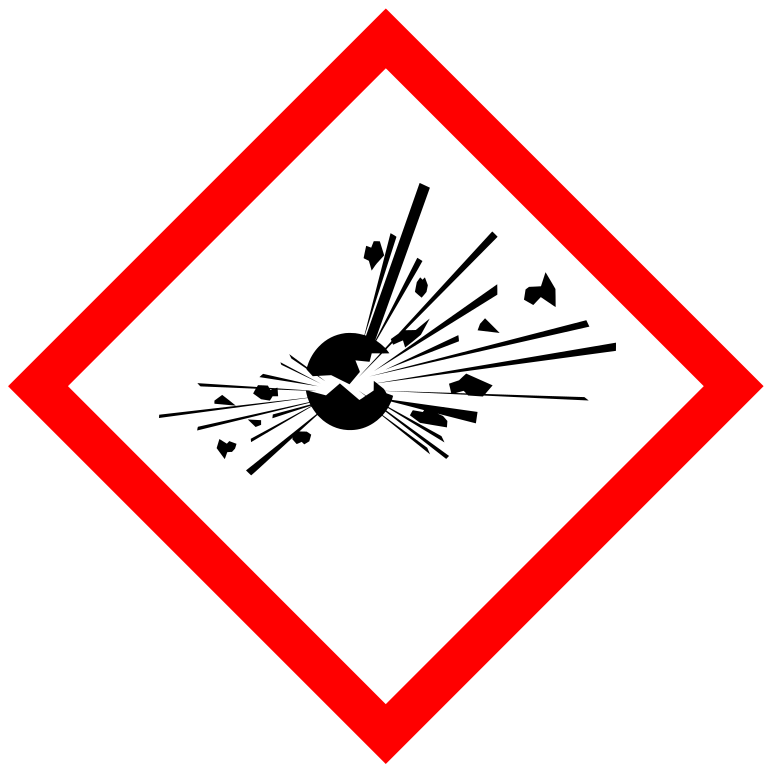
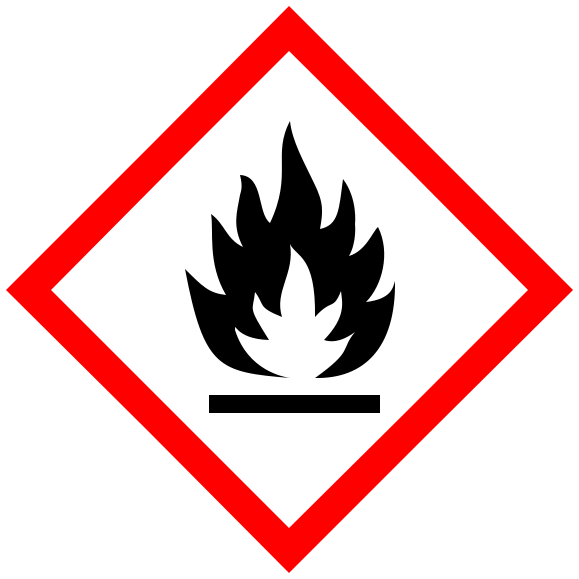
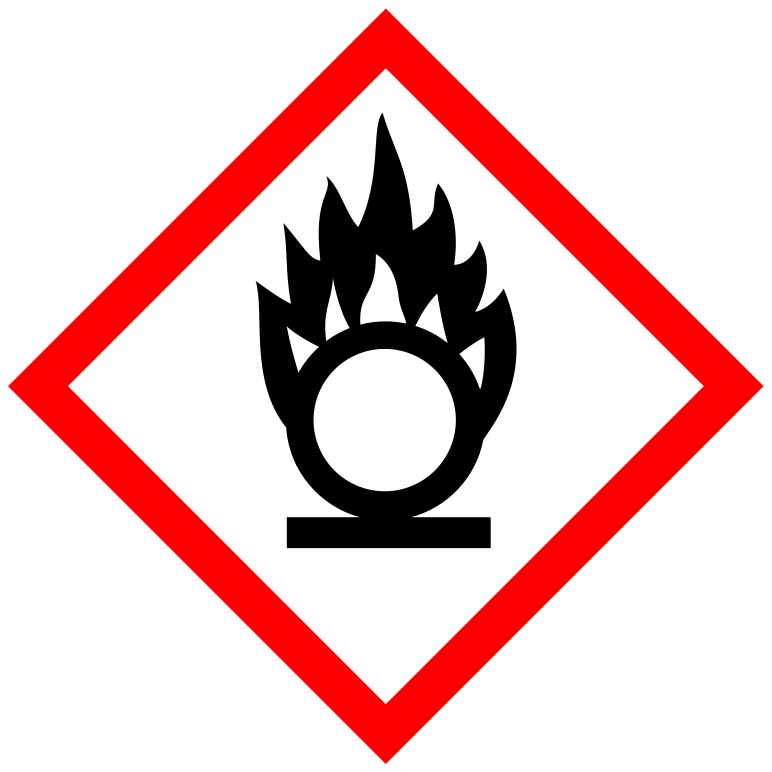
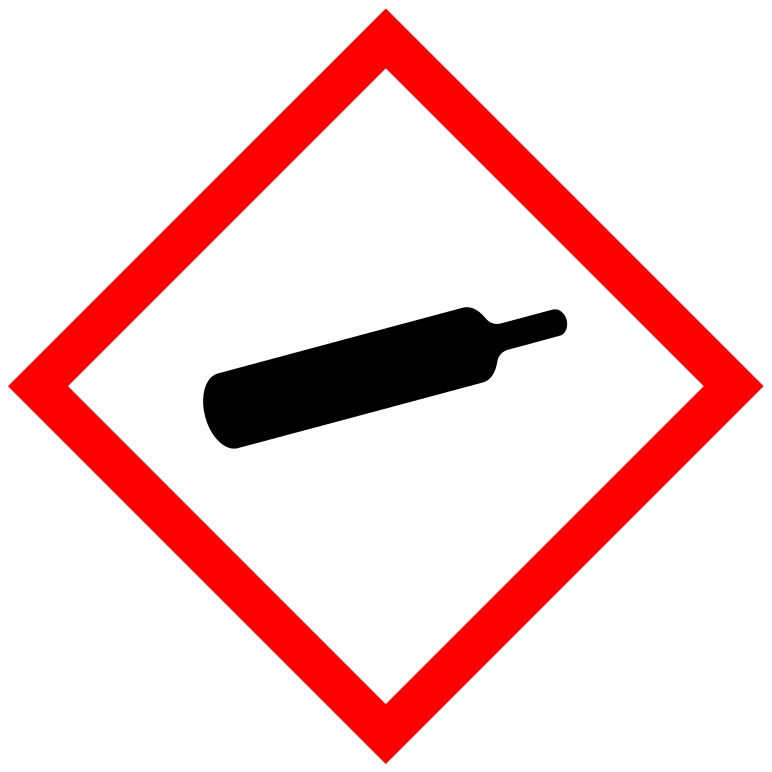
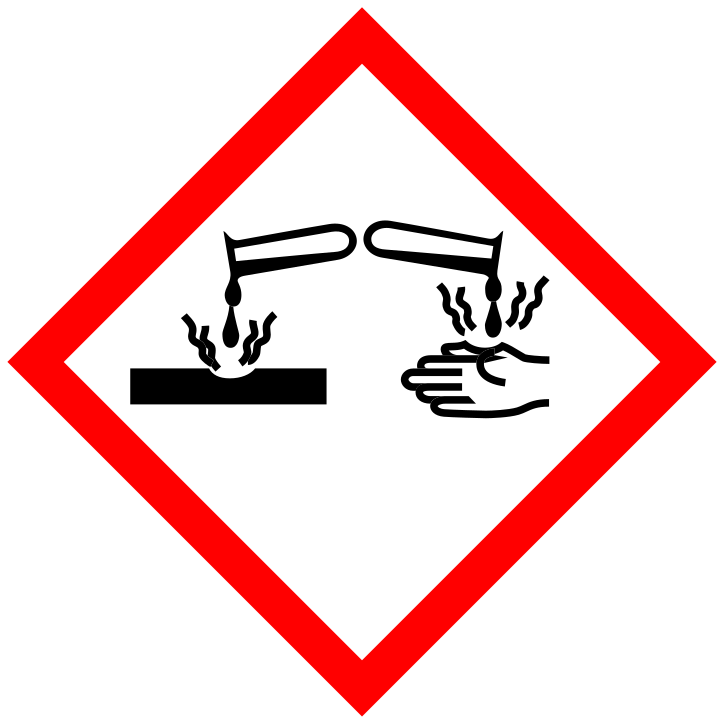
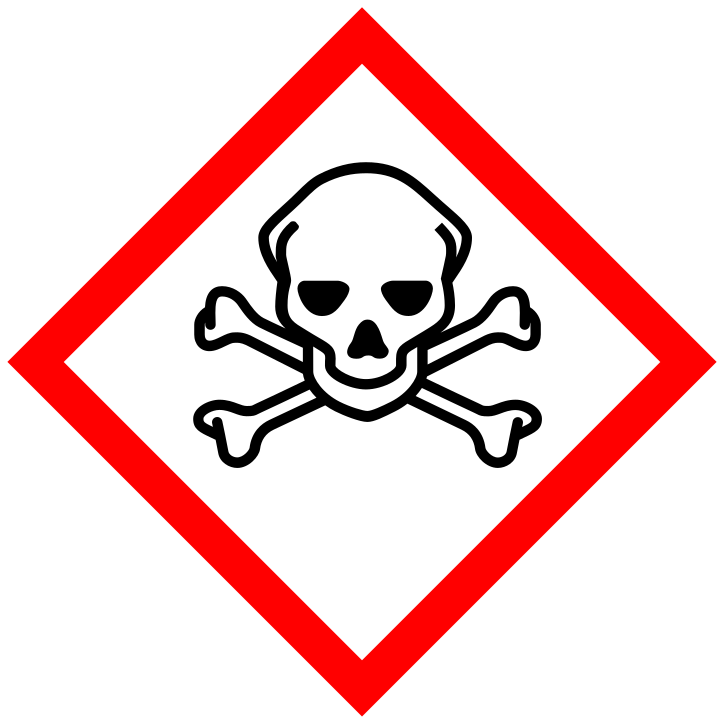
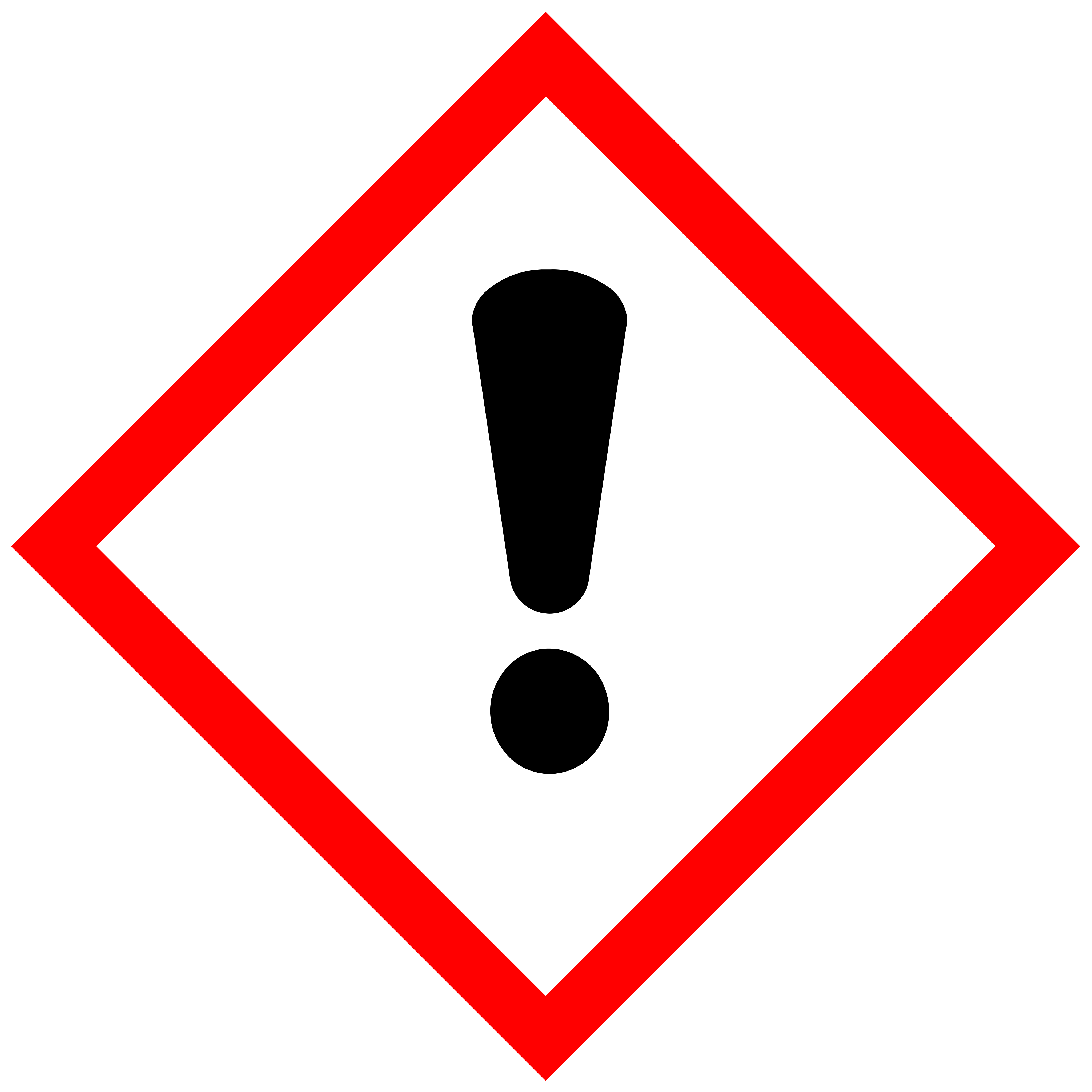
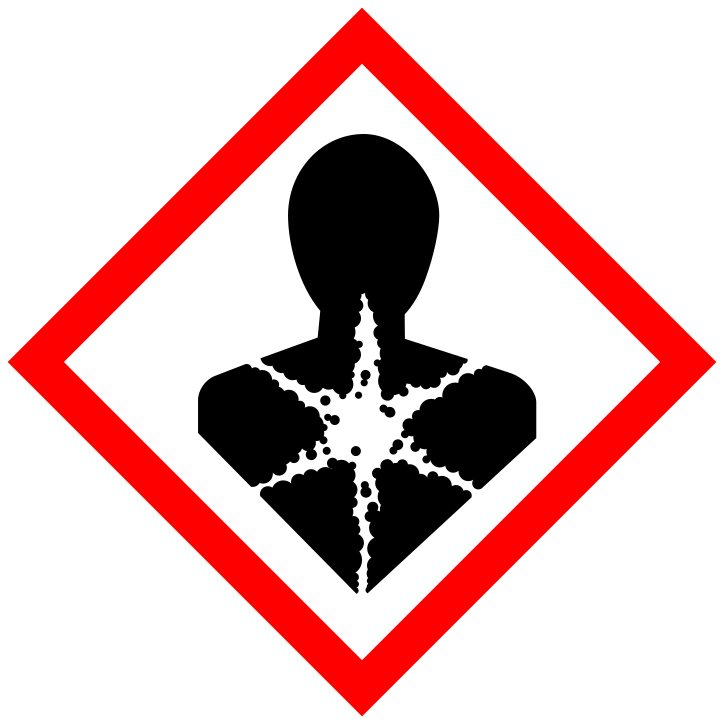
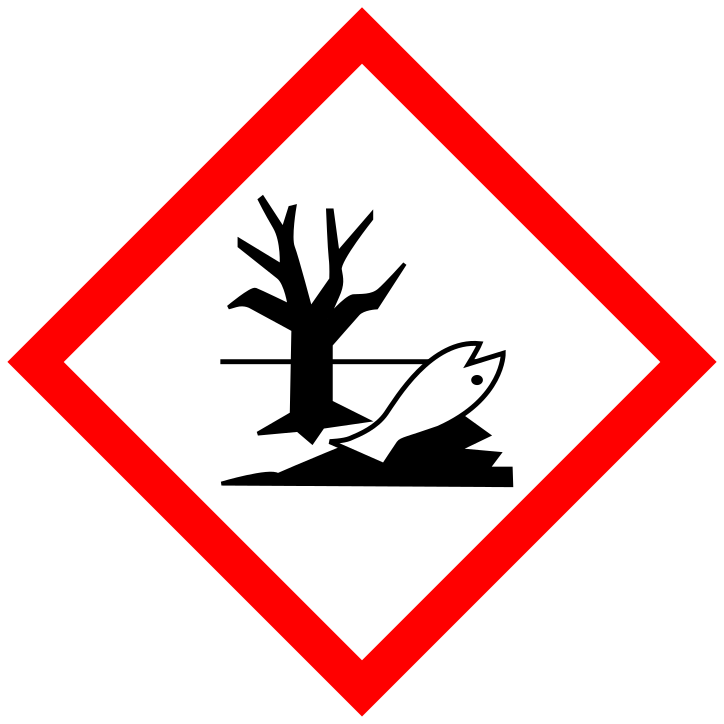
Yes: any cleaning product that meets the criteria for a health hazard class under GB CLP is a substance hazardous to health, so COSHH applies to it. That can include bleach, descalers, toilet, oven and drain cleaners, degreasers and disinfectants. HSE’s rule of thumb for cleaners is simple: a hazard symbol on the packaging means a hazardous substance.
The harm comes in four ways. Corrosive products burn skin and damage eyes. Detergents and wet work cause dermatitis. Some ingredients cause skin allergies and asthma. And some products give off toxic gas when mixed: bleach with an acid releases chlorine, and bleach with ammonia releases chloramines.
COSHH requires the employer to assess the risk before the work, to prevent or adequately control exposure, and to inform, instruct and train the people using the products. The contents and hazards of a decanted bottle must be clearly identifiable. Solvent-based cleaners add a fire risk, which falls under DSEAR.
The safety data sheet for any product comes from its supplier: ask them for it. The assessment is yours, and the cleaning risk assessment template shows the controls for a commercial cleaning contract.
Cleaning chemicals and what makes them hazardous
From HSE and UKHSAThe product types cleaning, FM and trades teams use most, and the hazards HSE and UKHSA describe for each. Strengths and classifications vary, so section 2 of each product’s data sheet is the guide to that product. Several points come from HSE’s CAIS22, a sheet on cleaning substances written for the hospitality industry, and are marked as such.
| Product type | Typical use | Main hazards | What to watch |
|---|---|---|---|
| Bleach and other chlorine-releasing products (sodium hypochlorite) | Disinfecting washrooms, toilets, drains and hard surfaces | UKHSA describes sodium hypochlorite as corrosive: it can irritate or burn the skin and damage the eyes, more so at higher strengths. The label gives each product’s own classification. | UKHSA puts household bleach at about 5% sodium hypochlorite, sometimes up to 10%, and industrial bleach at up to 50%. GB CLP names sodium hypochlorite as an example for EUH031, “Contact with acids liberates toxic gas”. |
| Acid descalers and toilet cleaners | Limescale, toilets, urinals and showers | Many are corrosive or irritant to the skin and eyes; section 2 of the data sheet says which | HSE’s CAIS22 says bleach mixed with acidic toilet cleaners gives off harmful gases. HSE’s COSHH essentials sheets SR2 and SR4 say to avoid products containing hydrofluoric acid. |
| Alkaline degreasers, oven cleaners and drain cleaners | Kitchens, grease, ovens and blocked drains | Many are corrosive and burn the skin and eyes on contact | HSE’s CAIS22 warns that products such as oven cleaner can cause breathing problems if oversprayed, sprayed onto hot surfaces or used without ventilation. SR2 says caustic soda can erupt when mixed with water and splash the eyes. |
| Disinfectants and sanitisers | Surfaces, washrooms, kitchens and touch points | Some contain ingredients that are toxic by inhalation or through the skin, or are sensitisers | Many disinfectants are biocidal products: use them only for what the label says they are authorised for. SR2 and SR4 say to avoid toxic or sensitising biocidal concentrates, giving quaternary ammonium compounds as an example, unless the sanitation programme identifies an absolute requirement. |
| General-purpose detergents and washing-up products | Floors, surfaces and general cleaning | Often mild, but repeated contact dries and irritates the skin | HSE’s G403 lists soaps and cleaning products, and wet work, among the main causes of occupational dermatitis. |
| Solvent-based cleaners and degreasers | Removing grease, adhesive, ink and paint residue | Vapour, skin irritation and dryness. Many are flammable. | Ventilation, no ignition sources, and storage under DSEAR. See solvents. |
Searching for a “COSHH sheet” for a branded product usually means its safety data sheet. Only the supplier can provide it, and HSE’s CAIS22 notes that suppliers of hazardous substances are required by law to provide safety information. Read how to read a safety data sheet, then record what it says in your own assessment. Sources: HSE CAIS22, SR2, SR4, G403 and UKHSA’s sodium hypochlorite guidance.
Never mix cleaning products
Toxic gasUKHSA says breathing the gases formed when bleach is mixed with acidic solutions, or alkaline ones such as ammonia, is the most frequent way adults are exposed to it. HSE’s CAIS22 puts it in four words: never mix cleaning substances.
Bleach and acid: chlorine gas
Bleach mixed with an acid releases chlorine. Acid descalers, acidic toilet cleaners and limescale removers are the usual culprits. UKHSA names vinegar as an acid too.
UKHSA, sodium hypochlorite; HSE SR2Bleach and ammonia: chloramines
Bleach mixed with a cleaning product containing ammonia produces chloramines, which UKHSA describes as highly irritating to the respiratory tract. Hazardous ingredients are listed in section 3 of the data sheet.
UKHSA, sodium hypochloriteBleach and anything else
HSE’s SR2 and SR4 say never to add any other chemical to a concentrate that contains bleach. Under GB CLP, a mixture sold to the general public with more than 1% active chlorine carries EUH206: “Warning! Do not use together with other products. May release dangerous gases (chlorine)”. Products sold only to professionals need not carry it, so its absence does not make a product safe to mix.
HSE SR2 and SR4; GB CLP Annex II, section 2.6What the gas does
For chlorine, UKHSA describes burning eyes and throat, coughing and a sore throat at low levels. More exposure brings breathing difficulty and swelling of the airways, and high levels can be fatal. Irritation usually starts at once, but UKHSA notes that breathlessness can follow after a delay of up to 15 hours.
UKHSA, sodium hypochlorite toxicological overviewMixing on the surface
Products meet in the toilet bowl, the drain or the bucket as easily as in a bottle. Our practical advice: one product per job where possible, rinse or flush between products, and never top up one product’s bottle or bucket with another.
Our practical advice, applying HSE’s “never mix”If gas is given off
UKHSA’s advice is to move away from the source and to seek medical advice after breathing it in. COSHH requires emergency procedures, including first aid, unless the assessment shows only a slight risk from the quantities present and the controls are sufficient.
UKHSA; COSHH regulation 13(1) and (4)UKHSA also notes that a small proportion of people exposed to chlorine go on to have a long-term sensitivity to inhaled chemicals. Store bleach away from acids so the two cannot meet in a leak either: see COSHH storage.
What COSHH asks for cleaning products
COSHH 2002There are no separate cleaning regulations. The general COSHH duties apply to a bottle of descaler as they do to any other hazardous substance. Each row says whether it is law or HSE guidance.
Which products are covered
The law covers any substance or mixture that meets the criteria for a health hazard class under GB CLP, whether or not it is actually classified. It also covers anything with a workplace exposure limit, and anything that creates a risk to health because of its properties and the way it is used. A product hazardous only because it is flammable falls outside COSHH; DSEAR covers that risk.
Regulation 2(1), “substance hazardous to health”, (a), (b) and (e); regulation 5(1)(b)Assess before the work
A suitable and sufficient assessment comes before the work. It considers the hazards, the supplier’s data sheet, the level, type and duration of exposure, and the risk from more than one substance in combination. Employers with 5 or more employees record the significant findings.
Regulation 6(1), (2) and (4)Substitute first
Substitution is the preferred way to prevent exposure: a milder product, or a process that does without the chemical. HSE’s skin guidance says to use the mildest cleaning chemicals that will do the job, and its CAIS22 says to ask the supplier for a safer alternative.
Regulation 7(1) and (2); HSE, skin at work FAQs; HSE CAIS22Then control, in order
Work methods and equipment come first, then control at source and good organisation, with PPE last and in addition. The measures include safe handling and storage, the least quantity on site, general ventilation and adequate washing facilities.
Regulation 7(3) and (4)A higher standard for asthma causes
For a product labelled H334, or a substance in section C of HSE’s Asthmagen? list, exposure must also be as low as reasonably practicable. The same applies to any other substance the assessment shows may cause occupational asthma. Section C includes the disinfectants glutaraldehyde and chloramine-T.
Regulation 7(7)(c)(ii); HSE, asthma substancesGloves and eye protection
PPE must be suitable for the purpose, properly stored, checked at suitable intervals and replaced when defective. Contaminated PPE comes off on leaving the work area and is kept apart from clean clothing.
Regulations 7(9) and 9(5) to (7)Information, training and labelled containers
Each employee liable to be exposed gets suitable information, instruction and training, including the product names and risks, access to the data sheets and the precautions. A container not labelled under other law must have its contents and hazards clearly identifiable.
Regulation 12(1), (2) and (5)Cleaning can be construction work
CDM 2015 counts the maintenance of a structure as construction work, including cleaning with water or an abrasive at high pressure, or with corrosive or toxic substances. Jet washing a building or chemically cleaning its brickwork are examples. CDM then applies alongside COSHH.
CDM 2015, regulation 2(1), “construction work”HSE’s CAIS22 adds that it is not enough to hand out safety data sheets: employees have to understand the hazards and the controls. More on the duties in the COSHH Regulations explained, and on CDM in the CDM 2015 guide.
Diluting, decanting and using cleaning chemicals
The stages follow a product from the delivery to the end of the shift. The points are from HSE’s cleaning guidance, CAIS22 and the COSHH essentials sheets SR2, SR4 and SR24, unless marked as ours.
Choose the product
Stop using products that are not needed. Choose the mildest one that does the job, ready-diluted products in smaller containers, and tablets, granules or single-use sachets in place of concentrates.
NoteHSE’s sheets say to avoid products containing hydrofluoric acid, and sensitising or toxic biocidal concentrates unless the cleaning programme needs them.
Dilute
Read the label and dilute as it says. Add the concentrate to the water, never the water to the concentrate, unless the instructions say otherwise. Make up solutions for immediate use only.
NoteUse pumps or syphons rather than pouring from heavy bulk containers. Dispense powders with a scoop, never by hand.
Decant and label
Keep products in their original labelled containers where possible. Where decanting, CAIS22 says the container should be of a suitable material, clean and clearly marked with the contents, the hazards and the instructions for use. Never decant a concentrate into an unlabelled container.
NoteNever use a food or drink container. Keep disinfectant and other biocide stock in its original container, which HSE says the law requires. Decant only a working solution, made up for immediate use as SR2 and SR4 say, and as the product label allows.
Clean with distance and air
Use a mop with a handle rather than a cloth, and work in a well-ventilated area. An open window may be enough; switch mechanical ventilation on and check it works.
NoteNever spray aerosols or oven cleaner onto hot surfaces. Wear eye protection when cleaning at eye level or above.
Protect skin and eyes
Wear the gloves and eye protection the label and data sheet set out, with goggles or a visor where splashes are possible. Check rubber gloves for holes, tears and thin patches before use.
NoteAvoid latex gloves. Report any irritation or allergy from gloves. See occupational dermatitis.
Store
Store products securely, in a cool, dry, ventilated place, lids on and labels facing forward. Keep acids apart from alkalis, bleach apart from acids, and corrosive products on lower shelves.
NoteAway from heat, sunlight, food and members of the public. See COSHH storage.
Deal with splashes and spills
Wash a splash off skin or eyes at once with plenty of water, and seek medical advice if irritation persists. For bleach, UKHSA advises at least 10 to 15 minutes of washing, then medical advice. Clear spills immediately under a set procedure, with the data sheets where staff know to find them.
NoteWhere mains tap water is not readily available, CAIS22 says to provide at least a litre of sterile water or sterile saline (0.9%) in sealed containers for eye irrigation.
Report and review
Workers report skin problems, breathing problems, headaches or nausea to their supervisor at once. Supervisors check products are used and stored as the assessment says.
NoteCOSHH requires the assessment to be reviewed regularly, and at once where there is reason to suspect it is no longer valid.
HSE’s sheets say respiratory protection is not normally needed for diluting or surface cleaning where general ventilation gives a good through draught. It may be needed for a spill, depending on its size and location. Tight-fitting RPE needs a face fit test.
Skin, breathing and health checks
HSE names cleaning among the high-risk groups for both occupational dermatitis and occupational asthma. The full detail is on each disease page; this is what matters for cleaning products.
Dermatitis
HSE’s key messages for cleaners: hands wet for long periods or frequently wet can lead to dermatitis, and some ingredients cause skin allergies. HSE’s approach is to avoid contact, protect the skin and check it for early signs.
HSE, COSHH and cleaners; HSE G403Gloves for cleaning
HSE’s skin guidance says strong reusable rubber gloves should be fine unless a product’s label says otherwise. Its SR2 and SR4 sheets accept single-use nitrile gloves, thrown away each time they come off. Either way, check section 8 of the data sheet, and choose non-latex gloves, as CAIS22 says latex is known to cause reactions. Cotton liners and short glove breaks help with sweat.
HSE, skin at work FAQs; HSE SR2, SR4 and CAIS22Asthma
HSE’s G402 lists cleaning products among the main causes of occupational asthma, and cleaning services among the high-risk groups. Look for H334 on the label: “May cause allergy or asthma symptoms or breathing difficulties if inhaled”.
HSE G402; GB CLP Annex IIIIrritant gases and existing asthma
Some products do not cause asthma but irritate the airways. HSE gives chlorine as an example of an irritant that can trigger attacks in people who already have asthma. HSE’s CAIS22 links breathing problems to overspraying and poor ventilation.
HSE, asthma overviewHealth surveillance
The law requires it where an identifiable disease may be related to the exposure, is reasonably likely in the work, and can be detected by a valid, low-risk technique. HSE’s G403 and G402 say to consider it for products labelled H315, H317 or H334, among other triggers. HSE’s cleaning sheets SR2 and SR4 put it more firmly: they say surveillance is required where workers use a product labelled as a skin or respiratory sensitiser.
Regulation 11(1) and (2)(b); HSE G402 and G403Reporting under RIDDOR
A doctor’s diagnosis of occupational dermatitis is reportable where the work involves significant or regular exposure to a known skin sensitiser or irritant. Occupational asthma is reportable on the same terms for a known respiratory sensitiser. A chemical burn that significantly damages the eyes or airways is a reportable specified injury.
RIDDOR 2013, regulations 4(1)(e) and 8(c) and (e)How skin and breathing checks are run is set out in health surveillance. The diseases themselves are covered in occupational dermatitis and occupational asthma.
COSHH training for cleaners
Regulation 12 applies to a cleaner liable to be exposed exactly as to any other employee. The training covers the products in use by name and what each can do to health. It also covers where the data sheets are, the significant findings of the assessment and the precautions.
HSE’s CAIS22 adds the practical points. People need to know when and how to wear and replace gloves and eye protection, and the first aid for splashes. They also need the spill procedure and how to report symptoms. Where staff do not have English as a first language, CAIS22 says the employer must make sure they clearly understand. Posters and pictures help.
Many disinfectants are biocidal products. HSE’s biocides guidance says professional users must have the information, instruction and training to use them, and must read and follow the label. The full content of COSHH training is set out in COSHH training, and short briefings in the toolbox talks.
Written, signed and kept,
tied to the job that uses it.
In Unibuild, a COSHH assessment is written once and operatives read and sign it on their phone, the same way as a RAMS. The AI builds a draft from the supplier’s safety data sheet and checks an assessment before it goes out. A person reviews and finalises every one.
Each substance holds its data sheet and supplier, linked to the jobs, materials and purchase orders that use it. Review dates are tracked and every version is kept. When an auditor or a principal contractor asks for the COSHH register, it is a search, not a spreadsheet.
- Signed on the phone by every operative, the same way as a RAMS
- Drafted by AI from the safety data sheet, and checked before issue
- A data sheet for every substance, tied to the job through materials and purchase orders
- Review dates tracked and every version kept
- COSHH e-learning, with the certificate on the training matrix
Free COSHH templates
Free to use and reuse, no sign-upCleaning chemicals: common questions
What happens if you mix bleach and ammonia?
What happens if you mix bleach with acid or toilet cleaner?
Do cleaning products need a COSHH assessment?
Where do I get a COSHH sheet for a cleaning product?
Can you decant cleaning chemicals into spray bottles?
Do you add water to the chemical or the chemical to water?
What gloves should cleaners wear?
Can cleaning products cause asthma?
Do cleaners need COSHH training?
Substances and diseases
Read in any orderSources
Great Britain law and HSE guidance, read on the dates above. Northern Ireland has its own COSHH Regulations.
- HSE CAIS22(rev2), Safe use of cleaning substances in the hospitality industry (PDF)
- HSE COSHH essentials SR2, Diluting chemical concentrates (PDF)
- HSE COSHH essentials SR4, Manual cleaning and disinfecting surfaces (PDF)
- HSE COSHH essentials SR24, Storing chemical products (small scale) (PDF)
- HSE, COSHH and cleaners: key messages
- HSE, Cleaning: control of substances hazardous to health
- HSE, Skin at work: frequently asked questions
- HSE G402, Health surveillance for occupational asthma (PDF)
- HSE G403, Health surveillance for occupational dermatitis (PDF)
- HSE, Asthma: overview
- HSE, Using biocides: overview
- UKHSA, Sodium hypochlorite: general information
- UKHSA, Sodium hypochlorite: toxicological overview
- The Control of Substances Hazardous to Health Regulations 2002, regulation 7, legislation.gov.uk
- The Control of Substances Hazardous to Health Regulations 2002, regulation 12, legislation.gov.uk
- GB CLP Regulation, Annex II, supplemental hazard information, legislation.gov.uk
- The Construction (Design and Management) Regulations 2015, regulation 2, legislation.gov.uk
- RIDDOR 2013 (SI 2013/1471), regulation 8, occupational diseases, legislation.gov.uk
The COSHH register,
tied to the job.
Unibuild keeps each substance’s data sheet and supplier against the jobs, materials and purchase orders that use it, with review dates tracked and every version kept.