Permit · HSE HSG168
Hot work permit
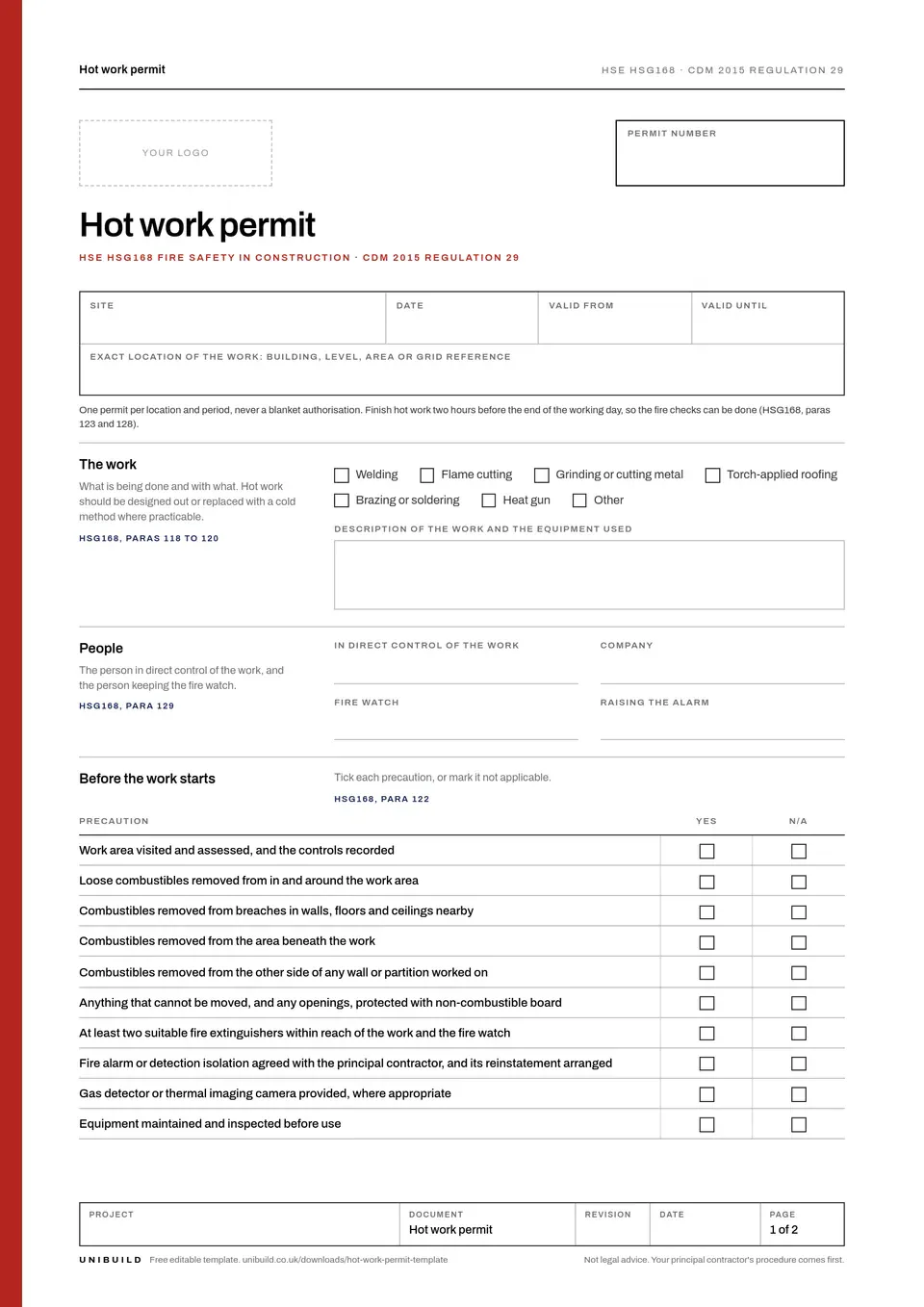
Welding, cutting, grinding and torch-on work: the precautions checked before it starts, the fire watch during and after, and hand-back.

UK-built · CDM · CIS · MTD
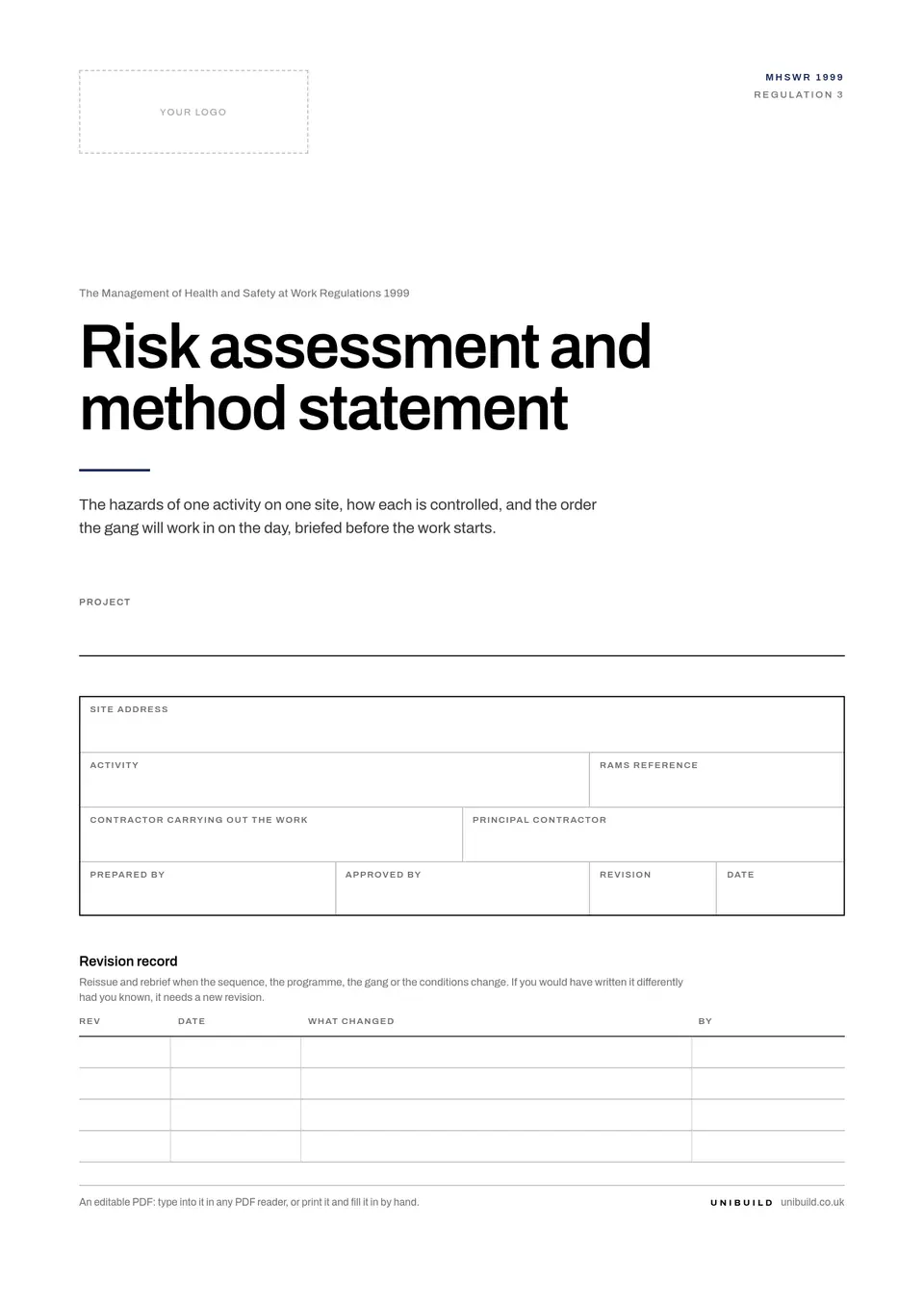
A risk assessment and method statement for one activity on one site, as an editable PDF you can type into or print. Eight pages, built around the real sequence of work and a briefing record signed against the revision. Free to use and reuse.
Scope, location and access, the programme, interfaces with other trades, the documents the RAMS relies on, and the team with their cards and tickets.
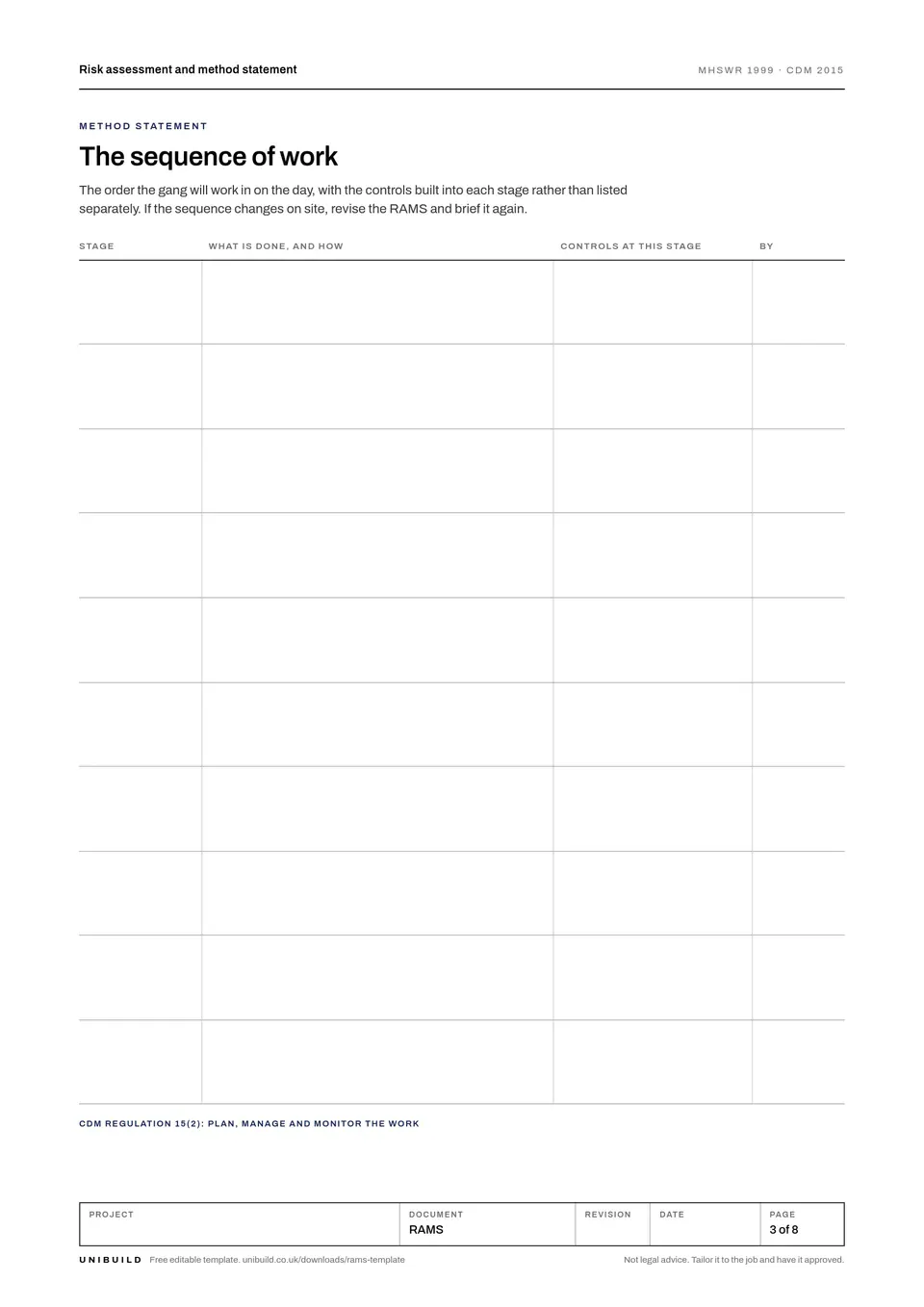
The sequence of work stage by stage, with the controls built into each stage and the person responsible for it.
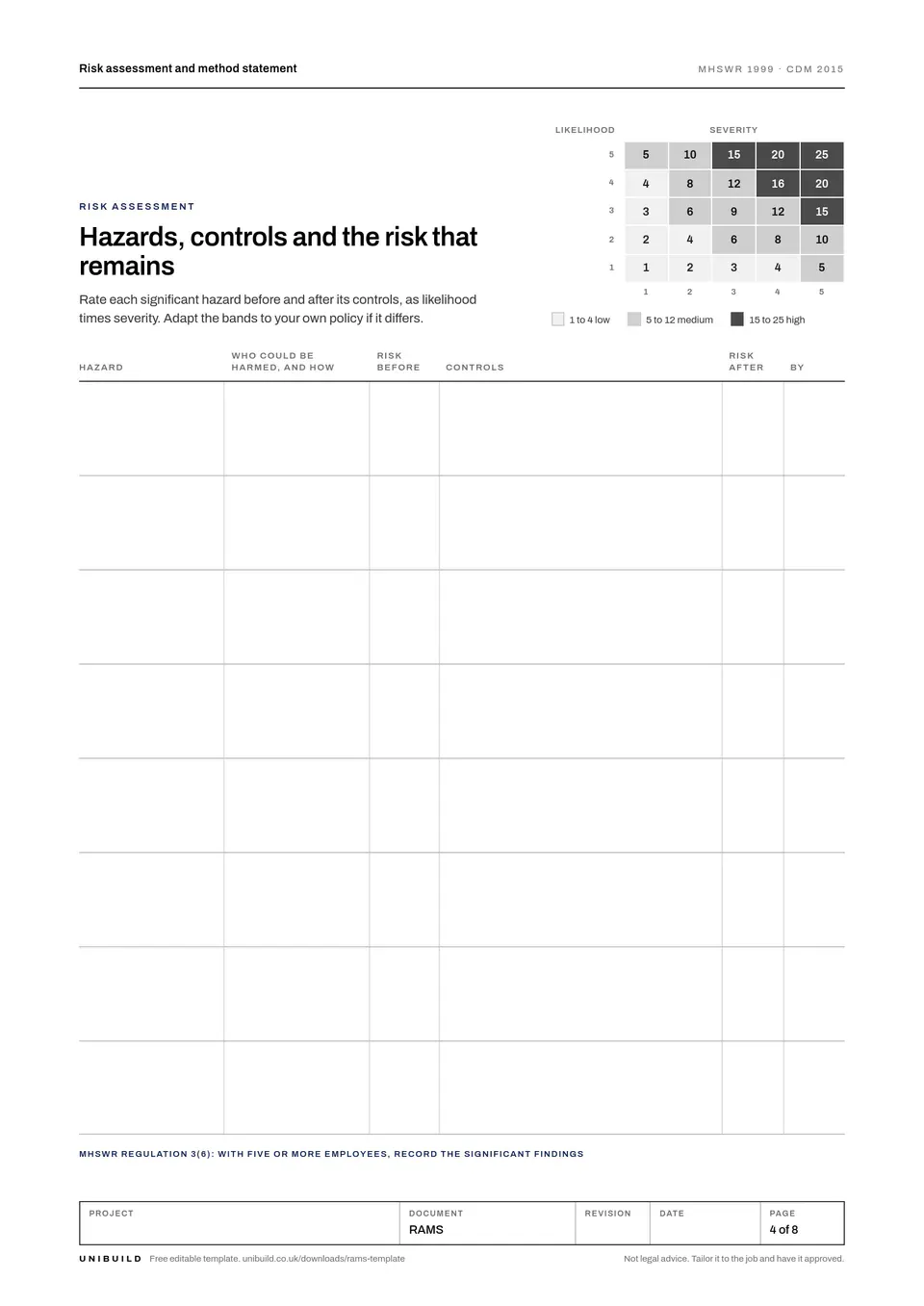
Each significant hazard, who could be harmed and how, the controls, and the risk before and after, rated on a five by five matrix.
Each item of plant with its checks, certificates and operator competence, and the PPE by type rather than by name.
COSHH references, the permits and plans the work needs, the rescue plan, and dust, noise and waste.
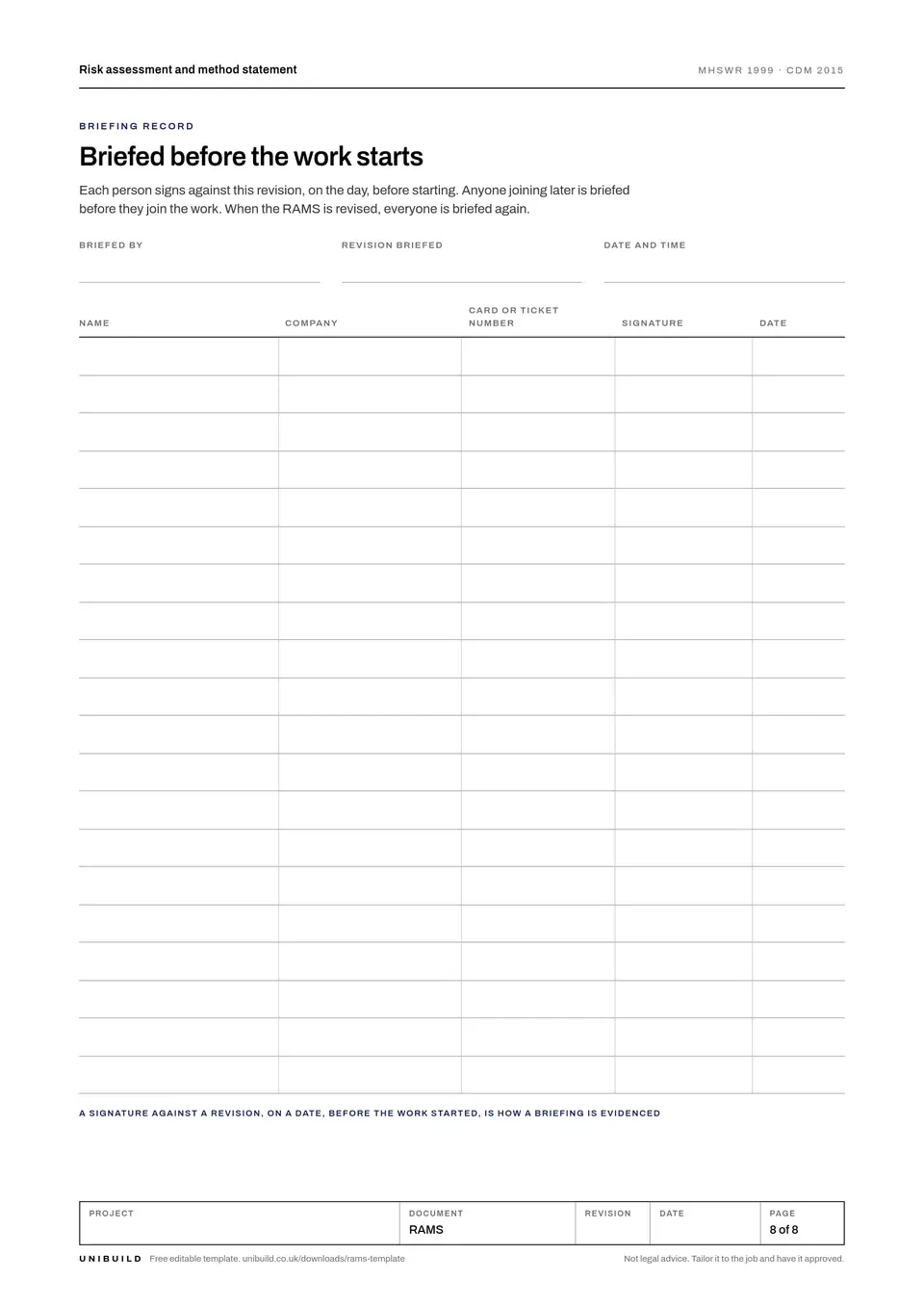
Twenty signatures against the revision, taken on the day and before the work starts.
Every employer must make a suitable and sufficient assessment of the risks to their employees and to anyone else affected by the work. With five or more employees, the significant findings must be recorded.
Management of Health and Safety at Work Regulations 1999, regulation 3Every contractor must plan, manage and monitor the construction work under their control. The aim is work carried out without risks to health and safety, so far as is reasonably practicable.
CDM 2015, regulation 15(2)For demolition or dismantling, the arrangements must be recorded in writing before the work begins, usually as a method statement. For other work it is not required by law, but HSE calls it an effective and practical way to plan, manage and monitor the work.
CDM 2015, regulation 20(2), and HSE construction guidanceOne activity on one site: this sequence, this access, these people. A RAMS that describes the trade rather than the job is the most common reason one is rejected.
A competent person checks it before the work starts. The cover records who prepared it, who approved it and the revision.
Everyone signs against the revision before they start. When the sequence, the gang or the conditions change, reissue it and brief it again.
Welding, cutting, grinding and torch-on work: the precautions checked before it starts, the fire watch during and after, and hand-back.
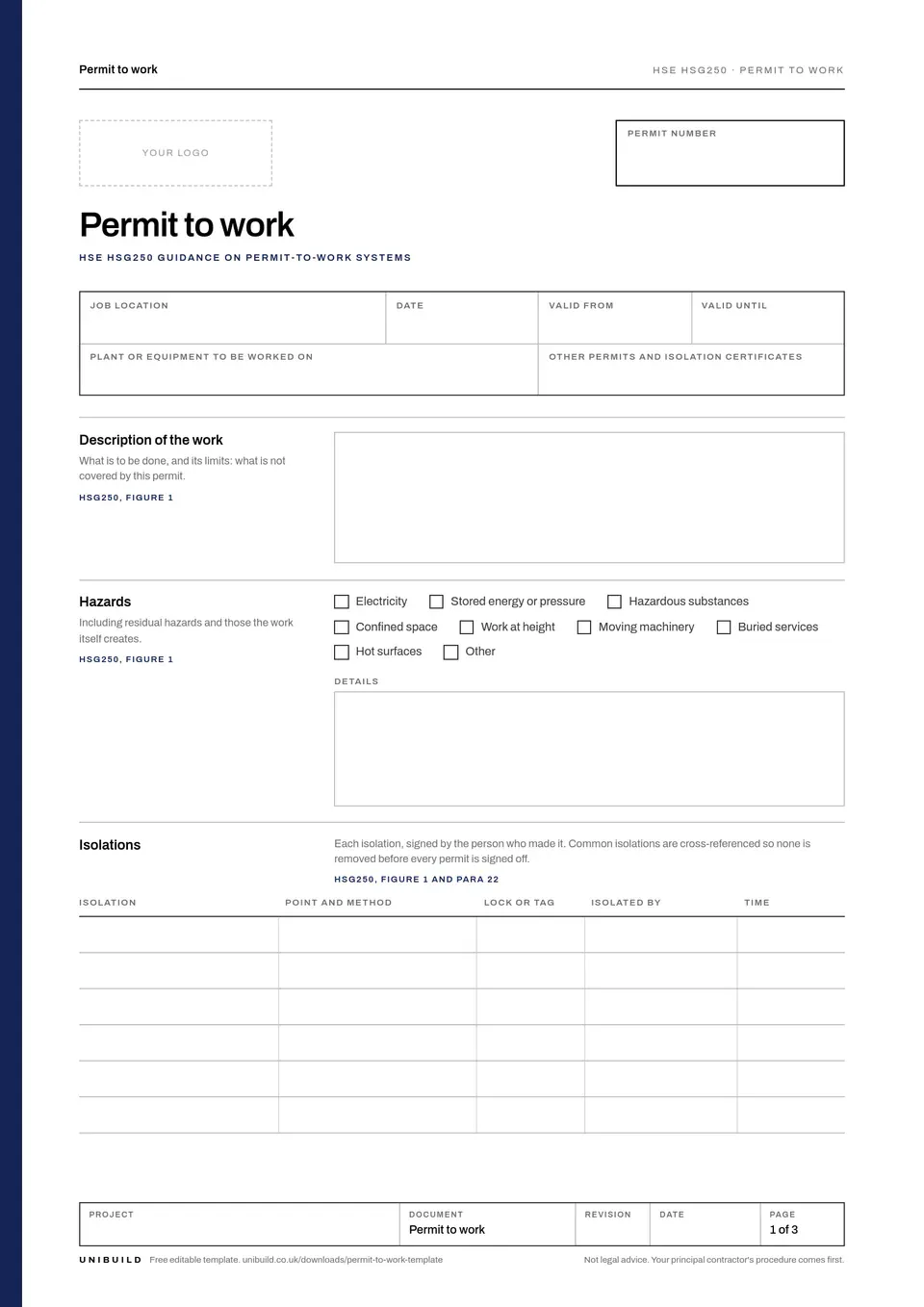
A general permit for high-risk work: the job, hazards, isolations, precautions, issue, acceptance, shift handover, hand-back and cancellation.
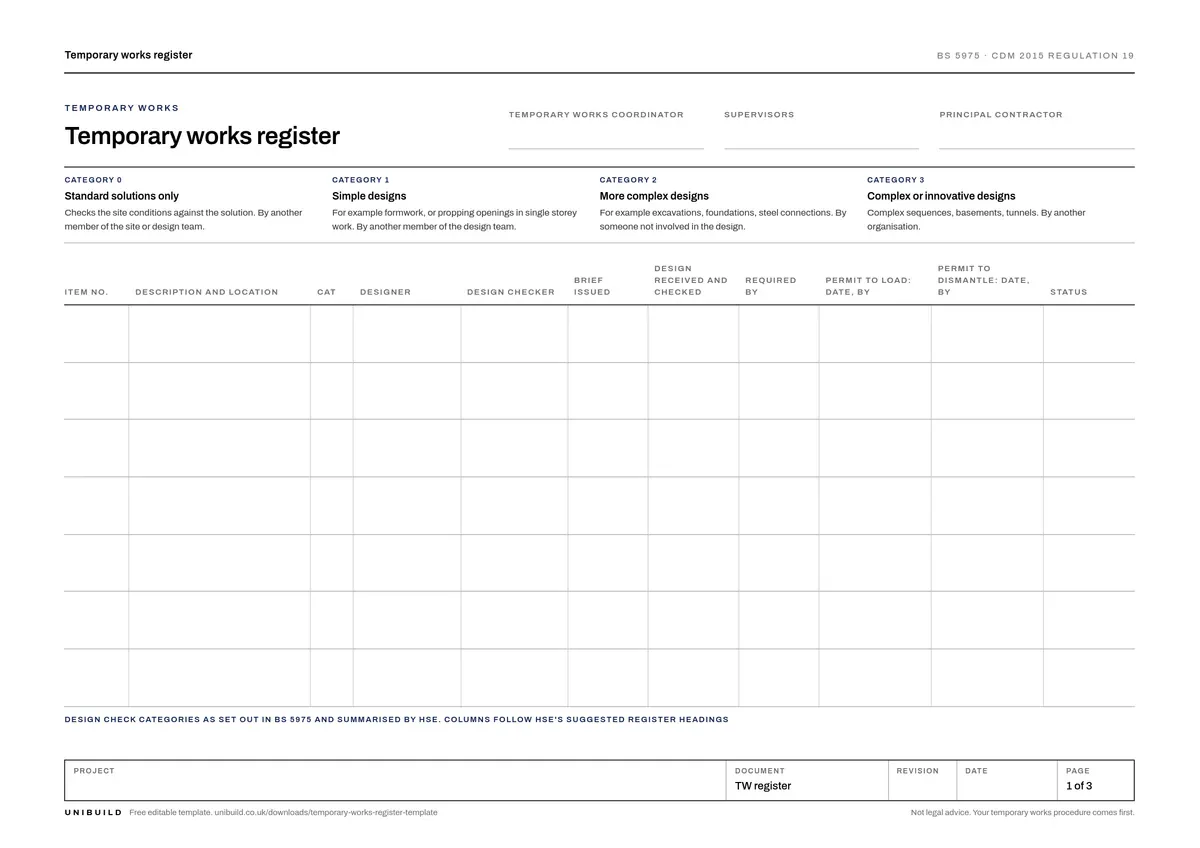
Every temporary works item on the job: design category, designer and checker, permit to load, permit to dismantle and status.
On the platform these stop being sheets. The check, the person, the date, the signature and the action that followed are recorded as the work runs and retrieved by site.