Form · MHSWR regulation 3
RAMS template
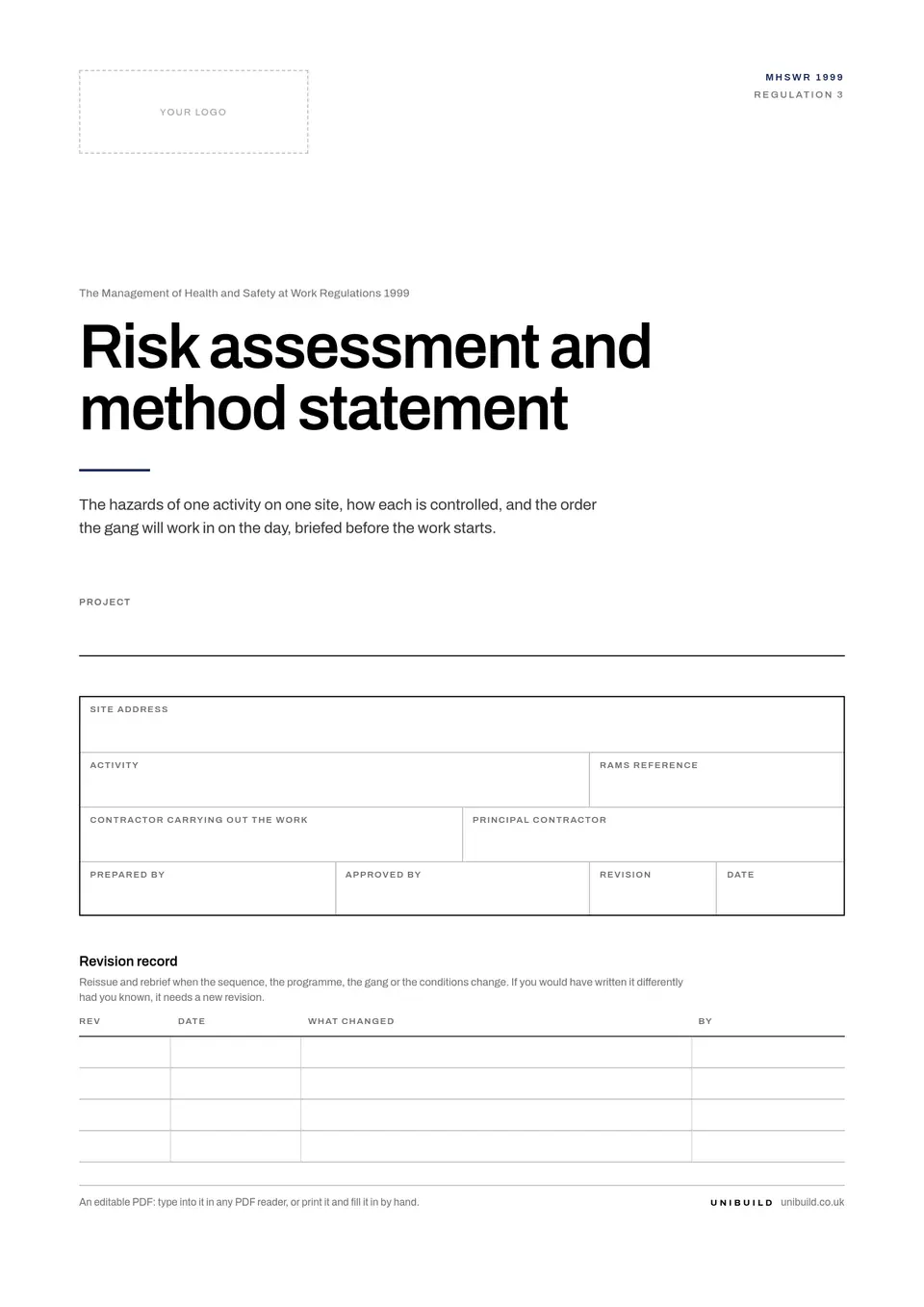
Risk assessment and method statement for one activity: the sequence of work, a five by five risk matrix, PPE, permits, rescue, and a briefing record signed against the revision.

An incident report form records an accident, a near miss or a dangerous occurrence while the facts are fresh: who, where, what happened, and whether HSE must be told. This one adds the RIDDOR check and an investigation page, as an editable PDF and a Word document, free to use and reuse.
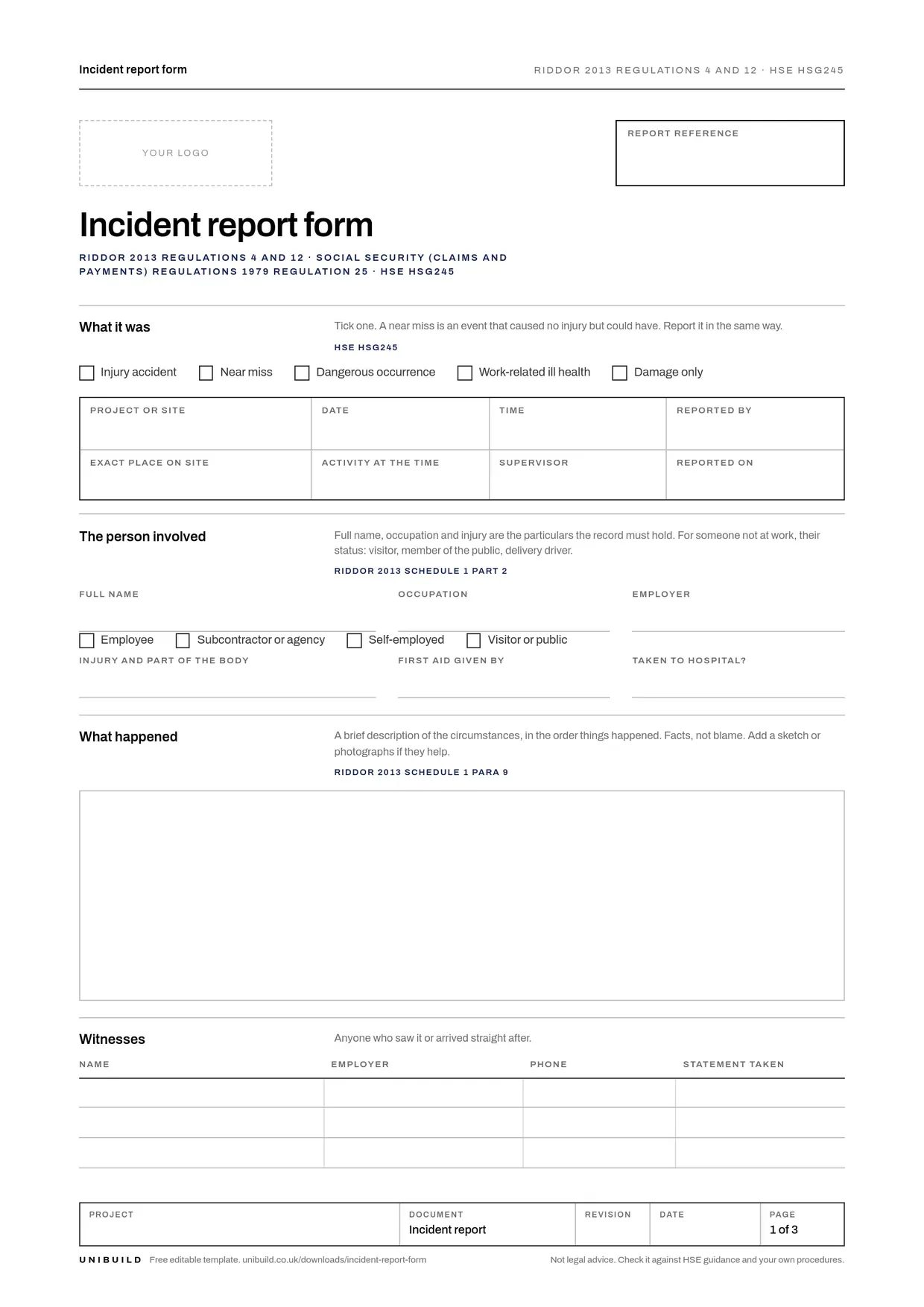
The kind of event, the site, date, time and exact place, the person involved with their occupation and injury, first aid, hospital, a description in order, and the witnesses.
The specified injuries listed to tick, the seven-day and three-day rules, members of the public taken to hospital, dangerous occurrences, and when and how the report went to HSE.
What was done straight away, and the employer, principal contractor, insurer and next of kin told.
The immediate, underlying and root causes, how much worse it could have been, the actions with owners and dates, the briefing, and sign-off.
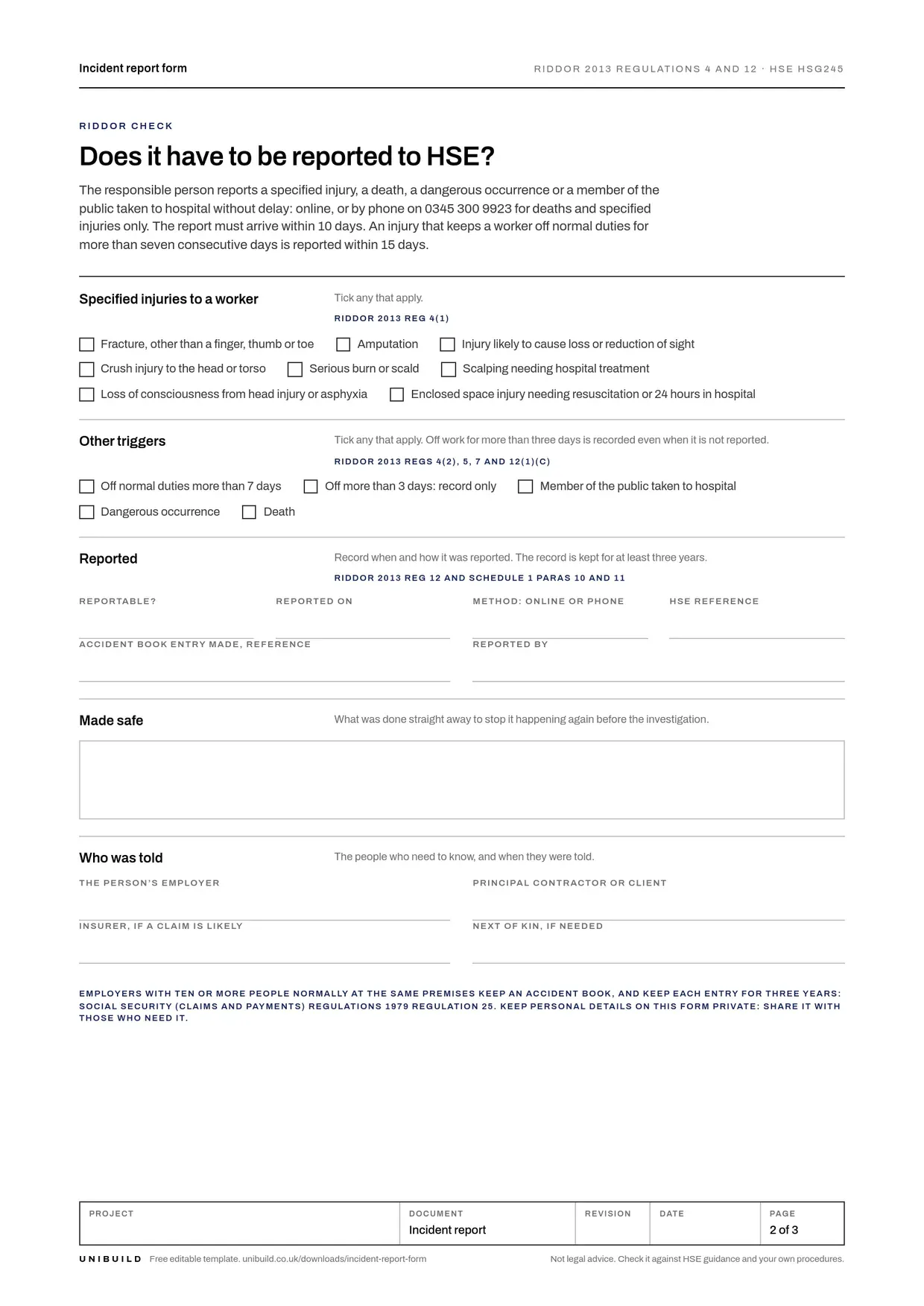
Deaths, specified injuries, dangerous occurrences and members of the public taken to hospital are reported without delay, and the report must arrive within 10 days. An injury that keeps a worker off normal duties for more than seven consecutive days is reported within 15 days.
RIDDOR 2013, regulations 4 to 7; HSE, When do I need to report an incident?The responsible person keeps a record of every reportable incident, and of every injury that keeps a worker off for more than three days. It holds the date and time, the person’s name, occupation and injury, the place, the circumstances, and when and how it was reported. It is kept for at least three years.
RIDDOR 2013, regulation 12 and Schedule 1 Part 2An employer with ten or more people normally employed at the same premises keeps an accident book, and keeps each entry for three years.
Social Security (Claims and Payments) Regulations 1979, regulation 25A near miss is the same event without the injury. HSE’s HSG245 treats it as the cheapest lesson a site gets.
The description is what happened, in order. The causes go on the investigation page, where they can be looked at as a system.
In Unibuild the accident report records whether the event is reportable and why, the reporting window is flagged, and alerts go by email and push notification. See health and safety in Unibuild.
Risk assessment and method statement for one activity: the sequence of work, a five by five risk matrix, PPE, permits, rescue, and a briefing record signed against the revision.
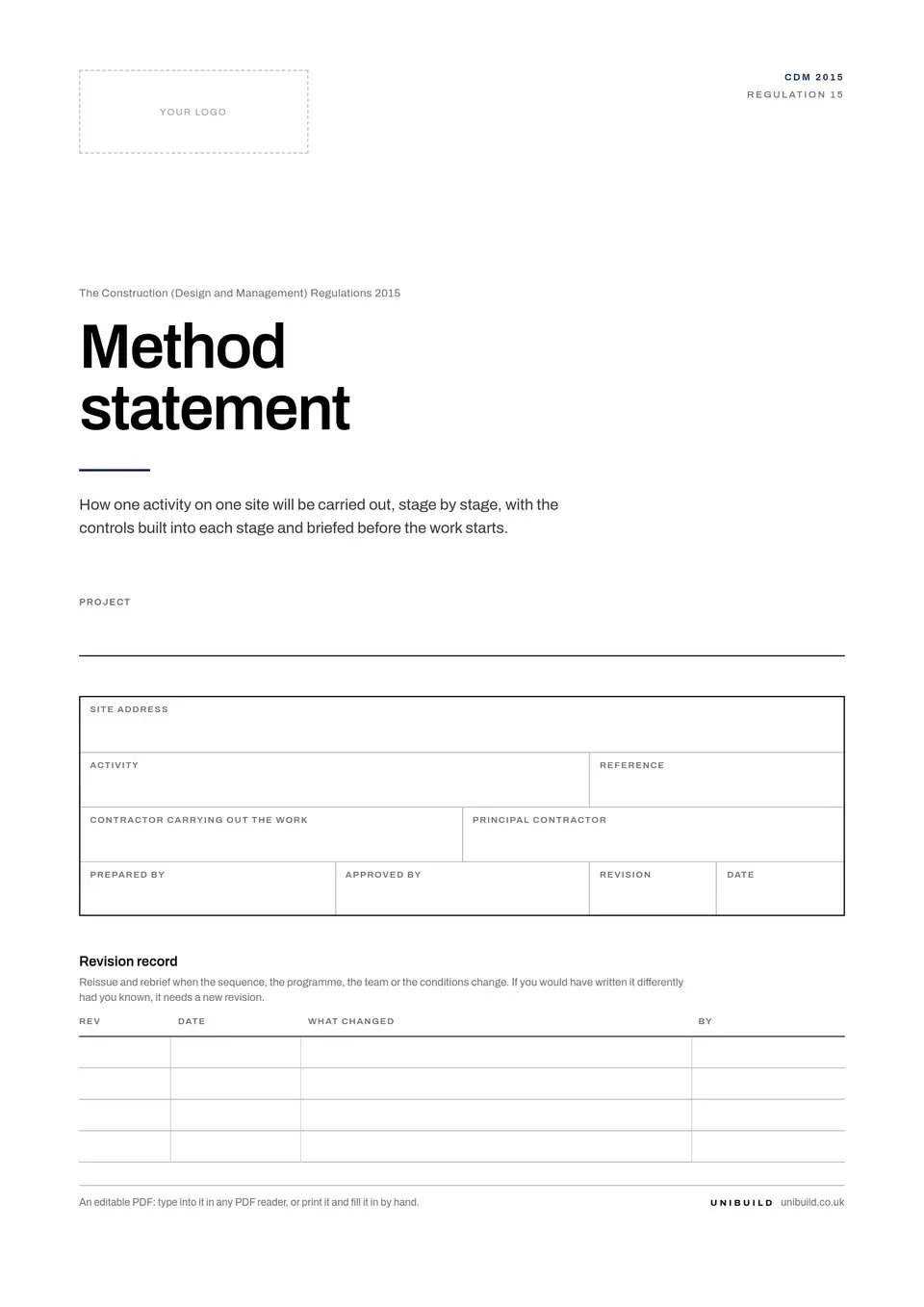
How one activity on one site will be carried out. Two pages of sequence with the controls at each stage, then plant, PPE, permits, rescue and a briefing record.
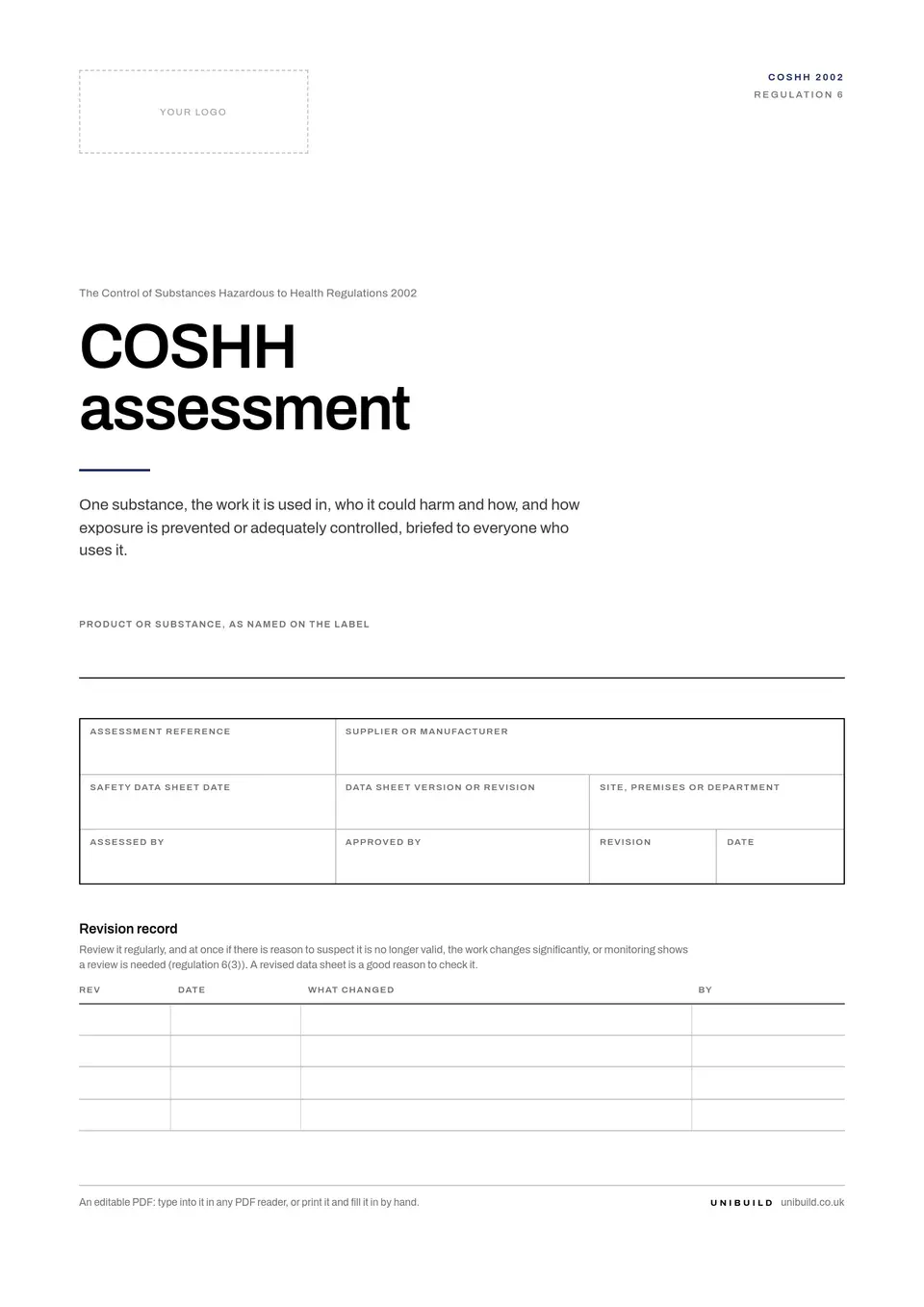
One hazardous substance: its hazards from the data sheet, who is exposed and how, controls in regulation 7 order, PPE and RPE, storage, spills, first aid, monitoring and review.
On the platform these stop being sheets. The check, the person, the date, the signature and the action that followed are recorded as the work runs and retrieved by site.
UK-built · CDM · CIS · MTD