Stop work authority poster
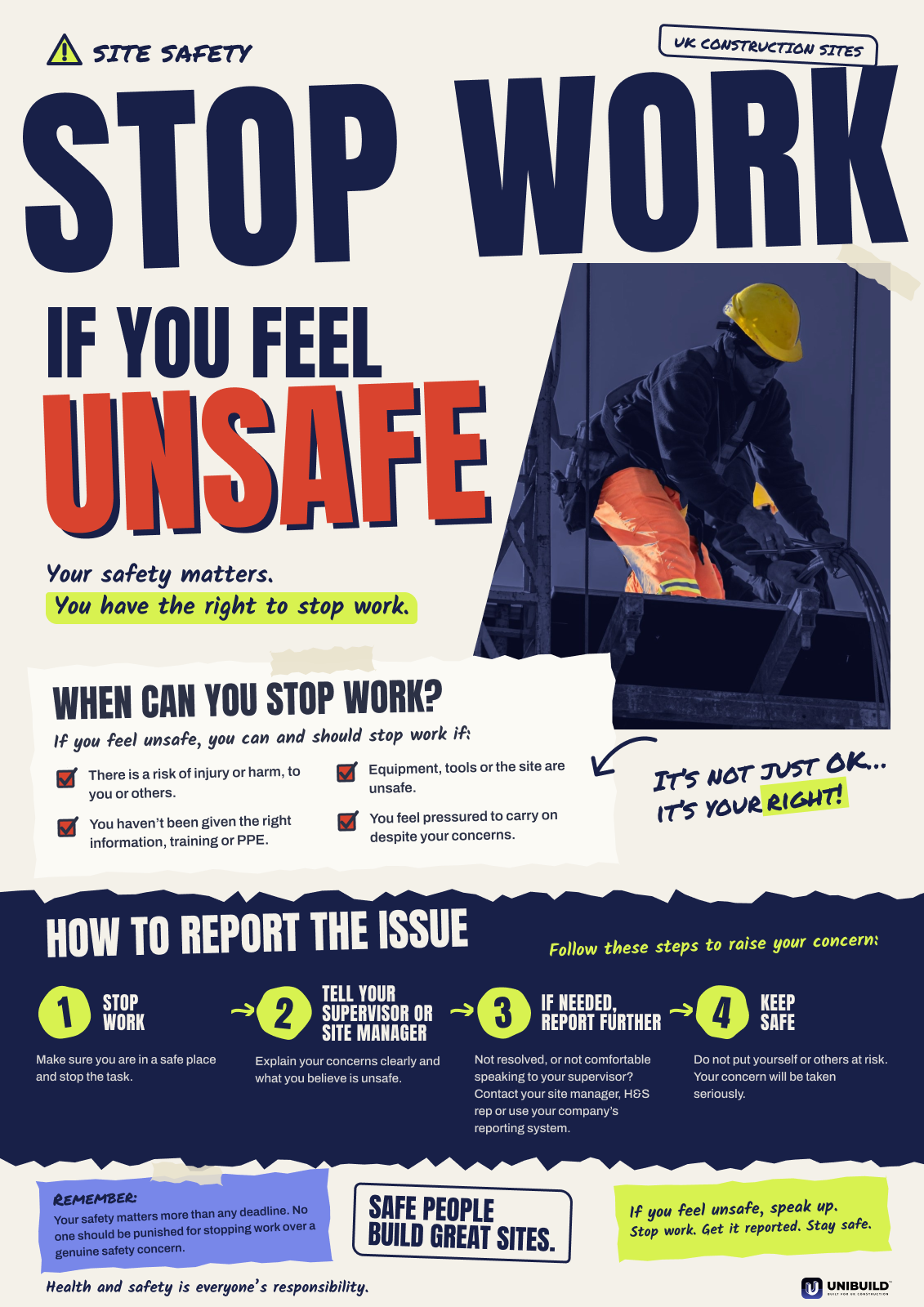
Stop work if you feel unsafe
A site safety reminder to stop, tell your supervisor and report concerns when a task feels unsafe.

UK-built · CDM · CIS · MTD
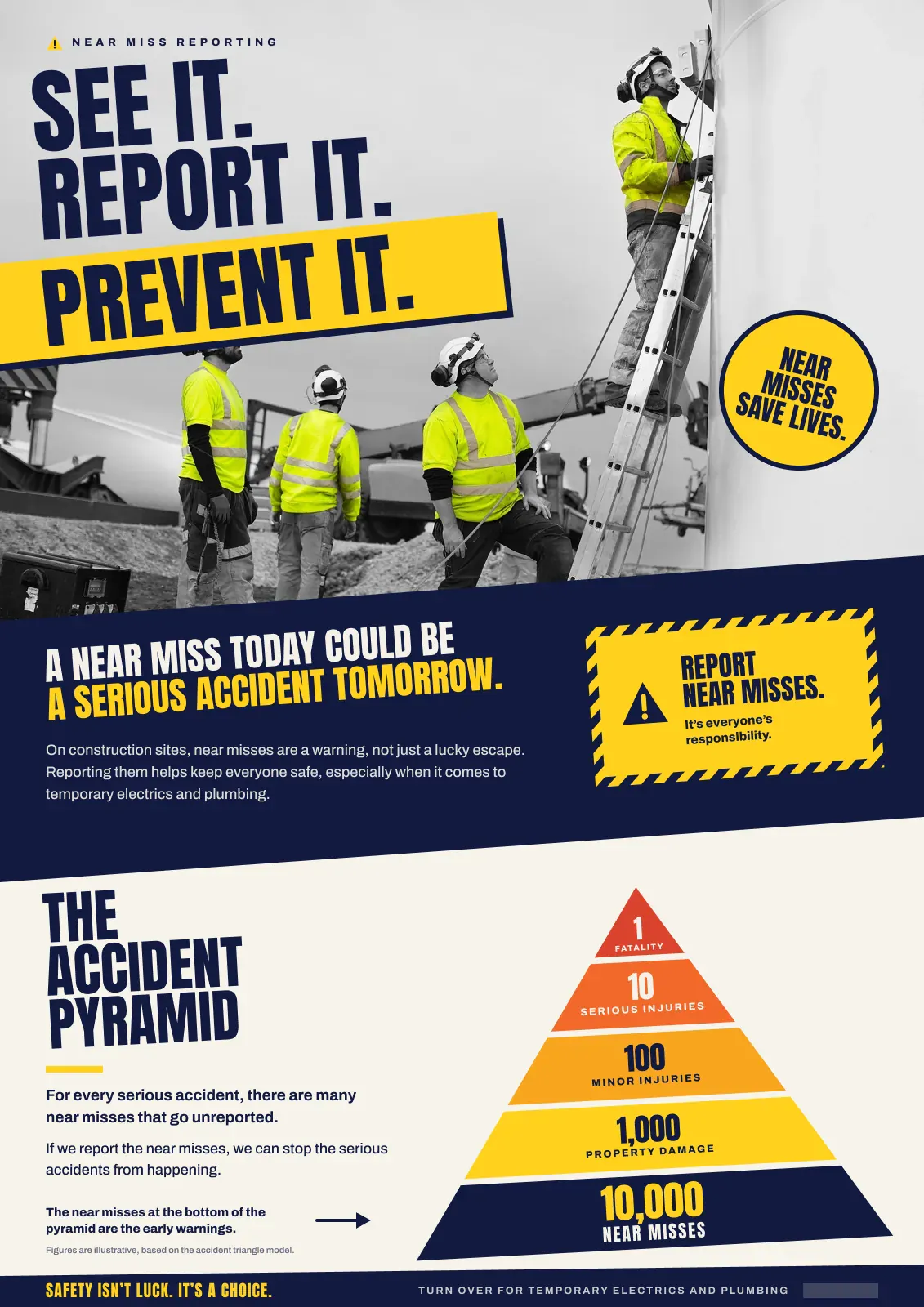
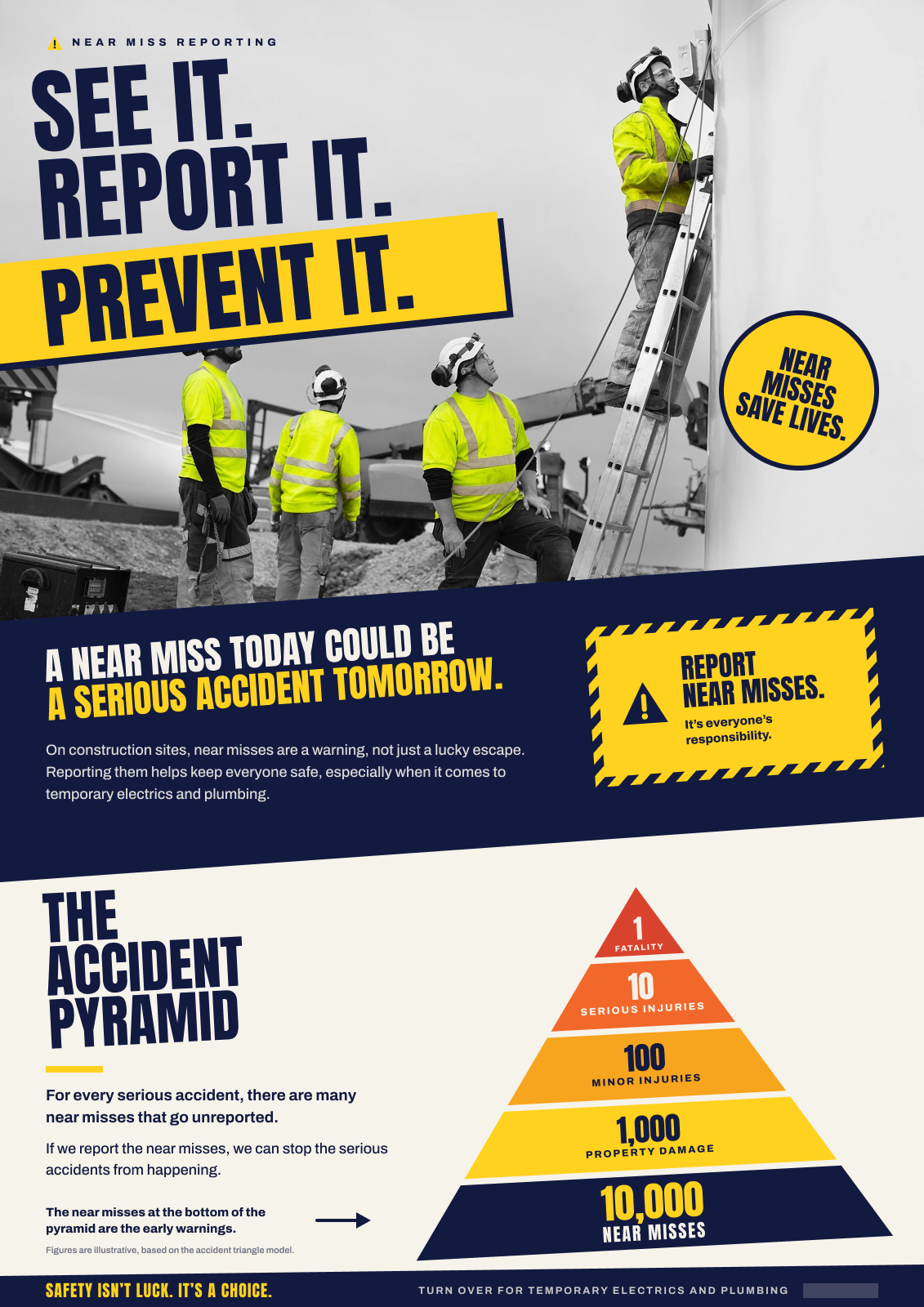
A site poster that asks everyone to report near misses, with the accident pyramid showing why the near misses at the bottom are the early warning. A4 PDF to print, and a PNG image for screens. Free to use and reuse.
The headline: a near miss today could be a serious accident tomorrow, and reporting it is everyone’s responsibility.
From 10,000 near misses at the base, through property damage and minor and serious injuries, to one fatality at the top. The poster states the figures are illustrative, based on the accident triangle model.
A line on the near misses that matter most around temporary electrics and plumbing.
A near miss is an event that did not cause harm but had the potential to cause injury or ill health. HSE recommends investigating near misses as well as accidents.
HSE HSG245, Investigating accidents and incidentsCertain near misses are dangerous occurrences and must be reported to HSE. Examples are the collapse of a scaffold and the failure of lifting equipment.
RIDDOR 2013, regulation 7 and Schedule 2Employers must have arrangements to monitor and review their preventive and protective measures. Near miss reports are the cheapest monitoring there is.
Management of Health and Safety at Work Regulations 1999, regulation 5Put the poster next to the way to report: the form, the phone number or the app. A poster that asks for reports with no route to make one is wallpaper.
Tell the team what changed because of a report. That is what keeps the reports coming.
Some near misses are dangerous occurrences under RIDDOR. Check before deciding it stays on site.
A site safety reminder to stop, tell your supervisor and report concerns when a task feels unsafe.
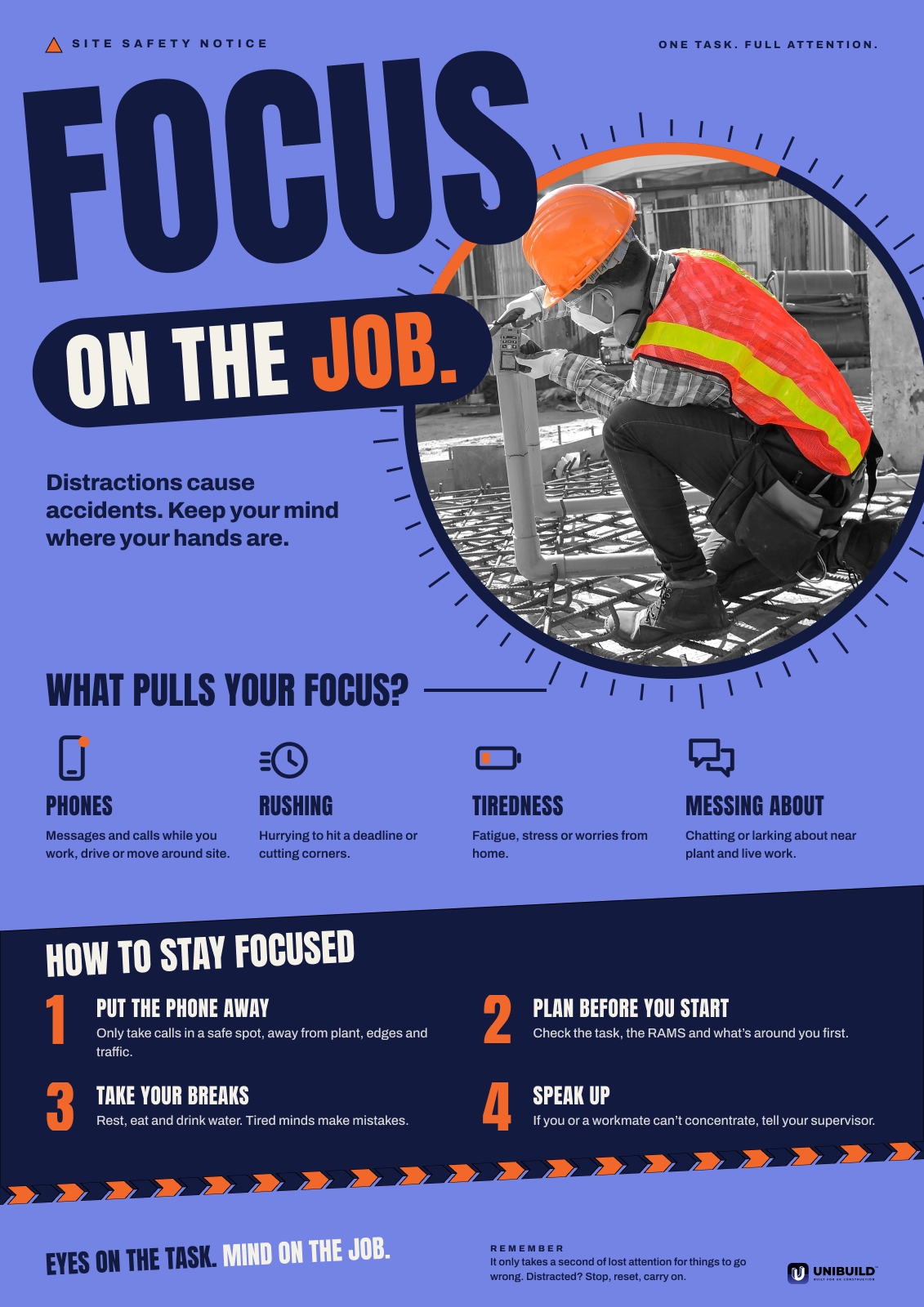
A reminder to give the task your full attention, put the phone away, plan ahead and take breaks.
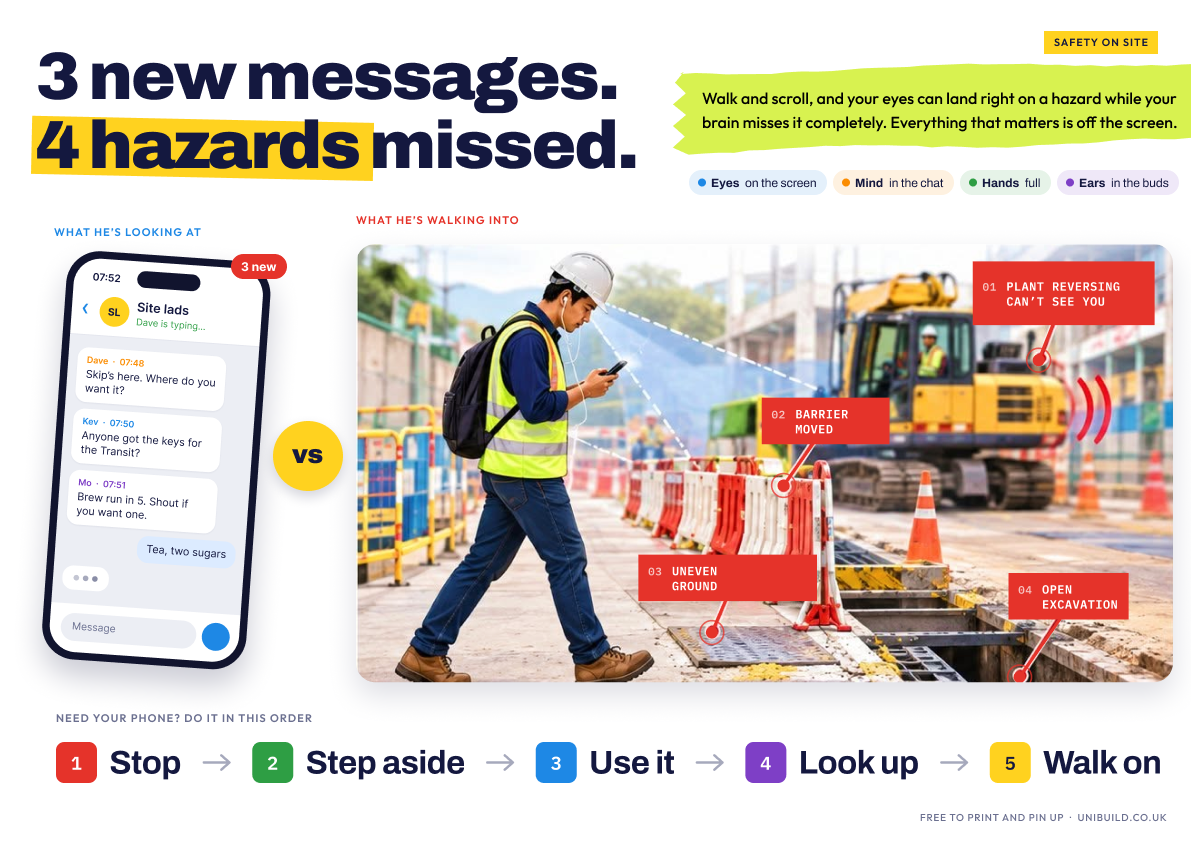
A reminder to stop and step aside before using your phone, then look up before walking on.
On the platform a RAMS is read on the operative’s own phone, in their own language, and signed against the revision. Toolbox talks are signed on the phone too, so the office can show who was briefed, on what, and when.