Form · MHSWR regulation 3
RAMS template
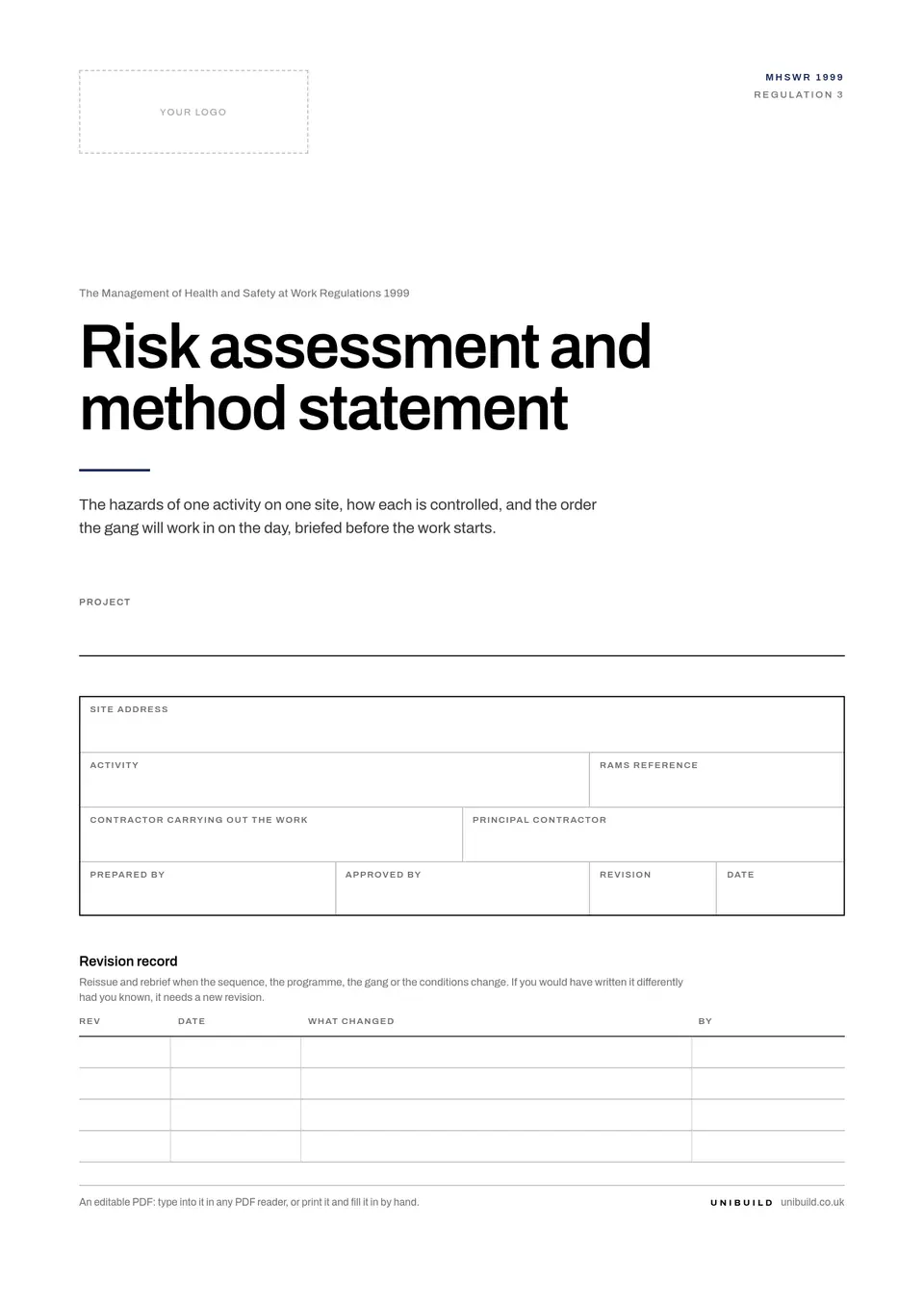
Risk assessment and method statement for one activity: the sequence of work, a five by five risk matrix, PPE, permits, rescue, and a briefing record signed against the revision.

UK-built · CDM · CIS · MTD
An asbestos management plan sets out where asbestos is, or is presumed to be, in non-domestic premises or the common parts of blocks of flats, and how the risk from it is managed. This one is an editable PDF for the dutyholder under regulation 4 of the Control of Asbestos Regulations 2012. Eight pages, free to use and reuse.
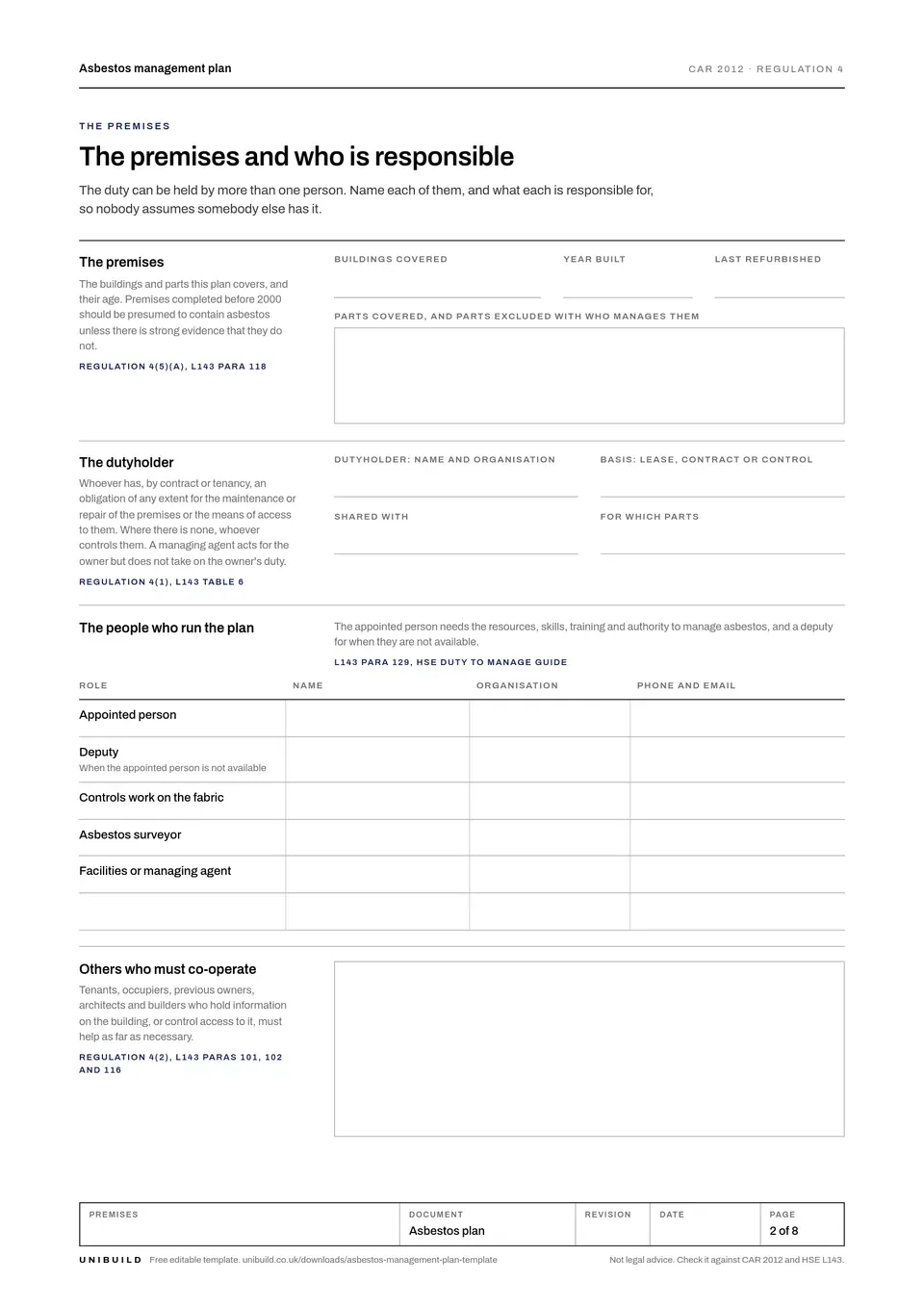
The buildings covered and their age, the dutyholder and the basis of the duty, the appointed person and a deputy, and others who must co-operate.
The management and refurbishment and demolition surveys held, the areas the surveyor could not reach, and any evidence that asbestos is absent.
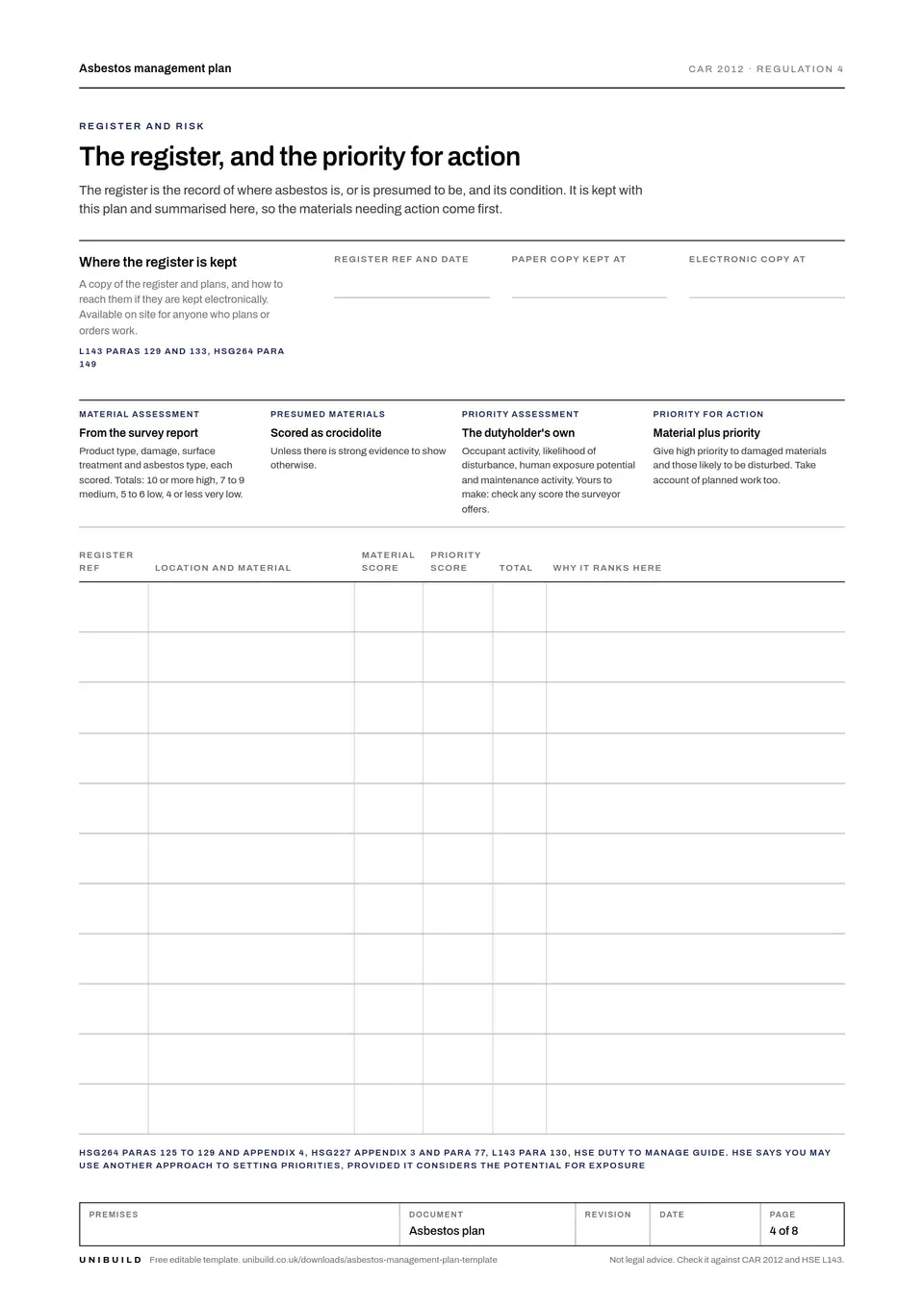
Where the register is kept, and each material ranked by its material score from the survey and your own priority score.
Manage in place, protect, seal, repair or remove, each with the work category, an owner, a due date and the evidence it was done.
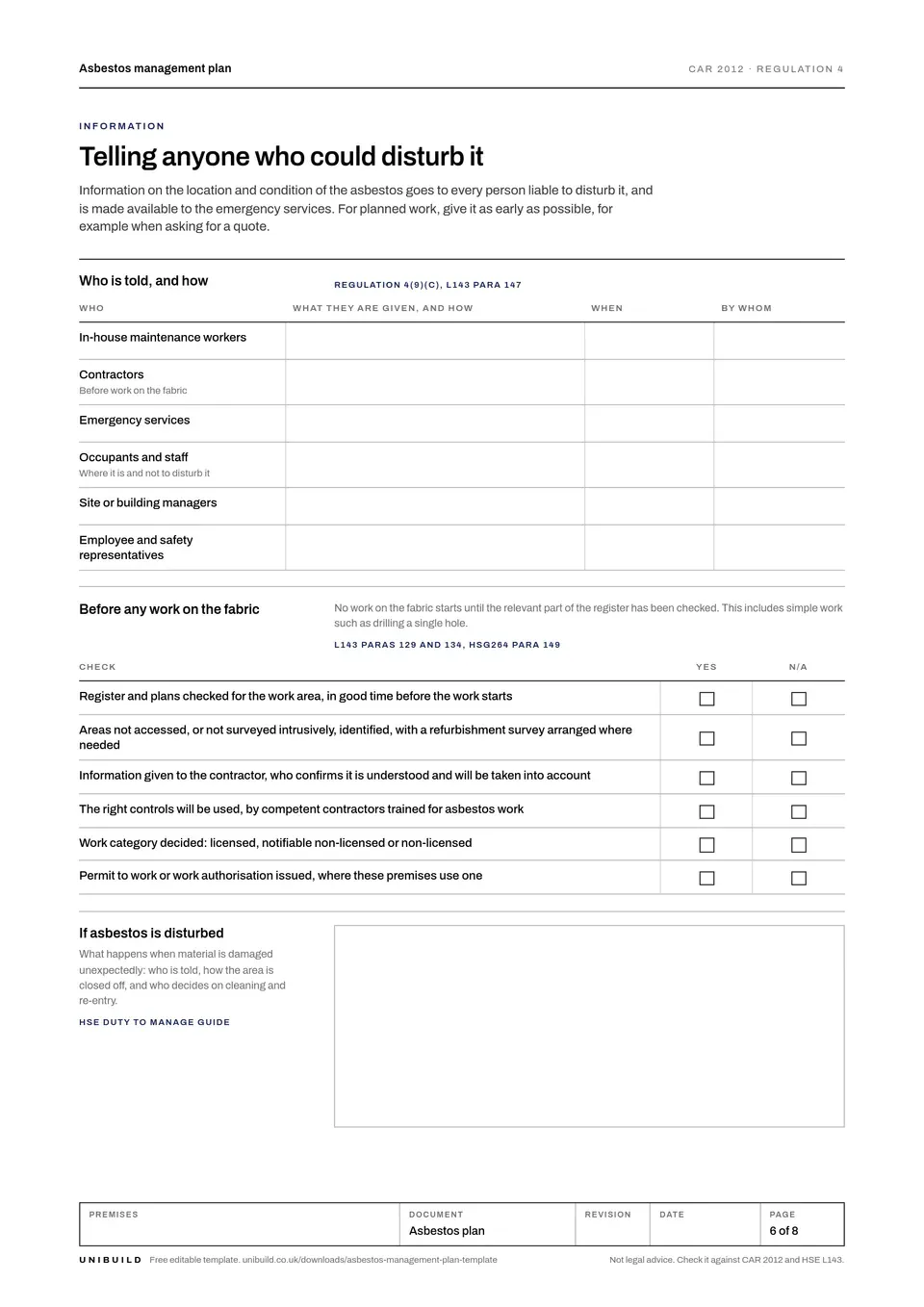
Who is told and how, including contractors and the emergency services, and the checks made before any work on the fabric starts.
The re-inspection schedule and record, what prompts a review, the review record and the approval of the plan.
Every person with an obligation of any extent, by contract or tenancy, for the maintenance or repair of non-domestic premises or the means of access to them. Where there is no contract or tenancy, every person who has, to any extent, control of the premises.
Control of Asbestos Regulations 2012, regulation 4(1)The dutyholder must ensure a suitable and sufficient assessment of whether asbestos is or is liable to be present. It considers the condition of any asbestos, takes account of building plans or other relevant information and the age of the premises, and includes an inspection of the parts reasonably accessible. Its conclusions must be recorded.
Regulation 4(3) to (7)Where asbestos is or is liable to be present, the risk must be determined and a written plan prepared. The plan identifies those parts of the premises and the measures for managing the risk.
Regulation 4(8)Monitoring the condition of the asbestos, and keeping it properly maintained or, where necessary, safely removed. Information on its location and condition goes to anyone liable to disturb it, and is made available to the emergency services.
Regulation 4(9)The plan must be reviewed and revised at regular intervals, and without delay if there is reason to suspect it is no longer valid or the premises change significantly. Its measures must be implemented, and the measures taken recorded. HSE's code of practice says review it at least every 12 months.
Regulation 4(10), and HSE L143, para 143The 2012 Regulations were made for Great Britain. Northern Ireland has its own Control of Asbestos Regulations (Northern Ireland) 2012, whose regulation 4 sets the same duty to manage in the same terms.
SI 2012/632, explanatory note, and SR 2012/179, regulations 1 and 4Use the management survey report to fill the register and the risk page. Areas the surveyor could not reach are presumed to contain asbestos until they have been checked.
The surveyor scores the material. Only you know how each area is used and how often maintenance reaches it, so the priority assessment is yours to make or to validate.
Contractors need the information before they price or start the work, not on arrival. Review the plan at least every 12 months, and sooner when something changes.
Risk assessment and method statement for one activity: the sequence of work, a five by five risk matrix, PPE, permits, rescue, and a briefing record signed against the revision.
How one activity on one site will be carried out. Two pages of sequence with the controls at each stage, then plant, PPE, permits, rescue and a briefing record.
One hazardous substance: its hazards from the data sheet, who is exposed and how, controls in regulation 7 order, PPE and RPE, storage, spills, first aid, monitoring and review.
On the platform these stop being sheets. The check, the person, the date, the signature and the action that followed are recorded as the work runs and retrieved by site.