Live site presence

The map fills up
as they scan in.

Every punch already carries a place and a time. The map draws them, on every site you have running, coloured by job, so a no-show is visible by eight rather than reported at four.

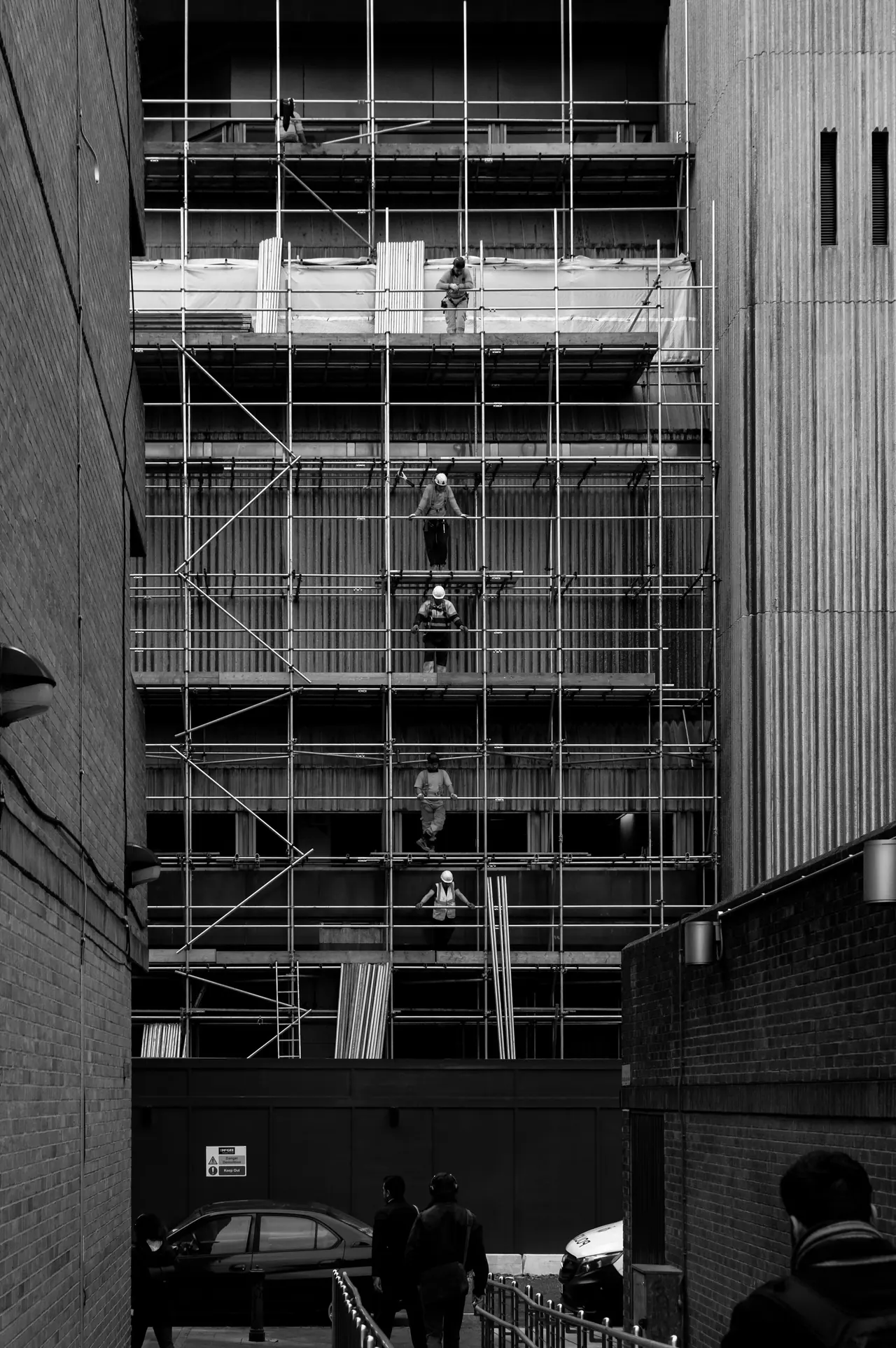
Operatives spread across five lifts of scaffold, the headcount one site office has to account for
In plain terms

Site attendance is the record of who was physically on a site, and when. Once a workforce is spread across more than two or three jobs it answers three questions that a weekly plan cannot: whether the people you allocated actually turned up, how many are inside the hoarding at this moment, and who is unaccounted for if the site has to be cleared.

Where is everybody is Unibuild's live map of that record. Operatives scan a QR poster to start their shift, the punch carries a location and a server-written time, and the map plots the day's scans across every project you have running, each in its own colour with a headcount on it. It reads on a laptop and it has a television view for the office wall. It is built from scans and nothing else: no phone is followed between them.

How the morning actually goes

The office knows who it planned. It rarely knows who came.

Those are two different numbers, and the gap between them is where the money goes.

Ten past seven
Three phone calls to three site managers, to build a number the system already has.
Half an hour, every morning
The number itself
Somebody says about ninety. Nobody in the building can say ninety where, or ninety whose.
About is not a number
The no-show
A man does not arrive. It surfaces at four, when the foreman rings about something else.
A day gone before anyone knew
Two gangs, one block
Both turned up to Block C. Block D is empty and stays empty until Thursday.
Paid twice, progressed once
The agency lad
First morning, sent by the agency at six. Nobody at the gate knows his name or who he is with.
On site, off the record
The alarm goes
The site is cleared and counted at the muster point, against a clipboard filled in on Monday.
Counted against the wrong list
The underlying issue The plan is a decision. Attendance is a fact And only one of them is written down each morning
What is on it

Four things, and the third is the one directors use.

Every live site,
on one map

01

Each project running today sits on the map where it actually is, drawn on Google Maps, carrying the number of people who have scanned onto it. Zoom out to the whole company, or in until you are looking at one plot.

  • Google Maps underneath, so the streets are the real ones
  • A headcount on every site
  • Each project in its own colour
  • From the whole country down to one address
The company, in one viewLive

Every scan,
with a name on it

02

Open a site and it lists who scanned onto it today, with the time our server wrote and the photograph taken at the punch. A number on a wall is reassuring. A name is what you can act on.

  • The time written by the server, not read off the handset
  • The photograph taken at the punch
  • The location recorded with it
  • Subcontract firms marked so they read differently
Names, not a totalLive

Planned
against actual

03

The labour run holds who should be where this week. The map holds who is. Put side by side, the difference is a short list of names, and it is on screen before the first tea break.

  • This week's plan, from the labour run
  • Who has scanned, and who has not
  • A no-show visible by 08:00
  • Approved leave taken off rather than left as a ghost
The gap, before it costs a dayLive

Today, or
any past day

04

Wind it back to a date and the map redraws as that day stood. Which is what a client asking about last Tuesday needs, and what an investigation asks for after something has happened on a site.

  • Any date, drawn as it was
  • The same names and times as today
  • What a delay claim argues about
  • What an insurer asks for after an incident
The day you have to account forRecorded
The three numbers

Two of these are easy.
The third is the job.

Any system can tell you what you planned, and any turnstile can tell you how many came through it. Holding the two against each other, by name, before the morning is spent, is the part offices do by telephone.

The map is the second number. The labour run is the first. Because both sit on the same records, the subtraction happens without anybody doing it, and what lands in front of the contracts manager is not a dashboard but a short list of people to ring.

Seven names at ten past eight is a morning's problem. The same seven at four o'clock is a day of a gang's time, and on most jobs that is the more expensive number by a distance.

Tuesday, 08:12 4 sites live
Planned on the labour run94
Scanned in so far87
Not yet scanned7
Nine Elms, Block C34
Deane Road21
Kingsway refurbishment19
Farnham depot13

The seven have names on them. That is the entire point of the map.

How the plan and the day's scans reconcile. Illustration, not a screen capture.

Bring a Tuesday and we will map it.

The quickest way to judge this is your own headcount on your own sites, laid out the way your office would want to read it at ten past seven, rather than a description of one.
Book a demo 30 minutes. The demo runs on our own data.
On the office wall

The same map, read
from across the room.

Switch to the television view and the map redraws for a screen nobody is standing at. The headcount on each site becomes the largest thing on it, the interface furniture goes away, and the room can answer its own question on the way past.

It is drawn to be read at four metres

Type steps up, the counts carry the weight, and everything that exists to be clicked stops competing with everything that exists to be read. A board is not a page with bigger text on it. The two are read from different distances by people with different reasons for looking.

It redraws itself through the morning

Nobody has to refresh it, because nobody is standing there. The arrivals appear as they happen, which is what makes it worth glancing at twice: a screen showing half past seven at nine o'clock is furniture, and everybody in the office learns to stop reading it within a week.

The wall shows what its account can see

Access in Unibuild is granted per person and per page, and whether somebody can see hourly rates at all is its own separate setting. So the television is signed into an account that sees sites, names and headcounts, and does not see pay. That is worth deciding before the screen goes up rather than after somebody notices.

It shares the wall with the other boards

The labour week and the project programme already run as TV boards, and a slideshow can rotate this map in alongside them, each one live rather than a captured image. Most offices end up with the map first thing and the week for the rest of the day.

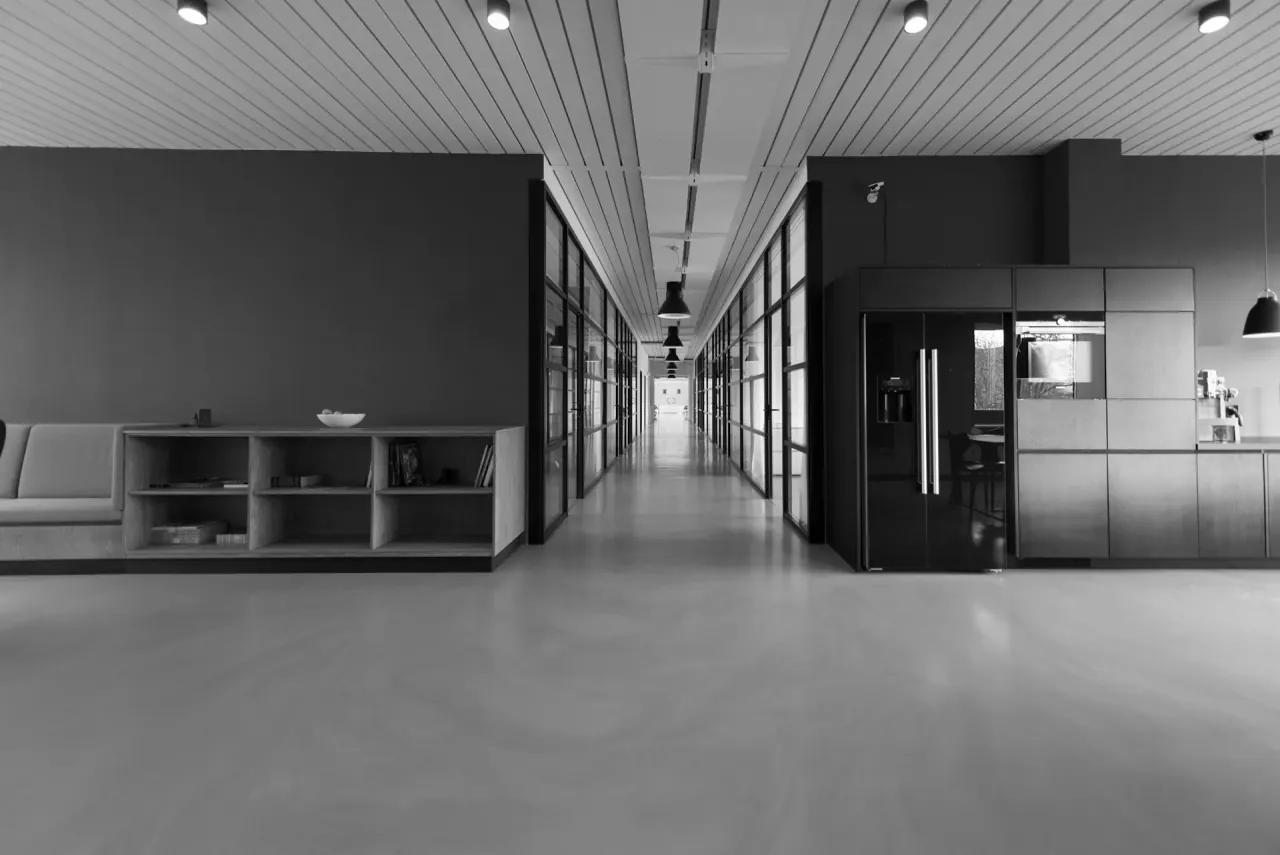
An open-plan office before the morning starts, the room where the question of who turned up gets asked out loud
The board earns its keep in the room where the question already gets asked out loud, which is rarely the director's office.
What it is not

A map of scans,
not a map of people.

Most of this market is vague about the difference, so it is worth being exact. Everything on the map is a moment the operative created by pointing a camera at a poster. There is nothing else in it.

The location is taken at the punch, and only then

A place is recorded when somebody scans to start or end a shift. Nothing runs between the two. Close the app, put the phone in a pocket, drive to the merchant, drive home: there is no second reading, because none is ever taken. The map is a set of pins where scans happened, and it cannot be anything more than that.

It is not a geofence

A punch made away from the site is not rejected and nobody is stopped from working by it. The location is shown to whoever approves the timesheet, as a map link, and the judgement stays with the person who knows why the van was at the other job at seven. Adding a distance check against your own boundaries is straightforward tailoring if you decide you want one. It is not the default, and we would rather you chose it deliberately.

The time is written by our server

Not read from the handset, so a punch cannot be back-dated by changing a phone clock. The office sees it at the same instant the operative sees the confirm screen, and every entry behind it is append-only, carrying the person, the time, the device and the IP address.

Nobody is being monitored quietly

A person points a camera at a poster on the welfare unit door, takes a photograph of themselves and presses a button. There is no version of this that happens without them knowing. Covert monitoring is a different thing entirely, with a far higher legal bar, and this is not it and is not built to become it.

The record lives in London and stays there

AWS eu-west-2. Data does not leave the UK. AES-256 at rest and TLS 1.3 in transit. Unibuild is ICO registered and holds Cyber Essentials Plus. ISO 27001 is in progress rather than held, and we will not describe it as anything else until we have been audited.

The duty stays yours, and no supplier can take it

We hold the record. Deciding you have a lawful basis for collecting it, telling your workforce plainly what is collected, and keeping it no longer than you need are yours, and any vendor implying otherwise is selling you a comfort they cannot deliver. What software can honestly do is make each of those easy to evidence when somebody asks. The four steps below are what that looks like.

Before the first scan

Four decisions, and none of them is difficult.

Location attached to a named person is personal data, so UK GDPR applies to it. These are the four things the Information Commissioner expects a UK employer to have settled before monitoring starts, in the order they are usually settled.

01

Pick your lawful basis, and write down why

For attendance the usual basis is legitimate interests, which obliges you to write a short assessment weighing what you gain against what the operative gives up. It is a page, not a project.

Consent is rarely the right answer between an employer and a worker, because consent has to be freely given and a job is not a free choice. A supplier who tells you to get everyone to tick a box has not thought about it.

02

Do the impact assessment

The ICO expects a data protection impact assessment where monitoring is systematic, and location data makes one more likely to be required rather than less. What you collect, why, who can see it, how long you hold it, what could go wrong and what you decided about it. Most firms find the exercise shortens the list of who needs access, which is worth the afternoon on its own.

03

Tell the workforce, in words they will actually read

Transparency is the obligation employers fail most often, and it is the cheapest one to meet. Say what is recorded at a punch, who sees it, and what it will and will not be used for. Say plainly that nothing is recorded between scans, because that is the thing people assume the opposite of.

A paragraph in the site induction they signed is worth more than a clause in a handbook nobody opened, and it is evidence rather than an assertion.

04

Decide how long you keep it

A punch location supports a timesheet, a pay run and any dispute about either. Once those are closed and out of time, it is doing nothing except sitting on your risk register. Set a period, apply it, and be able to state it when a subject access request arrives, which on a workforce of a few hundred is a question of when rather than whether.

A plain summary of the Information Commissioner's published expectations for monitoring at work, not legal advice. The decisions and the records are yours. The ICO's own guidance is at ico.org.uk.

The map is only as good as the scanning.

A map is worth exactly what the punch in behind it is worth. If half the workforce is still on paper timesheets, that is the conversation worth having first, and it is a shorter one than you think.
Book a demo Or call the office on UK hours
Questions

Asked by directors,
and by their staff.

Does this track where our staff are all day?+
No. A location is recorded at the moment somebody scans to start or end a shift, and at no other moment. Nothing runs in the background, nothing is collected while the app is closed, and there is no reading taken between the two scans. What the map shows is a set of pins where punches happened, which is why it can sit on an open office wall without anybody having to think about it. If you want continuous vehicle tracking that is a different product and we do not sell it.
Is it legal to record where employees clock in, in the UK?+
Yes, provided you do the ordinary things UK GDPR asks of any employer monitoring staff. Location tied to a named person is personal data, so you need a lawful basis, which for attendance is usually legitimate interests rather than consent, and you should record the assessment behind it. The Information Commissioner expects a data protection impact assessment where monitoring is systematic. You must tell your workforce what is collected and what it is used for, and you must decide how long you keep it. None of that is onerous, and the fact that nothing is recorded between scans makes the balancing exercise considerably easier than it would be for continuous tracking. This is a summary rather than legal advice, and the decisions stay with you.
What happens if somebody scans in from the wrong place?+
Nothing automatic, and that is deliberate. It is not a geofence: a punch away from the site is not rejected and nobody is prevented from working. The location is shown to whoever approves that timesheet as a map link, and they decide, because they are the person who knows the van was at the other job at seven and that the operative walked round. Adding a distance check against your site boundaries is straightforward tailoring if you decide you want one, but we would rather you asked for it than found it switched on.
Can we put it on a television in the office?+
Yes. There is a television view that redraws the map for a screen read from across a room: bigger type, the headcount on each site carrying the weight, and the controls out of the way. It needs a television with a browser and somebody to sign that browser in once, the same as the other TV boards, and a slideshow can rotate the map in with the labour week and the project programme. There is nothing to install, no player box to buy from us and no per-screen licence. One thing worth deciding first: the screen shows whatever its account can see, so sign it into an account that sees sites and headcounts rather than one that sees pay.
Do agency and subcontract people show on it?+
Yes, if they scan, and subcontract firms are marked so they read differently from your own people at a glance. This matters more than it sounds: on a job with a few hundred through the gate, the people you cannot account for are almost never your own employees, they are the ones somebody else sent. An agency worker can be signed up on their own phone before the first morning, with their CSCS card photographed both sides, so they arrive already on the list rather than becoming a name written on a clipboard.
Does it work for a company with several hundred people?+
That is the size it earns its keep at. With eleven men on one site you can see the answer out of the window. With three hundred across nine jobs, the morning headcount is a genuine piece of work that somebody does by telephone, and it is stale by the time it is finished. The map replaces that call round, and because every project carries its own colour and its own count the view stays readable as the number of sites goes up rather than turning into a wall of pins. Unibuild is one flat monthly fee with unlimited users, so a headcount of three hundred does not cost more than a headcount of thirty.
Can we look at a day that has already happened?+
Yes. Wind the map back to a date and it draws that day as it stood, with the same names and times. That is the version people end up using most, because the questions that matter tend to arrive late: a client disputing attendance on a delay claim, an insurer asking who was on site the afternoon something happened, or a contracts manager reconciling a subcontractor's application against the days their people were actually there.
Is this the same thing as a fire roll call?+
Related, but not the same, and it is worth being precise. This map is a live view of who has scanned onto which site, so it does answer the underlying question of who is inside the hoarding this morning. A roll call proper is a separate register in the platform, meant to be printed and carried to the muster point by the person doing the counting. Use the map to plan and to manage the day, and the roll call for the thing you hope never happens. Neither replaces your own evacuation procedure or the fire risk assessment that sits behind it.
Next step

Stop ringing round at seven.

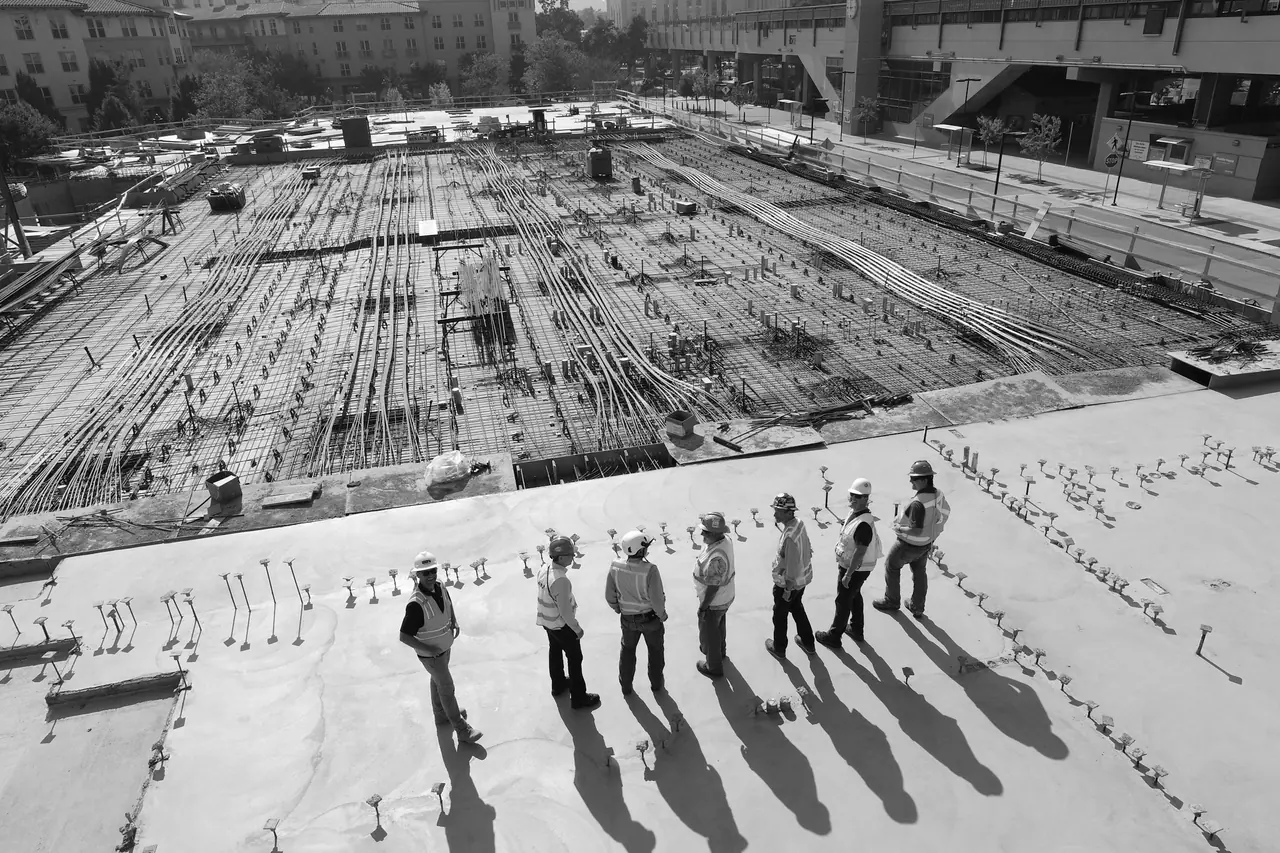
A group of operatives in hi-vis on a UK site, the headcount a live attendance map accounts for
The point Every one of them already scanned. Nobody drew it The record was there by ten past seven
WhatsApp us