
Site welfare, and what
Schedule 2 actually requires.
Toilets, washing, drinking water, somewhere to change and somewhere to sit down. The list is short, it is legally specific, and "so far as is reasonably practicable" does not apply to most of it.
Published ·Updated ·9 min read·Written by Darshan Parmar, Founder
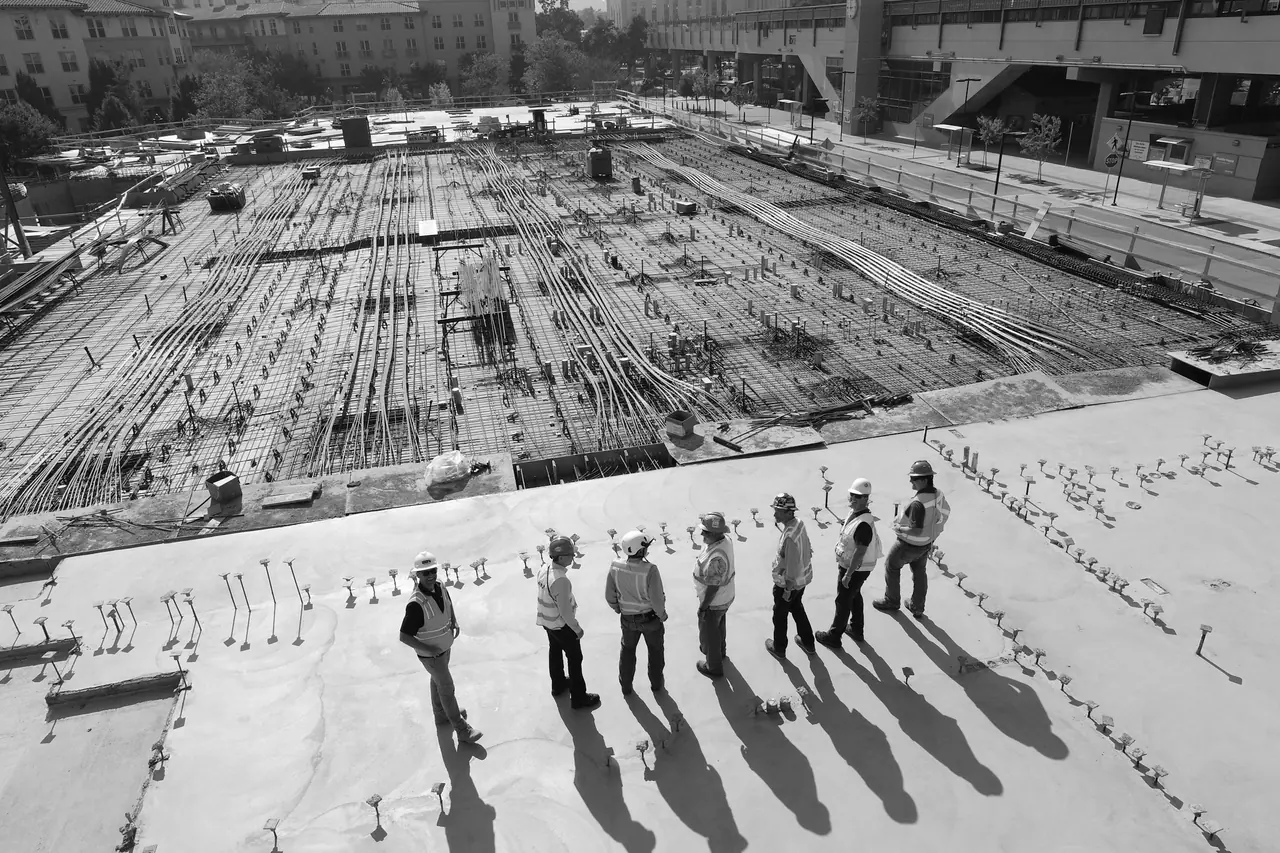
Welfare on a construction site is not a courtesy and it is not a prelim that can be trimmed to win a job. Schedule 2 to the Construction (Design and Management) Regulations 2015 sets it out under five headings: sanitary conveniences, washing facilities, drinking water, changing rooms and rest facilities. Most of those headings carry an unqualified duty. It is also the first thing an HSE inspector looks at, because it is visible from the gate and it tells them what kind of site they have walked onto.
Where the duty comes from
Two regulations carry it. Regulation 13(4) requires the principal contractor to ensure that welfare facilities complying with Schedule 2 are provided throughout the construction phase, so far as is reasonably practicable. Regulation 15(10) puts a parallel duty on a contractor: no contractor may begin work on a site unless satisfied that the Schedule 2 facilities will be provided.
Read those two together and the practical position is clear. On a site with a principal contractor, welfare is their job to provide. It is still every other contractor's job to check it exists before starting, and "we assumed the main contractor had sorted it" is not a defence that has ever worked. If you turn up to a site with no welfare and start work anyway, you have breached regulation 15(10) whatever anybody else has done.
There is a third route worth knowing. Where construction work happens inside an existing workplace that stays in use, the Workplace (Health, Safety and Welfare) Regulations 1992 continue to apply to the building's own facilities. A fit-out crew working in an occupied office is frequently covered by the building's existing welfare rather than by a cabin in the car park, and that is a legitimate arrangement provided the access is real and the facilities are actually available during the hours the work is done.
Schedule 2, heading by heading
The schedule runs to five substantive headings plus a general paragraph. It is worth reading in the original because it is short, but here is what each heading requires and where firms get caught.
Sanitary conveniences
Suitable and sufficient sanitary conveniences must be provided or made available at readily accessible places. So far as is reasonably practicable, the rooms containing them must be adequately ventilated and lit, and they must be kept in a clean and orderly condition. Separate rooms for men and women are required except where each convenience is in a separate room with a door that can be secured from inside.
Note where the qualification sits. The provision itself is not qualified by reasonable practicability. Ventilation, lighting and cleanliness are. That ordering is deliberate and it is the opposite of how most site inductions describe it.
Washing facilities
Suitable and sufficient washing facilities, including showers if required by the nature of the work or for health reasons, must be provided or made available at readily accessible places. They have to be in the immediate vicinity of every sanitary convenience and of every changing room, whether or not provided elsewhere. They must include a supply of clean hot and cold, or warm, water, which so far as is reasonably practicable must be running water. Soap or other suitable means of cleaning, and towels or other suitable means of drying, must be provided.
Hot water is the item that fails most often on a small site. A jerry can and a bar of soap in a plastic tray is not a washing facility within the meaning of the schedule, and an inspector will say so.
Drinking water
An adequate supply of wholesome drinking water must be provided or made available at readily accessible and suitable places. It must be conspicuously marked by an appropriate sign where necessary for reasons of health or safety. A sufficient number of cups or other drinking vessels must be provided unless the supply is in a jet from which people can drink easily.
Where the drinking water comes from a temporary supply rather than the mains, the question of whether it is wholesome is not rhetorical. That is covered in what a temporary water supply on site actually costs, because disinfection and sampling are the difference between water and drinking water.
Changing rooms and lockers
Suitable and sufficient changing rooms must be provided or made available where a person has to wear special clothing for work and cannot be expected to change elsewhere. Where necessary for reasons of propriety, there must be separate rooms for, or separate use of rooms by, men and women. The rooms must include facilities to enable a person to sit down. Suitable and sufficient facilities must also be provided for securing clothing not worn, and for drying it where the nature of the work makes that necessary.
The drying requirement is the one that gets missed on groundworks and external packages through the winter. If the work makes clothes wet, there has to be somewhere to dry them.
Rest facilities
Suitable and sufficient rest rooms or rest areas must be provided or made available at readily accessible places. They must include facilities to enable a person to sit down, arrangements to protect non-smokers from discomfort caused by tobacco smoke, and where necessary facilities for a pregnant woman or nursing mother to rest lying down. They must include suitable arrangements to ensure that meals can be prepared and eaten, and the means for boiling water.
A rest area is not the same thing as a canteen and the schedule does not require one. What it requires is somewhere to sit, out of the weather, where a meal can be prepared and eaten and a kettle can be boiled. That is a low bar and it is still routinely missed.
What "so far as is reasonably practicable" does and does not excuse
The phrase appears on the principal contractor's duty in regulation 13(4), and on specific items within Schedule 2 such as ventilation, cleanliness and running water. It does not appear on the core requirement to provide sanitary conveniences, washing facilities, drinking water or rest facilities at all.
In practice the qualification is about cost and effort being grossly disproportionate to the risk, and the bar for that is high. A remote site with no mains supply is not excused from providing welfare. It is required to provide welfare that works without a mains supply, which is exactly why self-contained and towable units exist. Short duration is not an exemption either. Even a short job needs toilets, washing and somewhere to sit, and HSE guidance is explicit that mobile work should be arranged so operatives have access to facilities on the same basis.
The genuinely narrow case is transient work at multiple locations in a day, where using public facilities or a client's may be reasonable. That is a judgement to be made and recorded in the construction phase plan, not an assumption to be made in the van.
Who provides it, and who pays for it
Provision and payment are different questions and conflating them causes most of the arguments. Regulation 13(4) makes provision the principal contractor's responsibility. Who bears the cost is a matter for the contract, and on most jobs it sits in the main contractor's preliminaries.
Where it goes wrong is a package let on a rate that quietly assumes site welfare will be available, on a site where the principal contractor has priced their prelims on the assumption that packages bring their own. Both parties have priced the same item at zero. The welfare then arrives late, or arrives and is charged onward as a variation, and the argument runs for the length of the job.
The fix is a line in the tender enquiry that says which it is. If you are supplying welfare, it is a priced item with a delivery, a servicing frequency and a collection, and it belongs in the valuation like any other. If you are relying on someone else's, that reliance is written down and dated, which is also how regulation 15(10) is satisfied on paper rather than by assumption.
What an inspector actually checks
Welfare is the easiest thing on a site to assess and it correlates with everything else, which is why it gets attention out of proportion to its apparent seriousness. An inspector looks for whether the facilities exist, whether they are accessible from where the work is happening rather than parked at the far gate, whether there is hot water and soap and towels, whether the toilets are clean, and whether there is somewhere to sit and eat that is not the tailgate of a van.
None of that requires a document. What documents help with is the second question, which is whether the arrangement was planned or improvised. A construction phase plan that names the welfare arrangements, a delivery note for the unit, and a servicing record all say the same thing: somebody thought about this before the job started. Their absence says the opposite, and the visit gets longer.
If an inspection does escalate, when an HSE inspector turns up on site covers what follows, including how the Fee for Intervention scheme works.
The records worth keeping, and why
Nothing in Schedule 2 requires a welfare log. Three records are worth holding anyway, because each of them answers a question that gets asked months later.
- What was provided, and when it arrived. The delivery note for the unit, against the job. This is the evidence that regulation 15(10) was satisfied before work began rather than after somebody complained.
- How it was serviced. Chemical toilets and self-contained units need emptying and restocking on a cycle. The schedule requires cleanliness so far as is reasonably practicable, and a servicing record is how you show the cycle existed rather than being done when somebody noticed.
- When it went off hire. Welfare units are among the most commonly forgotten items on a collection, and they carry on charging. That is the same failure described in off-hire, and the charges that keep running.
A welfare unit is an asset with a servicing schedule. In Unibuild it sits in the plant and inventory register with its service history, its current site and its expected collection date. The delivery and the collection are both signed records against the job with the note attached, which is what answers the "when did it actually arrive" question two months later. Both are signed for on the phone at the site, in the firm's own branded staff app, rather than written up in the office afterwards. The reminders engine watches servicing dates alongside vehicle MOTs, calibration and accreditation renewals, so an overdue service is a row that has already coloured itself rather than something somebody has to remember. Schedule 2 sets no ratio, so whether two toilets are sufficient for the number on site is a judgement for whoever writes the construction phase plan. What the platform removes is the failure that follows it, which is having made a sound judgement and then being unable to show the facilities were there, serviced, and collected when the job finished.
Where to start, on Monday
Take the last three sites you were on and answer one question for each: could you produce, this afternoon, the evidence that welfare complying with Schedule 2 was available on day one. Not that it was there, which it probably was. That you can show it.
For most firms the answer is a delivery note somewhere in an email, or nothing at all. That is worth fixing before it matters, because the moment it matters is the moment an inspector is standing in front of you or an accident has already happened, and neither is a good afternoon to start looking.
Sources
Checked against the source rather than against commentary. Where a schedule, a rate or a threshold is definitive on a government site, read it there.
- Construction (Design and Management) Regulations 2015 legislation.gov.uk
- CDM 2015 Schedule 2: minimum welfare facilities legislation.gov.uk
- Workplace (Health, Safety and Welfare) Regulations 1992 legislation.gov.uk
The follow-up questions.
The wider duty picture, including who becomes principal contractor and when, is in when you become the principal contractor, and when you do not.
What does Schedule 2 of CDM 2015 require?
How many toilets does a construction site need?
Does welfare have to include hot water?
What rest facilities does Schedule 2 require?
Does a site need drying facilities for wet clothing?
How far can welfare be from the work?
Who is responsible for welfare, the main contractor or us?
Does a short job still need welfare facilities?
Are welfare facilities required for short jobs and mobile teams?
Can we use the client's existing toilets instead of a site cabin?
Know what is on site, and when it goes back.
Welfare units are assets on hire with a servicing cycle and a collection date. Most firms can tell you what they have. Fewer can tell you where it is and when it was last serviced.
- Thirty minutes, weekdays, from tomorrow.
- Nothing to prepare. Bring a job number and we mock that job up.
- You drive it. There is no slide deck.
- You keep what you saw as a 14-day trial. No card.
More from Insights.
 What a temporary water supply on site actually costsThe cost splits three ways, and only one of the three is the water. The connection is quoted, the consumption is metered, and the compliance is the part that gets left out of the price.Read it →
 Temporary electrical supply, and the paperwork behind itWhy site power runs at 110 volts, what has to be inspected every three months, and why the isolation permit is the document that decides whether anybody is allowed to work on it.Read it →
 When you become the principal contractor, and when you do notA second contractor on the job is what triggers the appointment, whatever the size of the firm. Who holds the duties when nobody is appointed in writing, and what lands on you when you are.Read it →
All 3 articles on site services.