
The temporary works register,
and who signs the permit to load.
Propping, formwork, edge protection and the excavation support nobody designed. What the register holds, what a check category means, and why the permit to load is the entry that matters.
Published ·Updated ·7 min read·Written by Darshan Parmar, Founder
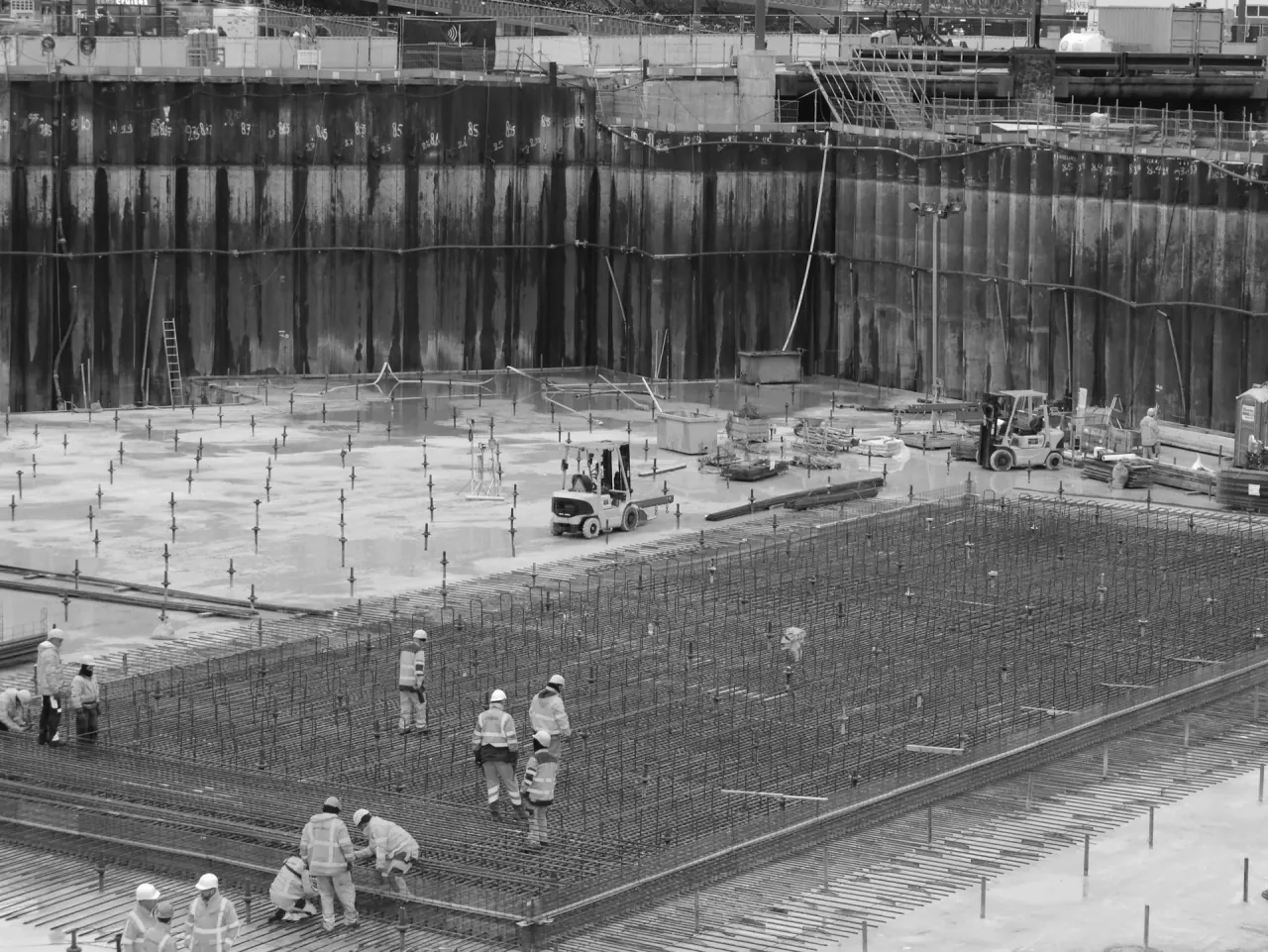
Temporary works are the structures that hold the job up until the permanent ones can. They are designed to be removed, which is why they are the part of a project most likely to be built by whoever is nearest, with the least paperwork behind it. When they fail, people die, and the inquiry almost never finds a design fault. It finds that nobody had signed to say the structure could be loaded.
What counts as temporary works
More than most people list. Formwork and falsework are the obvious ones. So are propping, needling, façade retention, edge protection, scaffolding, crane bases and hardstandings, hoardings that carry wind load, excavation support of any kind, and the temporary condition a permanent structure passes through during construction.
Scaffolding is the item on that list most firms meet every week, and it carries a regime of its own: a handover certificate before anyone else sets foot on it, then an inspection at least every seven days while it stands. That side of it is set out in the note for scaffolding contractors.
That last category is the one that catches firms out. A frame that is stable when finished may be unstable at the moment the last prop comes out, and the sequence that gets it from one state to the other is temporary works even though no temporary structure was built.
What the register is, and what it holds
The register is a single list of every temporary works item on a project, maintained by the temporary works coordinator, and it exists so that the question "is anything on this site holding something up that nobody has checked" has an answer that is not a guess.
A workable register carries, for every item:
- What it is and where, specifically enough to find it. Grid references beat descriptions.
- Who designed it, and whether that design is bespoke, a standard solution or a proprietary system used within its published limits.
- The design check category, and who carried the check out.
- The loading assumptions, because most failures are a structure used for something it was not designed for.
- The permit to load, with the date and the name of whoever issued it.
- The permit to dismantle, which is the same discipline in reverse and is forgotten far more often.
- Inspection records for the period it stands.
A register that lists items but records no permits is an inventory. It tells you what exists, not whether any of it was allowed to be used.
Check categories, in plain terms
Design checking is graded by how much can go wrong. The principle, set out in the procedural control that BS 5975 describes, is that the independence of the checker rises with the consequence of failure.
BS 5975 sets four categories. Category 0 covers standard solutions only: another member of the site or design team checks that the site conditions sit within the solution's limits. Category 1 is for simple designs, such as formwork or propping an opening in single storey work, checked by another member of the design team. Category 2 is for more complex designs, such as excavation support, foundations and steel connections, checked by someone not involved in the design. Category 3, for complex or innovative designs, is checked by another organisation.
The practical point for a contractor is not memorising the categories. It is that each item's category is set by somebody with the standing to set it, in consultation with the designer, and recorded before the check is done. Deciding afterwards that a check was proportionate is not a check.
The coordinator, and why the appointment is in writing
The temporary works coordinator is a role, not a job title, and on a small project it is often held by the site manager. What matters is that somebody holds it, knows they hold it, and has the authority the role needs, which includes the authority to refuse to issue a permit to load.
That last point is where the appointment being written down stops being an administrative nicety. A coordinator who reports to the person whose programme is delayed by a refusal needs the appointment to be explicit, because the pressure arrives on a Friday afternoon and it is real.
Where CDM 2015 fits
CDM does not use the phrase temporary works coordinator, and no regulation obliges you to keep a register in the form described here. What CDM requires is that the construction phase is planned, managed and monitored, that designers eliminate foreseeable risks so far as is reasonably practicable, and that the principal contractor plans the work.
The register is how a contractor demonstrates it did that for the part of the job most likely to collapse. It is evidence rather than a legal instrument, which is exactly why it needs to have been kept contemporaneously. Reconstructed afterwards it proves nothing. Becoming principal contractor covers what else arrives with the appointment.
How it goes wrong
- The register lives in one person's spreadsheet. It is complete, accurate and on a laptop that is at another site on the day somebody needs to know whether a prop can come out.
- Permits are verbal. The coordinator said yes on the phone. Everyone remembers it. Nothing records it.
- The design is a supplier's drawing nobody checked. A proprietary system used outside its published loading is a bespoke design, and it needs a bespoke design check.
- Nothing records the dismantle. Loading permits are taken seriously because a collapse under load is imaginable. Striking is treated as tidying up, and is where a surprising share of incidents happen.
- The sequence changed and the register did not. The design assumed a load path that the actual build sequence no longer produces, and the item on the register still says checked.
What good control looks like
One list, in one place, that the coordinator can update from site and anybody with an interest can read without asking. Items added when they are conceived rather than when they are built. Permits recorded as records rather than as signatures on paper that goes into a folder. And a standing answer to the only question that matters at any moment: what is currently loaded that has not been permitted.
Design and checking stay with the designer and the checker. Unibuild holds the register and the evidence around it: the item against the project, the design and check documents stored with who uploaded them and when, and the permits raised on the phone on site and stamped with the time they were created, so a permit written up after the event shows that it was. The office can add, rename and reorder the questions on a permit without a code change, and every permit stores the questions and answers as they stood on the day, so a historic permit keeps the wording that was actually asked rather than today's. Inspection intervals for standing items sit on the same reminder mechanism as certificate and insurance expiry.
Where to start, on Monday
Walk one live site and count the temporary works items. Then open the register and count the entries. If the two numbers differ, the gap is not a paperwork problem, it is a list of things holding up your building that nobody has checked.
Then look for the permits to dismantle. Most registers have loading permits and very few have striking permits, and the second half of that discipline is the half that is missing almost everywhere.
Sources
Checked against the source rather than against commentary. Where a schedule, a rate or a threshold is definitive on a government site, read it there.
- HSE guidance on temporary works Health and Safety Executive
- Construction (Design and Management) Regulations 2015 legislation.gov.uk
- Temporary Works Forum twforum.org.uk
The follow-up questions.
The duties that arrive with the principal contractor role are set out in when you become principal contractor.
What is a temporary works register?
What is the purpose of a temporary works register?
Does CDM 2015 require a temporary works register?
Does every job need a temporary works register?
Who owns the temporary works register?
What goes in each register entry?
What does a temporary works coordinator do?
What is a permit to load?
Who can check a temporary works design?
Is scaffolding temporary works?
What is the difference between a temporary works register and a design brief?
More from Insights.
 Permits to work, and the six a site actually issuesHot work, confined space, work at height, isolation, excavation and access. What a permit is for, who may sign one, and why the time it was raised matters more than the form it was raised on.Read it →
 RAMS that hold upWhat an inspector is actually looking for in a risk assessment and method statement, and the difference between a document that exists and one that is doing its job.Read it →
 When an HSE inspector turns up on siteWhat they can do, what they ask to see and in what order, what a Notification of Contravention means, and what the visit can cost you at £188 an hour.Read it →
All 15 articles on health and safety.