Form · MHSWR regulation 3
RAMS template
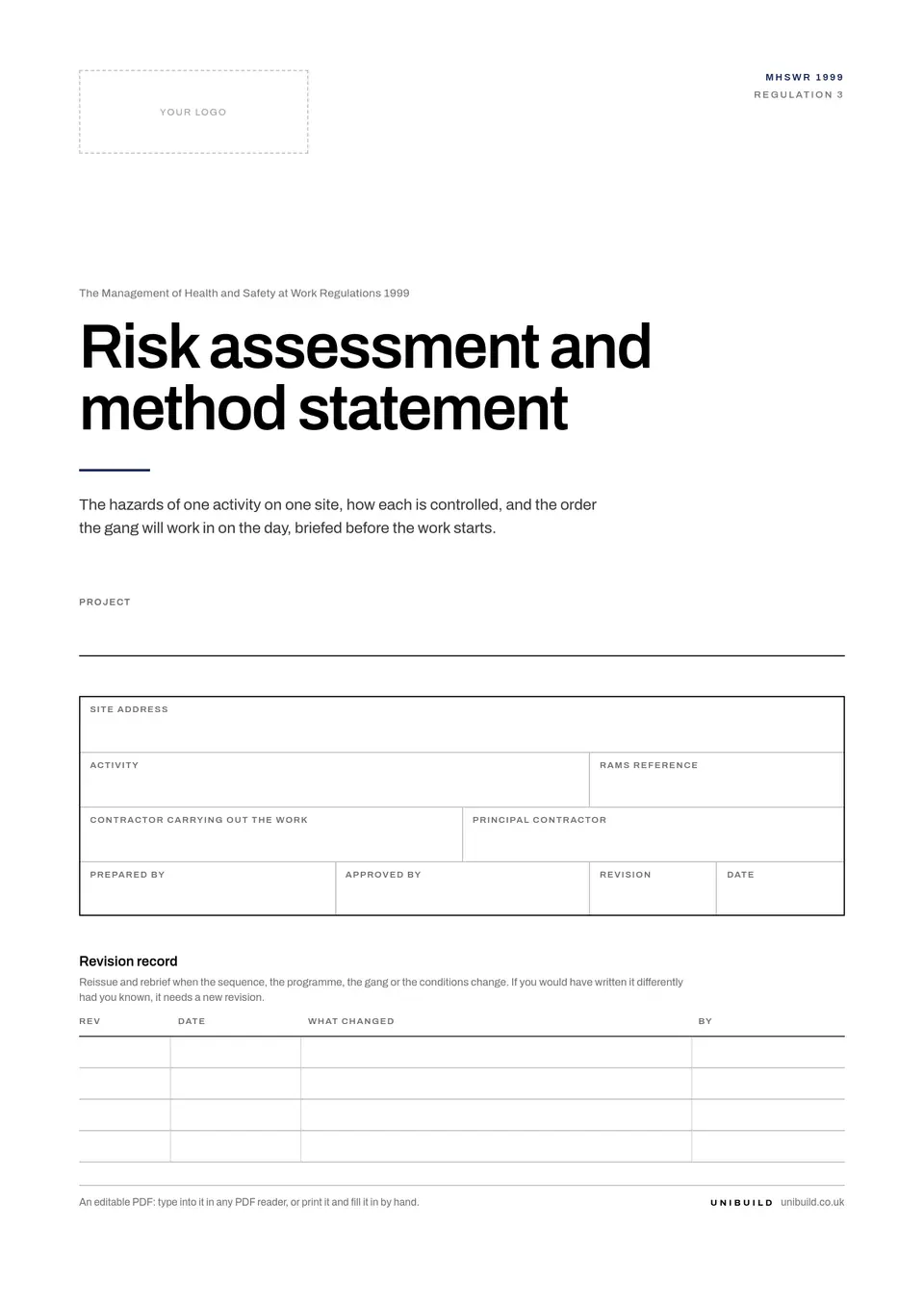
Risk assessment and method statement for one activity: the sequence of work, a five by five risk matrix, PPE, permits, rescue, and a briefing record signed against the revision.

UK-built · CDM · CIS · MTD
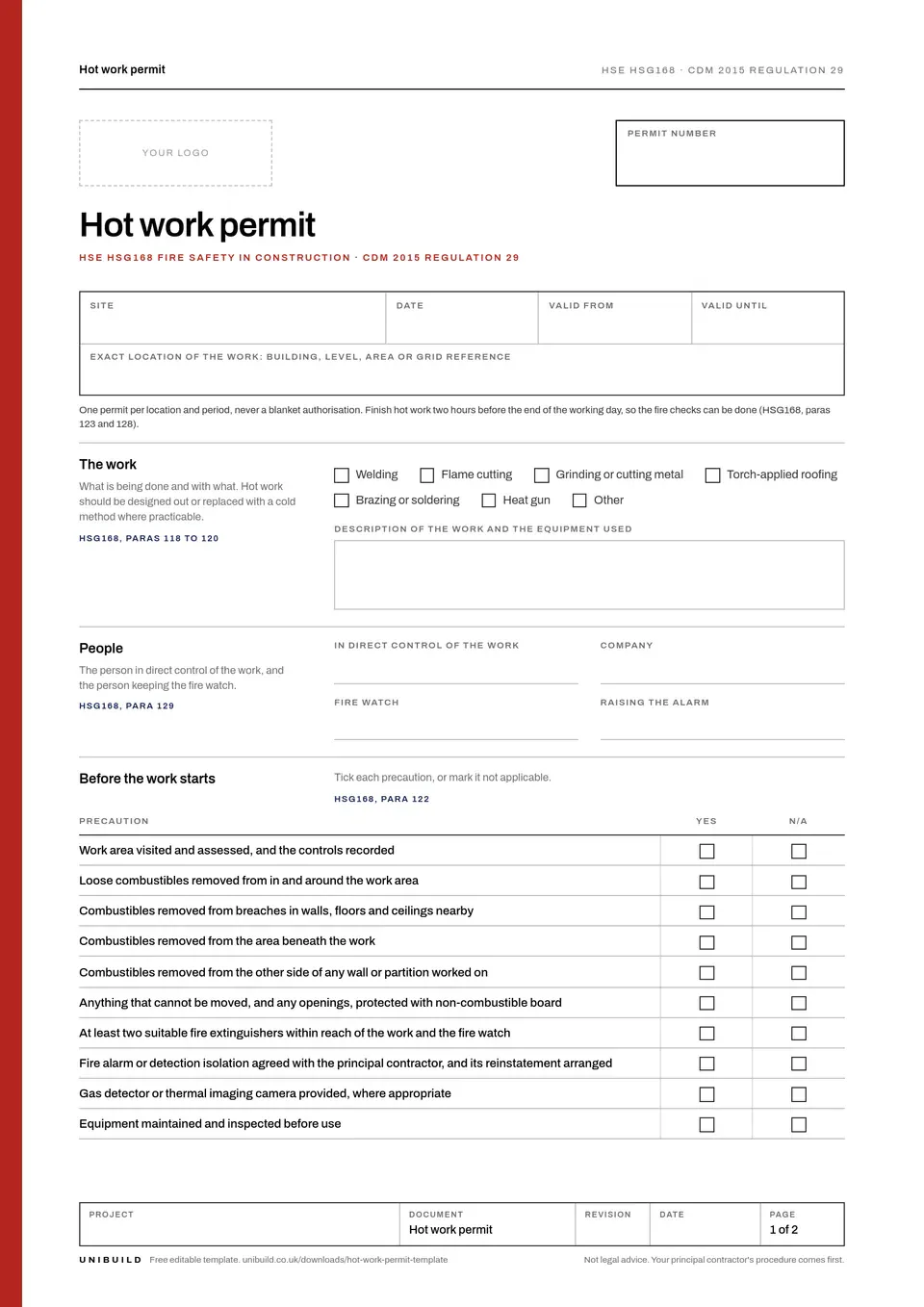
A hot work permit for welding, cutting, grinding and torch-on roofing, as an editable PDF built on HSE guidance on fire safety in construction. It covers the precautions before the work, the fire watch during and after it, and who issues and closes the permit.
The exact location, the date and the period the permit is valid for. One permit per location and period, never a blanket authorisation.
What is being done and with what, the person in direct control of the work, the fire watch, and how the alarm is raised.
Ten checks from HSE guidance, from clearing combustibles above, below and behind the work to two extinguishers within reach.
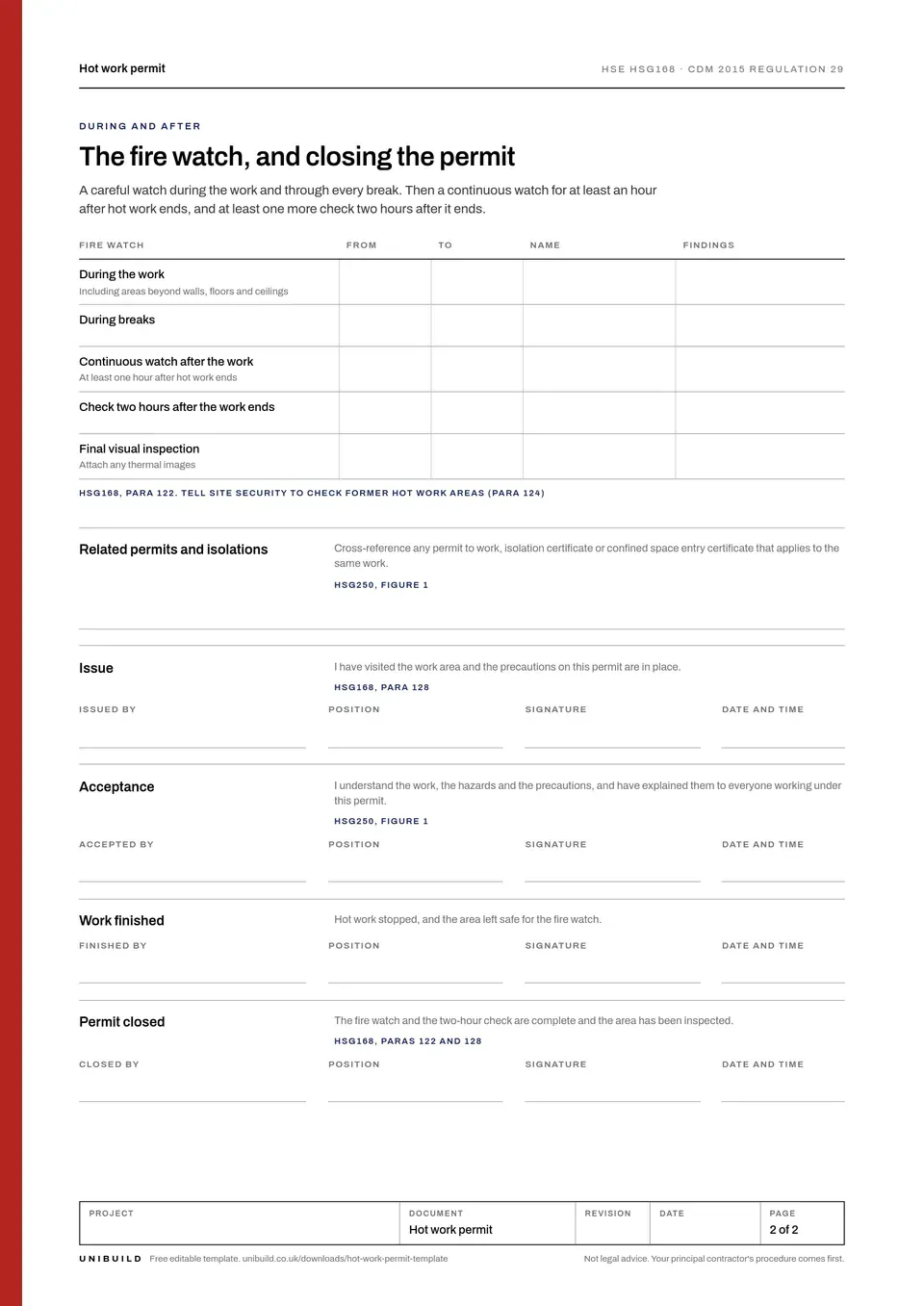
During the work and every break, continuously for at least an hour after the work ends, and a further check at two hours.
Signed by the person who checked the area, the person doing the work, and the person who closes it once the checks are complete.
Hot work should be designed out where practicable and replaced with cold methods, and the need for it justified.
HSE HSG168, paragraph 118Where hot work cannot be avoided, control it with a formal system such as a permit to work, issued for a defined job and period, never as a blanket authorisation.
HSG168, paragraphs 127 and 128A continuous fire watch for at least an hour after hot work ends, followed by at least one more check two hours after it ends.
HSG168, paragraph 122Complete hot work two hours before the end of the working day, so the fire checks can be carried out.
HSG168, paragraph 123Suitable and sufficient steps must be taken to prevent, so far as is reasonably practicable, the risk of injury from fire or explosion.
CDM 2015, regulation 29One location, one period, one team. Fill in the precautions after walking the area, not from the cabin.
Name the fire watch before work starts. The watch runs through breaks and for at least an hour after the last spark.
Only after the two-hour check and a final look at the area, ideally with a thermal camera. Ask site security to check former hot work areas.
Risk assessment and method statement for one activity: the sequence of work, a five by five risk matrix, PPE, permits, rescue, and a briefing record signed against the revision.
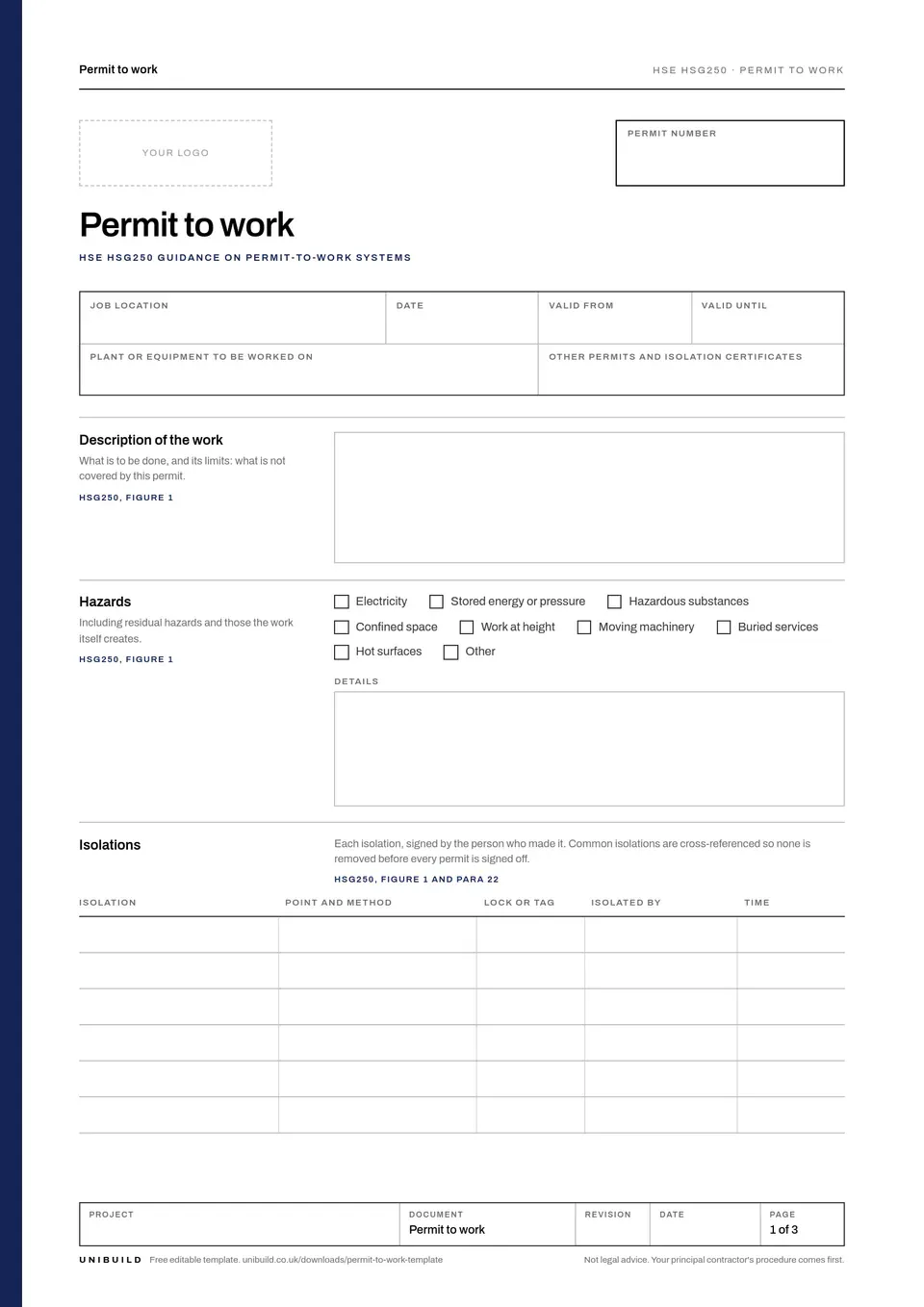
A general permit for high-risk work: the job, hazards, isolations, precautions, issue, acceptance, shift handover, hand-back and cancellation.
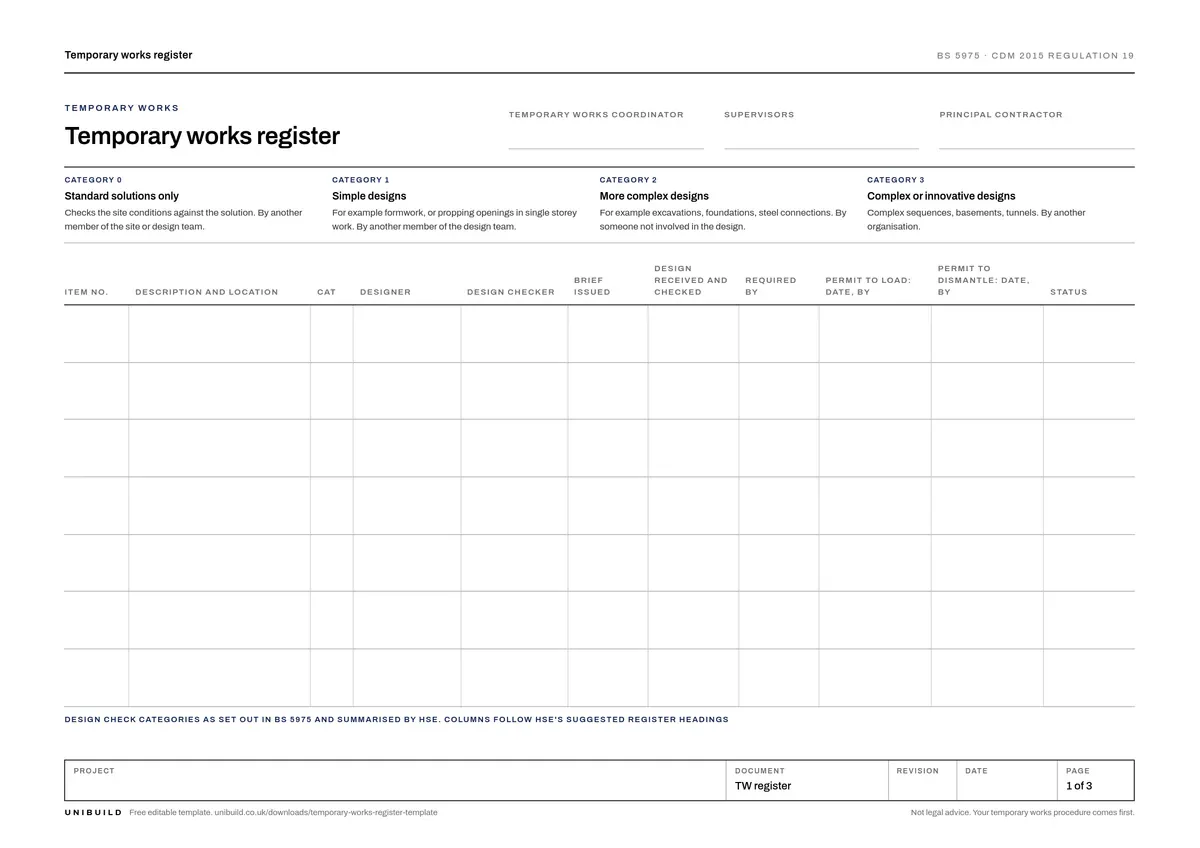
Every temporary works item on the job: design category, designer and checker, permit to load, permit to dismantle and status.
On the platform these stop being sheets. The check, the person, the date, the signature and the action that followed are recorded as the work runs and retrieved by site.