
Awaab’s Law phase 2 hazards:
what an engineer should report.
From 30 November 2026, cold homes, falls, fire, electrical, structural and hygiene hazards join damp and mould on Awaab's Law timescales. Each hazard, what an engineer looks for, and the government's own examples of emergency and significant cases.
Published ·10 min read·Written by Darshan Parmar, Founder
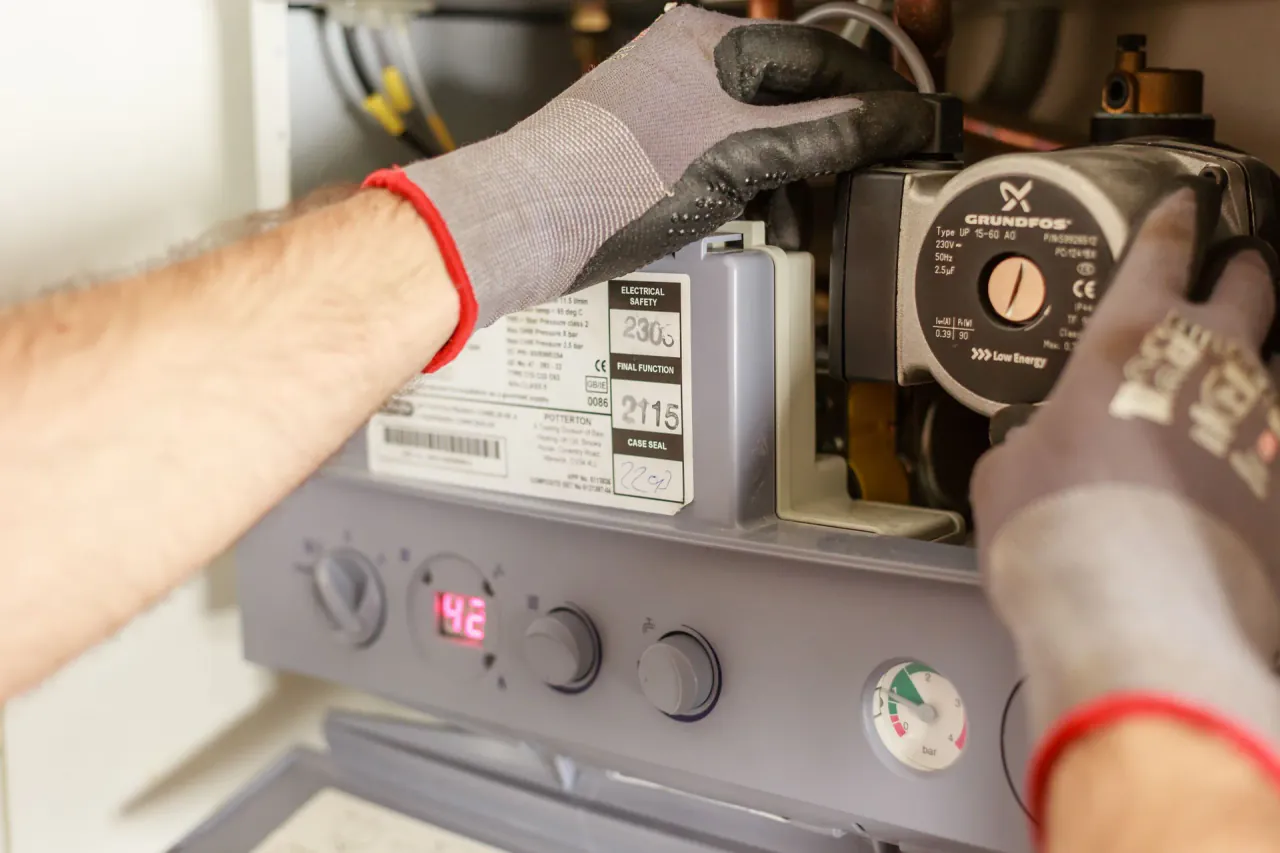
Phase 2 of Awaab’s Law is due to come into force on 30 November 2026. It brings nine more kinds of hazard inside the significant hazard timescales, and most of them are found by heating engineers, electricians, joiners and plumbers on visits for something else. This is the guide to each one, using the government’s own examples.
What phase 2 changes
Since 27 October 2025, Awaab’s Law has covered two things. Every emergency hazard of any kind, apart from overcrowding, must be investigated and made safe within 24 hours. Significant hazards from damp and mould run on the longer timescales.
Phase 2 extends those longer timescales to excess cold, excess heat, falls, structural collapse, fire and explosions, electrical hazards and domestic hygiene. Falls count as three hazards: on the level, on stairs and steps, and between levels. A significant phase 2 hazard is then investigated within 10 working days, with the safety work completed within 5 working days of the investigation concluding.
The amending regulations were approved by the House of Lords on 14 October 2026 and the House of Commons on 20 October 2026. The guidance plans a third phase covering the remaining hazards, apart from overcrowding, but gives no date for it.
A hazard already known before 30 November. The requirements apply when a landlord becomes aware of a potential hazard after the start date. If a hazard the landlord already knew about is reported again after that date, or changes materially, the requirements apply from that report.
Emergency or significant: the test the landlord applies
The regulations define both by what a reasonable landlord would do. A significant hazard is a risk of harm that a reasonable landlord, with the relevant knowledge, would make safe within 15 working days. An emergency hazard is one it would make safe within 24 hours.
The relevant knowledge is what the landlord knows, or ought to know, about the health and circumstances of the people living there. The same defect can therefore be significant in one home and an emergency in the next. The guidance says:
- Vulnerability is taken at face value. Landlords should accept reports of vulnerability as given, and there is no requirement for medical evidence.
- Some hazards are a danger to anyone. A tenant does not need a specific vulnerability for a hazard to be significant.
- No HHSRS assessment is needed. Awaab’s Law does not require a formal rating, or a category 1 hazard.
- Temporary measures count. Heaters while a boiler is repaired, or cleaning mould with a dehumidifier while wider work is booked, can make a home safe in time.
- Budget is not part of the test. The test is what a notional reasonable landlord would do, not the landlord’s own staffing or money.
This is why the engineer should report facts, not a legal category. Who lives there, their age, and anything they say about their health all go on the report. The landlord makes the classification.
The same broken handrail is significant in one home and an emergency in the next. The difference is who lives there.
Phase 2 hazards at a glance
Each example below is a scenario from the government’s triage guidance, with the conclusion it reached.
| Hazard | Emergency, for example | Significant, for example | Out of scope, for example |
|---|---|---|---|
| Excess cold | An elderly tenant’s boiler stops working in January | A broken living room window handle, tenant with asthma | Heating maintained by the freeholder, not the landlord |
| Excess heat | A broken window lock stops a heat-vulnerable tenant ventilating | A fault in the landlord’s communal heating that cannot be switched off | Overheating caused only by hot weather |
| Falls | A broken stair handrail, steep stairs and no light at the top, tenant aged 80 | An 860mm unguarded patio drop, three children under 5 | A loose paving stone, tenant in their 30s with no vulnerability |
| Structural collapse | Cracks where a balcony meets the building, above ground floor | Slipped roof tiles and a loose gutter above a front door | Superficial cracking in render |
| Fire and explosions | No working smoke alarm in a flat with two young children | Limited circumstances: most fire hazards are emergencies | Fire hazards in the common parts of a block |
| Electrical hazards | A damaged socket with live conductors exposed, child under 5 | C3 codes and an older consumer unit, pregnant tenant with a toddler | A C3 code on a consumer unit with no damage or overheating |
| Domestic hygiene | Foul water leaking from the soil stack into a bathroom | Mice in the living areas, affecting the tenant’s mental health | Clutter with no build-up of rubbish, pests or odours |
Excess cold
Excess cold is exposure to low temperatures: a home that cannot be heated, or cannot hold its heat, because of a defect. It is significant where the home cannot be adequately heated or kept at a safe temperature. It is an emergency where heating is lost completely in colder weather, or the indoor temperature is an immediate risk to the resident.
- Look for: a failed boiler or heating controls, broken or faulty radiators and heaters, broken, insecure or draughty windows and doors, and missing insulation.
- Most at risk: people aged 65 or over, children under 5, people who are pregnant, people having chemotherapy or radiotherapy, and people with long-term conditions.
- Not in scope: heating the landlord is not responsible for, such as a system the freeholder maintains. Energy costs are not the landlord’s responsibility.
Excess heat
Excess heat is exposure to high indoor temperatures caused by a defect in the home. It is significant where the temperature is high enough to risk health because of a mechanical or other defect. It becomes an emergency where the tenant is particularly vulnerable to heat or is already suffering serious effects.
- Look for: windows that cannot be opened, broken window locks, failed ventilation, and communal or district heating that cannot be turned down.
- Most at risk: people aged 65 or over, babies and children aged 5 and under, people who are pregnant, and people with long-term conditions or on some medications.
- Not in scope: overheating caused solely by very hot weather outside.
Falls on the level, on stairs and between levels
Falls are three hazards. Falls on the level include falls in baths and showers and at changes in level under 300mm. Falls on stairs cover stairs, steps and ramps of 300mm or more, including fire escapes. Falls between levels cover windows, balconies and garden retaining walls with a drop of 300mm or more.
A fall hazard is significant where a fall is likely because of the condition of the property. It is an emergency where, in the guidance’s words, “a fall is very likely and has the potential to cause serious harm”. Loose railings on a busy third floor walkway were an emergency in the guidance. So was a high-rise window that would not lock, in a home with a baby.
- Look for: broken or missing handrails and balustrades, damaged treads and nosings, poor lighting on stairs, slippery or uneven floors, and windows or drops without guarding.
- Most at risk: people over 60 on the level and on stairs, children under 5 for falls between levels, and anyone with mobility, balance or sight problems.
- Not in scope: everyday slips and trips not made worse by a defect, falls from misusing ladders or furniture, and the tenant’s own DIY.
Structural collapse and falling elements
This is the collapse of the whole or part of a building, including parts that fall inside or outside. It is significant where there is no imminent danger but serious harm is possible. It is an emergency where failure is imminent. A bath that had sunk into rotten joists after a leak was an emergency in the guidance.
- Look for: large cracks that appeared suddenly or are growing, sagging ceilings, leaning walls, rotten floors, damaged balconies, loose tiles, gutters and chimney pots.
- Most at risk: young children and people with limited mobility, and anybody using a busy area below.
- Not in scope: minor or superficial defects, and problems no reasonable landlord could make safe within 15 working days, such as those with large panel system buildings.
Cracks in internal walls can also mean a gap in fire compartmentation. The guidance says these should be passed to the person responsible for fire safety in the building.
Fire and explosions
This is exposure to uncontrolled fire, smoke and fumes, and to explosions, including the failure of systems such as boilers. The guidance expects most fire hazards reported under Awaab’s Law to be emergency hazards. The risk of a gas explosion is always an emergency.
- Look for: missing or failed smoke alarms, blocked escape routes and damaged compartmentation within the home. Also scorched switches and sockets, a smell of gas, and an uncontrolled hot water cylinder.
- Most at risk: people with limited mobility, neurodivergent conditions, learning difficulties or sensory impairments, people over 60, and neighbours in the same block.
- Not in scope: fire hazards in the common parts of a building with two or more homes, which fall under fire safety law. Also excluded are items that are not part of the building, such as stored e-scooters.
For a suspected gas leak, the guidance says the National Gas Helpline should be called immediately.
Electrical hazards
This is exposure to unsafe electrical installations: sockets, switches, consumer units and light fittings. It is an emergency where there is an imminent risk of injury, such as exposed live parts or a damaged socket within reach of children. It is significant where an installation has deteriorated and needs remedial work.
- Look for: exposed conductors, damaged or scorched sockets and switches, a burning smell, overheating consumer units, and temporary wiring.
- Most at risk: children under 5, people with learning disabilities, some neurodivergent conditions or dementia, people who are pregnant, and anyone relying on medical equipment that needs charging.
- Not in scope: the tenant’s own appliances, and a C3 observation on an installation with no damage, overheating or deterioration.
The guidance expects electrical hazards to be investigated by a qualified electrician. Where electrical safety regulations set a shorter timescale, the shorter one applies.
Domestic hygiene
Domestic hygiene has been one hazard since June 2026. It covers food storage and preparation, homes that cannot readily be kept clean, pests, household waste, washing facilities, and sanitation and drainage. It is an emergency where conditions pose an immediate and serious risk, including the loss of essential sanitation.
- Look for: escaping sewage, failed soil pipes and drains, no usable toilet or washing facilities, pest entry points and droppings, and kitchen surfaces too damaged to clean.
- Most at risk: adults aged 65 or over, children under 5, people with reduced mobility, long-term conditions or a weakened immune system, and people with mental health conditions.
- Not in scope: general clutter or untidiness without a build-up of rubbish, pests, odours or contamination.
Foul water leaking into a bathroom from the soil stack was an emergency in the guidance whoever lived there. An older tenant with no hot water and no electric shower, after a boiler failure in summer, was a significant hazard.
What the engineer records
The guidance asks contractors to report any hazard they find when visiting a property, beyond the work they were sent to do. It also asks them to report safeguarding and health and safety concerns. For the landlord to triage, the report needs:
- The hazard and where it is. The room, the extent and the apparent cause, in plain words.
- Photographs. Enough to show the extent and the cause, so the investigation can be remote where that is enough.
- The suspected urgency. Emergency, significant or unsure, with unsure as a proper answer.
- Who lives there. Children, older people, and any health condition or disability the resident mentions, recorded without diagnosis.
- What was made safe. What was done on the day, whether the area was isolated, and what remains.
- When it was reported. The time the office was told, and who it told at the landlord.
The guidance also says work to fix one hazard must not create another. Its example is ventilation added for damp and mould that damages fire compartmentation.
On Unibuild, an engineer makes an Awaab’s Law hazard report in the app at the property. Phase 1 and phase 2 hazards are listed on the report, each with emergency, significant or unsure, and as many photographs as the hazard needs. Submitting it alerts the office by phone notification and email, and the person who acknowledges it is recorded by name and time. The office records the escalation and handover on the same report, and sends the landlord a PDF or shares it on the client portal.
Before 30 November
Brief every engineer who works in social homes, not only the damp and mould team. A heating engineer now reports a broken window handle in a cold home, and a plumber reports a loose stair handrail on the way out. The free Awaab’s Law toolbox talk covers it in ten minutes. The landlord’s timescales, and how a contractor’s report can start them, are in Awaab’s Law for repair contractors. The full list of hazards since the June 2026 changes is in the HHSRS hazards list.
Awaab’s Law applies to social housing in England. This article is general guidance rather than legal advice, and the examples summarise the government’s scenarios rather than replace them.
Sources
Checked against the source rather than against commentary. Where a schedule, a rate or a threshold is definitive on a government site, read it there.
- GOV.UK: Awaab's Law phase 2, guidance to support triaging of hazards GOV.UK
- GOV.UK: Awaab's Law phase 2 guidance for social landlords GOV.UK
- The Hazards in Social Housing (Prescribed Requirements) (England) (Amendment) Regulations 2026, draft legislation.gov.uk
- The Hazards in Social Housing (Prescribed Requirements) (England) Regulations 2025 legislation.gov.uk
- Housing Health and Safety Rating System (England) Regulations 2005, Schedule 1 legislation.gov.uk
The follow-up questions.
How an engineer reports a hazard and how the office picks it up is on Awaab’s Law hazard reporting.
Which hazards does Awaab’s Law phase 2 cover?
When does Awaab’s Law phase 2 start?
Are emergency hazards already covered before phase 2?
How does a landlord decide between an emergency and a significant hazard?
Does a hazard have to be a category 1 HHSRS hazard?
What if the landlord knew about a phase 2 hazard before 30 November 2026?
Should the engineer decide whether it is an emergency?
What does the phase 2 guidance ask of contractors?
Are fire hazards in the common parts of a block covered?
Is there a free Awaab’s Law phase 2 form?
More from Insights.
 Awaab's Law for repair contractors: timescales, phase 2 and the records to keepAwaab's Law puts statutory clocks on social landlords, and the work that meets them is usually done by their contractors. The timescales, what phase 2 adds, and the record a repairs contractor should hold at every attendance.Read it →
 The HHSRS hazards list: 21 hazards since June 2026, and what changedThe Housing Health and Safety Rating System went from 29 hazards to 21 on 23 June 2026, and its ten bands became three. The current list, what each old hazard became, category 1 and 2, and where Awaab's Law fits.Read it →
 Snagging, and the list that decides when a job endsThe difference between a snag and a defect is who pays for it. How the list gets made, why it grows after handover, and what closes it out for good.Read it →
All 9 articles on reducing risk.