
Awaab’s Law for contractors:
the timescales, and the record behind them.
Awaab's Law puts statutory clocks on social landlords, and the work that meets them is usually done by their contractors. The timescales, what phase 2 adds, and the record a repairs contractor should hold at every attendance.
Published ·7 min read·Written by Darshan Parmar, Founder
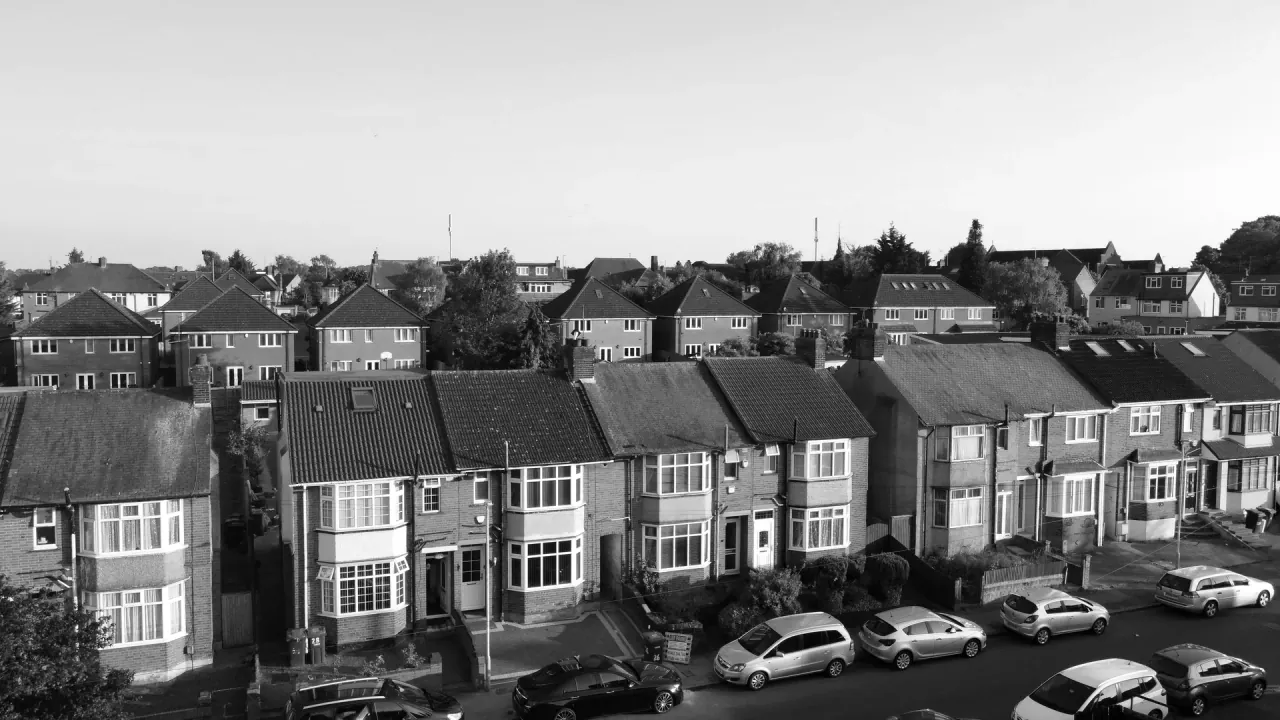
Awaab’s Law gives social landlords in England fixed timescales to investigate and fix hazards in their tenants’ homes. The legal duty is the landlord’s. The attendance, the make-safe and the record that proves both are usually produced by a repairs contractor, and since 27 October 2025 that record has a statutory clock behind it.
What Awaab’s Law is
The law is named after Awaab Ishak, a two year old who died in December 2020 after prolonged exposure to mould in his family’s social rented flat in Rochdale. His death, and the inquest that followed, led to the change in the law.
Section 42 of the Social Housing (Regulation) Act 2023 added a new section 10A to the Landlord and Tenant Act 1985. It implies a term into social housing tenancies in England: the landlord must meet requirements set out in regulations. Those requirements are in the Hazards in Social Housing (Prescribed Requirements) (England) Regulations 2025, which came into force on 27 October 2025.
It applies to social housing let by registered providers, which means housing associations and local authority landlords, including temporary and supported accommodation let as social housing. It does not apply to long leaseholds, shared ownership or other owner-occupied homes. A tenant can enforce it through the courts as a breach of the tenancy, and the Housing Ombudsman deals with complaints about it.
Awaab’s Law timescales
The regulations split hazards into two kinds. An emergency hazard is a risk that a reasonable landlord, knowing about it, would make safe within 24 hours. A significant hazard is one that landlord would make safe within 15 working days. The timescales follow from that:
- Emergency hazards. Investigate and carry out the work to make the home safe within 24 hours of becoming aware of the hazard.
- Significant hazards: investigation. Investigate within 10 working days of becoming aware of it.
- Written summary. Give the tenant a written summary within 3 working days of the investigation concluding. It says whether a hazard was found, what action is needed and the target dates. It is not required where all the work is already finished by then.
- Significant hazards: making safe. Complete the relevant safety work within 5 working days of the investigation concluding.
- Preventing it coming back. Begin any supplementary preventative work within 5 working days. Where that is not possible, begin as soon as reasonably practicable and within 12 weeks, and finish within a reasonable period.
- Alternative accommodation. Where the home cannot be made safe in time, the landlord must arrange suitable alternative accommodation at its own expense.
Working day timescales count from the working day after the landlord becomes aware. An investigation can be remote where photographs or video are enough to decide, but if the tenant asks for an in-person inspection, the landlord must arrange one.
Awaab’s Law phase 2, and what follows
Phase 1 has applied since 27 October 2025. It covers every emergency hazard and significant hazards from damp and mould.
Phase 2 is due on 30 November 2026, subject to Parliamentary approval of the amending regulations. It extends the significant hazard timescales to seven more groups of hazard. They are excess cold, excess heat, falls (including on stairs and between levels), structural collapse, fire and explosions, electrical hazards, and domestic hygiene. The government has said a third phase in 2027 will cover the remaining hazards in the Housing Health and Safety Rating System, apart from overcrowding.
For contractors, phase 2 is the bigger change. Phase 1 mainly reached damp and mould specialists and whoever attends emergencies. Phase 2 brings heating engineers, electricians, joiners, roofers and plumbers inside the same statutory clock, because excess cold, electrical hazards and structural defects are their work.
When the clock starts, and how a contractor can start it
The duty begins when the landlord becomes aware of a potential hazard. That can come from a tenant’s report through any channel, a routine inspection, or a third party. The guidance names contractors as one of those third parties.
Where a third party reports it, the landlord is treated as aware on the date it is notified. So an operative fitting a kitchen who sees black mould in the bedroom holds information that starts a statutory clock once it reaches the landlord. The contractor’s part is to pass it on the same day, with a photograph and a short note of what was seen and where.
The duty is the landlord’s. The evidence that it was met is usually the contractor’s.
Your contract timescales now sit inside a statutory one
The guidance is clear that a landlord keeps full responsibility when it engages contractors. It expects landlords to make sure their contractors know the statutory timeframes, report hazards found during visits and supply information in time for the written summary.
In practice that reaches the works order. Priorities that were once purely contractual, such as emergency, urgent and routine, now have to fit inside the landlord’s statutory dates. Once an investigation concludes, the landlord has three working days to issue the written summary. The contractor’s findings need to reach the landlord the same day, not at the end of the week.
The same applies further down the chain. A specialist remediation subcontractor, an access tower or a scaffold all have to be booked inside the time the landlord has left. Contractors that build this into their own subcontract orders make themselves easy to keep on the framework.
What a repairs contractor should record at every attendance
Landlords have a defence where they can show they used all reasonable endeavours to comply. The guidance gives examples, including no access after several attempts and specialist contractors or materials that were not available. The proof for most of those examples is the contractor’s record. At each attendance, it should show:
- The order and its reference. When it arrived, its priority, and the landlord’s own reference, so both sides are talking about the same job.
- Arrival and departure. Recorded at the property, at the time, rather than typed in afterwards.
- What was found. In plain words, with photographs and video of the hazard before any work started.
- The make-safe. What was done to make the home safe today, with photographs afterwards.
- Any failed access. Timed, with a photograph of the card left at the door, and the next appointment offered.
- What happens next. The follow-on work needed to stop it coming back, with a quote or an order reference.
- The resident’s signature. Taken on the day, on a copy that carries no prices.
All of it belongs against the property rather than the order, because an address is visited by many trades over many years. For flats, it belongs against the block as well, so a pattern across one building is visible to whoever looks.
Awaab’s Law, damp and mould: make safe, then fix the cause
The regulations separate two kinds of work. Relevant safety work makes the home safe now. Supplementary preventative work stops the hazard coming back as far as possible, and it has a longer clock.
For damp and mould, the first visit is usually about the first kind: treating the mould, stopping an active leak and recording the condition of the room. The second kind addresses the cause, whether that is ventilation, a defect in the building fabric or a leak in the structure. Recording both separately, each with its own photographs and dates, shows the landlord exactly where each clock stands.
Ask two questions at the enquiry stage
Some contractors now ask two questions on every new enquiry. Is the property social housing, where Awaab’s Law applies? And does the Building Safety Act 2022 apply to the building? The answers decide how fast the work must move, who needs to know, and what records will be asked for later.
Asking early also helps the price. Out-of-hours cover, faster attendance and specialist subcontractors all cost money, and a tender that knows the statutory clock can allow for them from the start.
On Unibuild, a call-out can be logged at any hour and assigned to an engineer, who is alerted on the phone. The arrival is recorded at the property. The engineer adds photographs, video, hours and materials, and the resident signs on the screen against a copy without prices. The landlord’s own reference stays on the job, flats sit under their block, and a follow-on quote is raised from the call-out itself. The time from raised to assigned to signed is measured against the response targets on the contract. Your landlord client can read each property’s history, with photographs and certificates, in its own portal. The staff app is published under your company’s own name, and Unibuild is bespoke construction management software in daily production since 2016, shaped to the way each firm works.
Where to start, this week
Take last month’s damp and mould orders and emergencies. For each one, check that you can show when it was reported, when you arrived, photographs before and after, and when your findings went back to the landlord. Wherever one of those is missing, the record is being made too late, and that is the part to fix before phase 2 arrives.
Awaab’s Law applies to social housing in England. This article is general guidance rather than legal advice, and contract wording is worth checking with an adviser.
Sources
Checked against the source rather than against commentary. Where a schedule, a rate or a threshold is definitive on a government site, read it there.
- GOV.UK: Awaab's Law guidance for social landlords, timeframes for repairs GOV.UK
- GOV.UK: Awaab's Law phase 2 guidance for social landlords GOV.UK
- GOV.UK: Awaab's Law in the social rented sector GOV.UK
- Social Housing (Regulation) Act 2023, section 42 legislation.gov.uk
- The Hazards in Social Housing (Prescribed Requirements) (England) Regulations 2025 legislation.gov.uk
- GOV.UK: guide to the Renters' Rights Act GOV.UK
The follow-up questions.
How attendances, photographs and certificates are held against each property is on software for housing repairs contractors.
What is Awaab’s Law?
Does Awaab’s Law apply to contractors?
What are the Awaab’s Law timescales?
When does the Awaab’s Law clock start?
What is Awaab’s Law phase 2?
What does Awaab’s Law mean for damp and mould?
What records should a repairs contractor keep for Awaab’s Law?
What happens if the contractor cannot get access?
Does an Awaab’s Law investigation have to be in person?
What is the difference between relevant safety work and supplementary preventative work?
Does Awaab’s Law apply to private landlords?
More from Insights.
 Gateway 2, and what it does to a programmeApproval has to be granted before construction starts, and the wait has improved sharply: a median of 22 weeks at June 2026 against 43 a year earlier. What that means if you are not the applicant.Read it →
 Document control, and the revision everybody was working toBuilding to a superseded drawing is expensive, common, and almost never anybody being careless. What has to be true for the right revision to reach the person holding the tool.Read it →
 Snagging, and the list that decides when a job endsThe difference between a snag and a defect is who pays for it. How the list gets made, why it grows after handover, and what closes it out for good.Read it →
All 6 articles on reducing risk.