
The O&M manual, and why
handover takes a fortnight.
Everything the building owner needs, in one file, assembled at the end from records made over a year. Why that is the wrong way round, and what it costs when the certificates cannot be found.
Published ·Updated ·7 min read·Written by Darshan Parmar, Founder
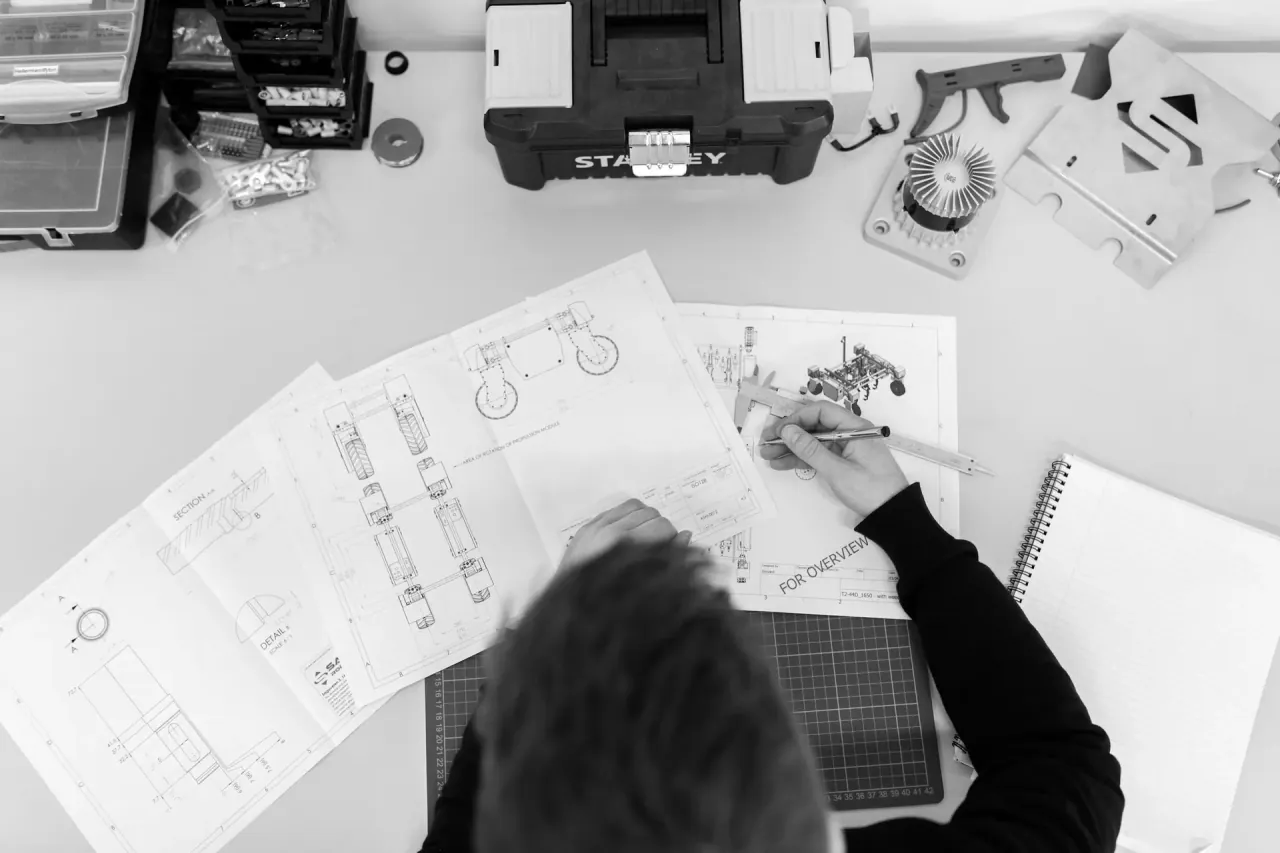
The operation and maintenance manual is the one deliverable on a construction project that is assembled entirely from records made months earlier by people who have moved on. That is why it takes a fortnight, why it is late, and why the last payment sits behind it.
What O&M means, and what the manual is for
O&M stands for operation and maintenance. In construction, the O&M manual is the handover document that tells the building owner what was installed, who supplied it, how each system is operated and maintained, and what has to be inspected and when. The main contractor compiles it from the records of every subcontractor and supplier on the job, and it is usually handed over at practical completion.
It is the document the building owner uses to run the building after you have gone. Not a compliance artefact, though it does compliance work: a caretaker with a leaking valve should be able to find out what the valve is, who supplied it, how to isolate it and who to ring.
That test is worth applying to the manuals you produce, because a great many of them fail it. A folder of manufacturers' PDFs in no particular order technically contains the answer and does not deliver it.
What goes in one
Contents vary by contract and by building, and the specification will say. In practice the recurring sections are:
- A description of the works, what was built and to what specification.
- As-built drawings, reflecting what is actually there rather than what was designed.
- Plant and equipment schedules, with location, make, model and serial number.
- Operating instructions for anything that has to be operated.
- Planned maintenance requirements, with intervals, which becomes the owner's PPM schedule on day one.
- Test and commissioning results, in full rather than in summary.
- Statutory certificates. Electrical installation certificates, gas safety, fire alarm and emergency lighting commissioning, lifting equipment, pressure systems, air tightness.
- Warranties and guarantees, with their start dates and what voids them.
- Supplier and subcontractor contact details, which is the section most used and least maintained.
- The health and safety file required under CDM 2015, which is a distinct document with a distinct purpose and is frequently bound in alongside.
Every one of those items existed on site, correct and available, at some point during the job. Handover is the process of finding them again.
The health and safety file is not the O&M manual
They get merged and they are different. The health and safety file, required by CDM 2015 on projects with more than one contractor, exists to tell anyone carrying out future construction work what they need to know to do it safely: residual hazards, structural principles, where the services run, what was left in the ground.
The O&M manual tells the occupier how to run the building. One is for the next builder, the other for the current caretaker. Binding them together is fine. Writing one and calling it both is not, and it is the version an inspector notices.
Handover, and the golden thread
For higher-risk buildings the Building Safety Act has made this considerably sharper. The golden thread requires building safety information to be held digitally, kept accurate, and handed on in a form the next duty holder can actually use. A box of paper does not satisfy it and neither does a folder of scanned PDFs with no structure.
The practical effect reaches well beyond in-scope buildings, because clients who commission both kinds of work are increasingly specifying the same standard on everything. Gateway 2 covers what that means before you start on site; this is the same discipline arriving at the other end of the job.
Why it is always late
The reasons are consistent across firms and almost none of them are about the manual itself:
- It is started at the end. The manual is treated as a document to be written rather than a file to be filled, so the work begins when the job is finished and everyone who knows anything has been reassigned.
- Certificates are held by whoever produced them. The electrical certificates are with the electrical subcontractor, whose commercial relationship with you is now about the final account, and chasing them is a negotiation rather than an errand.
- As-builts were never maintained. Changes were made on site, agreed verbally, and never marked up, so producing as-builts means a survey.
- Commissioning results are in emails. They exist, they are correct, and they are in one engineer's inbox.
- Nobody owns it. It falls between the project manager who has moved to the next job and the commercial team who want the retention released.
The fix is upstream, not at handover
The only durable answer is to stop treating the manual as an end-of-job document and start treating it as a file that fills itself as the job runs. That means the certificate is filed against the project on the day it is issued, the commissioning sheet is uploaded when the engineer signs it, and the as-built markup happens at the point the change is agreed rather than nine months later.
None of that is more work in total. It is the same work, done once, at the moment when the person doing it knows the answer. The fortnight at the end is what you pay for deferring it.
There is a commercial reason to care beyond tidiness. On most contracts the manual is a condition of practical completion, or of the release of the first half of retention, or both. A manual that is two weeks late is two weeks of retention held, and retention held is the money that most often goes uncollected.
Unibuild holds the parts of the O&M manual while the job is running, which is the half that fails. In Unibuild's documents and certificates module, certificates and commissioning documents are stored against the project with the uploading user, the original filename and the date and time. The asset register carries plant with its location, make, model and serial number, which is the schedule section most often rebuilt from scratch at the end. Subcontractor records hold the contact details that the manual's most-used section depends on. Where a client portal is in use, documents publish to it on upload as live files rather than an emailed copy, so a revision is an upload instead of a reprint and a delivery run. Compiling the manual becomes assembly rather than a search. Unibuild is bespoke business software for trades, in daily production since 2016, and it is made bespoke to each firm rather than sold as one package for everybody.
Where to start, on Monday
Take a live job that is three months from completion and ask one question: if we handed over on Friday, which sections could we produce today. Not could we get them, could we produce them. The sections that fail that test are the ones to start filling now, while the people who hold the documents still want something from you.
The single highest-value habit is filing statutory certificates against the project on the day of issue. It is thirty seconds each, it happens while the subcontractor still has an interest in your goodwill, and it removes the largest single cause of a late manual.
Sources
Checked against the source rather than against commentary. Where a schedule, a rate or a threshold is definitive on a government site, read it there.
- Building Safety Act 2022 legislation.gov.uk
- Construction (Design and Management) Regulations 2015 legislation.gov.uk
- Building Regulations 2010 legislation.gov.uk
The follow-up questions.
The other end of the same discipline is in Gateway 2 and the golden thread.
What is an O&M manual?
What is O&M in construction?
What goes in an O&M manual?
Who is responsible for producing the O&M manual?
When should you start compiling it?
Does the O&M manual affect payment?
What if the O&M manual is late or incomplete at handover?
Can O&M manuals be outsourced?
Is the O&M manual the same as the health and safety file?
What is the difference between the O&M manual and the health and safety file?
What does the golden thread mean for handover?
More from Insights.
 Gateway 2, and what it does to a programmeApproval has to be granted before construction starts, and the wait has improved sharply: a median of 22 weeks at June 2026 against 43 a year earlier. What that means if you are not the applicant.Read it →
 Document control, and the revision everybody was working toBuilding to a superseded drawing is expensive, common, and almost never anybody being careless. What has to be true for the right revision to reach the person holding the tool.Read it →
 Snagging, and the list that decides when a job endsThe difference between a snag and a defect is who pays for it. How the list gets made, why it grows after handover, and what closes it out for good.Read it →
All 7 articles on reducing risk.