
Getting paid for variations
you were told to get on with.
The entitlement is rarely the problem. The evidence is. What stands up when the instruction was verbal, and the one email that changes the argument.
Published ·Updated ·5 min read·Written by Darshan Parmar, Founder
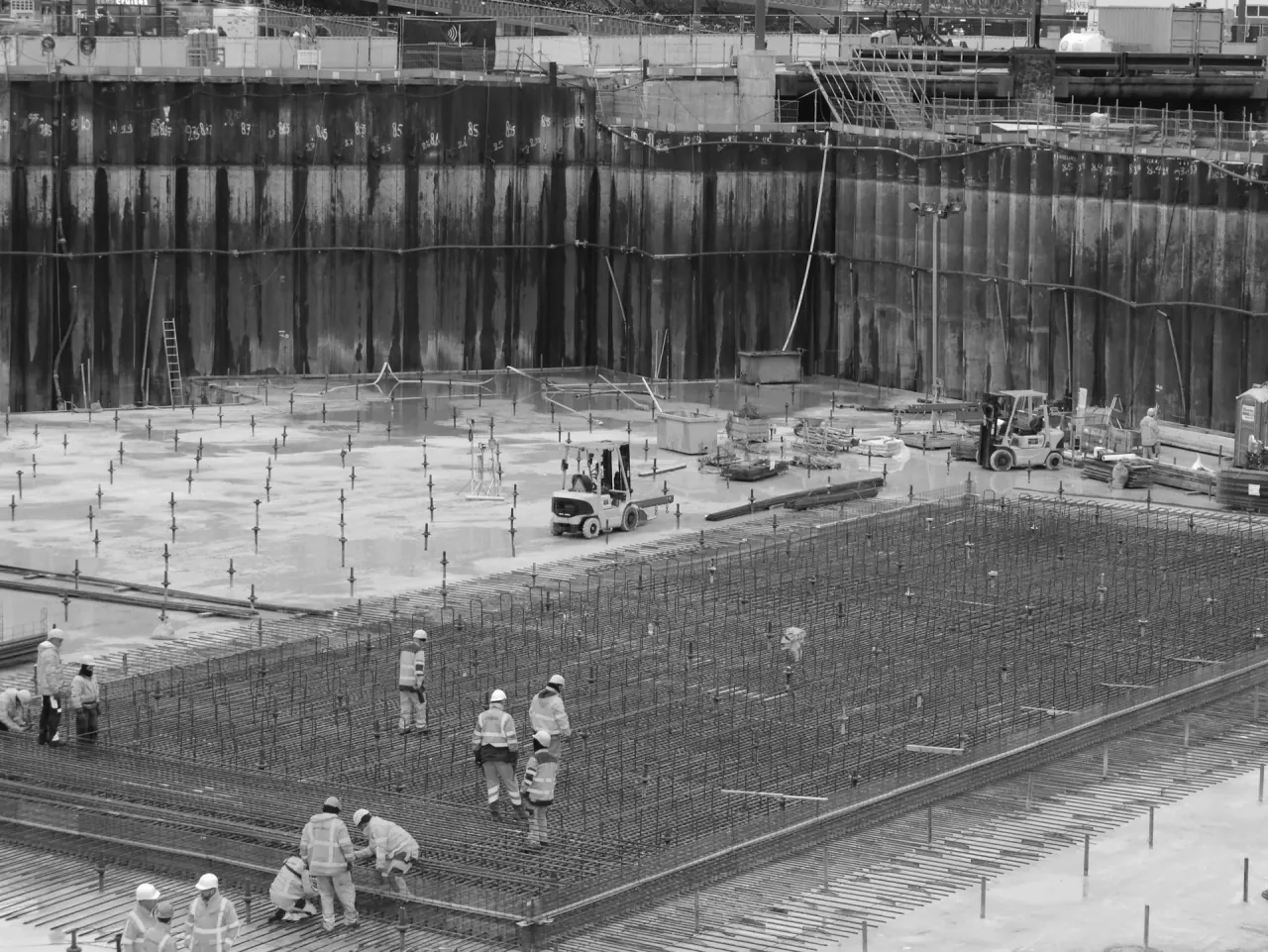
A verbal instruction is still an instruction, and a construction contract does not have to be in writing for its payment rights to apply. What decides whether you get paid is whether you can prove, months later, that the instruction was given, what it required, and what it was worth. That is an evidence problem, and it is solved at the time rather than at the end. The fix is a same-day written confirmation of every verbal instruction, and a priced, signed record of the extra work that becomes a variation without being retyped.
Why this goes wrong so reliably
Nobody sets out to work for nothing. The sequence is almost always the same, and it is nobody being dishonest.
Somebody senior asks on site for something that is not on the drawing. It is small, the gang is there, and stopping to raise paperwork would cost more than doing it. So it gets done. Then it happens again. By the time the final account is being agreed, the person who asked has moved to another job, the quantity surveyor has never heard of it, and the only record is your foreman's memory of a conversation in February.
The entitlement was fine throughout. It is the proof that decayed.
The variation was worth £8,000 in March and nothing in November, and the work did not change in between.
What actually stands up
In rough order of how much weight each carries.
- A written instruction. An architect's instruction, a client variation order, an email saying please do it. Nothing beats this and it costs nothing to ask for.
- Your written confirmation of a verbal instruction. The single most valuable habit in this article, and it is covered on its own below.
- Signed dayworks sheets. Signed on site, at the time, by somebody with authority, recording labour, plant and materials. A dayworks sheet signed the same week is worth far more than a perfect one signed at the end.
- The site diary. A contemporaneous daily record of what was done, by whom, in what weather, with which trades present. Contemporaneous is the operative word: a diary written up on Friday for the whole week is worth much less than one written each day.
- Photographs with dates. Before and after, and photographs of the condition that caused the change. A dated photograph of what was behind the wall settles most arguments about whether the work was necessary.
- Delivery notes and plant records. Corroboration that the materials and plant the claim depends on were actually on site when you say.
The email that changes the argument
Most standard forms have a mechanism for confirming a verbal instruction in writing, and even where yours does not, the habit works.
Send it the same day. Three sentences: what you were asked to do, who asked and when, and that you are proceeding on the basis it is a variation to be valued under the contract unless you hear otherwise by a stated date.
Two things then happen and both are good. Either nobody replies, and you have a contemporaneous unchallenged record that the instruction was given, which is close to as good as an instruction. Or somebody replies to say it is not a variation, and you find that out on day one rather than at the final account, while you can still decline to proceed or price it differently.
The reason firms do not send it is that it feels confrontational. It is worth being clear that it is the opposite: it is the thing that stops a disagreement in November about a conversation in March. Sites where this is routine have fewer arguments, not more.
Valuing it when there is no rate
Where the work resembles something in the contract, it is normally valued at those rates, or at rates adjusted where the character or conditions have changed. Where nothing in the contract fits, a star rate is built up from first principles: labour, plant, materials, overhead and profit. Where the work could not sensibly be measured at all, dayworks.
Two things worth claiming that firms routinely leave out. Where a variation disrupts the sequence of unchanged work, the effect on that work is part of the claim rather than something you absorb. And where it extends the programme, the time is a separate entitlement from the money, and both are lost by not asking.
Where this does not get you paid
Stated plainly, because an article that implies every claim succeeds is not useful.
Work you chose to do because it seemed sensible is not a variation. Correcting your own defective work is not a variation. An instruction from somebody with no authority to give one is a genuine problem, and knowing who on the other side can actually instruct a change is worth establishing at the start of a job rather than after. And where the contract has a condition precedent requiring notice within a stated period, missing that window can bar an otherwise good claim, which is one of the few places where the paperwork really is the whole thing.
What contractors move to
Three routes, in rising order of how much of the chain they cover.
- Better paperwork discipline. A variation register kept by the commercial team, the confirming email, and dayworks sheets signed the same week. It works when site sends the paper in, and slips when site is busy.
- Off-the-shelf job software. Variations, day works and photographs held as standard records on a phone, attached to the job. The firm works to the product's variation process and approval steps.
- A bespoke platform. Extra work priced on site from the firm's own rates, signed there, approved by whoever the firm says can commit it, and carried to the valuation without retyping.
Whichever route, the question is the same: does the agreed figure reach the next application without somebody having to remember to move it.
Unibuild sits in the third group: bespoke business software for trades, in daily production since 2016 and shaped to the way each firm already works. The onsite quotes and variations module prices extra work where it comes up, from the job's own price list and rate card. The client receives a copy with your cost and margin left off, and signs it on the phone against the document they were shown. Approval sits with a named role, and the agreed figure becomes a variation on the project in one action, with nothing retyped. Every quote still with the client is counted, so unanswered exposure has a number.
The evidence list above hangs off the same job record. Site diaries, progress photographs and day works are captured daily, with the weather and the trades on site logged. All of it goes in through the firm's own staff app, published under its company name and icon. Subcontract variations sit against the order with the instruction attached. The contemporaneous evidence exists as a by-product of running the job rather than as a task somebody has to remember.
Where to start, on Monday
Pick the job with the most disputed extras and list every variation you believe you are owed for. Against each, write down what you actually hold: an instruction, a signed sheet, a diary entry, a photograph, or nothing. The ones with nothing are your loss rate, and the number is usually larger than expected.
Then introduce one habit for the next job: the same-day confirming email, sent by whoever takes the instruction on site. It takes two minutes and it is the difference between the two columns on that list.
Sources
Checked against the source rather than against commentary. Where a schedule, a rate or a threshold is definitive on a government site, read it there.
- Housing Grants, Construction and Regeneration Act 1996 legislation.gov.uk
- Variation (construction) Designing Buildings Wiki
The follow-up questions.
Once valued, it goes into an application that does not come back rejected.
Can I get paid for a variation that was not in writing?
How do I confirm a verbal instruction on site?
What evidence supports a variation claim?
How long do I have to notify a variation claim?
Does a variation have to be agreed before the work is done?
How is a variation valued when there is no contract rate?
When is extra work not a variation?
Can I refuse to carry out a variation?
Can I claim for delay and disruption caused by variations?
What is the difference between a variation and a claim?
Have the record before you need it.
A verbal instruction is worth what the contemporaneous record says it is worth. That record is made on the day or it is not made at all.
- Thirty minutes, weekdays, from tomorrow.
- Nothing to prepare. Bring a job number and we mock that job up.
- You drive it. There is no slide deck.
- You keep what you saw as a 14-day trial. No card.
More from Insights.
 An application for payment that does not come back rejectedFour reasons account for most rejections, and none of them is the price. What the document has to contain, what has to sit behind it, and the date that matters more than the total.Read it →
 Document control, and the revision everybody was working toBuilding to a superseded drawing is expensive, common, and almost never anybody being careless. What has to be true for the right revision to reach the person holding the tool.Read it →Quote or estimate, and which one binds youOne becomes a fixed price the moment it is accepted. The other is an informed guess. The word at the top of the page is not what decides which you sent.Read it →
All 10 articles on getting paid.