PAS 2035 explained:
the retrofit standard, step by step.
PAS 2035 is the standard government-funded home retrofit is delivered under. What it requires, who does what, what changed in the 2023 edition, and the evidence an installer is paid on.
Published ·9 min read·Written by Darshan Parmar, Founder
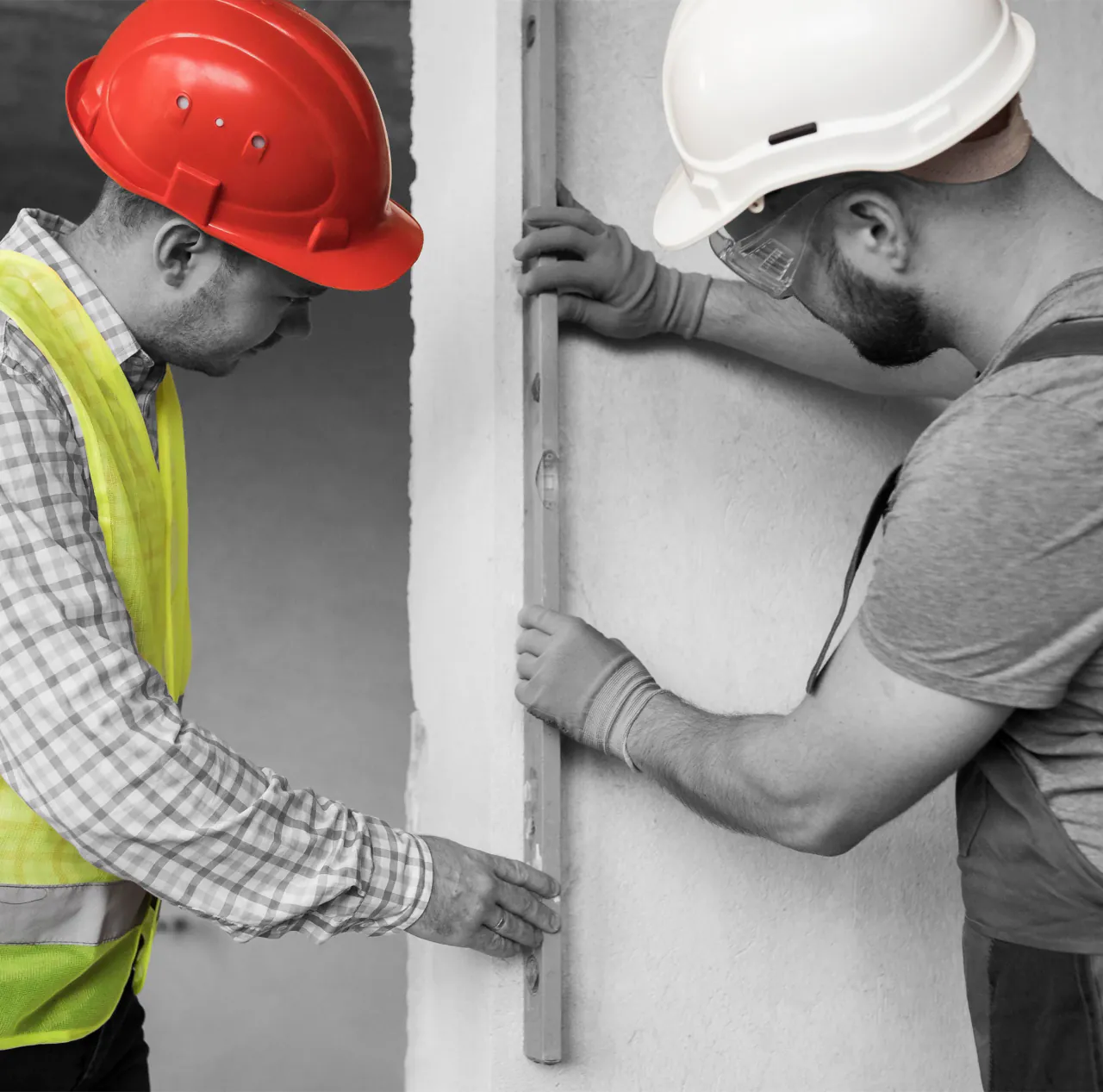

PAS 2035 is the specification for retrofitting existing homes to make them more energy efficient. It sets one process for every funded project, from the first assessment to the evaluation after handover, and names who is responsible at each step. The current edition is PAS 2035:2023. For an installer, it decides what has to be recorded, by whom, before the work is covered and the funder pays.
What PAS 2035 is
PAS 2035 is a publicly available specification published by BSI, titled Retrofitting dwellings for improved energy efficiency. Specification and guidance. It came out of the Each Home Counts review of consumer protection in home energy efficiency, and the first edition was published in 2019.
Its central idea is the whole-house approach. A home is assessed as a system before any measure is chosen, because changing one part of it changes how the rest behaves. Insulating a wall without thinking about ventilation can turn a cold home into a damp one.
The standard is not a law. It is a condition of government-funded domestic retrofit. Work under the Energy Company Obligation, the Warm Homes: Local Grant and the Warm Homes: Social Housing Fund is delivered to PAS 2035. It is done by TrustMark registered businesses, and each project is lodged with TrustMark. Privately funded work can follow it too, and some landlords and clients ask for it.
PAS 2035 and PAS 2030: which is which
The two are written to work together. PAS 2035 governs the project: the assessment, the plan, the design, the coordination and the evaluation. PAS 2030 governs the installation of each energy efficiency measure.
Installers are certified to PAS 2030 measure by measure, by a certification body that audits their work. A firm certified for loft insulation is not certified for internal wall insulation until that measure is added. On a funded job, the PAS 2030 installer works inside a PAS 2035 project led by a Retrofit Coordinator. Both standards were revised in 2023.
The PAS 2035 roles
PAS 2035 separates the work into defined roles, so that the person who sells or fits a measure is not the only person deciding whether it suits the house.
- Retrofit Assessor. Visits the home and records its condition, ventilation, occupancy and energy performance. Usually holds a Level 4 award in domestic retrofit assessment, with a domestic energy assessor qualification behind it.
- Retrofit Coordinator. Runs the project from start to finish: reviews the assessment, judges the risk, agrees the plan, oversees design and installation, records non-compliance and lodges the project. Usually holds a Level 5 diploma in retrofit coordination and risk management.
- Retrofit Designer. Designs the measures and how they connect to the rest of the building. In the 2023 edition, how qualified the designer must be depends on how many measures there are and how they interact.
- Installer. Fits each measure to PAS 2030 and the design, and produces the evidence that it was fitted correctly.
- Retrofit Evaluator. Checks after handover how the measures are performing and how the occupants find the home.
One person can hold more than one role, as long as they are qualified for each. The 2023 edition stopped the Retrofit Coordinator acting as designer, which the 2019 edition allowed on lower-risk projects.
The PAS 2035 process, step by step
Since the 2023 edition, every project follows the same sequence, whatever its size.
- Retrofit assessment. A condition survey, a ventilation survey, an occupancy assessment and an energy performance report. Traditional and protected buildings also need a significance assessment.
- Improvement option evaluation. The possible measures are weighed against the assessment, the occupants and the risks to the building.
- Medium-term improvement plan. A plan for the home over the coming years, so that the measures fitted now do not block the ones that come later. The 2023 edition requires one for every property.
- Retrofit design. The measures are designed, including the details where they meet the existing building and each other.
- Installation. The installer fits each measure to PAS 2030 and the design, with evidence at each stage.
- Handover. The occupant receives the documents, the guarantees and the advice on using and ventilating the home.
- Lodgement. The Retrofit Coordinator lodges the project on the TrustMark Data Warehouse.
- Monitoring and evaluation. At the least, a questionnaire to the occupants within three months of handover, with further monitoring on larger or riskier projects.
The measure takes a day. The record behind it is what the funder, the auditor and the next owner will ask for.
What changed in PAS 2035:2023
The second edition was published in 2023, alongside PAS 2030:2023. An eighteen-month transition ended on 30 March 2025, when the 2019 editions were withdrawn. Measures completed after that date under ECO4, the Great British Insulation Scheme and the Warm Homes schemes are delivered to the 2023 editions. Practitioner summaries of the changes agree on these points:
- Risk paths A, B and C have gone. The 2019 edition sorted projects into three risk paths, which set how much assessment and design they needed. The 2023 edition replaces them with one process for every project.
- A medium-term improvement plan for every home. It is no longer reserved for the riskier projects.
- The coordinator no longer designs. Design sits with a suitably qualified designer, and the qualification needed rises with the number of measures and the way they interact.
- Ventilation on every project. Existing ventilation is assessed every time. Where the package of measures falls into Category B or C under Approved Document F, or there is evidence of condensation or mould, it is upgraded.
- A clearer coordinator role. Site visits and the recording of non-compliance are set out more clearly.
- Monitoring from the start. Monitoring and evaluation are considered from inception rather than added at the end, and further monitoring refers to BS 40101.
Anyone working to the standard should read the 2023 text itself, which is available from BSI. The detail of the design qualification tiers in particular is summarised differently by different commentators.
In Unibuild’s Retrofit and Insulation module, each property carries its assessment, its measures, the stage photographs, the installer and the guarantee. Each job is scored against its scheme’s evidence list before it is lodged.
Ventilation: the part that goes wrong later
Insulation and draught proofing make a home more airtight. Moisture from cooking, washing and breathing that used to leak out now stays in, unless the ventilation is good enough to remove it. That is why PAS 2035 asks about ventilation before any measure is chosen, and checks it again afterwards.
The cost of getting it wrong is now on the public record. In October 2025 the National Audit Office looked at external wall insulation fitted under ECO4 and the Great British Insulation Scheme. It estimated that 22,000 to 23,000 of those homes, about 98%, had major issues. Its examples included rainwater trapped behind the insulation, which can lead to damp and mould. TrustMark had alerted the government to high levels of non-compliance a year earlier.
Water usually finds its way in at the details: where insulation meets windows, eaves, pipes and the ground. Those details are covered within hours, and a photograph taken before they were covered is often the only proof they were done properly.
The evidence an installer is paid on
Funded work is paid on accepted evidence, and audits come later. A sensible installer’s file for each measure on each property holds:
- The pre-installation survey. Answers and photographs taken at the property, including existing ventilation, damp and anything that makes the house unsuitable.
- The product. The system, its approval certificate, and the batch fitted to this house.
- Stage photographs. Before, during and after, taken before anything is covered, each with its date, place and the person who took it.
- Measure checks. For cavity wall insulation, the drill pattern and the flue and vent checks; for a loft, the depths at several points.
- Ventilation work. Extract fans, trickle vents and undercuts, evidenced like the insulation itself.
- The occupant’s signature. On completion, with any damage agreed.
- The guarantee. For cavity wall insulation, the 25-year CIGA guarantee, applied for and sent to the customer.
All of it belongs against the address rather than a job number. A guarantee claim, a buyer’s surveyor or an audit years later will start from the house.
Lodgement, audit and TrustMark
The Retrofit Coordinator lodges each completed project on the TrustMark Data Warehouse, using the assessment, the plan, the design and the installer’s evidence. TrustMark and the certification bodies audit lodged work, and installations found non-compliant have to be put right.
For an installer, the practical effect is simple. A missing photograph or certificate holds up the lodgement, and the lodgement holds up the payment. Chasing a crew for evidence a month after the van has left is the most expensive way to collect it.
What is changing next
ECO4 closes on 31 December 2026, after a nine-month extension. The Great British Insulation Scheme ended on 31 March 2026. Funded retrofit in England is moving to the Warm Homes schemes, which also require PAS 2035.
The Warm Homes Plan, published in January 2026, announced a review of the PAS standards for installers and retrofit professionals. The aim is to align them with the duty holder and competence regime under the Building Safety Act 2022. Firms should expect the standard to keep moving, and the scheme rules with it.
What will not change is the underlying question an auditor asks: what was fitted to this house, by whom, when, and how do you know.
Unibuild’s Retrofit and Insulation module holds one record per property. Grant eligibility, survey forms per measure, required before, during and after photographs, the guarantee register with CIGA application tracking and TrustMark lodgement tracking all sit on it. Surveys and installs work on the phone with no signal, and funder claims are made from the same record.
Where to start
Take last month’s completed properties and open each file. Check that every measure has its survey, its product and batch, stage photographs taken before it was covered, the occupant’s signature and, for cavity wall insulation, its guarantee. Wherever one is missing, the evidence is being gathered too late.
Then look at who held each role on those projects, and whether their qualifications were current on the day. The insulation RAMS template covers the site side of the same work.
This article is general guidance rather than professional advice. PAS 2035 and PAS 2030 are BSI publications, and the current text and the rules of each funding scheme decide what applies.
Sources
Checked against the source rather than against commentary. Where a schedule, a rate or a threshold is definitive on a government site, read it there. Each link opens in a new tab, so this page stays open.
- BSI: PAS 2035:2023, Retrofitting dwellings for improved energy efficiency. Specification and guidance (opens in a new tab) knowledge.bsigroup.com
- TrustMark: TrustMark, the Energy Company Obligation (ECO) and PAS 2035 (opens in a new tab) trustmark.org.uk
- TrustMark: DESNZ letter on the PAS 2035:2019 transition, 5 March 2025 (opens in a new tab) cms.trustmark.org.uk
- GOV.UK: Extending the ECO4 end date, government response (opens in a new tab) GOV.UK
- GOV.UK: Apply for the Warm Homes: Local Grant (opens in a new tab) GOV.UK
- National Audit Office: Energy efficiency installations under the Energy Company Obligation, October 2025 (opens in a new tab) nao.org.uk
- Elmhurst Energy: PAS 2035:2023 release (opens in a new tab) elmhurstenergy.co.uk
- Inside Housing: Decoding the changes to PAS certification (opens in a new tab) insidehousing.co.uk
- Construction News: Warm Homes Plan unveils retrofit competency review (opens in a new tab) constructionnews.co.uk
The follow-up questions.
How the property record, the stage photographs and the guarantees are held is on software for insulation and retrofit installers.
What is PAS 2035?
Is PAS 2035 a legal requirement?
What is the difference between PAS 2035 and PAS 2030?
What does a Retrofit Coordinator do?
What qualifications does a Retrofit Coordinator need?
Does PAS 2035:2023 still use risk paths A, B and C?
When did PAS 2035:2023 become mandatory?
What is a medium-term improvement plan?
Who lodges a PAS 2035 project with TrustMark?
What records should an installer keep for PAS 2035?
Does PAS 2035 still apply after ECO4 ends?
More from Insights.
 The O&M manual, and why handover takes a fortnightEverything the building owner needs, in one file, assembled at the end from records made over a year. Why that is the wrong way round, and what it costs when the certificates cannot be found.Read it →
 Awaab's Law for repair contractors: timescales, phase 2 and the records to keepAwaab's Law puts statutory clocks on social landlords, and the work that meets them is usually done by their contractors. The timescales, what phase 2 adds, and the record a repairs contractor should hold at every attendance.Read it →
 Getting on a main contractor's approved listThe application is the easy half. What decides it is the evidence pack behind it, and what gets a firm quietly dropped afterwards is rarely the work.Read it →
All 11 articles on reducing risk.
Have Google show you more of this.
Add Unibuild as a preferred source. Top Stories then favours Insights, and AI Overviews marks it preferred. One tap, and the same page undoes it.