
Driving for work:
the employer’s duties.
Health and safety law applies on the road as it does on site. What HSE expects of an employer whose people drive for work, and what a driving at work policy has to say.
Published ·8 min read·Written by Darshan Parmar, Founder
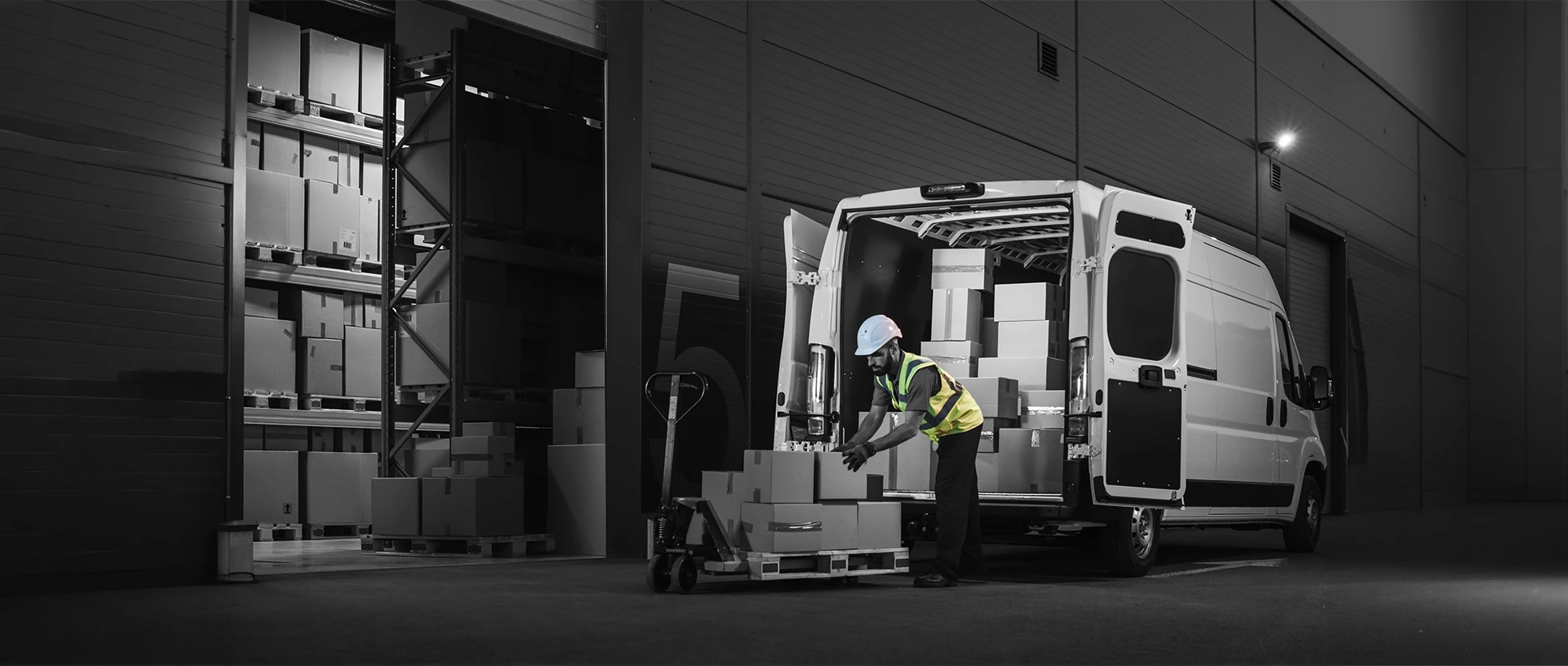
HSE’s guidance for employers is direct: health and safety law applies to work activities on the road in the same way as it does on a fixed site. HSE also calls driving for work one of the most dangerous things workers will do. An employer whose people drive for work, in company vans, pool cars or their own cars, has to manage that risk like any other. HSE splits it into three parts: the safe journey, the safe driver and the safe vehicle.
Who counts as driving for work
Anyone driving as part of their job. The operative taking the van to site and the engineer driving between calls are driving for work. So are the surveyor visiting a client and the office manager collecting parts. So is anybody using their own car for a work journey, often called the grey fleet, covered in its own article.
What the law requires
Section 2 of the Health and Safety at Work etc. Act 1974 requires every employer to ensure, so far as is reasonably practicable, the health, safety and welfare at work of their employees. Section 3 extends the duty to other people affected by the work, which on the road means every other road user. Regulation 3 of the Management of Health and Safety at Work Regulations 1999 requires a suitable and sufficient risk assessment, recorded where there are five or more employees.
Road traffic law runs alongside. It is enforced by the police and DVSA, and it covers the vehicle’s condition, the driver’s fitness and competence, and the load. HSE notes that the police lead investigations into road traffic incidents on public roads, and that HSE usually becomes involved where the police find serious management failures contributed. Where a death results from a gross breach of a duty of care, HSE points out that an organisation can be prosecuted for corporate manslaughter.
The safe journey
HSE asks employers to start by asking whether the journey is necessary at all, then to plan the ones that are:
- Route. The safest route for the type of vehicle, planned with the drivers, avoiding low bridges and other restrictions.
- Time. Journey times that allow safe driving within the speed limit, with traffic and conditions counted in. No schedule that pushes drivers to speed.
- Breaks. The Highway Code recommends a break of at least 15 minutes after every two hours of driving.
- The destination. Parking, traffic management on site, and somewhere to rest and wash.
- Weather and darkness. Work planned around seasonal conditions and periods of peak traffic where possible.
HSE also asks for a reporting system covering all work-related road incidents and near misses, and for each one to be investigated to find the underlying cause.
The safe driver
HSE expects employers to assess each driver’s competence and capability, and to make sure licences, insurance and MOTs are legal and up to date. Drivers should be trained at no cost to them, and briefed on company policy through written instructions, inductions or toolbox talks.
Three risks deserve their own line in any policy:
- Phones. It is illegal to hold and use a phone, sat nav or any device that can send or receive data while driving. The penalty is 6 points and a £200 fine. HSE adds that hands-free use still increases the likelihood of a collision, and that drivers should not pick up phones or take video calls while driving.
- Tiredness. HSE says fatigue is most likely on long, monotonous journeys, and between 2am and 6am or 2pm and 4pm. It is also likely after eating, and on the way home after long shifts.
- Hours. GOV.UK says anyone driving a van for business for more than four hours a day must follow the GB domestic drivers’ hours rules. They limit driving to 10 hours in a day.
A schedule with no room for traffic is a schedule that asks drivers to speed.
The safe vehicle
HSE’s guidance on vehicles is specific. Employers should make sure workers carry out and record daily vehicle checks, and that maintenance follows the manufacturer’s schedule. There should be procedures for reporting defects, and defects should be remedied promptly. There should be a clear policy that unsafe vehicles are not driven, vans should not be overloaded, and loads must be properly secured.
Using a vehicle in a dangerous condition is an offence under section 40A of the Road Traffic Act 1988, for the driver and for anyone who causes or permits it. HSE also reminds employers that an MOT certificate only covers basic defects and is no guarantee of safety. How the driver’s check and the office’s inspection divide the work is set out in daily vehicle checks.
What a driving at work policy covers
A policy turns the duties into rules drivers can follow. Most cover:
- Who may drive. Licence held and checked, the categories it covers, and what a driver must report, such as points or a medical condition.
- Vehicles. Daily checks, defect reporting, servicing, and the rule that an unsafe vehicle does not move.
- Own cars. Business use insurance, a valid MOT, servicing and the checks the firm asks for.
- Phones and distraction. No hand-held use, and limits on hands-free calls.
- Hours and fatigue. Breaks, maximum driving time and long journeys after a shift.
- Drink and drugs. Including prescription medicines that affect driving.
- Loads. Weight limits and how loads are secured.
- Collisions and near misses. What to do at the scene and how to report it to the firm.
After a collision causing injury or damage, section 170 of the Road Traffic Act 1988 requires the driver to stop. They must give their details to anyone with reasonable grounds to ask, as the Highway Code also sets out. If that does not happen, the collision must be reported to the police as soon as reasonably practicable, and within 24 hours.
The records that prove it
A policy on paper proves little. The evidence is the record underneath it. That means daily checks with defects closed, office inspections, renewal dates kept in date, fines traced to the driver, and briefings signed. The free daily vehicle check sheet, vehicle inspection checklist and vehicle maintenance log cover the vehicle, and the driving for work toolbox talk covers the briefing.
This is general guidance, not legal advice.
In Unibuild, every van, truck and car the firm runs is on one register, whether owned, hired or leased. Each is assigned to a person from the live staff list, with the driver history kept. Drivers do the daily vehicle check in your own staff app, and the office carries out periodic vehicle checks on the portal, each on its own tab. Defects arrive with photographs and video, fines are logged against the vehicle and the driver, and MOT, road tax, insurance and service dates are reminded by email and app notification.
Sources
Checked against the source rather than against commentary. Where a schedule, a rate or a threshold is definitive on a government site, read it there.
- HSE: Driving and riding safely for work, guidance for employers Health and Safety Executive
- HSE: Plan and manage journeys Health and Safety Executive
- HSE: Make sure drivers and riders are safe Health and Safety Executive
- HSE: Look after your workers’ health Health and Safety Executive
- HSE: The law and how it is regulated Health and Safety Executive
- Health and Safety at Work etc. Act 1974, section 2 legislation.gov.uk
- Management of Health and Safety at Work Regulations 1999, regulation 3 legislation.gov.uk
- GOV.UK: Drivers’ hours, GB domestic rules GOV.UK
- GOV.UK: Using a phone, sat nav or other device when driving GOV.UK
- The Highway Code, rules 286 and 287 GOV.UK
The follow-up questions.
How vehicles, checks, defects, fines and renewal dates sit on one record is on vehicles and fleet.
Does health and safety law apply to driving for work?
Do we need a driving at work policy?
Is commuting driving for work?
Can drivers use a hands-free phone?
How many hours can a van driver drive in a day?
Who investigates a collision involving a work vehicle?
What should employers check about drivers?
Can software help manage driving for work?
More from Insights.
 Daily vehicle checks: what the driver checks and what the office inspectsA van needs two kinds of check. The driver walks round it before the journey, and the office inspects it, its paperwork and its kit on a schedule. What each covers, and how a defect is closed.Read it →
 Grey fleet: when staff drive their own cars for workAn office manager visiting a site in their own car is driving for work. What an employer has to check, from business insurance to the MOT, and how to keep the record without chasing people.Read it →
 RIDDOR, what has to be reported and by whenThree different clocks run on three different categories, and the one firms miss is the fifteen days, which counts from the accident rather than from the day you realised.Read it →
All 15 articles on health and safety.