For fire door, passive fire and maintenance contractors

Every fire door
on its own record.

Each door registered, referenced and labelled. The Record of Maintenance or Repair completed standing in front of the door, with the photographs and a signature drawn on the phone. Your client opens the certificate from their own login. Built inside a UK contracting business, where the register runs every working day.

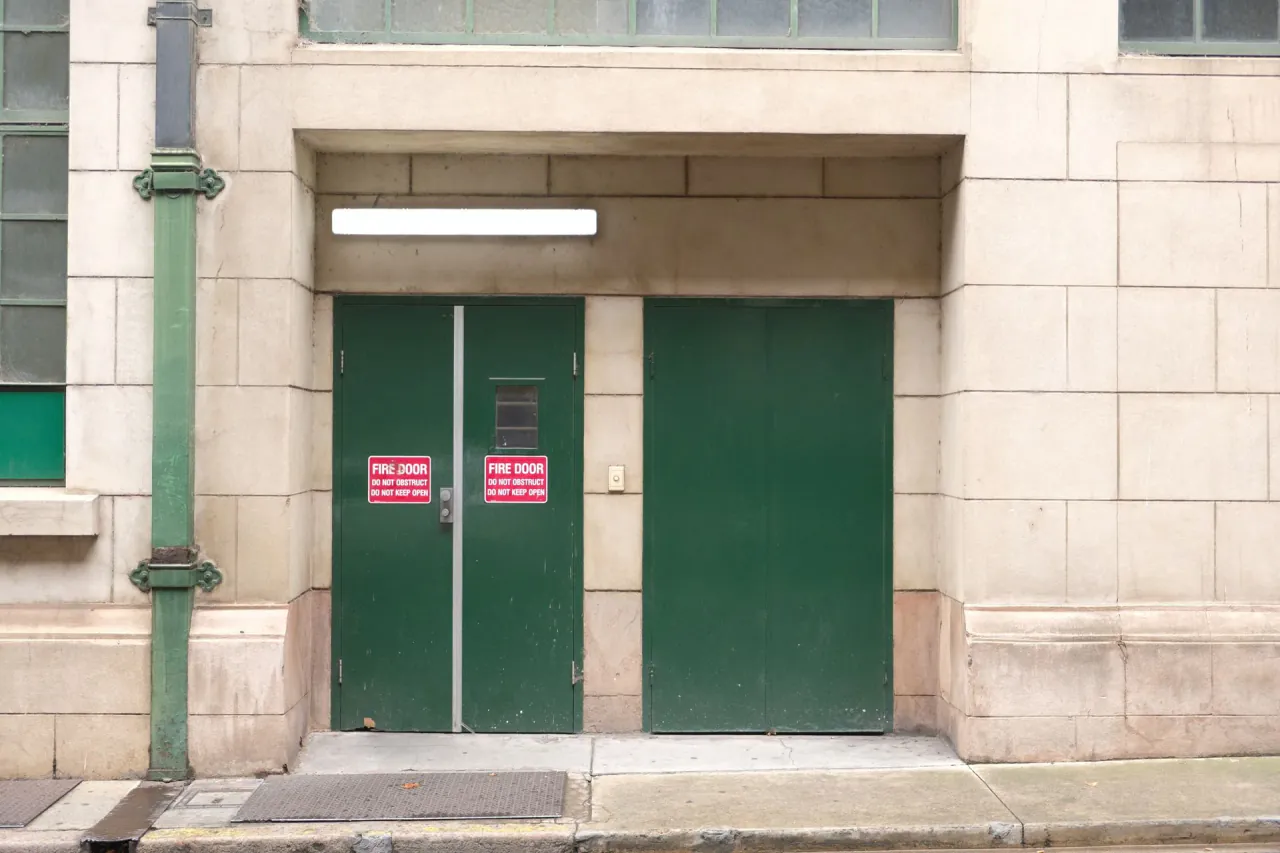
A pair of green fire doors carrying fire door signage on a city street
The register

One register, and the
paperwork that comes off it.

A fire door register is a list of every fire door in a building, each individually identified, with a dated and signed record of what has been done to it. This is that register, with the label, the certificate and the client's view built around it rather than bolted on.

The fire door
register

Register

Every door on a project is its own entry: a name people will recognise, the door reference, the floor, the manufacturer and serial where they are known, the approximate installation date and the actions required.

  • Door references as you write them on site, B-64, LG-144, G-22
  • Filtered by project, with a live count of doors
  • The site address comes from the project, so every document agrees
  • Attachments held against the door, not in a folder
416 doors registeredLive

A label on
every door

Labels

Each door gets its own label with a unique QR code, printed from the register with the door reference and your firm's name and number. An engineer scans it with the field app and the whole door comes up: every service and repair record, the photographs, the certificates and the door's details. A new service record is added from the same scan, standing at the door.

  • A unique QR code per door, printed from the register
  • One scan pulls every record and document for that door
  • A new service record raised from the same scan
  • Reprinted from the same record if a label is damaged
One scan, the whole doorLive

The maintenance
or repair record

Certificate

Completed against the door on the phone: the description of work, the site address, the door identified by type and reference, the photographs and a signature drawn on the screen. Saved as a certificate on your letterhead.

  • Nominal, notional or certified, with the definition printed beside the tick
  • Photographs on their own pages, captioned with the door and the date
  • Signed by name and dated, on behalf of your firm
  • Downloaded per record, or combined for the whole door
484 of 488 signed on a phoneLive

Photographs at
the door

Evidence

Taken on the phone against the record at the moment the work is done. Nothing depends on a photograph reaching the office from somebody's camera roll, which is the step that fails on a block with two hundred doors.

  • Bound to the record, with the date and the person
  • Straight onto the certificate, one page each
  • A wrong one removed on its own without losing the rest
  • 3,268 of them on record across live deployments
No camera rollLive

Your client's
own view

Client portal

The building owner, housing provider or managing agent logs in and sees the doors on their own buildings, filtered by location and floor, and opens any certificate themselves. Read only, on the web and on their phone.

  • Scoped to their projects and nothing else
  • Every certificate printable from their login
  • The label reprintable from their side too
  • Nothing they can edit or delete
Read only, by designLive

The history
of one door

Per door

Every record against a door in date order, and one combined document for the whole door when a client or an assessor asks for it. The record follows the door, not the engineer who made it.

  • Remedial work records live today, per door
  • Who created and who last changed every record
  • Deleting a door is deliberately hard to do by accident
  • Installation and routine check record types scoped with you
Follows the doorLive
The label

One scan,
the whole door.

Every door carries a label with its own QR code. The engineer scans it with the field app and the door opens on the phone: its details, every service and repair record, the photographs and the certificates. The new record is raised from the same screen, standing at the door.

At the door
Scan, read what was done last time, do the work, photograph it and sign it. The record is on the door's history before the engineer moves to the next one.
In the office
The same door, the same records and the same photographs in a browser, filtered by project and by floor, with the label reprinted from the record if one is damaged.
For the client
The same history, read only, from their own portal login on the web or on their phone. A resident's question about their door is answered from the door's record.
Who it is written for

Firms whose work is a fire door,
and firms whose duty is one.

The same register serves the contractor who does the work and the client who has to prove it was done. Each row below is a business we would expect to recognise itself.

Who uses a fire door register, and what changes for each of them
The businessWhat the week looks likeWhat changes
Fire door installers and remedial contractorsA block of flats, a schedule of doors from a fire risk assessment, and a van doing forty of them a week: seals, closers, hinges, gaps, signage, the occasional whole doorset.Each door is labelled at the first visit. The Record of Maintenance or Repair is completed at the door and the certificate exists before the van leaves the car park.
Passive fire protection contractorsFire stopping and fire doors from the same firm, often on the same building, with third party certification audited by sampling completed work.Doors sit on the fire asset register and penetrations on the project record. An auditor's sample is a lookup on a phone, not a search through folders.
Fire door inspection and survey firmsA building at a time, a door at a time, each with a condition, a set of photographs and an action, handed to a client who then has to commission the work.Every door is individually referenced and photographed on its own record, so the survey and the remedial work that follows it are written against the same door.
Facilities management and maintenance contractorsA fire door duty inside a wider maintenance contract, alongside the gas records, the emergency lighting and the PPM visits, for a client who audits all of it.Fire doors sit beside the maintained assets and the other certification registers on one account, in the same portal the client already opens.
Housing providers and managing agentsThe responsible person's side: a building over eleven metres, quarterly communal door checks, annual flat entrance door checks, and residents who ask what was done to their door.You are the client on the portal. Your contractor's records for your buildings, by location and floor, with every certificate printable from your own login.
Door types

Nominal, notional or certified.
The form makes you choose.

Every Record of Maintenance or Repair identifies the door by one of three types, and prints the definition beside the tick so the person signing knows exactly what they have signed for.

Nominal fire door
An existing door believed to offer some level of fire protection based on how it looks and how it is constructed. It has not been formally tested or certified, but factors such as door thickness, materials and fittings suggest it may provide fire resistance.
Notional fire door
A door assumed to perform as a fire door because it matches commonly accepted design standards, for example a solid timber door with suitable hinges and a closer. There is no test evidence or certification, and its fire performance cannot be guaranteed.
Certified fire door
A complete doorset that has been independently tested and approved to resist fire and smoke for a specified period, typically 30 or 60 minutes. The certification applies to the whole doorset, including the leaf, frame, seals, hinges, locks, closers and any glazing, all of which must be compatible and correctly installed, with documentation available.
Why the record asks
Because the answer decides what a repair can use. A certified doorset is maintained with approved components or it stops being certified. A nominal door can be upgraded, but nobody can sign to say it will hold for thirty minutes. Writing the type on every record is what lets a client read a block of two hundred doors and know which ones they can rely on.
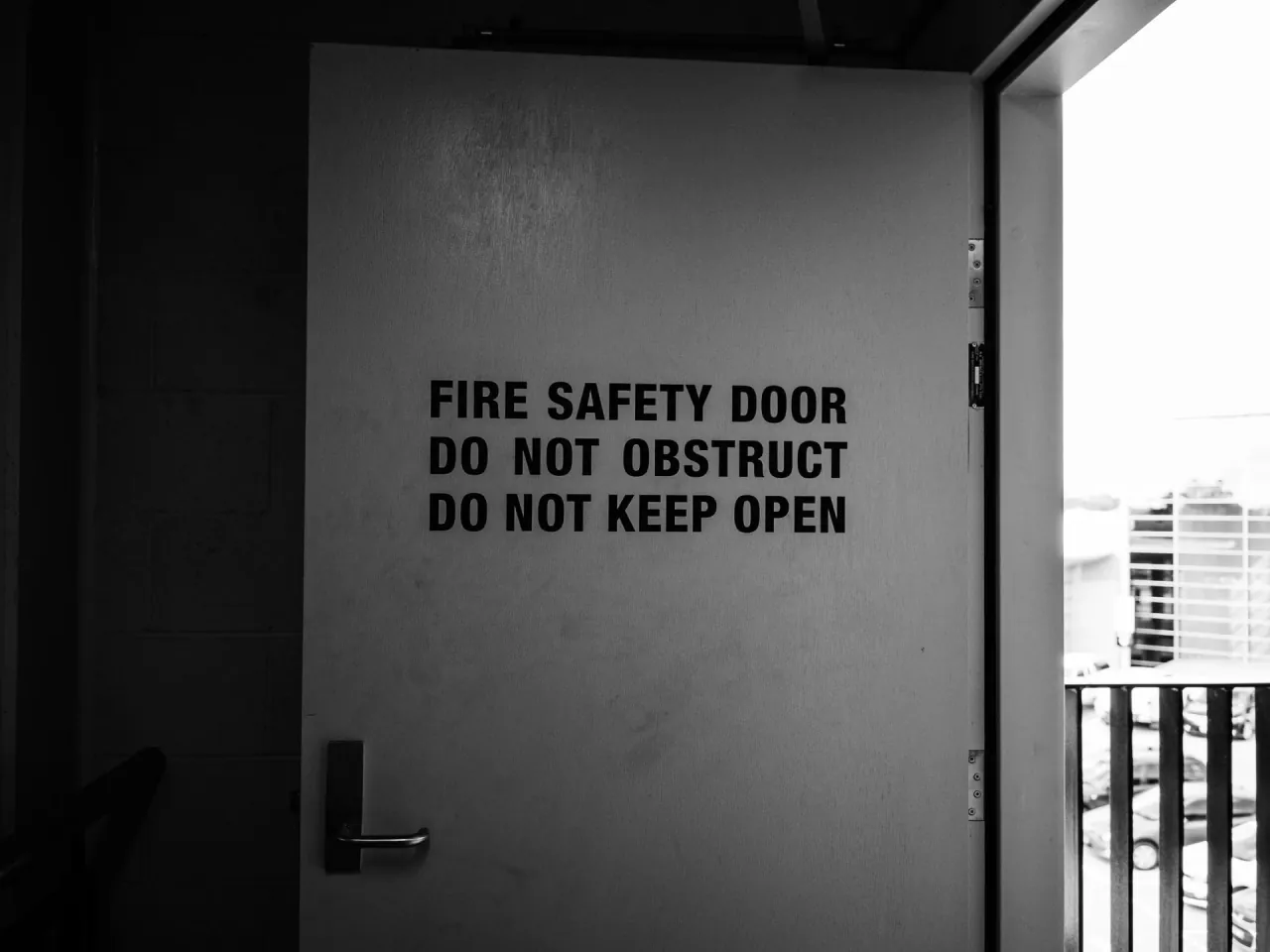
A fire safety door in a stairwell, marked do not obstruct and do not keep open
The regulatory map

What each regime asks
of a fire door record, and
how far the platform goes.

Nothing here is legal advice. Unibuild records,
evidences and prompts. The duty stays
with the responsible person in every case below.

01Regulatory Reform (Fire Safety) Order 2005, article 17
The responsible person must keep the premises and every fire safety facility, including fire doors, in an efficient state, in efficient working order and in good repair, under a suitable system of maintenance. The Record of Maintenance or Repair is the evidence that the system exists and was followed on a named door on a named date. Unibuild produces and holds that record. It does not decide what the system of maintenance should be.
02Fire Safety (England) Regulations 2022, regulation 10
In multi-occupied residential buildings with a storey over eleven metres, the responsible person must check fire doors in the common parts at least every three months and use best endeavours to check every flat entrance door at least every twelve months, and keep a record of the checks and of any steps taken. The platform holds the register, the labelling and the signed record of work carried out on each door. The periodic check regime itself, with its frequency, next due date and the communal versus flat entrance distinction, is built into your implementation rather than switched on, because every landlord's regime is different.
03Building Safety Act 2022 and the golden thread
For higher-risk buildings the information about what was installed and what has been done to it has to be created, kept and handed on in a structured, accessible form, and it follows the building rather than the contract. A fire door register that is individually referenced, photographed and signed per door is the shape that information is supposed to take. The register belongs to the building, so a change of contractor does not lose the history.
04Regulation 38 of the Building Regulations
Fire safety information has to be given to the responsible person at completion of the work, in a form they can use to operate and maintain the building. The door schedule, the certification of each doorset and the record of what was fitted are a substantial part of that handover. The combined document per door, with its photographs, is one download rather than a fortnight of assembling folders.
05BS 8214:2016
The code of practice for timber-based fire door assemblies sets out how a fire door should be specified, installed and maintained: the gaps, the seals, the ironmongery, the glazing, and the expectation that what is fitted to a doorset later does not invalidate what it was certified as. The description of work on each record is where an installer shows the code was followed, with the photographs to prove it.
06Third party certification schemes
Certifire, BM TRADA Q-Mark, IFC Certification, FIRAS and the BWF Fire Door Alliance certify doorsets, installers and maintainers, and audit by sampling completed work against the records the firm holds. Any door is retrieved by its reference with its photographs, its description of work, the date and the person who signed. Nothing is submitted to any scheme; the records are yours to produce during the visit.
07BS EN 1634-1 and BS 476-22
Fire doors are tested to these standards as complete doorsets, and the FD30 or FD60 rating that results applies to that doorset with those components. It is why the certified door type on the record refers to the whole assembly rather than to the leaf, and why a substitution of ironmongery on a certified door is worth recording against the door rather than remembering.
08Approved Document B
The guidance sets where fire doors are required, the periods of fire resistance expected, the self-closing requirement and the signage. The register does not interpret any of that. It holds the door, the floor, the type and the work done, so the person who does interpret it has a reliable list to work from.

484 of 488 fire door records signed on a phone screen in Unibuild
416Fire doors on the register
488Records of Maintenance or Repair
484Signed on a phone screen

Counted across the Unibuild deployments running the register, 2026. 3,268 photographs are bound to those records, and 400 of the 488 were raised from the field app rather than at a desk.

Questions

Asked by fire door contractors,
and by the people who audit them.

What is a fire door register?+
A list of every fire door in a building, each one individually identified, with its location, its type and a dated record of what has been done to it and by whom. In Unibuild each door is its own entry against the project, carrying a reference, a floor, the manufacturer and serial where known, an installation date, the actions required, any attachments, and every Record of Maintenance or Repair raised against it. The register is filtered by project and your client sees their own buildings in their own portal.
What is a Record of Maintenance or Repair?+
The document a contractor produces to show what was done to a fire door: the description of the work, the site address, the door identified by type and reference, the date, the name of the person responsible and their signature, with the photographs behind it. It is the evidence the responsible person relies on under the Fire Safety Order, and the document an assessor asks to see. In Unibuild it is completed on the phone at the door, signed on the screen, and saved as a certificate on your letterhead that your client can open from their own login.
What is the difference between a nominal, notional and certified fire door?+
A nominal fire door is an existing door believed to offer some fire protection from its construction, with no test evidence. A notional fire door is assumed to perform because it matches accepted design standards, again with no certification. A certified fire door is a complete doorset independently tested and approved for a stated period, typically 30 or 60 minutes, with the certification covering the leaf, frame, seals, hinges, closers and glazing together. Every record in Unibuild carries one of the three, with the full definition printed on the certificate beside the tick.
How often do fire doors have to be checked?+
The Fire Safety Order requires fire doors to be maintained under a suitable system, and leaves the frequency to the responsible person's risk assessment. For multi-occupied residential buildings in England with a storey over eleven metres, the Fire Safety (England) Regulations 2022 are specific: communal fire doors at least every three months, and best endeavours to check every flat entrance door at least every twelve months. Unibuild holds the record of the work done on each door. Scheduling the periodic checks against those frequencies is built into your implementation against the same register, not something you configure alone.
Does it schedule the next inspection and remind us?+
Not as standard, and we would rather say so here than on the demonstration. Today a fire door carries the record of work done to it and not an inspection frequency or a next due date. The reminders engine watches twelve other registers nightly, so the pattern exists. Unibuild is bespoke, so an inspection frequency per door, a next due date derived from the last record and the reminder that follows are a scoping conversation during implementation, written for you and included in the monthly fee.
Can our client see the records without ringing us?+
Yes. The building owner, housing provider or managing agent logs into the client portal and sees the doors on their own projects, filtered by location and by floor, and opens any certificate themselves, on the web or on their phone. It is read only. They cannot change a record, delete a door or see anybody else's buildings. The question a resident asks about their own door is answered by the client from their own screen.
Does it work on site, in a stairwell, with no signal?+
The field app is built for patchy coverage, which in a concrete stair core is the normal condition rather than an edge case. The label on the door is scanned to open the right record, the description of work is typed or dictated, the photographs are taken against the record, and the signature is drawn on the screen. Across the deployments running the register, 400 of 488 records were raised on the app rather than at a desk, which is the best evidence we have that engineers actually use it.
We do fire stopping as well as doors. Does it cover penetrations?+
Yes, on the project record rather than on the fire asset register. Each penetration is an entry against the job, the level and the room, with its reference, product, batch, installer, date and photographs, and remedials are raised against the original seal. The fire protection contractors page sets that out in full, including what the platform does not do for fire stopping. Doors and penetrations sit on the same account, and the same installer's competence is held per system on the same training matrix.
Does it give a pass or fail against each check item?+
As written evidence, yes, and consistently: the live records are full of entries for gaps and clearances, intumescent and smoke seals, hinges, closers, drop down seals, door furniture and signage, because engineers write them into the description of work. As structured tick boxes with a pass or fail per item, not as standard. We build that checklist to your own item list during implementation, in your order, and it is a short job precisely because the vocabulary in the records is already consistent.
Will it submit to Certifire, BM TRADA or FIRAS?+
No. The records are yours to produce when an assessor samples completed work, and any door is retrieved by its reference with the photographs, the description of work, the date and the signature attached. Nothing is sent to a certification body, and the platform holds no test evidence and cannot say whether a repair keeps a doorset within its certification. That judgement stays with your technical people, where it belongs.
How is it priced? Is there a charge per door or per engineer?+
Neither. Users are unlimited on every plan, so putting four more engineers on a block for six weeks does not change the bill, and there is no charge per door, per building or per certificate. There is no published rate card, because a six person fire door firm running this module and the field app is not the same product as a sixty person contractor running twenty modules. The pricing page explains how the figure is worked out, and the form at the top of this page gets you a written quote, usually the same day.
Who owns the records, and can we get them out?+
You do. Every certificate downloads as a PDF, per record or combined for the whole door, and the register exports like everything else on the platform. If you ever leave, the cancellation policy gives three months of full access at no charge to export at a sensible pace, and a clean dataset handed over within five working days. A fire door record has to outlive the contract it was made under, and it should not be held hostage by the software it was made in.
Honest limits

Where it stops today.

Five things a fire door firm asks for that are not in the platform as it stands. Unibuild is bespoke, so each one is a scoping conversation rather than a dead end: customer specific modules, fields, rules and reports are written on request and included in the monthly fee.

Periodic check scheduling
A door carries the record of work done, not an inspection frequency or a next due date. Built during implementation against your regime.
Pass or fail per item
The description of work is written evidence today. A structured checklist to your own item list is built on request.
Installation and routine check records
The remedial record is live. Separate record types for a new installation and for a routine check are scoped with you.
Doors on a floor plan
Doors are found by reference, floor and search, not plotted on a drawing.
Scheme submissions
Records are retrievable and exportable. Nothing is submitted to Certifire, BM TRADA, IFC, FIRAS or any other body.
The gap worth knowing about before you buy
Next step

Bring one building's
worth of doors.

A Unibuild demonstration on your own fire doors
The point The label printed and the first record signed in front of you We say plainly what it does not do
Ask for a quote

Tell us a little about the firm.
We do the rest.

Two minutes. A written figure by email, usually the same day. Unlimited users, and no charge per door.

Headcount
Trading entities
WhatsApp us