
Fire door classification:
certified, notional and nominal.
Most surveys of existing buildings find all three. What each classification means, the evidence that decides it, and what it changes for repair, replacement and the record kept for each door.
Published ·9 min read·Written by Darshan Parmar, Founder
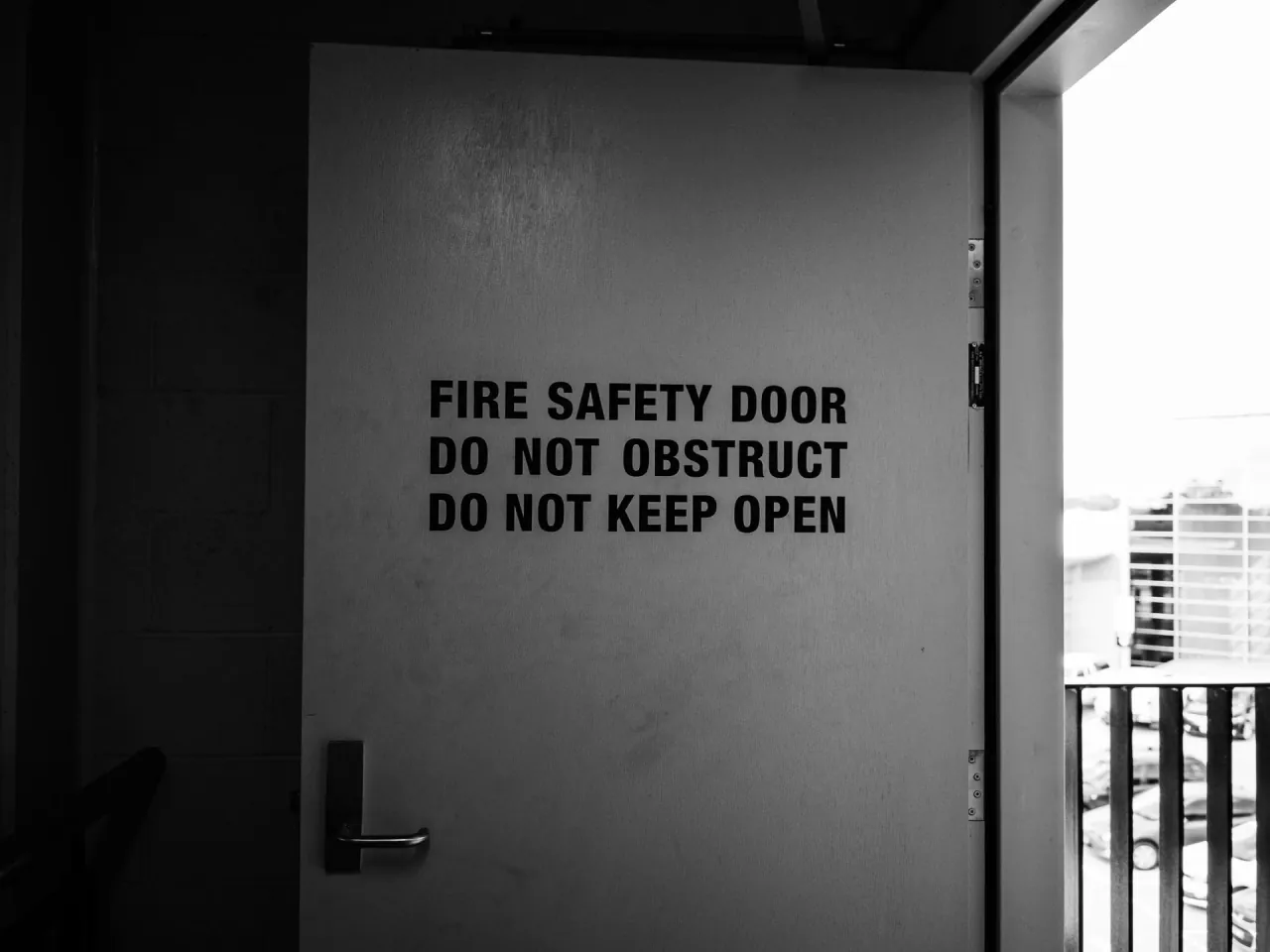
Walk an existing building with a fire door survey and three kinds of door turn up. Some carry a certification label and a traceable history. Some were built to the fire door standard of their day. Some look the part and have no paperwork at all. Fire door classification sorts them into certified, notional and nominal, and that one word shapes every decision about the door that follows.
Why fire door classification matters
The classification is evidence, not a verdict. Under the Regulatory Reform (Fire Safety) Order 2005, the responsible person’s fire risk assessment decides whether a door is adequate for its position. The classification tells the assessor how much weight the door can carry.
The Fire Safety Act 2021 made the reach of that assessment explicit for multi-occupied residential buildings. It covers the structure, the external walls and the entrance doors of individual flats that open onto the common parts. In a block of flats, that brings every flat entrance door into the fire risk assessment.
The classification also decides the repair route. It sets which components can go on the door, whether a repair keeps its evidence intact, and what anybody can sign for afterwards. Getting it right on the first visit saves a second survey later.
Certified fire doors
A certified fire door has been tested and is made under an independent third-party certification scheme. The test is either BS 476-22, which gives the familiar FD30 and FD60 ratings, or BS EN 1634-1, classified under BS EN 13501-2 as E30, EI30 and so on. E stands for integrity, and EI adds insulation.
The number is the minutes of integrity the door achieved in the test. An S suffix on an FD rating, or Sa in the European classification, means smoke leakage at room temperature was tested as well. Approved Document B sets out the rating each position needs, in both forms, in Appendix C.
The evidence sits on the door itself. Members of the BWF Fire Door Alliance fix a label with a unique number to the top edge of the leaf. It carries the member’s name and, where applicable, the certification number and the fire rating. BM TRADA Q-Mark doors carry either a top edge label or colour-coded plugs in the hanging edge.
The unique number lets the original certificate and specification be traced, so the door can be checked on site against what was certified. That is the real value of the label: it turns an inspection into a comparison against a known standard.
Certification covers the combination that was tested and approved. The leaf, frame, seals, hinges, closer, glazing and ironmongery all need to sit within the scope of the certificate and be installed and maintained to the manufacturer’s instructions. BM TRADA notes that some plug colours certify a leaf only up to a point, for example before intumescent strips or a certified frame are added.
Notional fire doors
A notional fire door was built to the fire door specification, or tested, at the time the building was constructed or the door was made. It has no modern certificate, because the standard it met predates the current schemes.
The term is common in blocks of flats. The Local Government Association’s 2011 guide on fire safety in purpose-built blocks of flats calls these doors “notional FD30”. As reported in the RICS Built Environment Journal, many rely on 25mm door stops or rebates rather than intumescent strips and smoke seals, with rising butt hinges to close them.
That guidance accepts notional FD30 doors in many existing blocks without modification. The conditions are suitable self-closing devices, and smoke ventilation, building height and horizontal escape distances within tolerance. Whether a particular door qualifies is the fire risk assessor’s decision, taken building by building.
The evidence for a notional door is historical rather than physical. It comes from the original drawings and specifications, building control records and the date of construction, set against a door that matches the specification of its day.
Nominal fire doors
A nominal fire door is an existing door with no certification and no evidence of a historic specification, which the surveyor judges to offer some fire resistance from its construction. A substantial solid leaf, a close fit in the frame, suitable hinges and a working closer are the usual signs.
The point every definition shares is that a nominal door has no test evidence behind it. It can be well made and in good condition, and still nobody can sign to say it will hold for a stated number of minutes. That is why the fire risk assessment, not the door, decides whether it stays.
Practice varies between surveyors here, and it is worth knowing. Some use nominal for a door they judge likely to perform. Others use it for any door believed to be a fire door without evidence, and a few fold notional and nominal into one category. The fix is simple: agree the definitions in the survey brief and print them on the report, so every door in the building is judged against the same words.
How a fire door survey reads the evidence
A good fire door survey works from the door outwards. The physical evidence comes first, then the paperwork, then the history. In practice that means:
- The top edge. A certification label with a unique number, photographed before anything else is touched.
- The hanging edge. A colour-coded plug, its colours recorded, because they say what the certification covers.
- The certificate and data sheet. Traced from the label number through the manufacturer or scheme, setting out the approved components.
- The handover records. The door schedule and certificates from the O&M manual, where the building has one.
- The original drawings and specification. The evidence a notional door rests on, with building control records where they survive.
- The door itself. Leaf thickness, stops or rebates, glazing, hinges, closer, seals and the gaps around the leaf.
- The door’s history. Earlier repairs, replaced ironmongery and anything fitted since the door was installed.
Each piece of evidence belongs on the record for that door, with its photographs. A classification written from memory in the van is hard to defend a year later. One written with the label photograph beside it needs no defending.
A classification without its evidence is an opinion. With the evidence attached, it is a record.
What the classification changes about repair and replacement
Each classification has a legitimate repair route. The classification simply tells everybody which one applies, before the van is loaded.
- Certified. Repairs use components within the scope of the certificate, fitted to the manufacturer’s instructions. Any substitution, such as a different closer or new glazing, is recorded against the door, so the certified status can still be shown.
- Notional. Maintenance keeps the door to its original arrangement: a working self-closer, a good fit, sound stops and a sound leaf. Improvements such as a new closer add safety. They do not turn a notional door into a certified one.
- Nominal. The fire risk assessment decides whether the door stays, is improved or is replaced. Where a door with evidence of performance is needed, the usual route is a certified doorset installed to its instructions.
Home Office guidance on the 2022 regulations is clear on who does the work. Where a check finds that a fire door needs repair or replacement, a competent contractor should carry it out as soon as reasonably practicable.
For installation and maintenance, BS 8214:2026 is now the code of practice. BSI published it in March 2026, replacing the 2016 edition, and it covers fire-resisting and smoke control doors of every material: timber, steel, aluminium and composite.
How to record the classification for each door
The classification is only useful if it sits on the record for one specific door, with the evidence behind it. A register that holds these for every door gives the client something they can read without a surveyor beside them:
- A unique reference for each door, and a label on the door carrying it.
- The location: building, floor, and the flat or room it serves.
- The classification, with its definition printed beside it on the report.
- The evidence: photographs of the label, plug, edges and ironmongery, and any certificate reference.
- The rating where it is known, in the form the evidence gives it, such as FD30S or E30 Sa.
- The condition found, the action required, and each visit’s work with photographs and a signature.
- The date of the next check.
One building services contractor runs its fire door work exactly this way. It imports each door schedule from a spreadsheet and labels every door with its own QR code. It pins each door on the uploaded floor plans, and records nominal, notional or certified on every door. On one job, its client opened and printed 99 fire door certificates from their own portal, without a phone call to anybody.
Regulation 10 checks, whatever the classification
In England, regulation 10 of the Fire Safety (England) Regulations 2022 applies to buildings with two or more sets of domestic premises and above 11 metres in height. The responsible person must check fire doors in the communal areas at least every three months.
Flat entrance doors must be checked at least every twelve months, on a best endeavours basis where residents do not give access. The checks include making sure self-closing devices work, and a record of the steps taken must be kept.
The Home Office guidance describes these checks as simple, basic and visual, and says they should not need a specialist. Caretakers, managing agents, housing officers and maintenance staff can carry them out. It also makes clear that the purpose is to implement the Grenfell Tower Inquiry recommendations, and that doors should remain suitable. The checks do not hold existing doors to the standard set for new blocks.
That is where classification earns its keep. A quarterly check confirms the door still closes and still fits. The classification on the same record says how much that door can be relied on, and the two together give the responsible person the full picture.
On Unibuild, each door in the fire door register gets its own label with a unique QR code, printed with the door reference and your firm’s name. An engineer scans it in your firm’s own app, published on the App Store and Google Play under your company’s name, and the door opens with its history. The Record of Maintenance or Repair is completed at the door with photographs and a signature. Every record carries nominal, notional or certified, with the definition printed beside the tick. Periodic checks are scheduled against the regulation 10 frequencies, and your client opens any certificate from their own portal. Unibuild is bespoke construction management software in daily production since 2016, so the survey form follows your method.
Where to start, on the next survey
Write the three definitions into the survey brief and agree them with the client and the fire risk assessor before the first door. Then photograph the top edge and the hanging edge of every door before anything else. Most classifications are settled by those two photographs, and the rest are settled by the paperwork they point to.
Sources
Checked against the source rather than against commentary. Where a schedule, a rate or a threshold is definitive on a government site, read it there.
- The Fire Safety (England) Regulations 2022, regulation 10 legislation.gov.uk
- Home Office: Fire Safety (England) Regulations 2022, fire door guidance GOV.UK
- The Regulatory Reform (Fire Safety) Order 2005 legislation.gov.uk
- Fire Safety Act 2021 legislation.gov.uk
- Approved Document B: fire safety GOV.UK
- BS 8214:2026, fire-resisting and smoke control doors, code of practice knowledge.bsigroup.com
- BWF Fire Door Alliance: understanding the label firedoors.bwf.org.uk
- BM TRADA: what is a fire door plug bmtrada.com
- RICS Built Environment Journal: fire doors in residential buildings ww3.rics.org
The follow-up questions.
How each door is labelled, recorded and shared with the client is on the fire door register page.
What is the difference between a certified, notional and nominal fire door?
What is a notional fire door?
What is a nominal fire door?
How do I know if a fire door is certified?
Does a certification label prove the fire door is compliant?
Are notional fire doors still acceptable?
Can a nominal fire door be upgraded to a certified one?
What do FD30, FD30S and E30 Sa mean?
How often must fire doors be checked in blocks of flats?
Who can carry out fire door checks and surveys?
What should a fire door survey record for each door?
Which standard covers fire door installation and maintenance?
More from Insights.
 QR codes on construction sites, and what a scan is actually worthA QR code at the gate is cheap to print and easy to oversell. What a scan proves, where the posters go, and the four things that decide whether the record survives a dispute.Read it →
 The O&M manual, and why handover takes a fortnightEverything the building owner needs, in one file, assembled at the end from records made over a year. Why that is the wrong way round, and what it costs when the certificates cannot be found.Read it →
 Gateway 2, and what it does to a programmeApproval has to be granted before construction starts, and the wait has improved sharply: a median of 22 weeks at June 2026 against 43 a year earlier. What that means if you are not the applicant.Read it →
All 13 articles on health and safety.