Case study · C&G Heating & Plumbing Supplies

Nine years behind
the trade counter.

C&G sell heating, plumbing and bathrooms from a counter and a two-floor showroom in Erith. They are the merchant the engineer buys from at half seven in the morning. Since November 2017 that counter has run on a system we built for it, and the phone in the assistant's hand is the till rather than a copy of it.

Trading since
2004
In Erith, Kent
Catalogue
72,444
Products, added to every year
On the system
Since 2017
Nine years at the counter
What a client says

5 star service by a great team at Unibuild.

Have been using Unibuild for approx 8 years now. 5 star service by a great team lead by Darshan. Having started of by making our own version of a Inventory system dedicated for our own needs and not just something off the shelf, the team have gone on to build us a very successful tablet app. Last year 2025 the team have made us 2 more APPS which have enhanced our business even more. All this at an affordable price. Can't recommend these guys highly enough 5 well deserved stars.

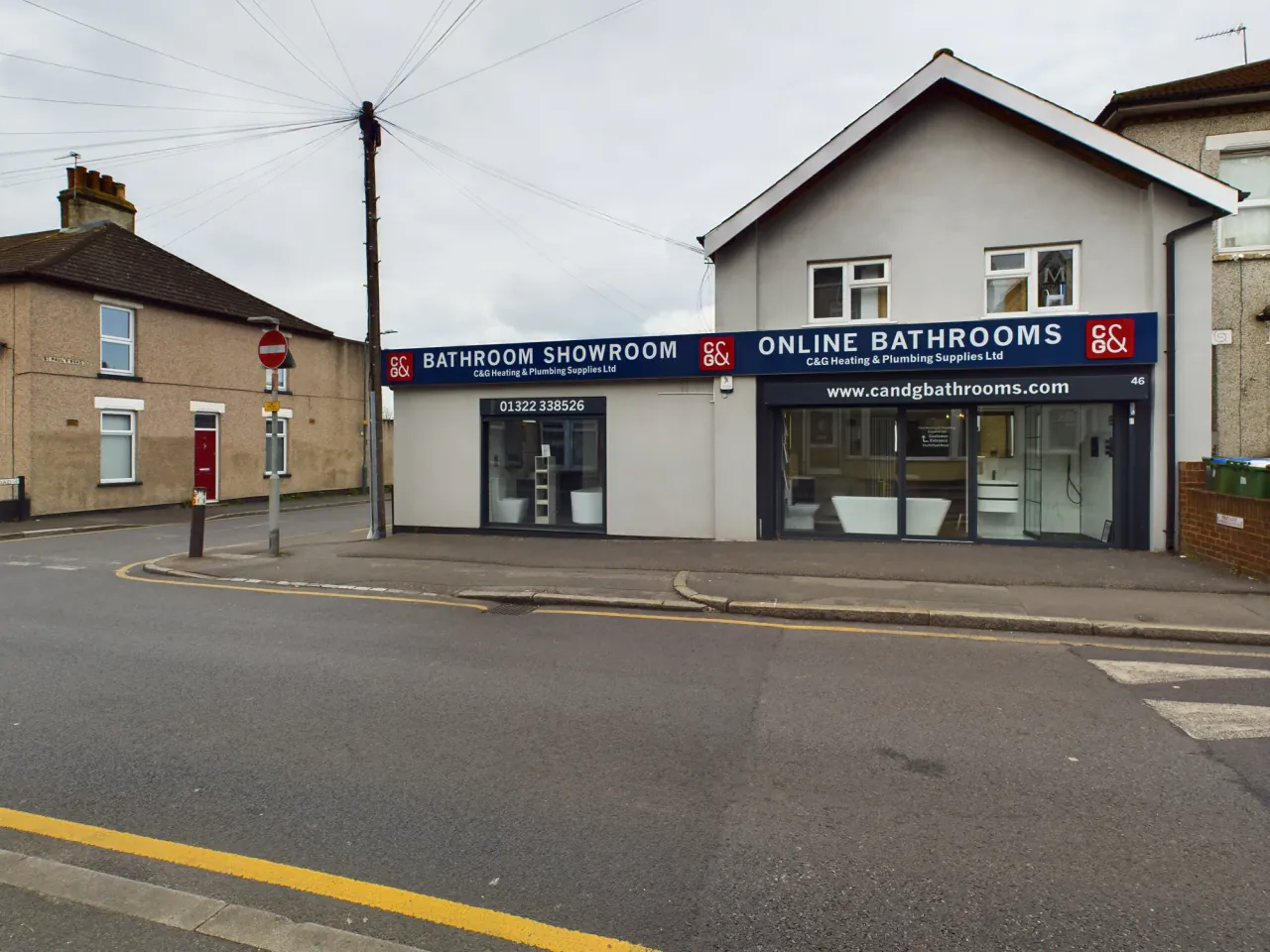
C&G Bathroom Showroom, the retail name of C&G Heating & Plumbing Supplies Ltd

Gary McHattieOwner, C&G Heating & Plumbing Supplies LtdErith, Kent · trading since 2004

Who they are

The firm on the other
side of the counter.

The other two studies on this site are contractors. C&G are the merchant those contractors buy from: a heating, plumbing and bathroom supplier at 46 Mill Road in Erith, trading since 2004, with a trade counter downstairs and two floors of bathroom showroom above it.

The showroom trades as C&G Bathrooms, which is the name on the mark above and on their website. Both it and the trade counter belong to the same company, C&G Heating & Plumbing Supplies Ltd, and both are served by the same system.

Two kinds of customer come through the same door. One has an account, a credit limit and payment terms, and settles at the end of the month against a statement. The other pays at the till and walks out with the goods. Both are served from the same catalogue by the same people, and the paperwork behind them could hardly be less alike.

Walk-in trade is more than half of everything the counter sells, and the average walk-in sale is around a third smaller than a sale to an account customer. That is the shape of the business, and it is why every walk-in is booked against a single counter account with the buyer's name typed onto the invoice, rather than opening a customer record for somebody who will not be back.

A merchant lives or dies on two things a contractor never has to think about: whether the price on the shelf is the price in the system, and whether the money owed on Friday is the money the customer thinks they owe.

What the counter carries

Catalogue
72,444 products across 1,459 categories
Merchandising
Category order set by hand, so fast-moving lines come first rather than alphabetically
Trade accounts
185 opened since 2017, 122 trading today
The first ones
75 accounts opened in December 2017, most of them still buying on the same records
Walk-in trade
Booked to one counter account, and more than half of all sales
Discontinued lines
4,762 retired without breaking a single historic invoice
Inside

The room the invoices
are raised in.

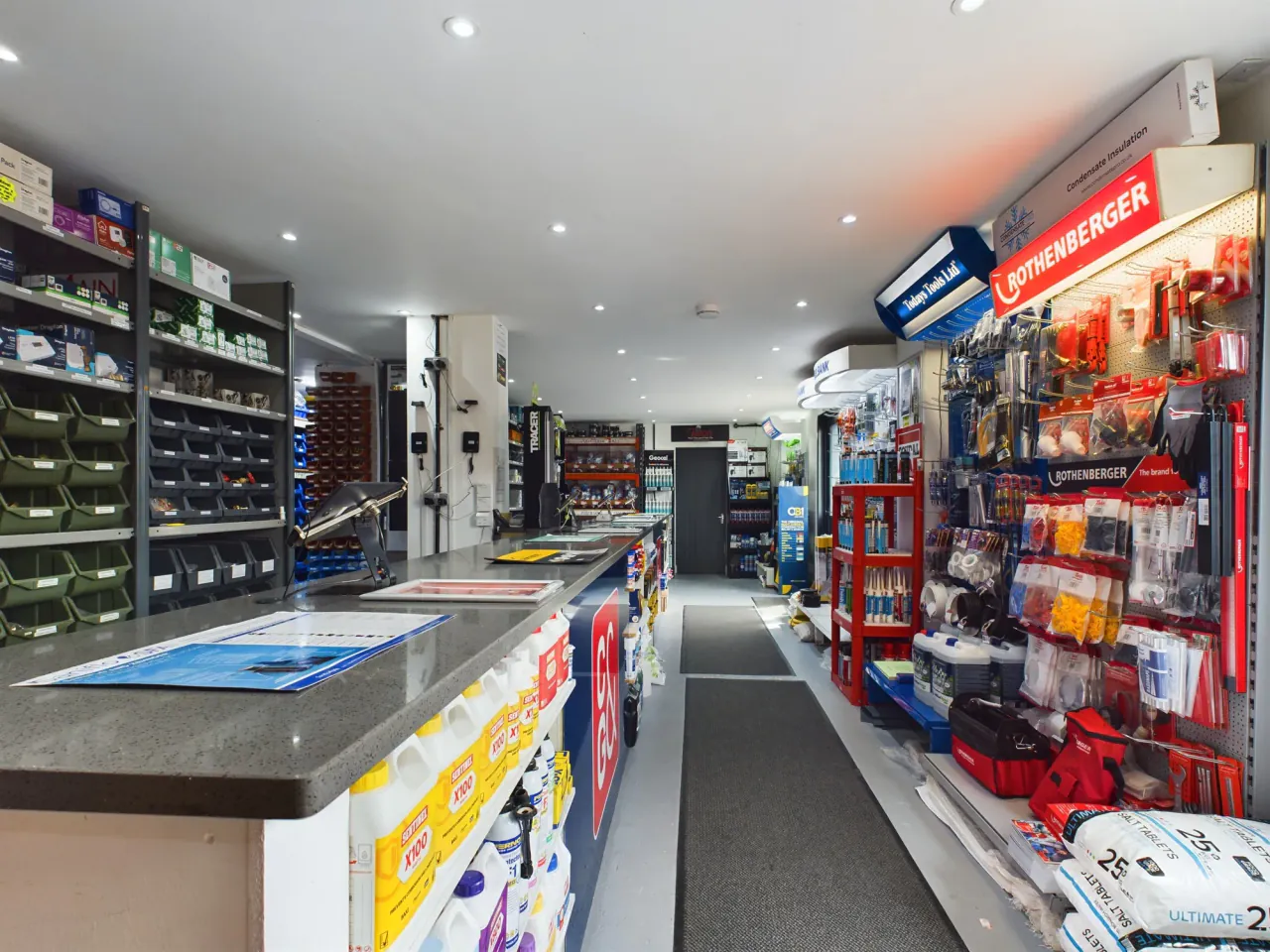
Every price on these shelves comes off the same list, and the order the categories appear in on the phone was set by hand to match the way the stock is laid out. This is what 72,444 lines looks like from the customer's side of the counter.

The C&G trade counter in Erith, with the serving counter and card terminals on the left and picking bins, hand tools and consumables on the right
The serving side, with the picking bins behind it. The invoice is raised here on a handset, with the customer still standing at the counter.
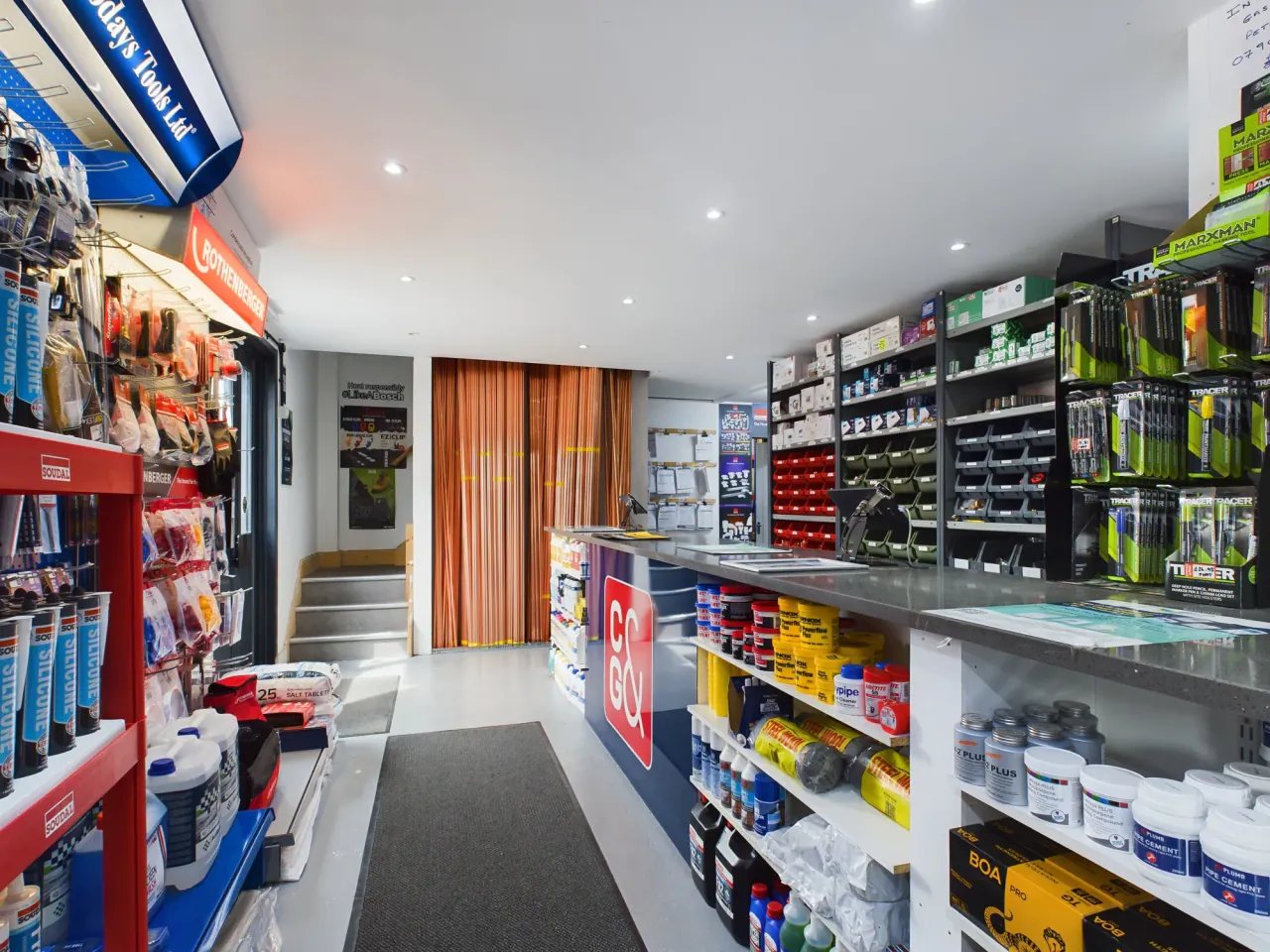
The C&G trade counter seen from the far end, with copper tube racked behind it and flux, steel wool, pipe cement and jointing compound shelved along the counter
The same counter from the other end. Copper tube racked at the back, flux and jointing compound within reach of the till.
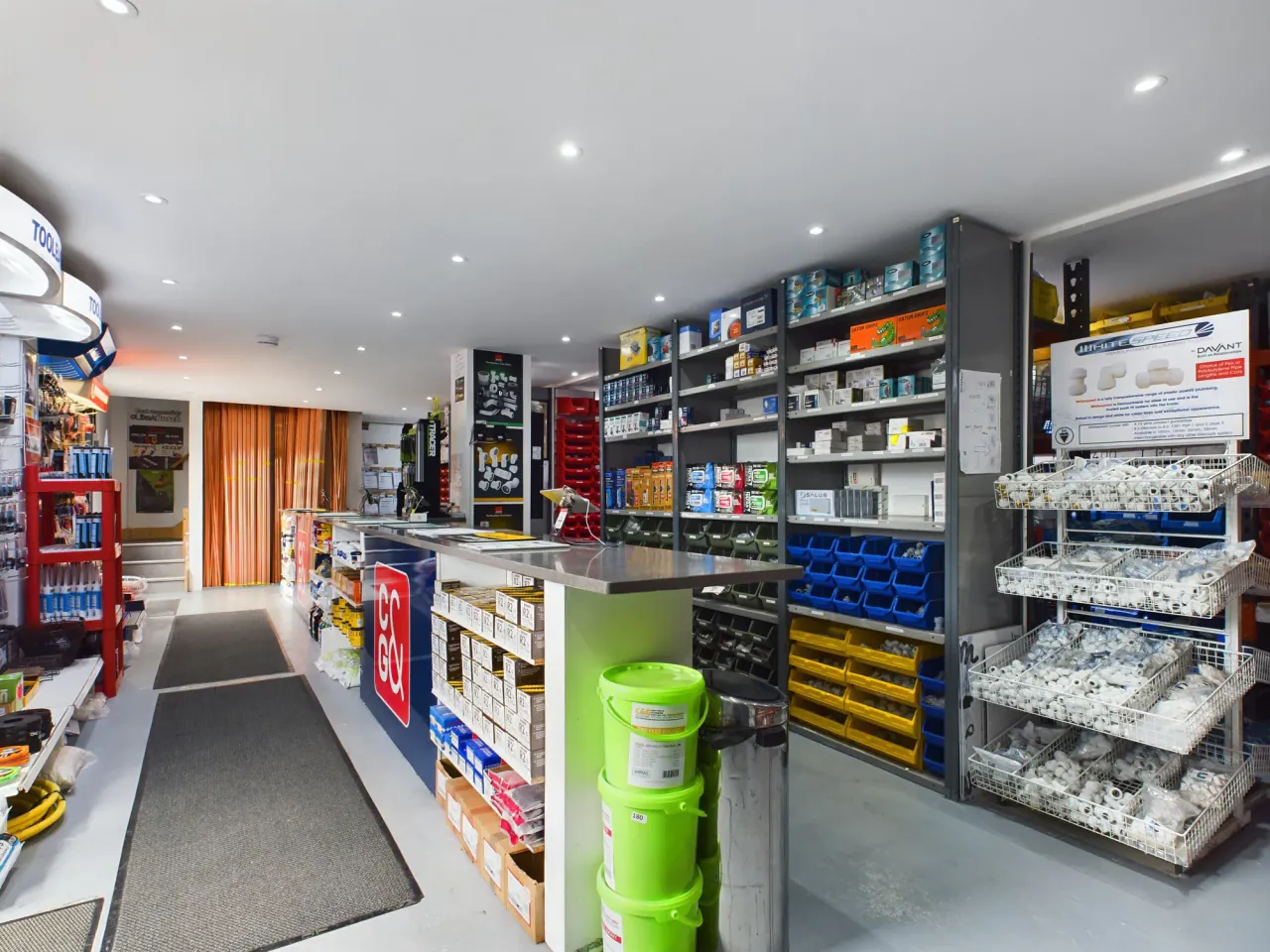
Colour-coded picking bins of plumbing fittings behind the C&G trade counter in Erith, with push-fit fittings racked alongside
The fittings wall. The 1,459 categories behind it are ordered on the phone the way the bins are ordered here, fastest movers first.
Before the system

Five things a counter
quietly absorbs.

A merchant counter runs at the speed of the queue. Everything below is what happens when the paperwork cannot keep up with it, and none of it ever appeared as a line on any report.

01

A quote was a piece of paper, or a voice on the phone

Somebody prices a bathroom over the counter and writes it on a pad. Nothing connects that price to the order that follows, or to the order that never followed. Nobody could say how many quotes turned into sales, or which ones were still worth a phone call.

02

The sale happened at the counter and the paperwork happened later

Serve the customer, then write it up afterwards from memory and a scribbled docket. The gap between the two is where the wrong price, the missing line and the sale attributed to nobody all live.

03

Returns turned into arguments at the end of the month

Merchant trade is full of returns: surplus stock coming back off a job, a damaged shower tray, the wrong size of fitting. Untracked, none of them exist until the statement lands and the customer rings about a figure they do not recognise.

04

A round payment against eleven invoices

A builder pays four thousand pounds covering eleven invoices, two of which have credit notes sitting against them. Splitting that by hand is the hardest job in merchant accounting, and getting it wrong means chasing a customer for money they have already paid.

05

Credit checked after the goods had gone

An account already over its limit, found at month end rather than at the counter. By then the van has left the yard and the conversation is about recovery instead of a polite word at the desk.

What it does

Four things it does every trading day.

There is a good deal more in there. These four are the ones that decide whether the queue moves and whether the month end holds up.

01

The handset is the till, not a copy of it

The assistant raises the invoice standing with the customer: lines picked from the live catalogue, VAT worked out, the sale attributed to whoever made it, a delivery postcode if it is going out, then an invoice PDF and a separate delivery note. The ledger entry is written in the same action, so nothing is re-keyed later. Around 66,000 invoices have gone through that way since 2018.

02

One catalogue, and the order of it is deliberate

Everything is priced from the same 72,444-line list, and the 1,459 categories are ordered by hand so the lines that move fastest come up first on the phone. Price movements are recorded as they happen, which is how you answer a customer asking why a fitting costs more than it did last month.

03

The credit decision happens before the goods move

Credit limit, live balance and the customer's own monthly statement are all on the handset at the desk. An account over its limit is a quiet word at the counter rather than a recovery problem three weeks later. The statement itself has been pulled up at the desk 9,536 times.

04

One ledger, one version of what is owed

Every invoice, credit note and payment lands in the same place, and a credit note is tagged to the invoice it reverses. The debtor book and the statement in the customer's hand are then the same document with two names, which is the only condition under which a chase call goes anywhere.

What changed

The same five things, nine years on.

C&G before and after the system, 2017 to 2026
Before Now
A quote on a pad, with nothing linking it to the sale that followed. 9,072 quotes on record, 65.2% of them converted, and the rest sitting on a list somebody can ring.
Served at the counter, written up afterwards from memory and a docket. Raised on the handset with the customer still standing there, priced from the live catalogue.
Returns surfacing as an argument when the statement landed. A credit note tagged to the invoice it reverses, answerable from the record.
A round payment split across eleven invoices by hand. Allocated across open invoices and credits by the system, with a repair route when it disagrees with itself.
An account over its limit, found at month end. Limit and balance on the handset at the counter, before the goods leave the yard.
Not a contractor either? If your business does not fit the shape of the software you have been shown, bring us the awkward part of it. The demonstration runs on a live system and half an hour is usually enough to tell.
Book a 30-minute demo
Nine years in

What that adds up to.

Counted from the live system on 3 September 2026. They are volumes rather than savings: no saving has been measured at this business, so there is none quoted here.

72,444

Products in the catalogue, and lines were added in every one of the nine years the system has run. 2018 alone took it past nine thousand.

99.2%

Of this year's invoices were raised on a handset rather than at a desk. Across all logged traffic, close to nine requests in ten come from a phone on the counter.

65.2%

Of quotes became invoices. The counter can see that number now instead of guessing at it, and the 3,154 that did not convert are a list rather than a shrug.

126

Of the 185 trade accounts were opened in the system's first two years and are still buying against the same records today.

How it was built

It was built one
year at a time.

Worth reading if you are trying to picture what the first few years look like from the inside. The counter never shut, and no year of this was a project with a name.

The sequenceSix steps across nine years. None of them closed the counter.
Nov 2017The catalogue

The first 160 products go in.

It starts with the list, because you cannot raise a priced invoice until there is something to price against. That was the whole of the first month's work, and by the end of the following year the catalogue had passed nine thousand lines.

Dec 2017The counter

Staff accounts, then the first 75 trade accounts.

The counter starts trading on it before the year is out, six weeks after the first product record was created. Most of those 75 accounts are still buying against the same records today.

2018 to 2022The routine

Around seven thousand new lines a year, every year.

Nothing here to write up, which is the point of including it. The clearest evidence that a system is genuinely in use is that somebody keeps maintaining it in the years when nobody is watching.

Aug 2025The handsets

A new generation of the counter app goes out.

The back office publishes a minimum version and the handsets update themselves to it, so the whole counter is on the same build by the time the shutters go up rather than whenever each person got round to it.

Feb 2026The showroom

The bathroom showroom gets an enquiry route of its own.

A public form for bathroom design enquiries, landing in the same back office as everything else instead of in somebody's inbox. Still small, and deliberately so while it is being watched.

Aug 2026Credit control

A debtor book that agrees with the statement.

This is the step worth noticing. The first version of the page aged debt into 30, 60 and 90 day windows, while the statements being posted to customers aged by calendar month. The two never matched, so credit control could not fully trust either. It was rebuilt to age exactly the way the customer's own statement ages, with that statement linked from every row, and the argument now happens over one document instead of two.

Real, and named

You can go and check.

C&G Heating & Plumbing Supplies Ltd trade under their own name at 46 Mill Road, Northumberland Heath, Erith, Kent DA8 1HN, on 01322 338526. The company was incorporated in November 2004 and its number is 05288707.

Their own site is at candgbathrooms.com, where the showroom, the trade discount and the delivery area are described in their words rather than ours. The trade, the address and the founding date on this page match what they publish about themselves and what Companies House holds.

Where these figures come from, and what they do not say

Every number here was counted from the live system on 3 September 2026. The operational history is evidenced from catalogue, account and staff records running back to November 2017, not from anybody's recollection. Invoice counts before January 2023 are estimated from the invoice number sequence, because the detail behind them sits on a separate archive. No saving has been measured at this business, so no saving is claimed.

Counted on 3 September 2026

Catalogue
72,444 products in 1,459 categories
Invoices
About 66,000 raised since 2018
Quotes
9,072, of which 65.2% became invoices
Accounts
185 opened, 122 trading today
Raised on a phone
99.2% of this year's invoices
Counter hours
Busy from seven, peak at ten, finished by five
Questions

Asked by people who
are not contractors.

Do you only build for construction contractors?+
No. Most of what we do is construction, and two of the three case studies on this site are contractors, but C&G are a merchant and have been running on what we built for them since 2017. The common ground is not the industry, it is the shape of the problem: a business where the record has to be made at the point the work happens, by the person doing it, or it does not get made accurately at all.
What is trade counter software?+
It is the system a merchant serves from: a priced catalogue, quotes, invoices, credit notes, payments and the customer's ledger, in the order a queue actually needs them. The distinguishing feature against general accounting software is that it has to work at the counter in front of a waiting customer, which is why almost every invoice at C&G is raised on a handset rather than at a desk.
Can one system handle both trade accounts and walk-in customers?+
It has to, because both come through the same door. At C&G an account customer has a credit limit, terms and a monthly statement, while a walk-in is booked against a single counter account with the buyer's name typed onto the invoice and settles at the till. That counter account is then excluded from every debtor report, because chasing it would be chasing money already taken.
Is this the same product as the construction platform on this site?+
No, and it is worth being straight about that. The module pages on this site describe the construction platform that EMS and SME Building Services run on. C&G's counter system was built for a merchant and fits a merchant. What carries across is the approach rather than the code: work out how the business actually trades, then build to that, and add to it as the business meets the next problem.
How long does a system like this last before it needs replacing?+
C&G are nine years in on the catalogue they started building in November 2017, with no re-platforming, no data conversion and no retraining cycle. Accounts opened in December 2017 are still trading against the same records. That continuity is worth something on its own: the years a business spends migrating between systems are years it is not improving anything.
Does the counter need to be on a desktop?+
Not at C&G. In 2026, 99.2% of invoices were raised from the app, and the browser is what the office uses for credit control, reporting and catalogue work on top of it. The request logs show the trading day plainly: traffic starts at seven, peaks at ten, and stops at five. It is a workplace tool used at the workplace, which is a different thing from software people are expected to catch up with in the evening.
WhatsApp us, someone is available now